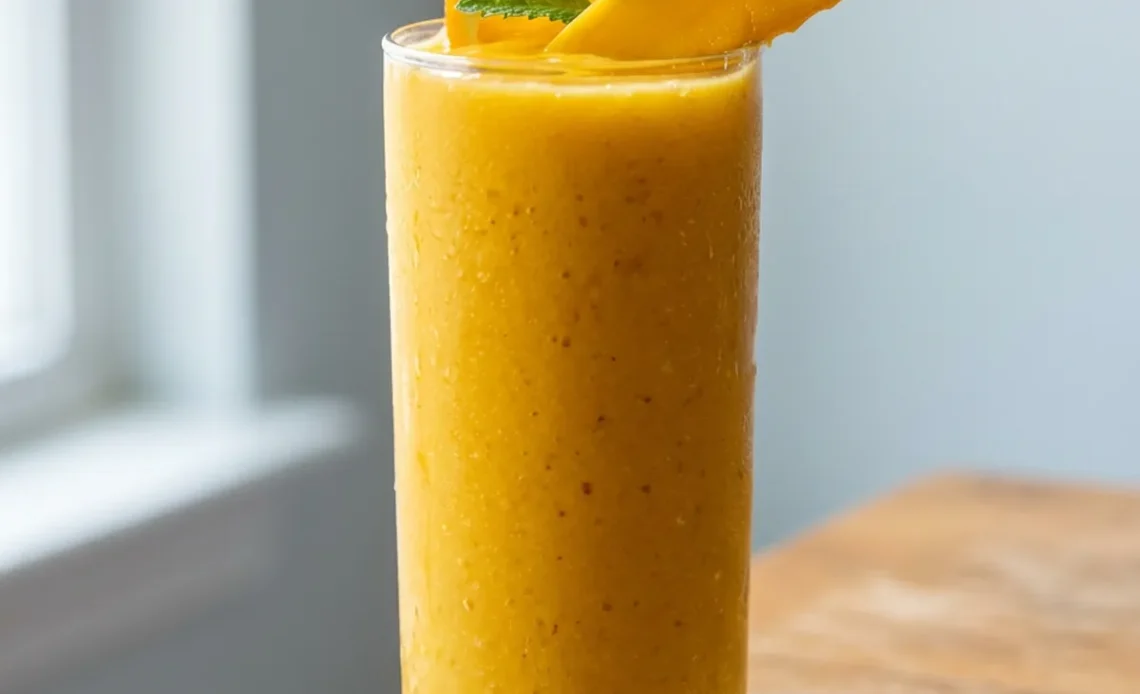
Three mangoes going soft in the fruit bowl faster than I could eat them is what started this mango smoothie recipe. Four ingredients and about sixty seconds in the blender is all it takes to get something thick and cold that tastes like real mango, not diluted juice.
The mango itself isn’t what makes it work — freezing it first, along with a banana that’s gone into the freezer ahead of time, is what does it. Skip the ice altogether. Below is the ratio I keep coming back to, plus the swaps that change the texture of this mango smoothie recipe instead of just the flavor.
Why This Mango Smoothie Recipe Works
Frozen fruit is what makes this thick instead of just cold. When mango and banana freeze, the water inside their cells forms ice crystals that rupture the cell walls, and Penn State Extension’s research on freezing confirms this is precisely how produce texture breaks down. That breakdown works in your favor here: blended together, the ruptured cells release pulp and natural pectin that thickens the drink instead of watering it down the way ice cubes do.
Mango Smoothie vs. Mango Lassi: What’s the Real Difference?
A mango lassi looks similar in the glass, but the two drinks aren’t built the same way. Lassi is a yogurt-based drink from the Indian subcontinent, flavored with fruit rather than built around it, while a smoothie like this one uses the fruit as the main body and yogurt only as an add-in. Want something closer to lassi? Swap the orange juice for an extra half cup of yogurt and drop the banana, or just make my mango lassi recipe instead.
Key Ingredient Notes
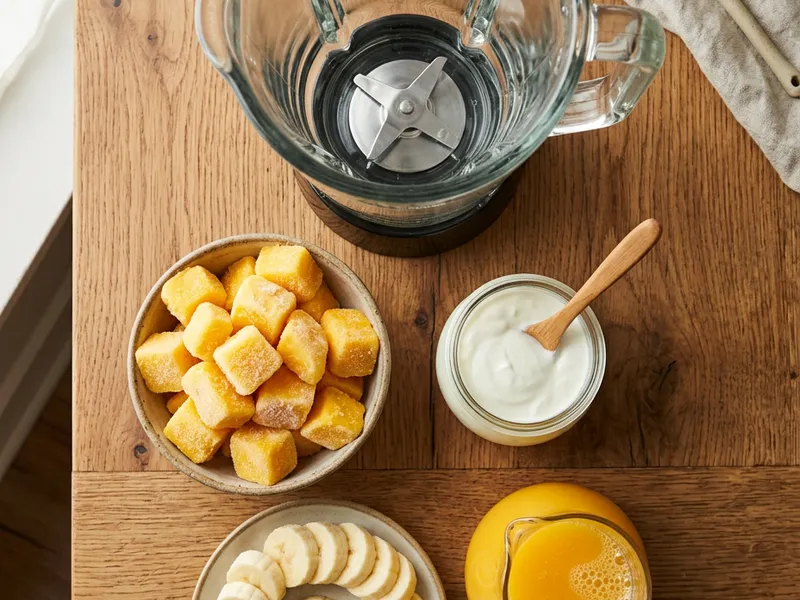
Fresh mango works, but frozen is worth the extra minute of prep. I buy a bag of frozen mango chunks from the international aisle at my regular grocery store since it’s usually cheaper per pound than the fresh mangoes sitting two aisles over, and it means never waiting on one to ripen. A ripe mango smells sweet and faintly like pine right at the stem end, and the good frozen bags still carry a little of that smell once they thaw.
According to USDA FoodData Central, one cup of mango provides close to a full day’s vitamin C, which is most of the reason this mango smoothie recipe doubles as breakfast in my house more often than not. Mango cultivation traces back thousands of years to South Asia, long before it became a smoothie staple anywhere else. Any plain yogurt works, but a thicker Greek yogurt holds up better against the frozen fruit than a thin, pourable one does, and it won’t separate as fast once it sits in the fridge.
What I Learned Testing This
I made a batch of this most mornings for about two weeks last August, mostly to use up mangoes before they went soft in the Texas heat. The first few batches used fresh, room-temperature mango and came out thin, closer to mango juice than a smoothie. Freezing the fruit the night before fixed it completely — that one change did more for this mango smoothie recipe’s texture than any ratio adjustment I tried after it.
Is This Mango Smoothie Recipe Healthy?
A cup of mango brings real vitamin C and a decent amount of fiber, and using yogurt instead of ice cream keeps this on the lighter side without tasting diet-adjacent. It isn’t a low-sugar drink, though — mango is naturally sweet, and this mango smoothie recipe doesn’t need any added sugar because of it. To cut the natural sugar load, swap half the mango for frozen cauliflower rice. It sounds strange, but blended with mango and banana, you genuinely can’t taste it.
Tips and Variations
A few ways to change up this mango smoothie recipe once the base ratio is dialed in:
- Swap the orange juice for coconut water for a lighter, less sweet finish.
- Add a handful of spinach — the color turns a dull green for a few pulses, then the mango takes back over.
- Use Greek yogurt instead of regular for a thicker, higher-protein version.
- Swap half the mango for frozen pineapple to lean it more tropical punch than mango straight-up.
Troubleshooting This Mango Smoothie Recipe
- Too thick to blend: Add liquid one tablespoon at a time until the blades catch. Frozen-fruit-heavy smoothies can stall a weaker blender.
- Tastes watery instead of thick: Your mango wasn’t frozen going in, or too much liquid went in up front. Start with less and add more only if needed.
- Too sweet: A squeeze of lime juice cuts the sweetness better than adding more liquid does, especially if the mango was very ripe going in.
- Banana flavor takes over: Use a smaller or less-ripe banana. The riper it is, the more it dominates the mango.
More Recipes You’ll Love
If tropical fruit drinks are your thing, my watermelon agua fresca recipe and strawberry agua fresca recipe are both worth a look for something lighter and juice-based instead of blended. All the fruit drinks on this site, including this one, live on the fruit drinks hub if you want to see the full list.
The short version of this mango smoothie recipe: blend 1 cup frozen mango, half a frozen banana, 3 tablespoons yogurt, and half a cup orange juice until smooth, about 60 seconds. Freeze the fruit ahead of time instead of relying on ice — that’s what makes it thick rather than watery. Swap in coconut water or Greek yogurt to change the flavor and protein without changing the method.
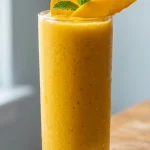
Mango Smoothie Recipe
Equipment
- 1 Blender
Ingredients
For the Smoothie
- 1 cup frozen mango chunks
- 1/2 frozen banana sliced
- 3 tablespoons plain yogurt Greek yogurt for extra thickness
- 1/2 cup orange juice
Instructions
Prep the Fruit
- Spread mango chunks in a single layer on a tray and freeze at least 2 hours, or use a pre-frozen bag straight from the freezer.
- Slice the banana and freeze it alongside the mango if it isn’t frozen yet.
Blend and Serve
- Add the frozen mango and banana to the blender jar before any liquid.
- Pour the yogurt and orange juice on top of the frozen fruit.
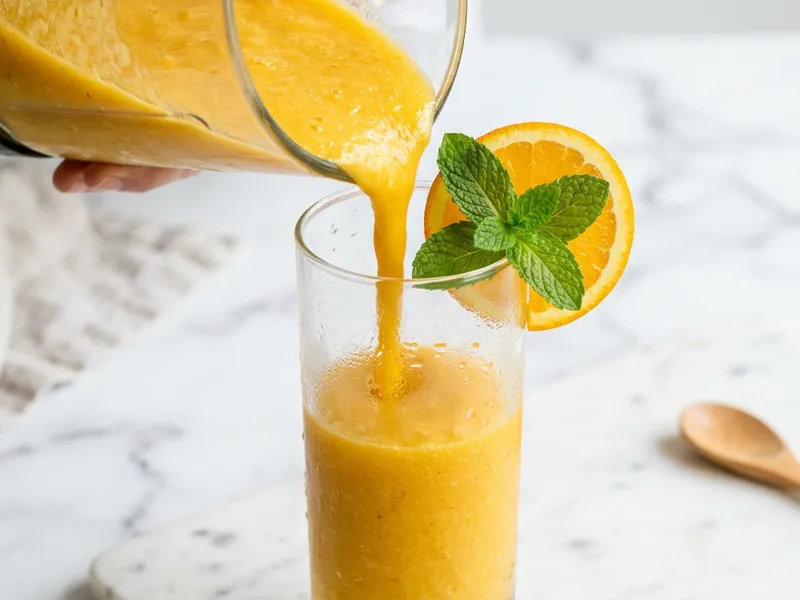
- Blend on high for 45-60 seconds, stopping once to scrape down the sides if needed, until completely smooth.
- If it’s too thick to pour, add a tablespoon of orange juice or milk at a time and blend again until it loosens.
- Pour into a glass and drink right away for the best texture — it thickens further the longer it sits.
Notes
Frequently Asked Questions
Can I use fresh mango instead of frozen for this mango smoothie recipe?
Yes, but freeze it for at least 2 hours first or the smoothie comes out thin like juice instead of thick. If you’re short on time, add a few ice cubes, though the texture won’t be quite as creamy as fruit frozen on its own.
What’s the difference between a mango smoothie and a mango lassi?
A smoothie is fruit-forward with yogurt as an optional add-in, while lassi is yogurt-based and only flavored with fruit. This mango smoothie recipe uses about 3 tablespoons of yogurt; a lassi typically uses a full cup or more.
Can I make this mango smoothie recipe dairy-free?
Swap the yogurt for a coconut or almond milk yogurt and use a plant-based milk in place of the orange juice if you want it less citrus-forward. The texture holds up fine either way.
How long does a mango smoothie keep in the fridge?
About 24 hours in a sealed jar before it separates and loses its texture. Give it a quick shake or re-blend before drinking if it’s been sitting more than a few hours.
Why did my mango smoothie turn out watery?
The mango or banana wasn’t frozen going in. Fresh fruit at room temperature releases its water immediately when blended, with nothing to thicken the drink the way frozen fruit does.