
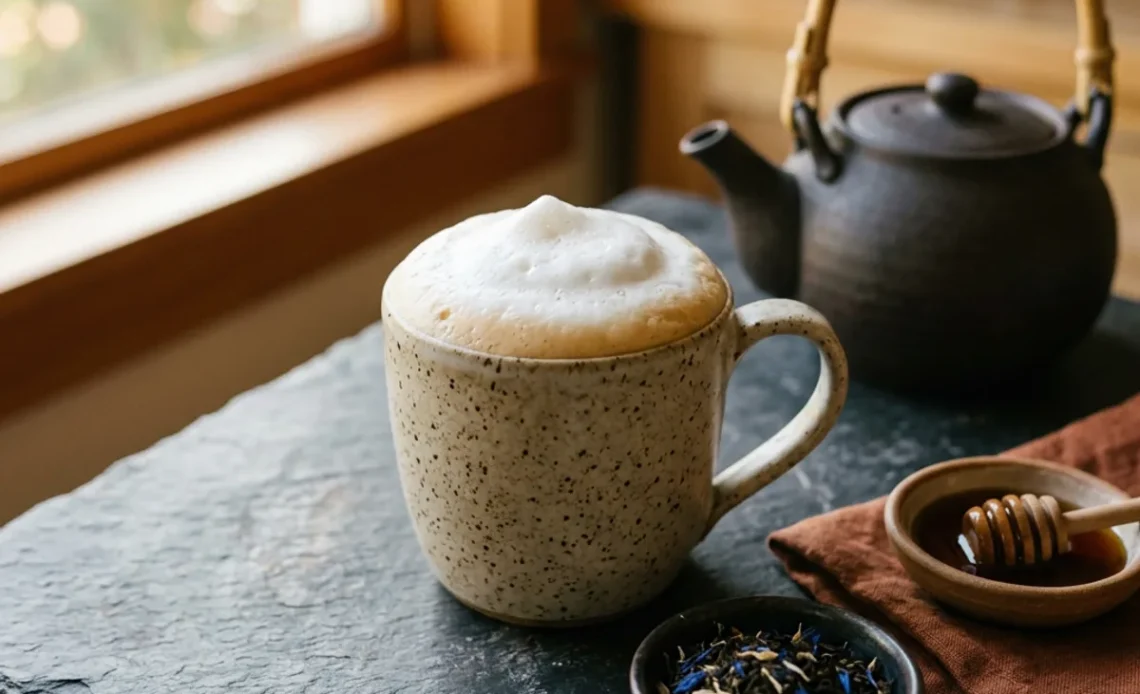
The short version: decaf tea is real tea, black, green or oolong, with most of its caffeine removed, so a cup keeps the familiar taste with only a trace left: about 2 mg in brewed decaf black tea versus 47 mg in regular, according to USDA. Herbal teas, by contrast, never had caffeine.
For a decaf tea that feels like a treat, start with a cozy decaf Earl Grey London fog; the exact amounts are in the recipe card.
Same leaf, same ritual, way less buzz. That is the whole deal with decaf, and it opens up a late-afternoon or evening cup for anyone who loves tea but not the jitters. Below: what the label really promises, how the caffeine gets out, and three drinks, hot and iced, to make with it.
| Decaf style | What is in an 8-ounce cup (USDA) | What the evidence shows | Main caution |
|---|---|---|---|
| Black tea decaf | About 2 mg caffeine, 2 calories, brewed plain | Small trials on decaf vs regular tea and alertness | Still a trace of caffeine (FDA) |
| Tea Earl Grey decaf | Decaf black tea plus bergamot flavor, same 2 mg | No study on this drink | Honey and milk add calories; honey never for babies under 1 |
| Earl gray decaf tea | The same tea under its other spelling | No study on this drink | Same as above |
| Green tea decaf | Listed at 0 mg caffeine and 0 calories, brewed | No study on this drink | Decaf is reduced, not removed (FDA) |
| Decaf chai tea | Decaf black tea simmered with whole spices and milk | No study on this drink | Sweetener adds up fast; keep it to 1 tsp a mug |
| Matcha green tea decaf | Regular matcha is whole powdered leaf, so its caffeine stays in the cup | No study on this drink | Unless the label says decaffeinated, assume it has caffeine |
Decaf vs caffeine-free: two different labels
These two words get swapped all the time, and they mean different things.
Decaf (or decaffeinated) tea starts as true tea from the Camellia sinensis plant, the same leaves used for black, green, white and oolong tea. The leaves go through a process that pulls most of the caffeine out. Key word: most. The FDA says it plainly: decaffeinated coffees and teas have less caffeine than their regular versions, but still contain some.
Caffeine-free drinks never had caffeine to begin with. Chamomile, hibiscus, peppermint, rooibos and ginger infusions are brewed like tea, but they are made from flowers, leaves, roots or bark of other plants, so there is nothing to remove.
So which one do you want? If you love the taste of a real black or green tea and just want far less caffeine, pick decaf. If you need zero caffeine, for example because even a small amount keeps you awake, go herbal.
How much caffeine is left in decaf tea
Here is how a standard 8-ounce cup compares, using USDA FoodData Central values for brewed tea:
| Brewed tea, 8 fl oz | Caffeine | Calories |
|---|---|---|
| Black tea, regular | 47 mg | About 2 |
| Black tea, decaf | 2 mg | About 2 |
| Green tea, regular | 28 mg | About 2 |
| Green tea, decaf | 0 mg listed | 0 |
| Chamomile (herbal) | 0 mg | About 2 |
That is a drop of about 45 mg per cup when you swap regular black tea for decaf. USDA lists brewed decaf green tea at 0 mg, but treat that as “very low”, not as a guarantee: decaf means reduced, and brands vary with the leaf and the method. Real cups also vary with how many bags you use and how long they steep, so the three-bag London fog below lands a little higher than a single plain cup.
For context, the FDA cites 400 mg a day as an amount not generally associated with negative effects for most adults, with wide differences in how sensitive people are. Even several mugs of decaf a day stay far below that.
How tea gets decaffeinated
Nobody decaffeinates tea in a home kitchen; it happens at the processing plant, on the leaves, before they are packed. Four methods show up on labels and brand pages:
- Carbon dioxide (CO2). Pressurized carbon dioxide is pushed through moistened leaves and carries caffeine out with it.
- Ethyl acetate. The leaves are washed with this solvent, which binds the caffeine; the solvent is then removed.
- Methylene chloride. A solvent used mostly for coffee beans.
- Water processing. The leaves are soaked in water and the caffeine is filtered out of it.
Each method can change the flavor a little, which is why one decaf can taste brighter or flatter than another. If the method matters to you, look for it on the package or the brand’s page.
What US rules allow
There is a lot of scary talk online about decaf solvents, so here is what the federal rules actually say. FDA food additive rules (21 CFR 173.228) allow ethyl acetate to be used, under good manufacturing practice, as a solvent in the decaffeination of coffee and tea. The methylene chloride rule (21 CFR 173.255) sets a residue limit of 10 parts per million for decaffeinated coffee and does not mention tea. If you want to avoid solvents altogether, choose a decaf that names the CO2 or water method.
Black Tea Decaf: Brewing the Everyday Cup
Decaf black tea is the easiest place to start with decaf tea, and the one you will find most often: bags or loose leaf, English breakfast style or flavored.
Brew it exactly like regular black tea. Use water that has just come to a boil, 1 bag or 1 teaspoon of loose leaf per 8-ounce cup, and steep for 3 to 5 minutes. Decaf leaves can taste a touch softer, so go to the longer end rather than adding sugar to make up for it. Plain, a cup has about 2 calories, which makes it an easy evening cup to replace a sweet drink.
Want milk? Use the strong-brew trick from our milk tea recipe: double the tea, same water. The method works the same with decaf bags.
Tea Earl Grey Decaf London Fog
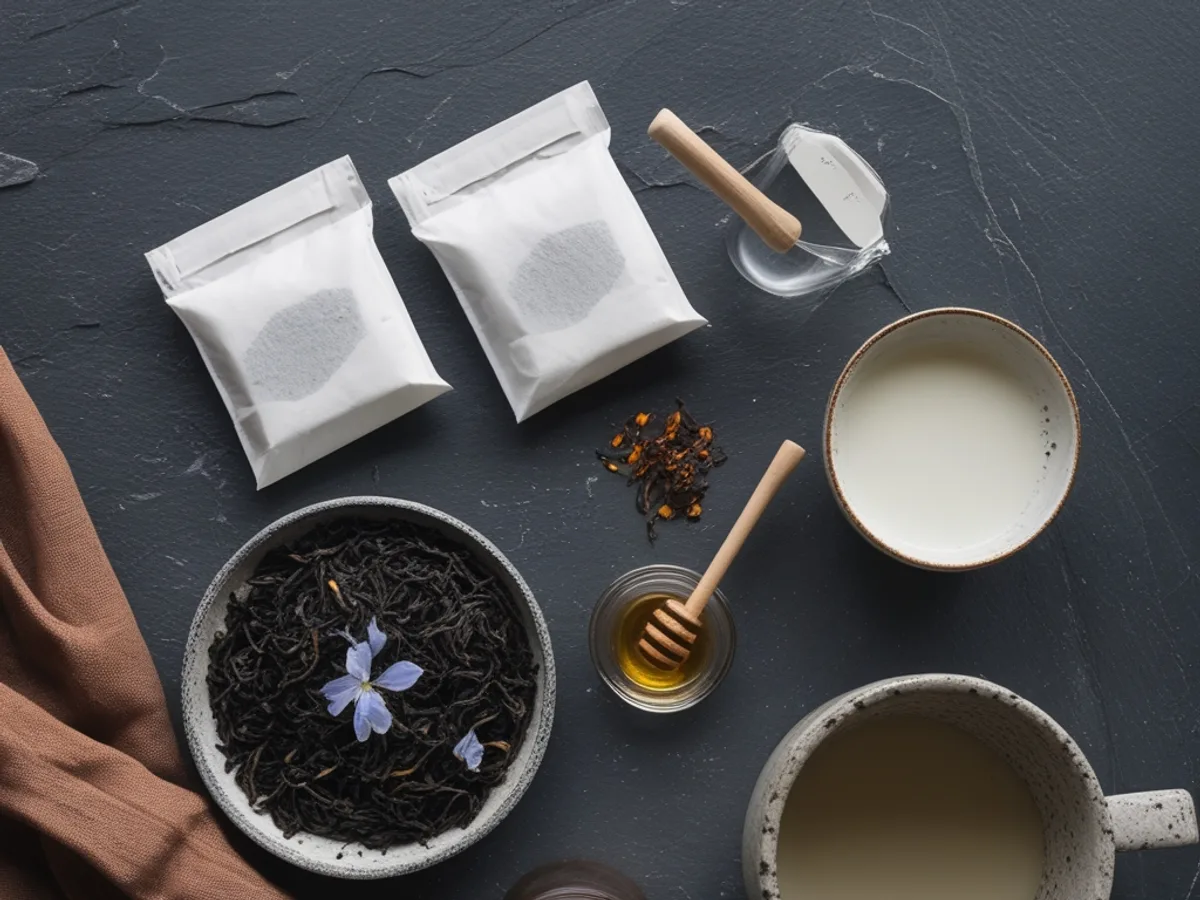
This is the recipe on the card, and the decaf tea drink here that feels most like a café treat. A London fog is Earl Grey tea topped with steamed, foamy milk and a little vanilla: floral, creamy, a bit like a tea latte.
The twist that makes it work with decaf: three bags for two mugs. The milk softens everything, and decaf leaves start a little gentler, so the extra bag keeps the bergamot loud and clear.
Here is the flow:
- Steep 3 decaf Earl Grey bags in 1 1/2 cups of just-boiled water for 5 minutes.
- Heat 1 cup of milk until it steams, then whisk or shake it until foamy.
- Stir in 2 teaspoons of honey and 1/2 teaspoon of vanilla, pour, and spoon the foam on top.
Khalil A made the fog to the letter, found it delicious and easy to pull together, and liked the texture just as hoped. It will be brewed again.
Each mug comes to about 82 calories, with about 4 g of protein from the 2% milk. The healthy angle sits in the sweetener: 1 teaspoon of honey per mug is enough to round off the bergamot, and dropping it saves about 21 calories and 6 g of sugar a mug. Honey never goes to babies under 1 year old (MedlinePlus).
Make it your own:
- Iced fog: cool the sweetened tea for 10 minutes, pour it over ice and add the milk cold. Shake the milk in a jar first if you want a foamy top.
- Dairy-free: oat milk froths beautifully and tastes naturally sweet, so you can cut the honey to half a teaspoon per mug.
- Lavender twist: steep a pinch of culinary dried lavender with the tea bags for a floral layer.
Earl Gray Decaf Tea: Picking a Good One
Earl Grey, also spelled Earl Gray, is black tea flavored with bergamot, a fragrant citrus. Decaf versions use decaffeinated black tea with the same flavoring, so the perfume carries through even when the tea underneath is gentler.
When you shop, look at three things on the box: the word “decaffeinated” (not just “light” or “smooth”), whether the flavor is natural bergamot oil, and, if you care, the decaffeination method. Loose leaf decaf Earl Grey gives you more control over strength; bags are simpler for a weeknight mug.
Green Tea Decaf, Iced With Lemon and Mint
Decaf green tea is lighter and grassier than black, and it shines cold. This iced pitcher is unsweetened by default, which keeps it close to 0 calories a glass.
Hot-brew method (ready in 30 minutes): bring 4 cups of water to a boil and let it sit 2 to 3 minutes so it cools slightly; green tea turns bitter with water that is too hot. Steep 4 decaf green tea bags for 2 to 3 minutes, no longer, then remove them. Cool, then add the juice of half a lemon and a handful of fresh mint leaves.
Cold-brew method (overnight): put the 4 bags in 4 cups of cold water in the fridge for 6 to 8 hours. Cold brewing gives a rounder, less bitter tea.
Serve over ice with a lemon slice. If you like it sweet, stir 1 teaspoon of honey into each glass while the tea is still warm, or try a splash of fresh orange juice for a fruity layer instead.
Decaf Chai Tea, Simmered With Whole Spices
Good news for chai fans: the spices in a chai, such as cinnamon, cardamom, cloves and ginger, do not come from the tea plant, so the only caffeine in a cup comes from the tea itself. Use decaf black tea and the whole mug drops to a trace.
For 2 mugs: simmer 1 cinnamon stick, 4 lightly crushed cardamom pods, 3 whole cloves and 3 thin slices of fresh ginger in 1 1/2 cups of water for 5 minutes. Turn off the heat, add 2 decaf black tea bags and steep 4 minutes. Strain, add 1 cup of milk, warm it through, and sweeten with 1 teaspoon of honey or maple syrup per mug.
The spices bring so much flavor that you need less sugar than a café-style chai. Start with that 1 teaspoon per mug and taste before you add more. Our chai latte recipe follows the same simmer-then-steep method, so decaf tea bags drop straight into it.
Matcha Green Tea Decaf: Read the Label First
Matcha is green tea leaf ground into a fine powder and whisked into water or milk. You drink the whole leaf, not an infusion, so whatever caffeine the leaf holds ends up in your cup.
Decaffeinated matcha is not the norm, so the rule is simple: unless the package says “decaffeinated”, assume your matcha has caffeine. If you want that grassy green flavor in the evening, the decaf green tea above, brewed strong and topped with frothed milk, gets you close.
When You Want Zero Caffeine
If any trace is too much, skip decaf and go herbal. These are caffeine-free by nature and brew just like tea:
- Chamomile: soft, honey-like and floral, the classic after-dinner cup. Our chamomile tea recipe shows how to brew it from dried flowers or bags.
- Hibiscus: ruby red, tart like cranberry, great hot or iced. The hibiscus tea recipe covers both.
- Peppermint: cool and bright.
- Rooibos: a red South African herb with a mellow, slightly sweet taste; rooibos “Earl Grey” blends add bergamot for a caffeine-free take on the classic.
For more cups, hot and cold, browse all our tea drinks.
What the Research Says About Decaf Tea
Studies on decaf tea as a drink in its own right are few. What exists mostly uses decaf as the comparison in caffeine research, and these small trials were run in the UK, at least one of them by researchers from Unilever, a tea company.
- Alertness through the day. Nineteen healthy volunteers drank black tea, coffee, caffeinated water, decaf tea or plain water three times a day. Tea gave short improvements in one performance test compared with water, and caffeinated drinks, more than decaffeinated ones, largely prevented the steady drop in alertness seen with water. The authors concluded the effects of tea were not entirely due to caffeine (PubMed 9784078, 1998).
- Caffeine dose. In a crossover study, 15 people drank decaf tea with 0 to 200 mg of added caffeine. Caffeinated drinks raised blood pressure a little and increased alertness compared with water, but the caffeine level itself was not a major factor, and the authors suggested other factors also play a part (PubMed 10837840, 2000).
- Switching to decaf. Regular coffee and tea drinkers were given only decaf tea or coffee for 3 weeks. Going without caffeine overnight caused headaches and lower alertness in people who were still drinking it daily, while those already off caffeine for 3 weeks did not perform better after a dose of caffeine (PubMed 15887055, 2005).
The evidence is thin, and none of these trials measured long-term health. The fair takeaway: decaf tea keeps most of what people like about the tea ritual, and the main thing you give up is the caffeine.
Caffeine Safety: Who Should Take Care With Decaf Tea
- Cut back gradually. If you drink regular tea or coffee every day, the FDA advises cutting back gradually; withdrawal is not dangerous but can be unpleasant. Swap one cup a day for decaf, then another, rather than all at once.
- Very sensitive to caffeine? The FDA notes that people who react strongly may want to avoid decaf drinks altogether. Choose an herbal tea.
- Pregnant, trying to become pregnant or breastfeeding, or living with a condition or taking a medicine: the FDA suggests asking your health care provider whether you need to limit caffeine.
- Children: the FDA, citing the Dietary Guidelines for Americans, says caffeinated drinks are best avoided under age 2, and drinks with no added sugars should come first for children and teens.
Brewing Mistakes That Make Decaf Taste Flat
- Weak and watery: too little tea. Decaf tastes softer, so use a full bag per cup, or an extra one when milk is involved.
- Bitter green tea: water too hot or a long steep. Let boiled water rest 2 to 3 minutes and stop at 3 minutes.
- Flat iced tea: hot tea poured straight onto ice melts it. Cool it first, or cold-brew it.
- Stale flavor: decaf leaves lose aroma like any tea. Keep the box sealed, away from heat and light, and use it within its best-by date.
Brewed iced decaf keeps in a covered pitcher in the fridge; drink it within a couple of days, and add the lemon and mint just before serving so they stay fresh.
Where the Numbers Come From
- Caffeine and nutrition: USDA FoodData Central, brewed decaf black tea, brewed black tea, brewed decaf green tea, brewed green tea, brewed chamomile tea, 2% milk and honey. Card values are estimates for one of 2 mugs.
- Caffeine guidance: FDA, Spilling the Beans: How Much Caffeine Is Too Much?
- Decaffeination solvents: eCFR, 21 CFR 173.228 (ethyl acetate) and 21 CFR 173.255 (methylene chloride)
- Honey and infants: MedlinePlus, Infant botulism
- Studies: the PubMed records linked above.
Decaf tea is not a lesser cup, just a quieter one, and a box of decaf tea in the cupboard means tea is always an option. Brew it strong, sweeten it lightly, and let that London fog be the reason you look forward to tea after dark.
Decaf Tea: What It Really Means, and 3 Easy Drinks to Make With It
Ingredients
- 3 decaf Earl Grey tea bags or 3 tsp loose decaf Earl Grey in an infuser
- 1 1/2 cup boiling water 360 ml
- 1 cup milk 240 ml, 2% milk; oat or soy milk work too
- 2 tsp honey 1 tsp per mug; less, or none, if you like it plain
- 1/2 tsp vanilla extract
- ice cubes only for the iced version
Instructions
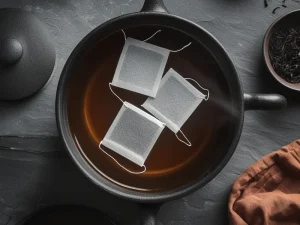
- Pour the just-boiled water over the 3 tea bags in a teapot or heatproof jug and steep for 5 minutes. Lift the bags out and press them lightly against the side with a spoon; three bags for two mugs keeps the bergamot bold once the milk goes in.
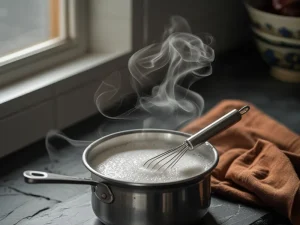
- Warm the milk in a small pan over medium heat until it steams and tiny bubbles form at the edge, without boiling. Whisk it hard for 20 to 30 seconds, or shake it in a sealed jar wrapped in a towel, until it turns foamy.
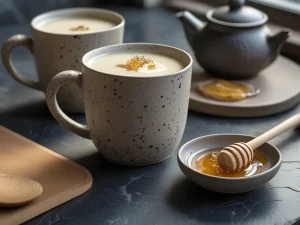
- Stir the honey and vanilla into the hot tea, split it between 2 mugs and pour in the warm milk, holding back the foam with a spoon, then spoon the foam on top. For an iced fog, cool the sweetened tea for 10 minutes, pour it over ice and add the milk cold.
Notes
Nutrition
Frequently Asked Questions
What is decaf tea?
Decaf tea is true tea, from the Camellia sinensis plant, that went through a process to remove most of its caffeine. A trace always stays: USDA lists brewed decaf black tea at about 2 mg of caffeine per 8-ounce cup.
Is decaf tea really free of caffeine?
No. The FDA notes that decaffeinated teas have less caffeine than regular ones but still contain some, so if you react strongly to caffeine you may want to skip them and drink an herbal tea instead.
Is decaffeinated tea as good for you?
Very little research tests decaf tea on its own, so nobody can say it matches regular tea point for point. What it clearly offers is the same flavor and ritual with far less caffeine, and unsweetened it has about 2 calories a cup.
What is the healthiest caffeine-free tea?
There is no single winner: chamomile, hibiscus, peppermint and rooibos are all caffeine-free because they do not come from the tea plant. The simplest healthy choice is any of them brewed plain, with little or no added sugar.
Which tea has the least caffeine?
Herbal infusions have none at all. Among true teas, a decaf version has the least: about 2 mg a cup for decaf black tea, against about 47 mg for regular black tea and 28 mg for regular green tea in USDA data.
Can I drink decaf tea at night?
For most people an evening cup of decaf tea is a gentle choice, since it keeps only a small trace of caffeine. If even small amounts keep you awake, switch to chamomile or another herbal cup after dinner.
Does decaf Earl Grey taste like regular Earl Grey?
The bergamot that defines Earl Grey is added as flavor, so it carries through decaf blends. The tea underneath can taste a little softer, which is why the London fog here uses three bags for two mugs.