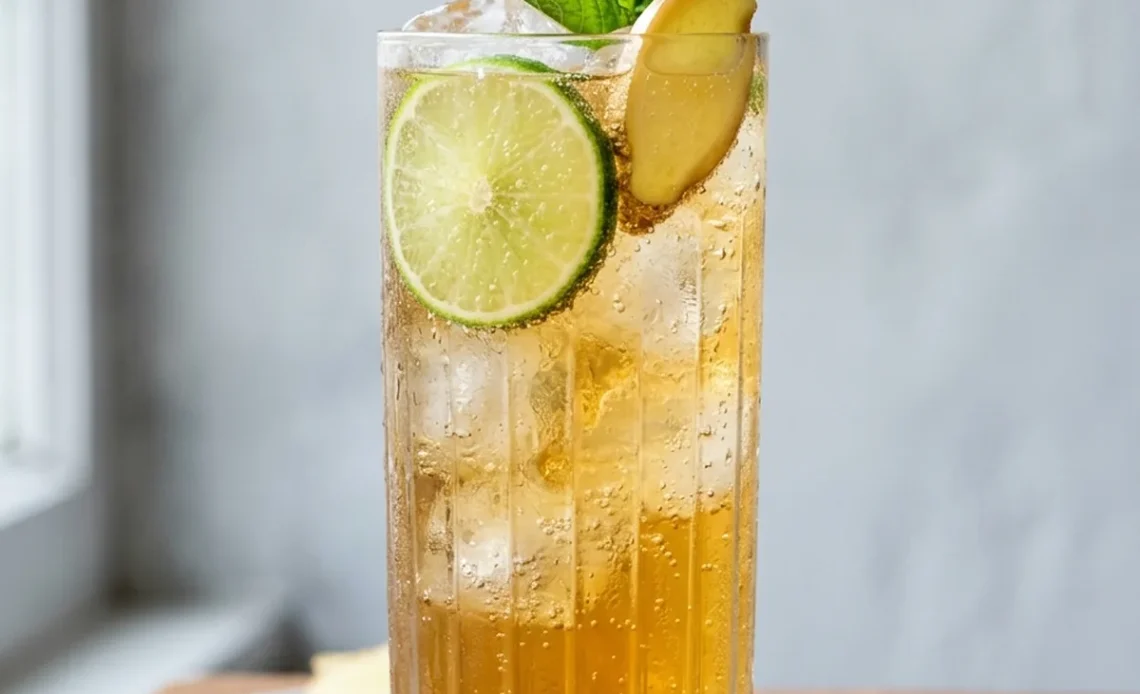
A ginger beer recipe homemade from a real ginger bug tastes nothing like the bottled stuff, and it starts with a jar you’ve already got fermenting on the counter. If you followed my ginger bug recipe and it’s bubbling by now, this is the next step: turning that starter into an actual bottle of fizzy, sharp, naturally carbonated soda. I made my first batch on a Tuesday night in September mostly because I was impatient to see if the bug I’d been feeding for a week actually worked.
Why This Ginger Beer Recipe Homemade Works
Sugar water strained through fresh ginger gives wild yeast something to eat, and the CO2 that yeast produces has nowhere to go once the bottle is sealed. That trapped gas is the entire mechanism, with no soda stream and no store-bought carbonation drops involved. Pressure builds inside a capped bottle over two to three days at room temperature.
Ginger Beer Recipe Homemade vs. Traditional Ginger Beer Plant
These are not the same culture. Historic ginger beer was fermented with a specific symbiotic yeast-and-bacteria culture called a “ginger beer plant” — a gelatinous mass first documented in 19th-century England. A modern ginger bug uses whatever wild yeast is already living on the ginger’s skin and in your kitchen air, which is a different, less finicky culture. Both carbonate a drink the same basic way; only one of them requires mail-ordering a starter.
Key Ingredient Notes
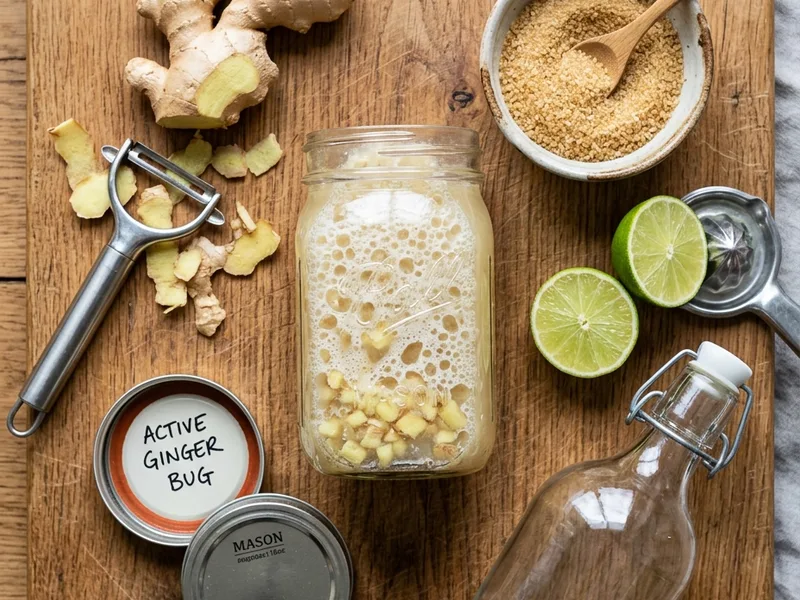
Your active ginger bug is the one ingredient you can’t buy at a store for this ginger beer recipe homemade, and it has to come from a jar you’ve fed for several days until it bubbles within an hour of stirring. Fresh ginger for the syrup should feel firm and heavy, not shriveled at the ends; shriveled ginger has lost enough moisture that the flavor comes out thin no matter how much you grate.
Cane sugar works better here than honey or maple syrup for one practical reason: the yeast in a ginger bug ferments plain sucrose fastest, and alternative sweeteners can slow or stall the second fermentation. Save the honey for finishing a glass at the table instead of feeding the bottle.
What I Learned Testing This
My first bottle of this ginger beer recipe homemade sat in a warm cabinet above the stove instead of a cool counter, and two days later it had built enough pressure that opening it sprayed syrup across my kitchen ceiling. Room temperature means room temperature: anything warmer speeds the yeast up more than you’d expect, and a warm cabinet is not the same as a countertop.
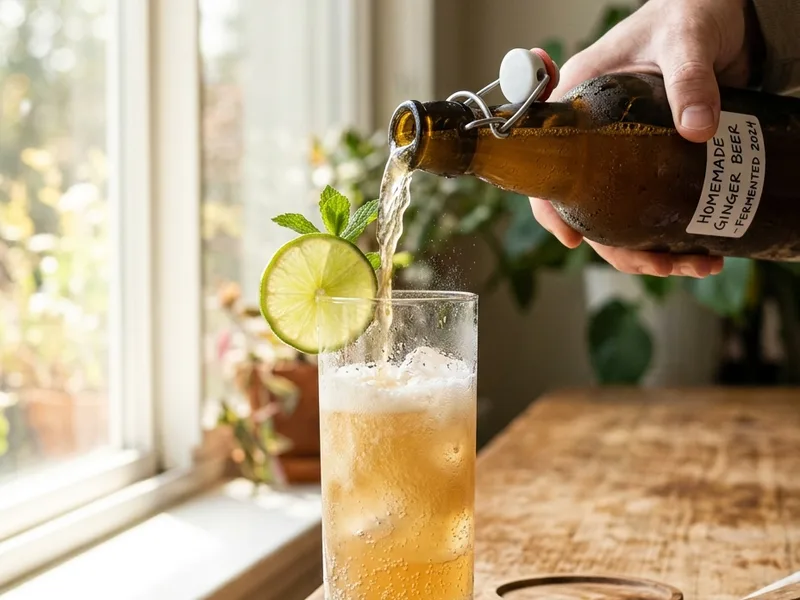
Swing-top bottles rated for pressure fixed the mess-and-guesswork problem completely, and “burping” each bottle once a day, cracking the cap for a second to release gas, is the difference between fizzy soda and a genuine bottle bomb, a real risk the National Center for Home Food Preservation flags for any sealed home ferment under pressure. A properly finished batch smells sharper than any canned ginger ale, almost like a fresh-cracked ginger ale gone slightly wild, with a faint yeasty note underneath the bite.
Is This Ginger Beer Recipe Homemade Alcoholic?
A little, technically. Wild yeast produces trace ethanol as a natural byproduct alongside the CO2 that carbonates the bottle, the same mechanism behind kombucha. A short, 48-to-72-hour ferment like this one keeps that number very low — typically in the 0.1% to 0.5% ABV range, the same threshold regulators use to call a drink “non-alcoholic,” according to a NSW Health fact sheet on fermented drinks. Kombucha ferments for 7 to 10 days and can climb a bit higher; this recipe’s short timeline keeps it well under that.
Refrigerating the finished bottles stops fermentation almost entirely, so the alcohol content doesn’t keep climbing in storage. Anyone who needs to avoid alcohol completely, not just keep it low, should treat this the same way they’d treat kombucha and skip it.
Tips and Variations
A few ways to change up this ginger beer recipe homemade once the base method is working:
- Add a strip of lime peel to the syrup while it simmers for a brighter, less one-note ginger flavor.
- Double the ginger for a properly hot, sinus-clearing version closer to Jamaican-style ginger beer.
- Swap half the sugar for dark brown sugar for a deeper, almost molasses-like finish.
- Bottle it flat and drink it as a ginger syrup soda mixed with plain sparkling water if you’d rather skip the wait for natural carbonation.
Troubleshooting
Barely any fizz after 3 days: Your ginger bug wasn’t active enough going in. Feed it another day or two until it bubbles reliably before starting this ginger beer recipe homemade again.
Too much fizz, gushes when opened: It fermented too warm or too long. Burp the bottles daily and refrigerate as soon as the carbonation feels right, even if that’s a day earlier than planned.
Tastes flat and overly sweet: Fermentation stalled, usually from cold kitchen temperatures. Move the bottles somewhere warmer, closer to 70-75°F, and give them another day before refrigerating.
Tastes sharp or vinegary instead of gingery: It over-fermented past the sweet spot. Refrigerate sooner next time, ideally right when the fizz first feels lively on your tongue.
More Recipes You’ll Love
Once you’ve got a ginger bug going, my ginger bug recipe covers the starter itself in more detail, including what to do if it grows a kahm yeast film. My homemade ginger ale recipe is a faster, non-fermented alternative for nights when you don’t want to wait three days for fizz. Both live on the homemade sodas hub along with the rest of the fermented cluster this ginger beer recipe homemade belongs to.
The short version of this ginger beer recipe homemade: simmer grated ginger with sugar and water for 15 minutes, strain, cool, then stir in fresh lime juice and active ginger bug. Bottle in swing-top bottles, burp daily, and refrigerate after 2-3 days once the fizz feels lively. Expect trace alcohol under 0.5% ABV, the same range as kombucha.
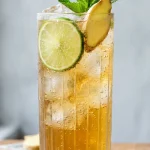
Ginger Beer Recipe Homemade
Equipment
- 1 Large saucepan
- 8 Swing-top pressure-rated bottles 1-liter or 16 oz size
- 1 Fine mesh strainer
- 1 Funnel
Ingredients
For the Ginger Syrup
- 1 cup fresh ginger peeled and grated, about 4-6 inches
- 1.5 cups cane sugar
- 8 cups filtered water divided
- 0.25 cup fresh lime juice about 2 limes
For Carbonating
- 1 cup active ginger bug strained liquid only, see ginger bug recipe
- 8 tsp cane sugar 1 tsp per bottle, for the second ferment
Instructions
Make the Ginger Syrup
- Combine the grated ginger, 1.5 cups sugar, and 6 cups of the water in a large saucepan. Bring to a simmer and cook for 15 minutes, stirring occasionally.
- Strain the syrup through a fine mesh strainer into a large bowl or jug, pressing on the ginger to extract as much liquid as possible. Let cool to room temperature.
Build the Ginger Beer
- Stir the cooled syrup, lime juice, remaining 2 cups water, and 1 cup of active strained ginger bug together in a large jug.
- Using a funnel, divide the mixture evenly among 8 swing-top bottles, leaving about 2 inches of headspace in each for carbonation.
Ferment and Carbonate
- Seal the bottles and leave at room temperature (70-75F) for 2-3 days.
- Once a day, crack each cap for a second to release built-up pressure, then reseal immediately. This prevents bottle bombs.
- Once the bottles feel firm and the ginger beer tastes lively and fizzy when opened, move all bottles to the refrigerator to stop fermentation.
- Serve cold, straight from the bottle or over ice. Drink within 2-3 weeks for the best flavor.
Notes
Frequently Asked Questions
Is this ginger beer recipe homemade actually alcoholic?
A little, technically. Wild yeast fermentation produces trace ethanol alongside the CO2 that carbonates the bottle, the same mechanism behind kombucha. A short 2-3 day ferment keeps it in the 0.1-0.5% ABV range, the standard threshold for “non-alcoholic” labeling.
How long does a ginger beer recipe homemade take to ferment?
Usually 2 to 3 days at room temperature (70-75F). Warmer kitchens ferment faster and cooler ones slower, so check daily by feel and taste rather than the clock alone.
What’s the difference between a ginger bug and a traditional ginger beer plant?
A ginger beer plant is a specific historic yeast-and-bacteria culture from 19th-century England. A modern ginger bug uses whatever wild yeast lives on the ginger’s skin and in your kitchen, a simpler, more accessible substitute that carbonates the same way.
Can you make this without an active ginger bug?
Not with this method. The bug is the only source of live yeast doing the carbonating work here. If you don’t have one going yet, start with a ginger bug recipe first, it takes about a week to become active.
Why did my bottles gush or nearly explode when opened?
The ginger beer fermented too warm or too long, building more pressure than the bottle could hold comfortably. Burp each bottle once daily and refrigerate as soon as the carbonation feels lively, even a day early.
How long does homemade ginger beer keep in the fridge?
About 2 to 3 weeks refrigerated. Cold temperatures slow the yeast down close to a stop, but the drink will keep getting very slightly more sour over time.