
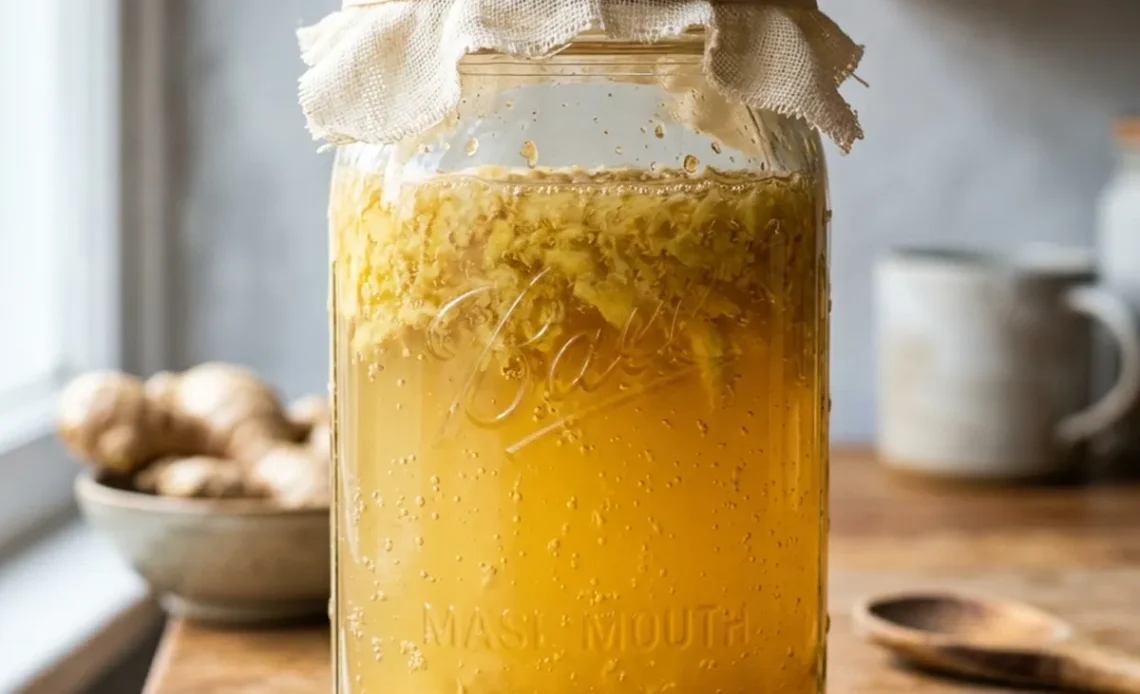
A ginger bug recipe sounds intimidating until you realize it’s just grated ginger, sugar, and water left alone on a counter for a week. Wild yeast and bacteria already living on the ginger’s skin wake up, start eating the sugar, and turn the jar into a living starter you can use to naturally carbonate soda without a single drop of store-bought yeast. I started mine on a windowsill in early September, mostly because I was tired of buying kombucha SCOBYs online and wanted something I could grow from a grocery-store root.
Why This Ginger Bug Recipe Works
Ginger skin carries its own community of wild yeast and lactic acid bacteria, the same organisms researchers isolated from yan-jiang, a traditional Taiwanese fermented ginger product, in a study published in the Journal of the Science of Food and Agriculture. Feeding that culture sugar daily lets the yeast multiply fast enough to out-compete anything unwanted, while the bacteria acidify the liquid, which is what keeps the jar smelling tangy instead of rotten.
Daily feeding matters more than the exact ratio. A ginger bug recipe that skips a day or two usually survives, but three or four missed feedings in a row starves the culture faster than most people expect.
Key Ingredient Notes
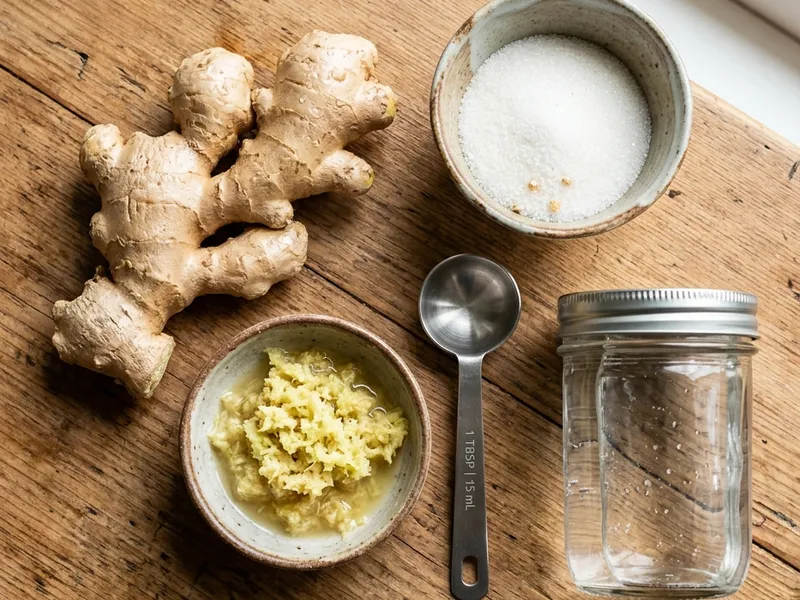
Buy organic ginger if you can find it, unpeeled. Conventionally grown ginger is sometimes treated with a sprout inhibitor that can slow down or block the wild yeast you’re trying to cultivate, and peeling strips away most of the surface organisms this whole ginger bug recipe depends on. I grate mine on the coarse side of a box grater, skin and all, straight into the jar.
Water matters as much as the ginger. Tap water treated with chlorine or chloramine can suppress the same wild yeast you’re trying to grow, so filtered or dechlorinated water gives a more reliable start. Sugar-wise, plain white cane sugar feeds this ginger bug recipe cleanly — raw or turbinado works too, but honey and coconut sugar carry their own microbes that can compete with, rather than support, the ginger bug.
What I Learned Testing This
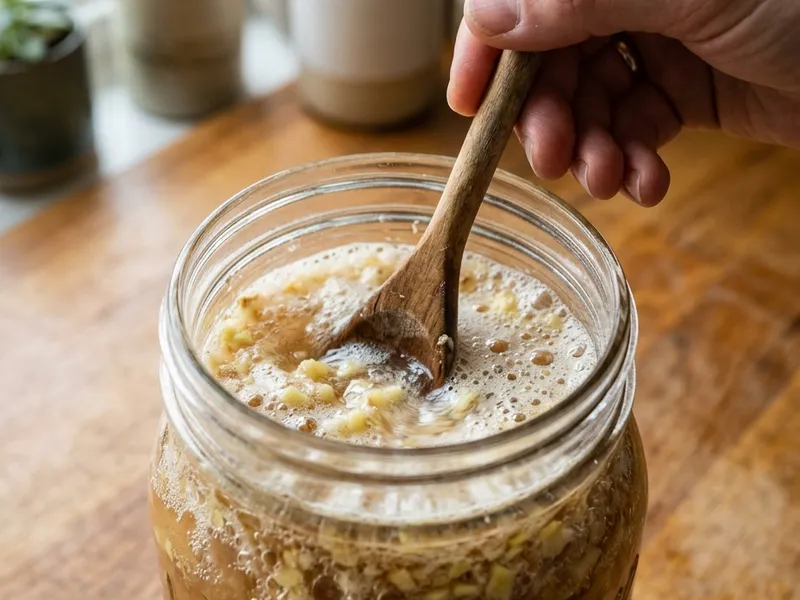
My first attempt grew a thin white film on day four. I’d let a few shreds of ginger float above the waterline instead of staying submerged, and that exposed surface is exactly where mold gets a foothold. The second jar, stirred twice a day and kept fully submerged, never had the problem. By day six it smelled like a cross between apple cider vinegar and fresh bread, and the whole jar fizzed audibly when I unscrewed the lid.
Is a Ginger Bug Safe to Drink?
Wild lactic acid fermentation carries real, manageable risk, not zero risk, and the same care applies to every ginger bug recipe. The National Center for Home Food Preservation recommends food-grade containers, hot soapy water on every jar and utensil before use, and keeping ferments in the 70-75°F range where the beneficial organisms out-compete anything harmful. A thin white kahm yeast film is common and harmless to scrape off; fuzzy green, black, or pink mold means the batch goes in the trash, not the compost.
What to Make With Your Ginger Bug
A finished ginger bug recipe is really just step one. Two tablespoons of active bug strained into a bottle of sweetened juice or homemade ginger syrup, sealed and left at room temperature for two to three days, is how you get a naturally carbonated soda without any commercial yeast. My homemade ginger beer recipe uses this exact bug as the starter, so once yours is bubbling, that’s the natural next stop.
Tips and Variations
- Keep a backup jar going once your first bug is established — a spoonful of active bug restarts a new one in days instead of a week.
- Slow down between uses by moving the jar to the fridge; feed once a week instead of daily.
- A cheesecloth or coffee filter secured with a rubber band keeps fruit flies out better than a loose paper towel.
- If your kitchen runs cold, a spot near (not on) a running appliance keeps the jar in the 70-75°F range fermentation needs.
Troubleshooting This Ginger Bug Recipe
No bubbles by day three: Normal. Most ginger bugs show little visible activity until day four or five — keep feeding daily before assuming it failed.
Thin white film on top: That’s kahm yeast, harmless but a sign the ginger wasn’t fully submerged. Stir it back in or scrape it off, then keep the ginger pushed under the liquid line going forward.
Fuzzy or colored mold: Green, black, orange, or pink fuzz means real contamination. Discard the whole batch and start fresh with a clean jar — don’t try to scoop around it.
Weak fizz when bottling soda: Your bug may be under-fed or too cold. Feed it for two more days at room temperature before using it again, and confirm it’s actively bubbling before you strain it into a new batch.
More Recipes You’ll Love
Once your ginger bug recipe is fizzing, the natural next step is turning it into an actual soda — my homemade ginger ale recipe and grapefruit soda recipe both work well with a spoonful of active bug swapped in for the fizz. Every recipe in this pillar lives on the homemade sodas hub if you want to browse the full lineup.
The short version of this ginger bug recipe: feed one tablespoon each of grated ginger and sugar into filtered water daily for five to seven days, keeping the ginger fully submerged, until the jar smells tangy and fizzes on its own. Scrape off any thin white film, but discard the batch entirely if you see colored mold. Once it’s active, two tablespoons strained into sweetened juice makes naturally fizzy soda in two to three days at room temperature.
Ginger Bug Recipe
Equipment
- 1 Wide-mouth quart jar
- 1 Cheesecloth or coffee filter plus a rubber band
- 1 Box grater or fine grater
Ingredients
For the Ginger Bug Starter
- 1 tbsp fresh organic ginger grated, unpeeled, plus 1 tbsp daily
- 1 tbsp white cane sugar plus 1 tbsp daily
- 2 cups filtered water unchlorinated
Instructions
Day 1: Start the Culture
- In a clean wide-mouth jar, stir together the grated ginger, sugar, and filtered water until the sugar mostly dissolves.
- Cover the jar with cheesecloth secured by a rubber band and leave it at room temperature, out of direct sunlight, for 24 hours.
Days 2-7: Feed Daily
- Once a day, stir in 1 more tablespoon each of grated ginger and sugar. Make sure the ginger stays fully submerged under the liquid.
- Look for small bubbles rising when you stir, a light foam on top, and a tangy, slightly yeasty smell developing over the next several days.
- Keep feeding daily even if you see little activity before day 4 or 5 — this is normal and does not mean the culture has failed.
Using the Finished Bug
- Your ginger bug is ready when it fizzes audibly when stirred, smells tangy like apple cider vinegar, and has been actively bubbling for at least a day.
- Strain out 2 tablespoons of the liquid (leaving the ginger pulp behind) to use as a starter for naturally carbonated soda.
- Keep feeding the remaining bug daily to maintain it at room temperature, or move it to the fridge and feed once a week to slow it down.
Notes
Frequently Asked Questions
How long does it take to make a ginger bug?
Most ginger bugs are ready in five to seven days of daily feeding, once the jar smells tangy and fizzes on its own when stirred. Cooler kitchens can take up to ten days, so judge readiness by bubbles and smell, not the calendar.
Why isn’t my ginger bug recipe bubbling?
Little visible activity before day four or five is normal, not a sign of failure. If there’s still nothing after a full week of daily feeding, chlorinated water or a kitchen under 70°F are the most common causes.
Is the white film on top of my ginger bug safe?
A thin white film is kahm yeast, a common and harmless byproduct of fermentation. Stir it back in or scrape it off, then keep the ginger fully submerged going forward so it doesn’t return.
Can I use ground ginger instead of fresh?
No. Fresh, unpeeled ginger carries the wild yeast and bacteria on its skin that a ginger bug recipe depends on, and dried or ground ginger has none of that living culture to ferment.
How do I use a ginger bug recipe to make soda?
Strain two tablespoons of active, bubbling bug into a bottle of sweetened juice or ginger syrup, seal it, and leave it at room temperature for two to three days until it’s naturally carbonated.
Can I make a ginger bug without organic ginger?
Yes, but results are less reliable, since conventional ginger is sometimes treated with a sprout inhibitor that can slow the wild yeast. Use the freshest ginger available and expect fermentation to possibly take a day or two longer.