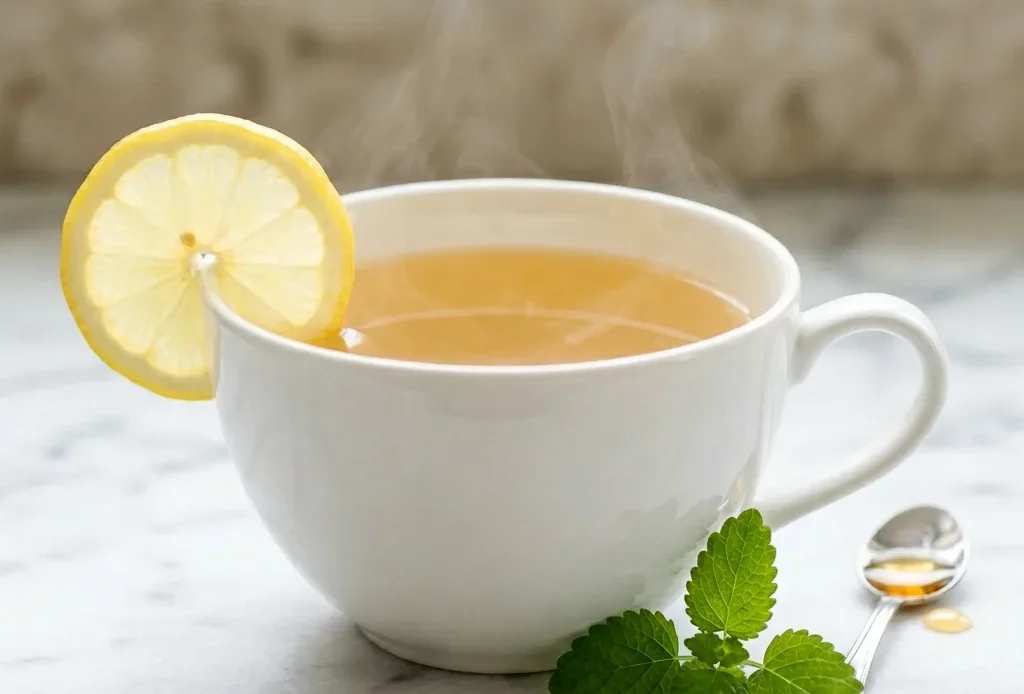
Steep a handful of fresh lemon balm leaves in hot water for ten minutes, strain, and add honey — that’s the whole lemon balm tea recipe, and it’s the easiest herbal tea I make on a regular basis.
If you landed here specifically for the weight-loss angle: there isn’t solid evidence that lemon balm tea causes weight loss on its own. It’s a good caffeine-free, low-calorie swap for a sugary drink, which can matter if you’re cutting calories elsewhere — but the tea itself isn’t a shortcut. Full explanation, with sources, further down.
I started growing this herb two summers ago because it kept spreading through a corner of my balcony planter that nothing else would touch, and I needed something to do with all those lemon-scented leaves. This lemon balm tea recipe works hot for a slow evening or iced for a warm afternoon, and I’ll walk you through both, plus what I’ve learned about sourcing dried leaves when the plant dies back in winter.
Why This Recipe Works
Lemon balm (Melissa officinalis) is part of the mint family, and it behaves like mint in the kettle — the citrus-and-mint aroma releases fast once hot water hits the leaves, but it also turns bitter and slightly grassy if you leave it steeping too long. Ten minutes is the point where the tea tastes bright and lemony without tipping into bitterness.
Crushing or bruising the leaves before steeping helps too: it breaks open the oil-bearing cells on the underside of the leaf, so you get more flavor from fewer leaves. Honey softens the sharper citrus notes, and a squeeze of fresh lemon juice at the end brings the citrus back up front if the brew tastes flat. None of this is complicated, but the timing matters more than most lemon balm tea recipes let on.
Key Ingredient Notes
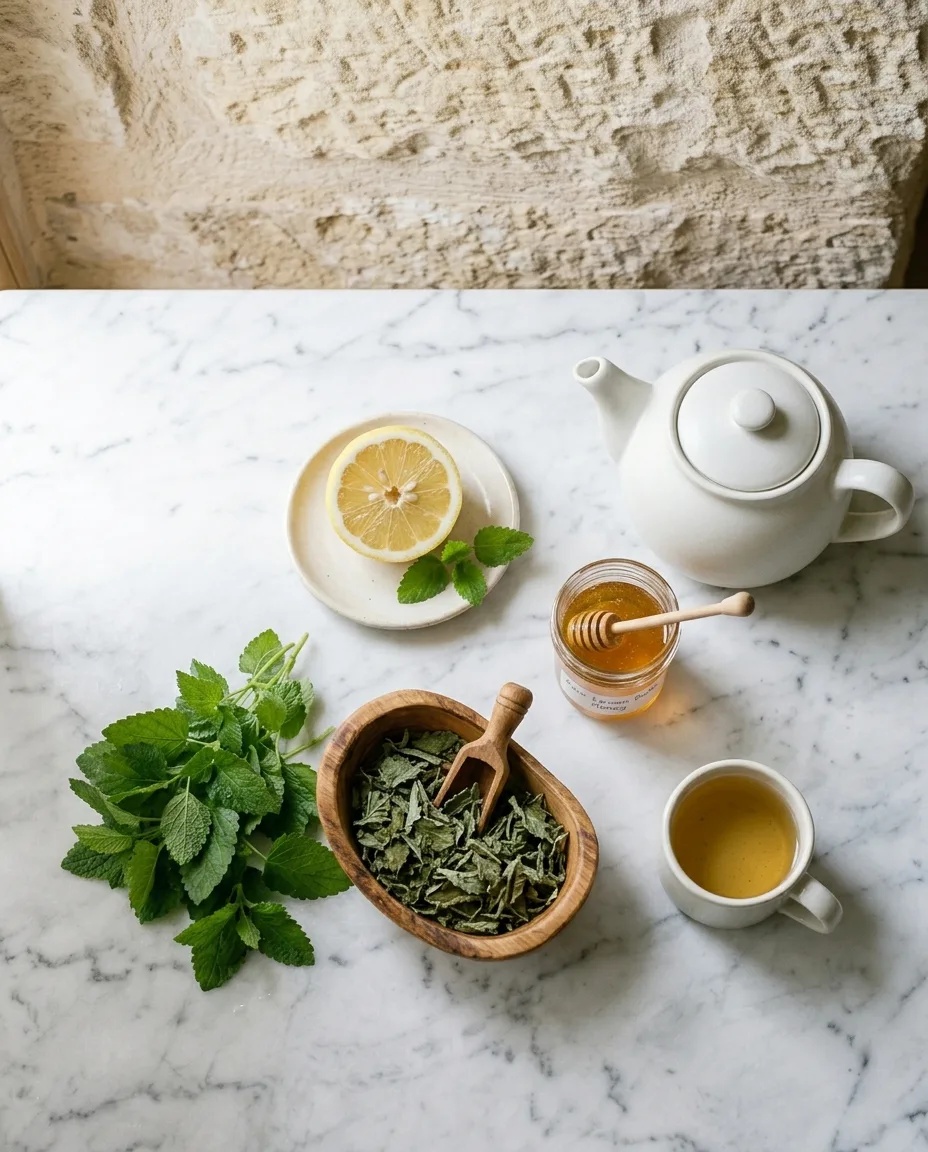
Fresh lemon balm is easy if you grow it, and it grows almost too easily, spreading by runners the way mint does. If you don’t have a plant, look for it at a farmers market herb stall before reaching for dried; the fresh leaves have a stronger citrus punch and a slightly fuzzy texture that releases oil when you rub it between your fingers.
Fresh vs. Dried Lemon Balm
Dried leaves work fine and are what I reach for from late fall through early spring, once my plant has died back. I buy mine from the bulk herb section at my local Asian grocery, where it’s sold loose and costs less than the pre-packaged tins at the supermarket.
Dried leaves are more concentrated, so you’ll use less than you would fresh; start with about a third of the volume and adjust by taste. Either version makes a good lemon balm tea recipe; dried just steeps slightly faster and tastes a touch more herbal, less green.
Hot or Iced: Two Ways to Make This Lemon Balm Tea Recipe
Hot tea is what I make most, usually in the early evening when I want to wind down without caffeine. Pour it into a mug, let it cool for a minute or two past the point where it stops steaming, and the citrus aroma comes through stronger than when it’s scalding hot.
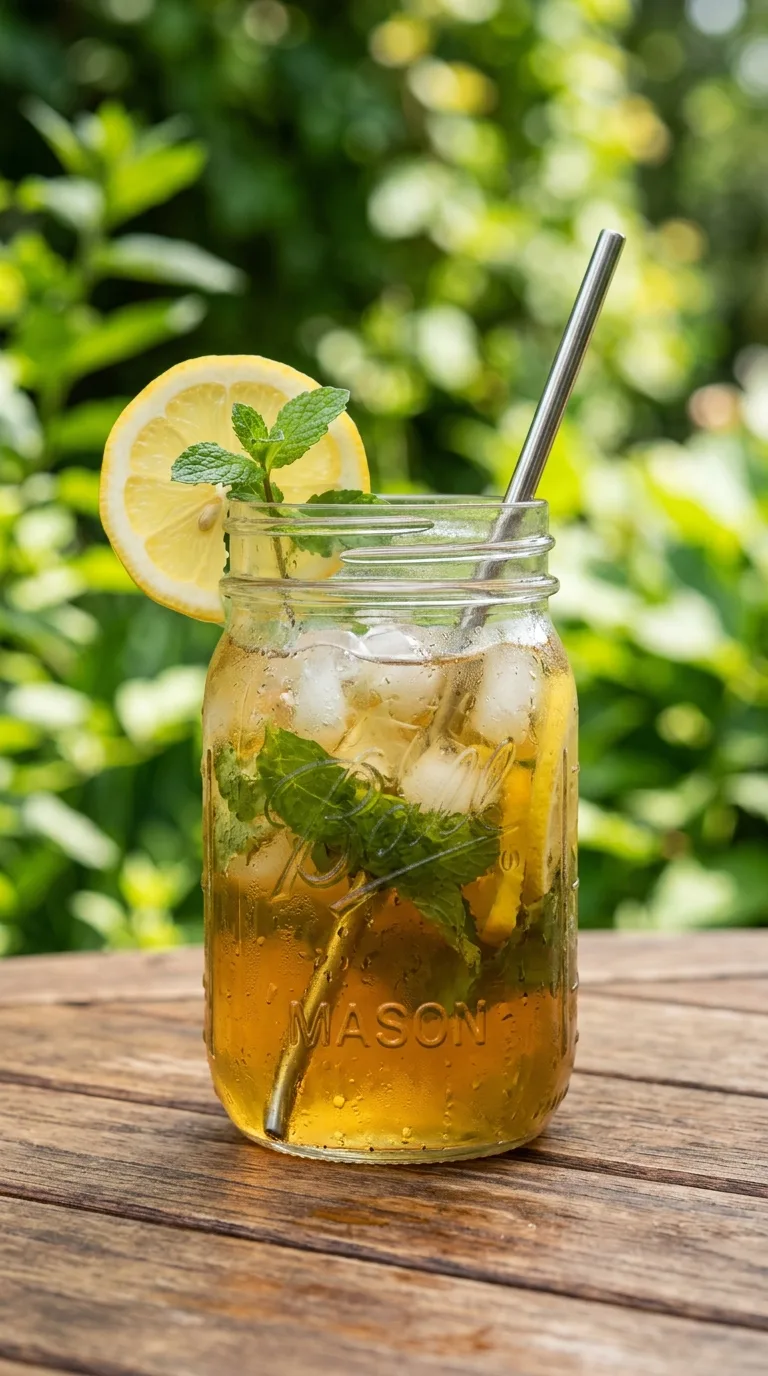
Iced is the better option on warm afternoons, and it’s also the easier way to use up a big batch. Make the hot version slightly stronger than you’d drink it, since the ice will dilute it, then pour it over a full glass of ice and add a lemon wheel and a sprig of mint. Cold-brewing works too: steep the leaves in cold water in the fridge overnight for a milder, less bitter result, though it takes longer than the hot method.
Is Lemon Balm Tea Recipe Safe? (Benefits, Weight Loss Claims, and Who Should Be Careful)
Lemon balm is caffeine-free, which is the main reason I reach for it in the evening instead of green or oolong tea. People have used it as a calming herb for centuries, and the NCCIH notes that some of its compounds interact with GABA receptors — the same receptors involved in relaxation and sleep.
A lot of the search traffic here is people looking for a weight loss effect, and I want to be straight about this: there isn’t solid evidence that drinking this lemon balm tea recipe causes weight loss on its own. It’s a pleasant, low-calorie swap for a sugary drink, and that swap can matter if you’re cutting calories elsewhere, but the tea itself isn’t a shortcut.
Who Should Be Careful
Lemon balm can interact with thyroid medication, since some of its compounds affect thyroid hormone activity. If you take thyroid medication, or you’re pregnant or breastfeeding, talk to your doctor before adding it to your routine. The NCCIH page above covers what’s currently documented in more detail.
What I Learned Testing This
I tested this lemon balm tea recipe over a few evenings last October, after my lemon balm plant had gotten huge and slightly out of control on the balcony — my downstairs neighbor actually asked what the lemony smell was when I had the windows open while it steeped. My first batch steeped for almost twenty minutes because I got distracted, and it came out bitter and a little soapy, closer to bruised grass than tea.
Ten minutes, covered, is the number that’s worked every time since. Covering the cup matters too — uncovered, a lot of the aroma just evaporates into the kitchen instead of staying in the cup.
Tips, Variations, and Herb Pairings
A few ways I change this up depending on what’s around:
- Add a few fresh mint leaves alongside the leaves for a brighter, more cooling cup, good for iced versions especially.
- Swap in a chamomile tea bag for half the steeping water if you want something even more sedating before bed; Healthline has a good rundown of caffeine-free herbal teas that pair well for sleep.
- A thin slice of fresh ginger steeped alongside the lemon balm adds warmth, which I like in the cooler months.
- Stir in a small spoonful of maple syrup instead of honey for a slightly deeper, less floral sweetness.
No Fresh Lemon Balm? Try This Instead
If you can’t find lemon balm fresh or dried, try lemongrass or a mix of lemon verbena and fresh mint for a similar citrus-mint profile. That calming effect is specifically a lemon balm trait, though, so it won’t be quite the same.
Troubleshooting
Tea tastes bitter or grassy. You steeped too long or used water that was still at a full boil. Let the water sit for thirty seconds off the heat before pouring it over the leaves, and keep steeping to around ten minutes.
Tea is weak and watery. Dried lemon balm loses potency fast once a package has been open for more than a few months. If your tea tastes like flavored water after ten minutes, your dried leaves are probably old. Buy a smaller amount more often, or switch to fresh.
Iced tea turns cloudy or separates oddly. This usually just means it cooled too slowly at room temperature before refrigerating. Cool the hot tea for a few minutes, then move it straight to the fridge to chill faster.
Tea smells great but tastes flat. Add the lemon juice and honey after steeping, not before. Heat can mute both the citrus and the sweetness if they sit in the hot water too long.
More Recipes You’ll Love
If you like brewing your own herbal teas, my raspberry leaf tea recipe is a good next one to try — it’s another fresh-or-dried option with its own seasonal angle. Ginger infusion is the one I make most in winter, since it’s warming in a way lemon balm isn’t; you can find that ginger infusion recipe here too.
For more hot and iced options, the Tea Drinks hub has everything from chai mixes to iced oolong, and that’s where I’d start if you want to build out a rotation of caffeine-free and low-caffeine drinks alongside this lemon balm tea recipe. This one’s stayed in my regular rotation since that first October batch, mostly because it’s nearly impossible to get wrong once you’ve got the timing down.
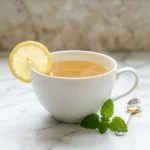
Lemon Balm Tea Recipe
Equipment
- 1 Teapot or heatproof mug
- 1 Fine mesh strainer
Ingredients
For the Tea
- 1 cup fresh lemon balm leaves, loosely packed or 1 tablespoon dried lemon balm
- 2 cups water
- 1 teaspoon honey or to taste, optional
- 1 lemon wheel for serving, optional
For Serving Iced (Optional)
- 1 cup ice cubes
- 1 sprig fresh mint
Instructions
Brew the Tea
- Bring 2 cups of water to a boil in a small pot or kettle.
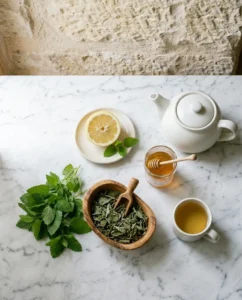
- Remove from heat and let the water sit for about 30 seconds so it is just below boiling.
- Place the fresh or dried lemon balm leaves in a teapot or heatproof mug, then pour the hot water over them.
- Cover and steep for about 10 minutes, until the tea is fragrant and lightly golden.
- Strain the tea into a clean mug or pitcher, pressing the leaves gently to release any remaining liquid.
Serve Hot or Iced
- Stir in honey if using, tasting as you go since lemon balm tea is naturally mild.
- For hot tea, pour into a mug and add a lemon wheel.
- For iced tea, pour the slightly stronger brew over a glass filled with ice and garnish with a lemon wheel and mint sprig.
Notes
Steep covered to keep the citrus aroma from evaporating.
For iced tea, brew it slightly stronger since the ice will dilute it.
Cold-brew option: steep leaves in cold water in the fridge overnight for a milder result.
Frequently Asked Questions
Is lemon balm as good as Ozempic?
No. Lemon balm tea is a caffeine-free herbal drink with a long history of calming use, but it isn’t a substitute for prescription medication like Ozempic. There’s no clinical evidence comparing the two. If you’re managing a medical condition, talk to your doctor rather than swapping medication for tea.
Is it safe to drink lemon balm tea daily?
For most healthy adults, one or two cups a day is generally considered fine. The NCCIH notes lemon balm can interact with thyroid medication, so check with your doctor first if you’re on thyroid medication, pregnant, or breastfeeding.
How to make lemon balm tea for weight loss?
There’s no special method that makes lemon balm tea work for weight loss; it’s the same steeped tea either way. It can be a useful low-calorie swap for sugary drinks, which may help if you’re cutting calories overall, but the tea itself doesn’t burn fat.
What will lemon balm tea do for you?
Mainly, it gives you a caffeine-free, citrusy herbal drink that’s traditionally used to wind down in the evening. Some of its compounds interact with GABA receptors linked to relaxation, according to the NCCIH, though it isn’t a cure for anxiety or sleep problems.
Can you make lemon balm tea with dried leaves?
Yes. Dried lemon balm works well and is what I use once my plant dies back for winter. Dried leaves are more concentrated than fresh, so use about a third of the amount you’d use fresh and steep for the same 10 minutes.
What can you use instead of lemon balm in tea?
Lemongrass or a mix of lemon verbena and fresh mint gets you a similar citrus-mint flavor. Neither has the same calming reputation as lemon balm, but both make a pleasant caffeine-free herbal tea on their own.