
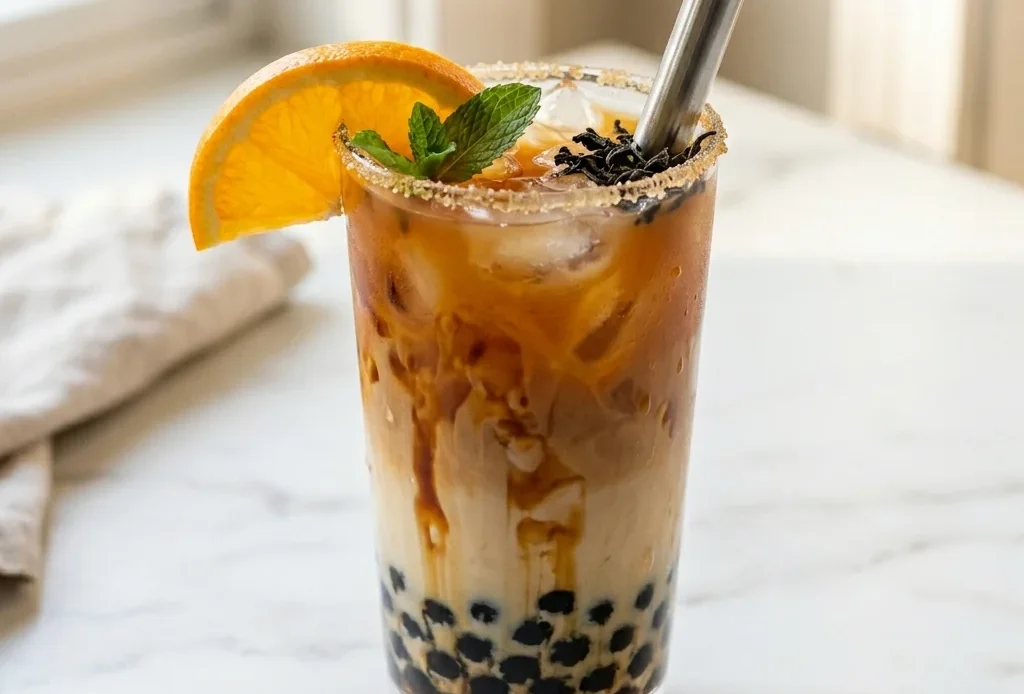
This oolong boba recipe is the one I finally landed on after way too many failed batches — bitter tea, mushy pearls, and ratios that tasted more like sugar water than a proper drink. If you want oolong boba that actually tastes like something worth making at home, you need more than a basic ingredient list. You need to know why each step works. I’ll walk you through the steep temperature that keeps your tea smooth, the difference between roasted and green oolong, and how to fix the pearl problems that wreck most homemade attempts.
What Makes Oolong the Best Tea for Boba
Oolong sits between green and black tea in terms of oxidation — typically 15–85% oxidized, depending on the variety. That middle ground gives it a complexity neither green nor black tea can match. Black tea turns sharp and tannic under milk; green tea goes grassy and thin. Oolong holds its character — you still taste the tea even after you add milk and sweetener.
The flavor profile also changes meaningfully based on the type you pick. Roasted (dark) oolong goes through a Maillard reaction during processing — the same Maillard reaction that makes bread crusts taste nutty. The result is a cup with caramel and toasted wood notes that pair beautifully with brown sugar syrup. Green oolong keeps its floral, sometimes orchid-like quality — lighter and more delicate, better with honey or a plain simple syrup.
Roasted Oolong vs. Green Oolong — Which Should You Use?
For this oolong boba recipe, I use roasted oolong. The nutty, caramel notes play directly off the brown sugar syrup and give the drink a depth that green oolong can’t quite reach in a cold milk tea context. If you prefer something lighter, green oolong with honey works — just know the flavor will be softer and the tea character more subtle once you add milk and ice.
Good roasted oolong brands to look for: Rishi Tea’s Wuyi Oolong and Te Amo’s Roasted Oolong both perform well here. If you’re shopping at an Asian grocery like H Mart, look for Dong Ding or Wuyi-style loose leaf — both are widely stocked and work reliably for boba. Love this drink? Try our classic oolong milk tea next for a simpler version without the pearls.
Key Ingredient Notes for Your Oolong Boba
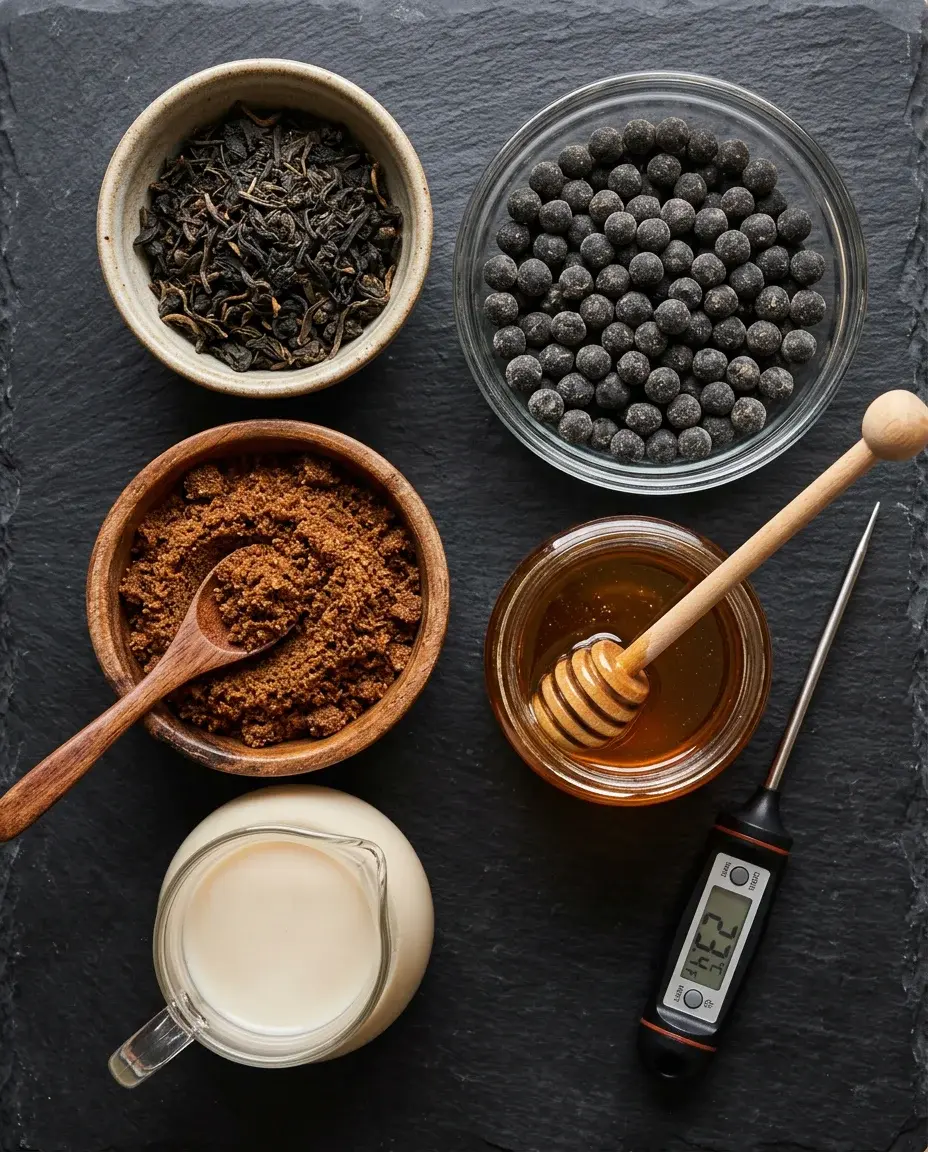
You only need a handful of ingredients, but the sourcing choices matter more than most recipes let on. For the tapioca pearls, WuFuYuan black tapioca pearls (the ones in the pink bag, widely available at H Mart and on Amazon) are my go-to. They cook predictably and hold their chewy QQ texture — that satisfying bounce Taiwanese food culture calls for — without turning to paste. Avoid quick-cook pearls if you want real texture; they go gummy fast.
Choosing Your Milk
Whole milk gives you the richest, most traditional result. For dairy-free options, oat milk is the clear winner — it produces a creamy body that doesn’t fight the tea. Almond milk adds a subtle nuttiness that actually complements roasted oolong, though it’s thinner. Coconut milk thins the tea flavor noticeably and adds its own sweetness, which can unbalance the drink unless you reduce the syrup. Stick with oat milk if you want the closest dairy-free match to the café version.
Where to Find Tapioca Pearls
Asian grocery stores are the most reliable source — H Mart, 99 Ranch, and similar shops carry multiple brands at reasonable prices. The Boba Tea Company also sells good pearls online if you don’t have a local option. Get the uncooked dried black tapioca pearls, not the pre-cooked vacuum-sealed ones, which have a different texture and don’t hold as well after sitting in syrup.
What I Learned Testing This Oolong Boba Recipe
My first serious attempt started on a rainy Saturday afternoon — I was trying to recreate a roasted oolong boba I’d had at a Taiwanese tea shop that stuck with me. I’d been skeptical you could get that same depth at home. I was wrong about the difficulty, but I made almost every possible mistake on the way to getting it right.
The worst batch came from my second attempt: I brewed the oolong tea leaves at a full rolling boil — around 212°F — because I was impatient. The tea came out so bitter I couldn’t taste anything else. Oolong should steep at 185–205°F (85–96°C). Above that, the tannins release aggressively and the tea turns harsh in a way no amount of sweetener fixes. A kitchen thermometer is worth using here — it’s not fussy, it just matters.
The pearl batch that actually taught me the most: I forgot to cover the pot during the resting phase, and the pearls turned rock-hard in the center within minutes of cooling. The covered resting step — 20 minutes off the heat with the lid on after 20–30 minutes of boiling — is what finishes cooking the tapioca starch all the way through. Skip it and you get hard centers every time.
I also learned to toss the cooked pearls immediately into brown sugar syrup after draining — that keeps them from sticking to each other and gives them that glossy, syrup-coated look you see in café drinks. When I lifted the lid after resting and smelled the toasty, faintly smoky steam coming off the roasted oolong, I knew the temperature had been right.
Calories in This Oolong Boba Recipe
A standard serving runs around 250–350 calories depending on your milk choice and how much syrup you use. Oat milk lands in the middle of that range; whole milk pushes toward the top. The tapioca pearls contribute most of the carbohydrates — roughly 30–40g per serving — since they’re made from tapioca starch. The tea itself adds almost nothing calorically.
Oolong tea contains 30–50mg of caffeine per 8oz cup — less than coffee, more than most herbal teas. If you’re making this as a morning drink or an afternoon pick-me-up instead of a coffee, that caffeine level is genuinely useful without being overwhelming. For a lower-calorie version, use unsweetened almond milk and cut the syrup in half.
Tips and Variations for Your Oolong Boba
- Steep time matters: 3–4 minutes at 185–205°F is the target window. Below 3 minutes and the tea tastes weak; above 5 minutes at any temperature and bitterness creeps in.
- Brown sugar syrup ratio: 1:1 brown sugar to water by weight — combine and stir over low heat until dissolved. This gives you a pourable syrup that coats the pearls without crystallizing.
- Green oolong swap: Sub green oolong and replace the brown sugar syrup with honey simple syrup (1:1 honey to warm water). The floral notes come through better with a lighter sweetener.
- Honey variation: Works well with both oolong types — just reduce total sweetener since honey is sweeter by volume than brown sugar syrup.
- Hot oolong boba: Skip the ice and use hot brewed tea directly. Add pearls last so they stay warm. Use a wide mug rather than a glass.
- Make it a matcha swirl: Whisk 1 tsp matcha with 1 tbsp hot water into a paste, then drizzle over the assembled drink before stirring. The earthiness pairs surprisingly well with roasted oolong.
- Fat straws are non-negotiable: Standard straws don’t fit tapioca pearls. Boba straws (12mm diameter) are available on Amazon for a few dollars and make the whole drink work the way it should.
Troubleshooting Your Oolong Boba Recipe
Pearls Are Hard in the Center
This is the most common pearl problem and it has one fix: more time. Extend the boiling phase by 5 minutes and make sure the covered resting step runs a full 20 minutes with the heat off. The resting phase — not the boiling — is what finishes cooking the tapioca starch through to the center. Lifting the lid early drops the temperature and stops the process.
Pearls Are Too Gummy or Falling Apart
Over-boiling is usually the cause. If you ran the full 30-minute boil plus resting and the pearls are still dissolving at the edges, your heat was too high or the pearls are a quick-cook variety that can’t handle extended cooking. Next batch: keep the boil at a medium rather than hard rolling boil, and check at 20 minutes. Pull them as soon as they’re translucent with a chewy (not mushy) center.
Pearls Turned Hard After Cooling
Tapioca pearls harden quickly once they cool — this is normal starch behavior, not a cooking failure. The fix is to store them submerged in brown sugar syrup at room temperature if you’re using them within 2 hours. Don’t refrigerate cooked pearls — cold hardens them almost instantly and you won’t be able to soften them back without re-boiling. Use them fresh, or make a new batch.
Tea Tastes Bitter
You brewed too hot or too long. Oolong tea releases harsh tannins above 205°F or after about 5 minutes of steeping. Pull the leaves at 4 minutes max and check your water temperature with a thermometer. If you don’t have one, let boiling water sit for 3–4 minutes before adding the leaves — it drops to roughly 190–200°F on its own.
Drink Tastes Too Sweet or Too Thin
Sweetness is easy to adjust — start with half the syrup and taste before adding more. If the drink tastes watery, you either used too much ice diluting a weak tea or under-steeped the oolong. Brew the tea slightly stronger (add an extra half-teaspoon of leaves) to account for the dilution ice creates when you pour hot tea over it.
Make-Ahead and Storage Tips
Brewed oolong tea keeps well in a sealed jar in the refrigerator for up to 3 days. Brew a full batch, cool it to room temperature, then refrigerate — cold-brewed tea can also be made by steeping oolong tea leaves in cold water for 8–12 hours in the fridge, which produces a smoother, slightly sweeter result with less bitterness risk.
Cooked tapioca pearls do not keep well long-term. Use them within 2 hours of cooking for best texture, stored at room temperature in brown sugar syrup. If you need to prep ahead, the pearl-cooking step takes about 45 minutes total — plan it as the first thing you do, then brew the tea while the pearls rest. Don’t refrigerate cooked pearls — they harden and won’t recover.
More Tea Drinks to Try
If this oolong boba recipe hit the mark, there’s more where it came from. Classic oolong milk tea is the same base without the pearls — faster to make and still worth the effort. For more ideas across the oolong family, check out more ways to use oolong tea and best teas to drink in the morning if you’re building a daily tea routine. The full collection is waiting at all our tea drink recipes — worth bookmarking if tea drinks are your thing.
Oolong Boba Recipe
Equipment
- 1 Small saucepan for cooking pearls
- 1 Fine mesh strainer for tea
- 1 Boba straws (12mm) wide straws required for pearls
Ingredients
Tapioca Pearls and Syrup
- 1/2 cup dried black tapioca pearls WuFuYuan brand recommended; not quick-cook variety
- 1/4 cup brown sugar for syrup
- 1/4 cup water for syrup
Oolong Tea and Assembly
- 2 tbsp loose-leaf roasted oolong tea Dong Ding or Wuyi-style; no tea bags
- 1.5 cups water heated to exactly 185F / 85C
- 1 cup oat milk or whole milk cold
- ice as needed
Instructions
Cook the Tapioca Pearls
- Bring a large pot of water to a boil. Add dried tapioca pearls and stir immediately to prevent sticking. Boil on a medium-high heat for 20 to 30 minutes, stirring every 5 minutes. The pearls should look translucent on the outside but may still have a small dark center.
- Remove the pot from heat. Cover with a lid and let the pearls rest for 20 minutes without opening the lid. The covered resting step — not the boiling — is what finishes cooking the starch through to the center. Lifting the lid drops the temperature and stops the process.
- Drain the pearls and rinse briefly with warm water. While still warm, toss immediately in a small bowl with the brown sugar syrup (combined and dissolved in a saucepan). Coating them right away prevents sticking and gives them the glossy, caramel-coated look.
Brew the Oolong Tea
- Heat water to 185F. If you don’t have a thermometer, bring water to a boil then let it sit uncovered for 3 to 4 minutes. Add loose-leaf oolong and steep for 3 to 4 minutes. Pull the leaves immediately at 4 minutes — longer steeping at any temperature causes bitterness.
Assemble the Boba
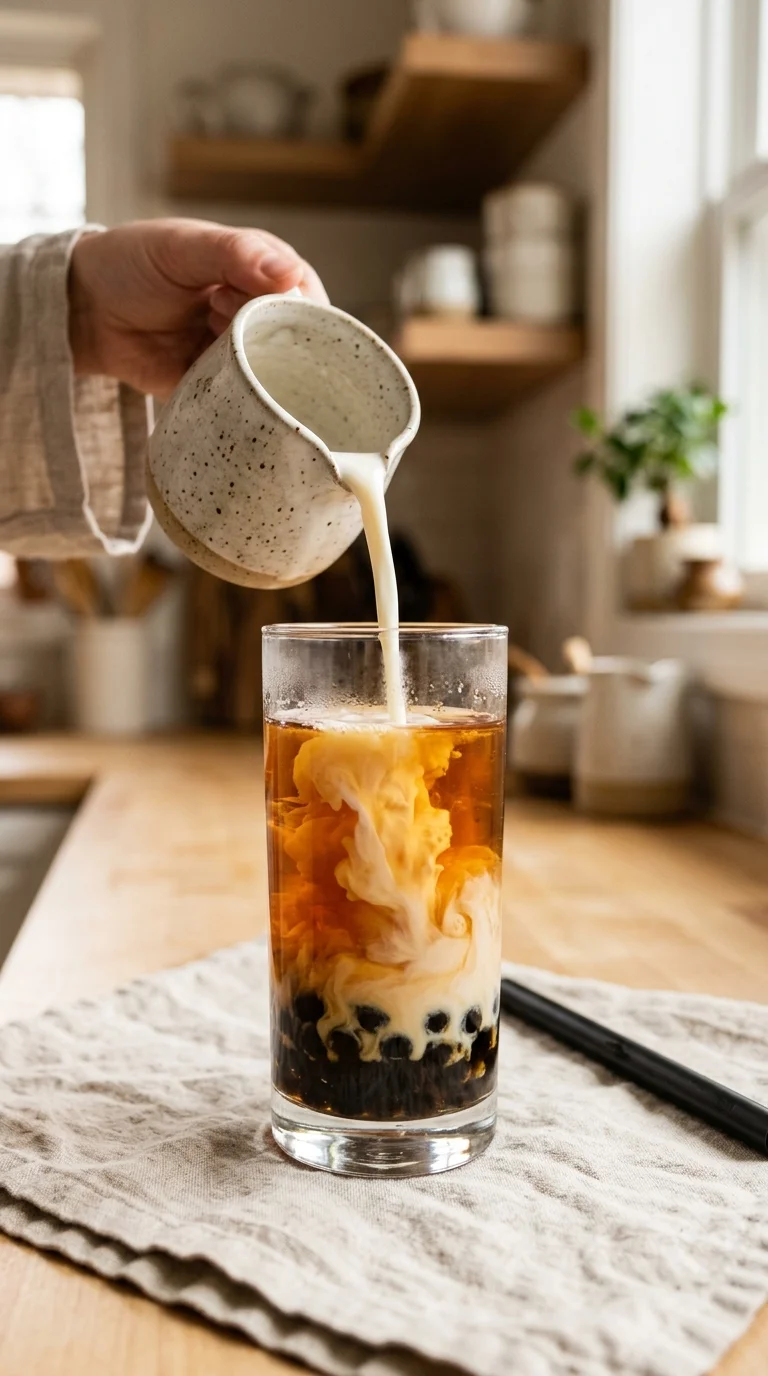
- Spoon cooked pearls into each glass. Add ice. Pour cooled oolong tea over the ice, filling the glass about 2/3 full. Top with cold oat milk. Stir gently and serve with a wide boba straw immediately.
Notes
Nutrition
Frequently Asked Questions
What is oolong boba made of?
Oolong boba is made from brewed oolong tea, cooked tapioca pearls, milk (dairy or plant-based), a sweetener like brown sugar syrup or honey, and ice. Roasted oolong is the most common tea choice because its nutty, caramel notes pair well with brown sugar.
Is oolong good for bubble tea?
Yes — oolong is one of the best teas for bubble tea. Its partial oxidation gives it a complexity that holds up under milk and sweetener, unlike green tea (which turns grassy) or black tea (which can go sharp and tannic). Roasted oolong works especially well with brown sugar syrup.
How do you make boba tea from scratch?
Brew oolong tea at 185–205°F for 3–4 minutes and strain. Boil tapioca pearls for 20–30 minutes, then rest covered off heat for 20 minutes. Make a 1:1 brown sugar syrup. Layer pearls, tea, milk, and ice in a glass. Use a wide boba straw to serve.
What type of milk is best for oolong milk tea?
Whole milk gives the richest, most traditional result. For dairy-free options, oat milk is the best choice — it produces a creamy texture without masking the tea flavor. Almond milk adds nuttiness and works well with roasted oolong; coconut milk thins the drink and adds its own sweetness.
Can you make boba without tapioca pearls?
Yes. You can substitute coffee jelly cubes, lychee jelly, or grass jelly for tapioca pearls. These alternatives have a different texture — more firm and less chewy — but they work in the same drink format and require no cooking.
What does oolong boba taste like?
Roasted oolong boba tastes warm, nutty, and slightly caramel-like from the brown sugar syrup, with a creamy body from the milk and a satisfying chew from the tapioca pearls. Green oolong boba tastes lighter and more floral. Both are less bitter than black tea boba.
How long do you steep oolong tea for boba?
Steep oolong tea for 3–4 minutes at 185–205°F (85–96°C). Shorter than 3 minutes produces weak tea; longer than 5 minutes — especially at high temperatures — releases tannins that make the tea bitter. A kitchen thermometer helps hit the right range consistently.
Is oolong boba caffeinated?
Yes. Oolong tea contains roughly 30–50mg of caffeine per 8oz cup, which is less than coffee but more than most herbal teas. A full serving of oolong boba made with 8oz of brewed tea will have a moderate caffeine level — enough for an afternoon energy boost without the jitteriness of a strong coffee.
Better than my local café and I say that genuinely. The oolong base is what elevates it.
The pearl rest technique described here finally got me consistent chewy results instead of the rubbery ones I kept making.