
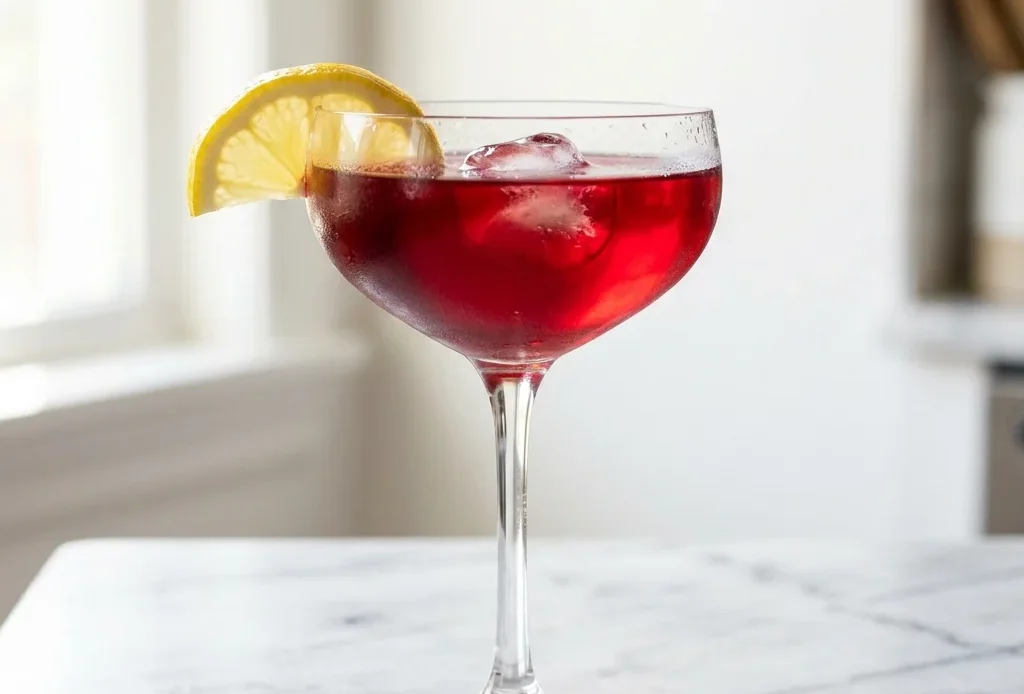
Omija is called a five-flavor berry because it genuinely tastes of five things in sequence: sour first, then sweet, then bitter, then salty, then a faint umami finish that lingers. This isn’t poetic description — it’s an actual sensory experience that’s unusual enough to notice the first time and interesting enough to want to repeat. As a mocktail, it produces a deep rose-red drink with a flavor arc that most fruit drinks don’t attempt.
This omija mocktail recipe is a cold-steeped concentrate topped with sparkling water and a squeeze of lemon. The steeping does all the work — 8 to 12 hours in cold water extracts the full flavor complexity without any heat. What you get is a vibrant, tart-forward drink that shifts as you drink it.
Why This Omija Mocktail Recipe Works
Cold steeping rather than hot brewing is essential for this omija mocktail recipe. Hot water over the berries extracts quickly but flattens the flavor progression — you get mostly sour and slightly bitter, which is interesting but one-dimensional. Cold water, given time, extracts a much wider range of compounds including the sweet and savory notes that give omija its five-flavor character.
The color alone is worth the effort. Cold-steeped omija produces a liquid that ranges from pale rose to deep crimson depending on berry quantity and steeping time. It’s visually striking in a way that’s hard to achieve without artificial coloring — the color comes entirely from the berries themselves.
A small amount of honey softens the sourness without eliminating it. Omija without any sweetener is genuinely tart — pleasant for some people, too sharp for others. The goal is to ease the initial sour hit without losing the five-flavor progression. A teaspoon of honey per glass does that without masking the complexity.
Key Ingredient Notes for Your Omija Mocktail Recipe
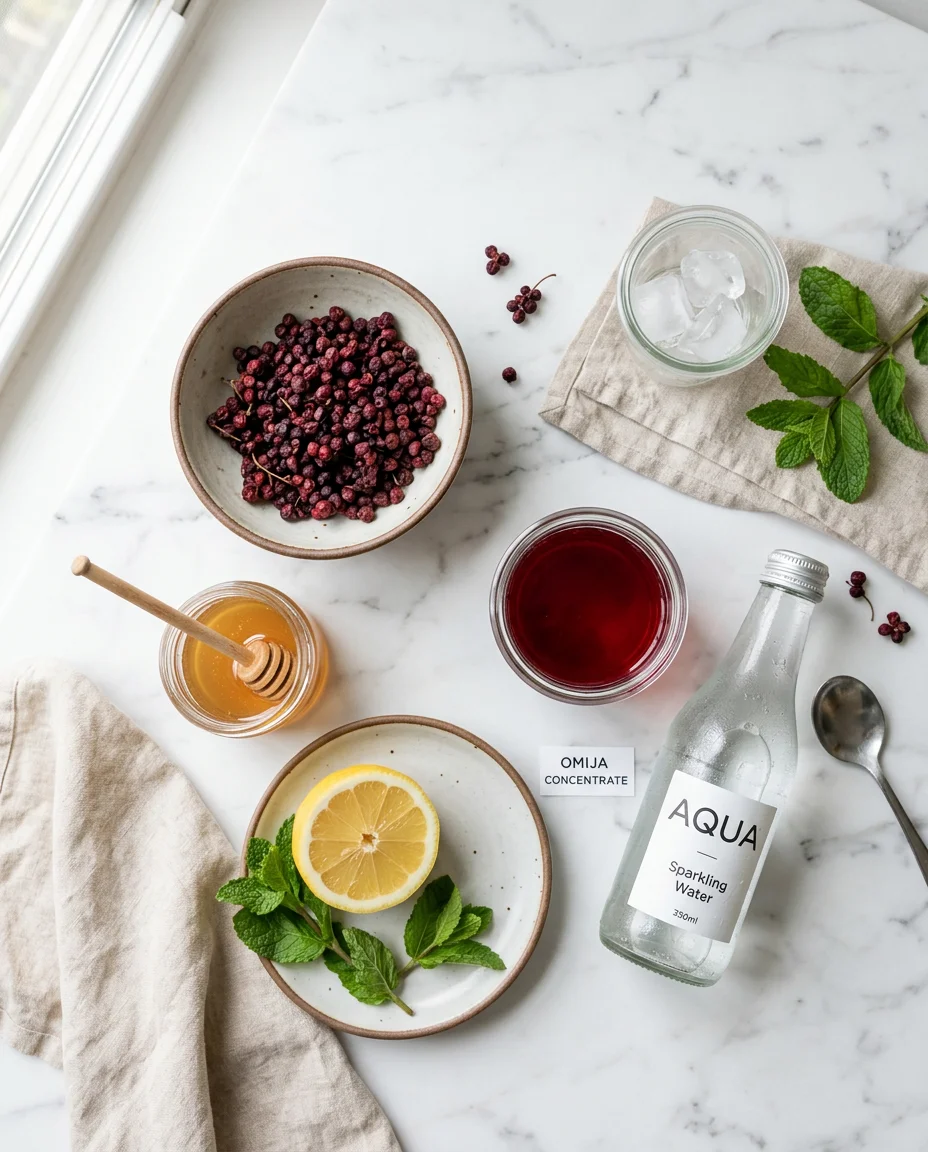
Dried omija berries: Available at Korean grocery stores and Korean traditional medicine shops (hanbang), typically in the dried goods section. Schisandra chinensis — the botanical name for omija — is also sold as a supplement at health food stores in capsule form, but use the dried berries only for this recipe. The berries are small, dark red, and wrinkled when dried. Online availability is good through Korean food retailers.
Water temperature for steeping: Cold or room temperature only — not warm, not hot. The ideal is a clean-filtered cold water. Use 20 to 25 berries per 500ml of water for a concentrate at the right strength. More berries give a deeper color and more intense flavor; fewer give a lighter result.
Honey: Light honey — acacia or clover — works best because it doesn’t add a competing flavor. The goal is to reduce the sour edge, not to add floral or buckwheat notes. Start with a small amount and add more to taste after steeping.
If the five-flavor concept interests you, the passion fruit mocktail takes a similar approach to layered flavor — though its complexity comes from a completely different source.
What I Learned Testing This Omija Mocktail Recipe
Steeping time is the main variable. Eight hours gives a light, slightly tart result with a pale rose color. Twelve hours gives a deeper crimson and a more intense flavor with a more noticeable savory finish. I prefer the 10-hour result — the flavor is present and layered but not overwhelming, and the color is a vivid ruby red that looks genuinely beautiful in the glass.
I also tested adding lemon at different ratios. A full squeeze per glass (about a tablespoon) adds clean acidity that brightens the drink considerably and makes the first sip more approachable. Less than that and the lemon is barely noticeable. I’d recommend starting with a half-squeeze and tasting before adding more.
Tips and Variations for Your Omija Mocktail Recipe
Adjust steeping time for intensity
8 hours gives a delicate, approachable drink. 12 hours gives something more complex and polarizing — the savory and bitter notes are more pronounced, which some people find fascinating and others find too unusual. If you’re making this for guests who haven’t had omija before, err toward the shorter steep and let them decide if they want more intensity.
Strain the berries thoroughly
Use a fine mesh strainer when pouring the concentrate. Omija seeds and skin fragments in the drink affect the texture in an unpleasant way. Strain slowly and press the berries gently against the strainer to extract the maximum liquid without pushing through any solids.
Serve it at room temperature
Omija tea is traditionally drunk warm in Korean traditional medicine (hanbang) practice. As a mocktail, room temperature over a single ice cube (rather than a glass full of ice) lets more of the five-flavor progression through. Very cold temperatures suppress some of the subtler notes.
Troubleshooting Your Omija Mocktail Recipe
Drink is too sour: Add more honey, a teaspoon at a time, until the sourness is where you want it. The sour note in omija is natural and part of its character — it can’t be fully eliminated, only balanced.
Color is too pale: You used too few berries or steeped for too short a time. Use at least 20 berries per 500ml and steep for a full 10 hours. The color deepens significantly with both more berries and more time.
Can’t find dried omija berries: Korean grocery stores and traditional medicine shops are the best sources. They may also be labeled “schisandra berries” at health food stores. Freeze-dried omija powder dissolved in cold water is an emergency substitute but lacks the full flavor complexity of steeped whole berries.
More Mocktails Worth Trying
- Yuzu Mocktail — Korean citrus, 3 minutes, no steeping
- Passion Fruit Mocktail — tropical depth, similar concentrate approach
- All Mocktail Recipes — complete non-alcoholic drinks guide

Omija Mocktail (Korean Five-Flavor Berry Drink)
Equipment
- 1 Fine mesh strainer
- 1 Jar or pitcher for steeping
- 2 Stemmed glasses or tall glasses
Ingredients
For the Omija Concentrate
- 25 dried omija berries schisandra berries — adjust quantity for deeper or lighter color
- 500 ml cold filtered water
Per Glass
- 120 ml strained omija concentrate cold
- 1 tsp honey light variety — acacia or clover
- 1/2 lemon juice only — about 1 tbsp
- 80 ml sparkling water plain, cold
- 1 ice cube just one — very cold is better than fully iced
- 1 wedge lemon for garnish
Instructions
Cold-Steep the Omija
- Place 25 dried omija berries in a clean jar or pitcher. Pour 500ml of cold filtered water over them. Do not use warm or hot water — cold steeping preserves the five-flavor complexity. Stir briefly to make sure all the berries are submerged.
- Cover the jar and refrigerate for 8 to 12 hours. The liquid will turn from pale pink to deep crimson as it steeps. Eight hours gives a lighter, more delicate result. Twelve hours gives an intense crimson color and more pronounced five-flavor complexity.
- Pour the steeped liquid through a fine mesh strainer into a clean jar, pressing the berries gently against the strainer to extract maximum liquid. Discard the spent berries. The strained concentrate keeps in the refrigerator for up to 3 days.
Build Each Glass
- Add 1 teaspoon of honey to 120ml of omija concentrate in a glass. Stir until fully dissolved.
- Squeeze half a lemon into the glass. Add one ice cube — keeping the drink only lightly chilled lets more of the five-flavor progression through than a fully iced drink.
- Pour 80ml of cold sparkling water gently into the glass. Stir once very lightly.
- Add a lemon wedge garnish. Serve immediately. Pay attention to the flavor as you drink — the sour note comes first, sweetness follows, then a faint bitter and savory finish that arrives well after you have swallowed.
Notes
Nutrition
Frequently Asked Questions
What is an omija mocktail?
An omija mocktail is a non-alcoholic drink made from cold-steeped dried omija berries, lightly sweetened with honey, and topped with sparkling water and lemon. Omija (schisandra berry) is a Korean five-flavor berry that produces a deep rose-red liquid with a taste that moves through sour, sweet, bitter, salty, and savory in sequence. The mocktail showcases that flavor progression in a sparkling format.
What does omija taste like?
Omija tastes of five distinct flavors in sequence — sour first, then sweet, then bitter, then a slight salty note, finishing with a faint savory or umami quality. The experience is unusual and genuinely noticeable once you are aware of it. The dominant impression is tart-forward with a complex, layered finish quite unlike any common Western fruit.
Where can I buy dried omija berries?
Dried omija berries are available at Korean grocery stores and Korean traditional medicine shops (hanbang), typically in the dried goods or herbal section. They may also be sold as “schisandra berries” at health food stores. Online availability is good through Korean food specialty retailers and on Amazon.
How long do you steep omija berries?
Cold-steep 20 to 25 dried omija berries in 500ml of cold water for 8 to 12 hours in the refrigerator. Eight hours gives a lighter, more approachable result. Twelve hours gives a deeper crimson color and more intense five-flavor complexity. Ten hours is a reliable middle ground for most tastes.
Is omija tea the same as five-flavor tea?
Yes. Omija tea and five-flavor tea (or berry tea) refer to the same drink made from schisandra berries. The name “five-flavor” (omija in Korean, wuweizi in Chinese) describes the berry’s distinctive taste profile. It is used in Korean traditional medicine and cuisine and is the same berry sold as a health supplement in many countries.
Can I hot-brew omija instead of cold-steeping?
You can, but the flavor is noticeably different — hot brewing extracts mostly the sour and bitter compounds quickly, giving a sharper, one-dimensional result. Cold steeping over 8 to 12 hours extracts a wider range of flavor compounds including the sweet and savory notes that give omija its five-flavor character. Cold steeping is strongly recommended for this mocktail.


The five-flavor berry is a genuinely interesting ingredient and this recipe uses it well. Tart, floral, slightly earthy all at once.