
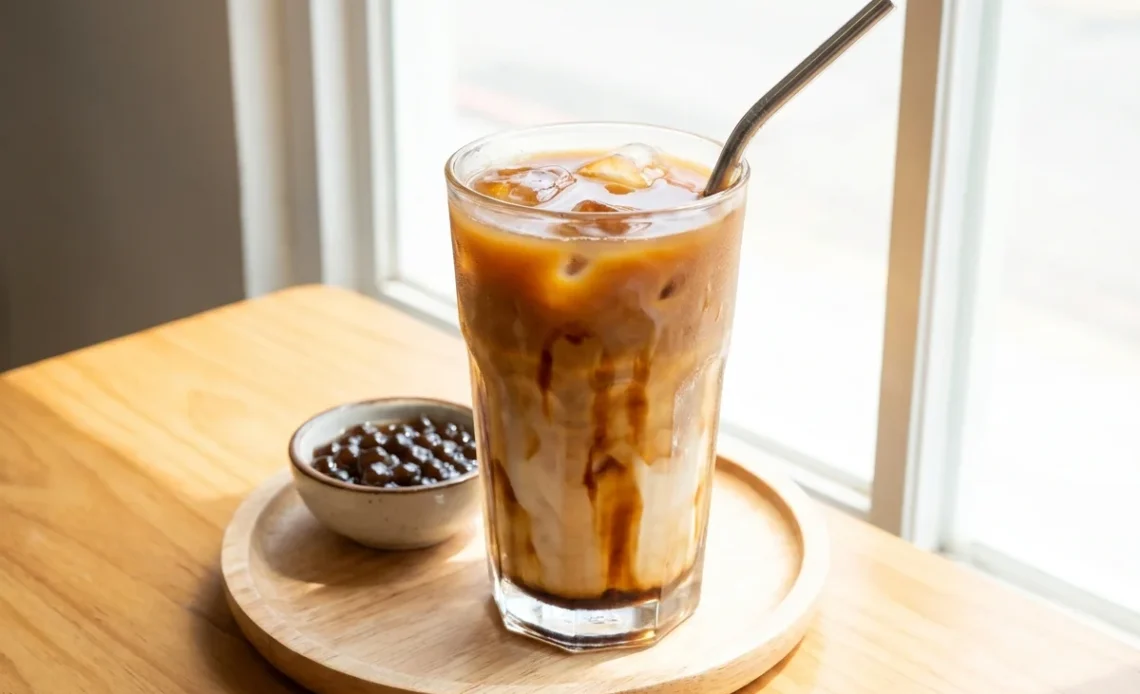
Two things trip up most oolong milk tea recipes: tea bags and boiling water. Both ruin the cup. I tested this oolong milk tea recipe over two Sunday afternoons in late January, working through a Dong Ding and a Jin Xuan I picked up from the tea aisle at H-Mart. By the second session, I had a version that matched what a good boba shop produces — fragrant, slightly creamy, no bitterness at all. The difference was temperature. Oolong needs 85°C, not a full boil.
This covers the hot base version and a cold concentrate method for iced. No tea bags. A thermometer or temperature-controlled kettle is the only gear you actually need. If you’ve browsed the full oolong tea drinks roundup and want to go deeper on milk tea specifically, this is that recipe.
Why This Oolong Milk Tea Recipe Works
Three factors separate this from most versions online.
Water temperature is the biggest one. Oolong is a semi-oxidized tea — lighter varieties carry delicate aromatic compounds that break down above 85°C. Brew at a full boil and you flatten those aromatics, push tannins forward, and end up with a bitter, one-dimensional cup. Oolong’s oxidation level ranges from roughly 15% to 85% depending on variety — that range is exactly what determines how heat-sensitive the leaves are. Stay at 85°C and the roasted or floral character comes through clearly.
Loose-leaf over tea bags is the second factor. Bags typically contain fannings — dust-grade tea that infuses fast but produces a flat, astringent result. Whole or large-cut loose-leaf oolong releases flavor gradually, and the difference in the cup is real: more dimension, less harshness.
Milk timing is third. Pouring cold milk into hot tea drops the temperature fast and mutes the aroma before you’ve even had a sip. Warming the milk first — or using room-temperature barista oat milk — keeps the fragrance alive in the cup.
Picking the Right Oolong for Milk Tea
Three varieties work well, and they produce noticeably different results. Picking the right one is worth a minute of thought before you start.
Dong Ding is the most forgiving choice. Medium oxidized, with a roasted, slightly sweet character — it holds up against milk without disappearing. This is the closest thing to what traditional boba shops use as a base. Start here if oolong milk tea is new to you.
Jin Xuan (also called Milk Oolong) is greener and more floral. It has a naturally buttery note that reads as creamy in the cup — that’s the tea itself, not an additive. Most H-Mart locations carry it in the Taiwanese tea section. It’s also available through specialty sellers like Ten Ren Tea online.
Tie Guan Yin is darker and more toasted, with a slightly drier finish. Use it when you want a roasted oolong latte profile rather than a classic milk tea. It pairs well with oat milk and brown sugar syrup.
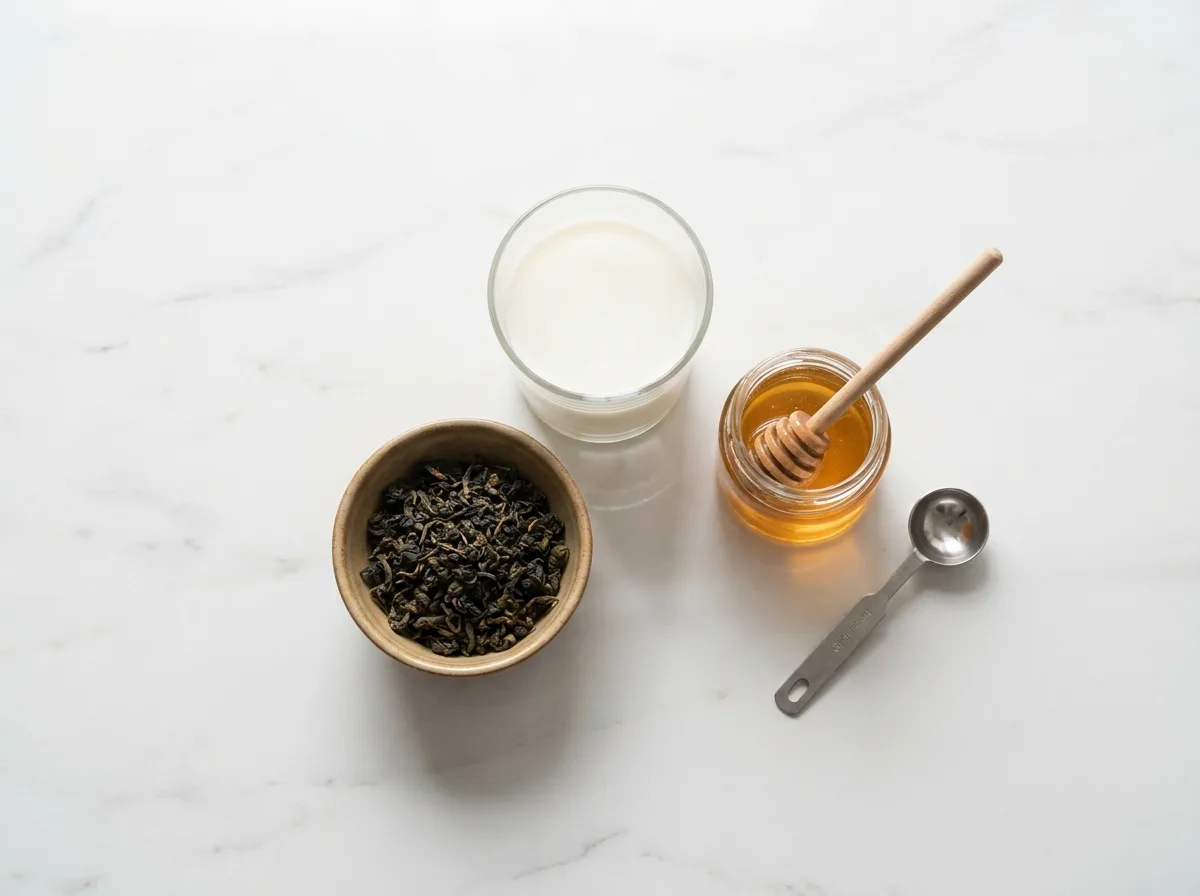
All three use the same brew parameters: 85°C, 2 minutes steep, 1.5–2 teaspoons of loose-leaf per 8 oz of water.
Key Ingredient Notes for Oolong Milk Tea
For loose-leaf oolong: H-Mart is the most accessible starting point — the Taiwanese tea section usually stocks both Dong Ding and Jin Xuan. Online, Ten Ren Tea and Jing Tea both carry quality loose-leaf without overcomplicating sourcing. Avoid anything labeled “oolong blend” — those are typically lower-grade leaves that won’t hold up in milk.
For sweetener: a 1:1 simple syrup (equal parts sugar and water, stirred until dissolved) gives you the most control. Brown sugar syrup adds a caramel note that pairs especially well with Dong Ding. Honey works with Jin Xuan, but avoid strong-flavored honeys — they fight the tea’s natural creaminess.
For milk: whole dairy milk is the default for the hot version. Barista oat milk — Oatly Barista or Minor Figures — is the best non-dairy option. Standard carton oat milk tends to turn watery in warm tea. More detail on milk options below.
How to Make Iced Oolong Milk Tea
Brew the same base — 85°C, 2 minutes — but use half the water. That gives you a concentrate that won’t dilute when poured over ice. Let it cool to room temperature before adding ice; pouring hot tea directly over ice speeds up the chill but waters everything down within seconds.
Use 4–5 large ice cubes rather than a full glass of crushed ice. More surface area means faster melt, which means faster dilution.
Cold oat milk works particularly well here. Pour the cooled concentrate over ice, add milk to taste, and stir once. For a layered look — tea sitting above the milk — pour the concentrate slowly over the back of a spoon held just above the surface.
Which Milk Works Best?
This is a real choice that changes the final cup, not a minor detail.
Whole dairy milk gives the fullest body and a clean, slightly sweet finish. Fat content softens the tannins in the tea without muting its character. This is the default for the hot version.
Barista oat milk — Oatly Barista or Minor Figures — is the best non-dairy option. Formulated to be creamier than standard oat milk, it holds up in warm tea without separating. Standard carton oat milk turns watery fast when it hits hot liquid.
Canned coconut milk adds richness but can overpower lighter oolongs. Better with Dong Ding or Tie Guan Yin than with Jin Xuan. Almond milk is too thin and brings its own flavor. Condensed milk produces a very sweet, dessert-style drink — fine if that’s what you want, but it dominates the tea and changes the character entirely.
What I Learned Testing This
I ran two sessions in late January — one Sunday afternoon with Dong Ding, one with Jin Xuan, both from H-Mart.
My first mistake with the Jin Xuan batch: I brewed it at a full boil. My kettle had no temperature setting, and I didn’t bother with a thermometer. Sharp, bitter — the naturally buttery note Jin Xuan is known for had completely disappeared. I poured it out.
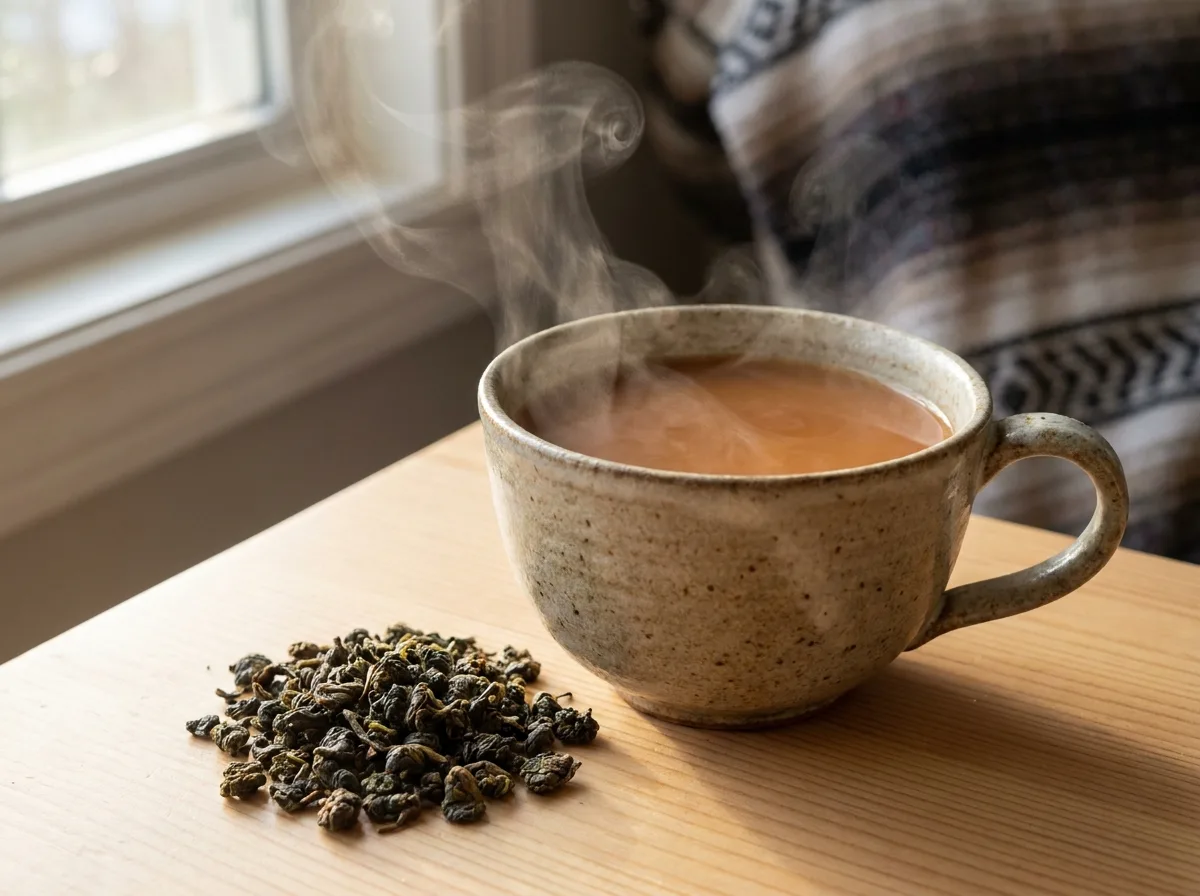
Dropping to 85°C on the second batch fixed it immediately. I used a cooking thermometer and let the boiled water rest uncovered for 90 seconds. One detail worth noting: when you add cold milk to the hot brew, you get a toasted, slightly nutty smell — not perfumed, not sweet. That’s how you know the temperature held correctly during steeping.
Steep time mattered more than I expected. Two minutes was the sweet spot for both varieties. Three minutes pushed bitterness back in, even at the correct temperature.
Tips and Variations
- Boba version: brew Dong Ding at 1.5x concentration, serve iced with cooked tapioca pearls. Use a wide straw.
- Brown sugar boba: swap simple syrup for brown sugar syrup and coat the inside of the glass before adding ice and tea.
- Oolong milk tea latte (hot): flip the ratio to 2 oz brewed tea : 4 oz frothed milk. Use a milk frother and serve in a wide mug.
- Vanilla note: add 1/2 teaspoon of vanilla extract to your simple syrup before stirring. Works especially well with Jin Xuan.
- Stronger base without more bitterness: increase loose-leaf to 2.5 teaspoons per 8 oz. Do not extend the steep — that adds bitterness rather than strength.
Troubleshooting
The tea tastes bitter. Water was too hot or steep time was too long. Keep temperature at 85°C and steep no longer than 2.5 minutes. If bitterness persists after fixing both, reduce to 1.5 teaspoons of loose-leaf per 8 oz.
The milk separated or curdled. Hot tea poured into cold milk straight from the fridge can cause this. Warm the milk first, or use room-temperature barista oat milk. Oatly Barista is specifically formulated to handle hot liquid without breaking.
Tea flavor disappeared after adding milk. Brew was too weak. For oolong milk tea, you need a stronger extraction than you’d use for straight tea. Start at 2 teaspoons per 8 oz and adjust up. Also check that you’re using loose-leaf — tea bags produce a thinner extraction that milk overwhelms easily.
The iced version is watery. Brew as a concentrate first — same amount of loose-leaf, half the water. Pouring normal-strength tea over ice dilutes it within a minute.
More Recipes You’ll Love
If you enjoyed this oolong milk tea, these are worth making next.
- Chai Tea Drink Mix — a concentrate you batch in advance, same loose-leaf approach as this recipe.
- Cherry Blossom Iced Tea — floral and lightly sweet, another iced tea worth building into your rotation.
- Oolong Tea Drinks — Full Roundup — eight oolong-based non-alcoholic drinks including cold brew and sparkling variations.
- Oolong Peach Iced Tea — the same 195°F steeping method in a cold, fruity direction, with a real look at the metabolism research behind oolong.
- Browse all tea recipes at the Tea Drinks hub.
Oolong Milk Tea Recipe
Equipment
- 1 Small saucepan or temperature-controlled kettle
- 1 Tea strainer
- 1 Kitchen thermometer optional but recommended
Ingredients
For the Oolong Milk Tea
- 2 tbsp loose-leaf oolong tea roasted (Dong Ding or Wuyi) for nutty notes; green oolong for floral
- 1.5 cups water heated to exactly 85C / 185F — not boiling
- 1/2 cup whole milk or oat milk cold
- 1 tbsp simple syrup or sugar to taste
- ice as needed for iced version
Instructions
Brew the Oolong
- Heat water to 85C — not a full boil. Boiling water makes oolong tea bitter and grassy. If you don’t have a thermometer, bring water to a boil then let it sit uncovered for 3 to 4 minutes before adding the leaves.
- Add loose-leaf oolong to a strainer over your cup or a teapot. Pour the 85C water over the leaves and steep for 3 to 4 minutes. Pull the leaves at 4 minutes — longer steeps at any temperature cause bitterness. The brewed tea should be golden-amber and smell fragrant, not sharp.
- Stir in simple syrup or sugar while the tea is still hot — cold tea doesn’t dissolve sugar well. Start with 1 tablespoon and adjust after tasting.
Assemble the Milk Tea
- For iced milk tea, let the brewed oolong cool to room temperature, then refrigerate for 20 minutes. Do not pour hot tea directly over ice — it dilutes the flavor.
- Fill a tall glass with ice. Pour in the cooled oolong tea and add cold milk. Stir gently. For hot milk tea, warm the milk separately and froth if desired before adding to the hot tea. Serve immediately.
Notes
Frequently Asked Question
What type of oolong is best for milk tea?
Dong Ding is the most forgiving starting point — medium oxidized, slightly roasted, holds up against milk without losing character. Jin Xuan adds a natural buttery note if you want something creamier. Tie Guan Yin suits darker, roasted profiles. All three use the same brew parameters: 85°C, 2 minutes steep.
Can you make oolong milk tea without a tea bag?
Yes — and loose-leaf is the better method. Tea bags typically contain fannings, the dust-grade tea that infuses fast but produces a flat, astringent cup. Whole or large-cut loose-leaf oolong releases flavor gradually and gives you more dimension. A simple infuser or fine-mesh strainer is all the extra equipment you need.
What temperature should oolong tea be brewed at?
85°C (185°F) for most oolong varieties used in milk tea. Brewing at a full boil breaks down the aromatic compounds and pushes bitterness forward. Use a temperature-controlled kettle, or bring water to a boil and let it rest uncovered for 90 seconds before pouring over the leaves. A cooking thermometer also works.
Is oolong milk tea a lighter drink than regular milk tea?
It depends on your sweetener and milk choice. Oolong milk tea made with a small amount of simple syrup and whole milk runs lighter in calories than a heavily sweetened commercial milk tea. Using barista oat milk and cutting the sweetener in half brings it down further. The tea itself has no calories — it’s what you add that changes the profile.
How long should you steep oolong for milk tea?
Two minutes at 85°C is the sweet spot for milk tea. Three minutes starts to bring bitterness back, even at the correct temperature. If you want a stronger base, increase the amount of loose-leaf — try 2.5 teaspoons per 8 oz instead of 1.5 — rather than extending steep time.
Can you make oolong milk tea with oat milk?
Yes — barista-formula oat milk works especially well. Brands like Oatly Barista and Minor Figures are formulated to be creamier than standard carton oat milk and hold up in warm tea without separating. Standard carton oat milk tends to turn watery when it hits hot liquid. For the iced version, any good oat milk works fine.
What’s the difference between oolong milk tea and boba milk tea?
Boba milk tea is oolong milk tea with cooked tapioca pearls added. The tea base is the same — typically Dong Ding or a similar medium-oxidized oolong brewed at 85°C, served over ice. Boba shops usually brew a concentrated base and add sweetener separately. The pearls change the texture and eating experience but not the flavor of the tea itself.
Does oolong milk tea have caffeine?
Yes. Oolong tea contains caffeine — it sits between green tea and black tea in terms of level. More than herbal tea, less than coffee. Adding milk doesn’t change the caffeine content. If you want to reduce it slightly, a shorter steep (90 seconds instead of 2 minutes) will extract a bit less from the same leaves.
More Oolong and Tea Recipes
- Oolong Boba — Better than the café version. The covered pearl rest explained.
- 8 Oolong Tea Drinks — Full roundup including the Mocktail Highball and cold brew.
- Chai Tea Drink Mix — Homemade mix better than store packets. Works hot or cold.
- All Tea Drink Recipes — Hot, iced, sparkling, and mocktail styles — the full hub.
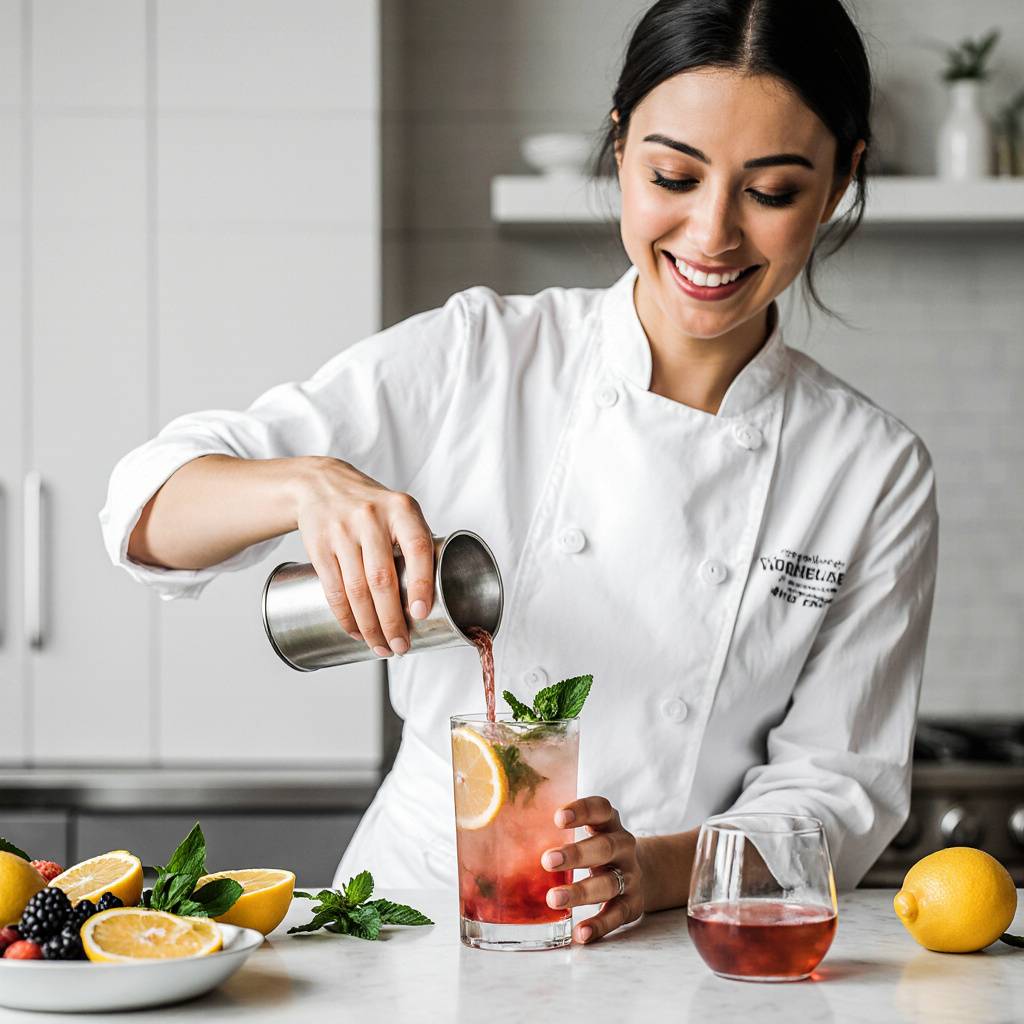
Made this last night with a taiwanese oolong I had sitting around. The 85C tip made a noticeable difference, less bitter than usual. Did the iced version and it was perfect.
Finally got my milk tea right after weeks of attempts. The temperature guidance was what I was missing.
The 85°C method makes a real difference. I used to boil it and always got a slightly astringent result. Much smoother.