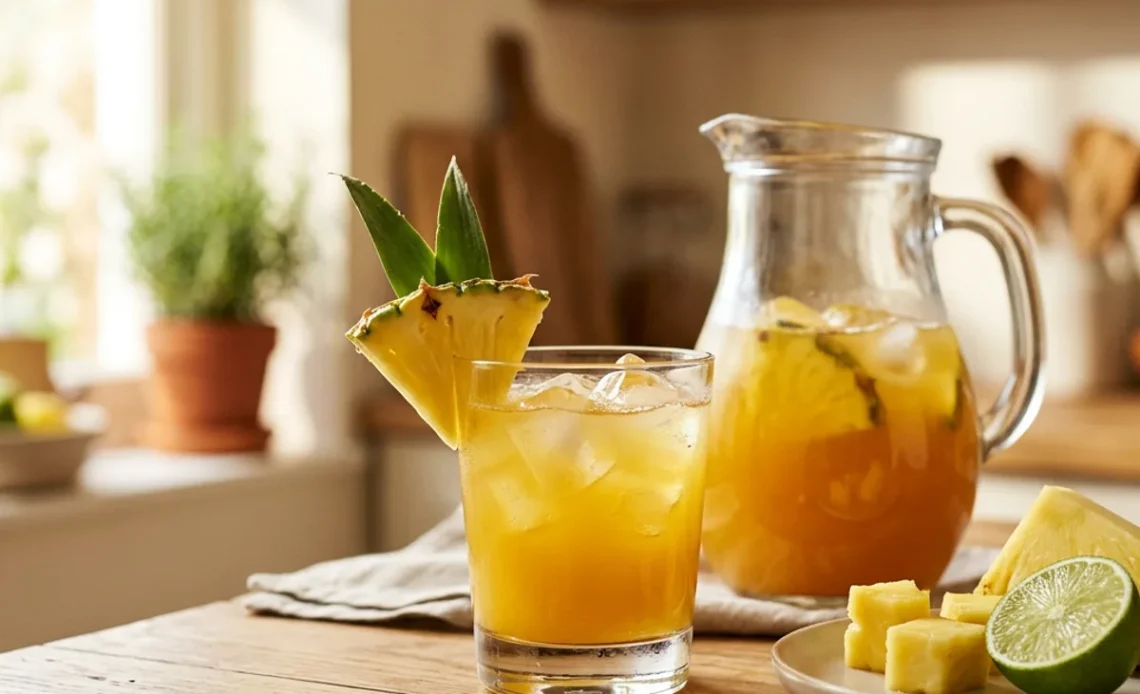
A pineapple juice recipe needs one ripe pineapple, a blender and about ten minutes. Blend the fruit with a cup of cold water, strain it or leave the fiber in, and you get a sweet, golden juice with no added sugar.
The short answer: to make pineapple juice, blend about 600 grams of ripe pineapple chunks with 1 cup of cold water for 45 to 60 seconds and add a little lime. Strain it for a smooth juice, or skip that step to keep the fruit’s fiber. It makes 3 glasses and needs no added sugar.
Why this pineapple juice recipe works
Fresh juice is made for flavor: the fruit is cut, blended and in your glass the same day. The one detail that matters is ripeness. A ripe pineapple is sweet enough that you never reach for sugar, and a pale, hard one will taste sharp no matter what you add.
You can adjust the sweetness to your taste with the water: a little less water for a stronger, sweeter juice, a little more for a lighter one.
For a citrus twist on the same idea, our homemade orange juice is just as quick to squeeze.
If you like your fruit juice even more refreshing, try our watermelon juice recipe for a juicy pink alternative.
How to pick a ripe pineapple for juice
Your nose does most of the work. Smell the base: a ripe fruit smells sweet and fruity there, while a sour or vinegar note means it is past its best. Lift it next: a good pineapple feels heavy for its size and gives only slightly when pressed, with no soft or wet patches.
Do not judge by color alone, since some ripe pineapples still look green on the outside. Fresh-looking green leaves are a better sign than the shade of the skin.
Frozen or pre-cut pineapple works too when a good whole fruit is hard to find. Thaw frozen chunks before blending, or keep them frozen for the slush variation below.
Prefer a golden juice from a vegetable instead? Our carrot juice recipe is worth a try.
Blender or juicer: how to make this pineapple juice recipe
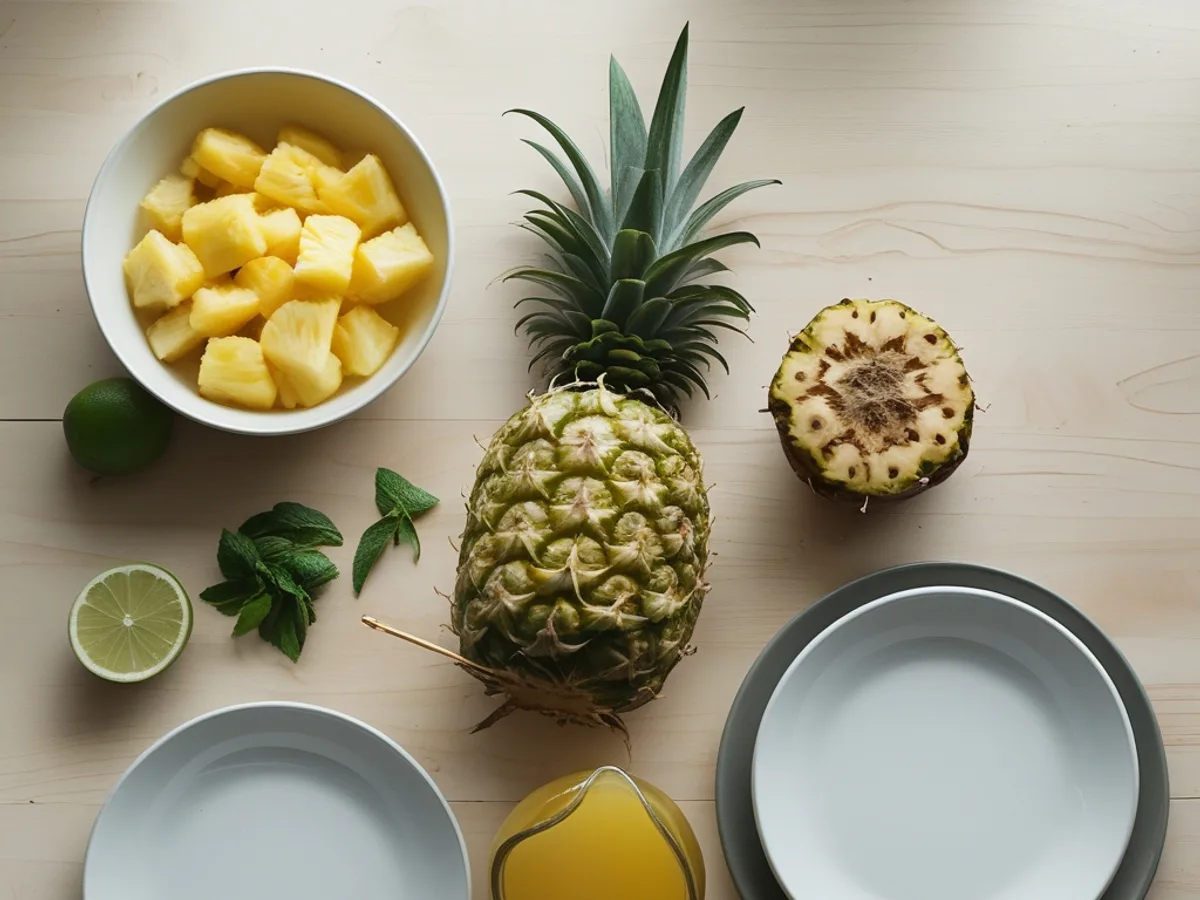
For three glasses you need 600 grams of peeled, cored pineapple (about 4 cups of chunks), 1 cup of cold water and 1 tablespoon of lime juice. You will find the step-by-step version on the recipe card at the end.
- Blender: fast and simple, and it keeps the fruit’s fiber if you do not strain the juice.
- Juicer: gives a thinner, pulp-free juice with no fiber.
- No machine: grate the pineapple and press the pulp through a fine strainer.
Pineapple juice recipe variations
| Variation | What changes | The result |
|---|---|---|
| Ginger pineapple | Blend in a thin slice of fresh ginger | Warmer, with a gentle bite |
| Mint lime | Add 8 mint leaves and extra lime juice | Cooler and brighter |
| Sparkling pineapple | Pour over ice and top with sparkling water | Fizzy and lighter |
| Slush | Freeze the chunks first and use half the water | Thick and frosty |
For another fruity glass, try our kiwi juice recipe or our nelli fruit juice recipe. If you want something creamy, our mango smoothie recipe is a good next stop.
If you want a tangier tropical glass, our passion fruit juice recipe pairs well with the same sunny flavors.
For a frozen, creamy glass, our non alcoholic pina colada recipe blends frozen pineapple with coconut milk and lime.
Prefer your pineapple thick and cold? Our tropical smoothie recipe blends it with mango and banana into a golden glass.
Tips and common mistakes
- Using an underripe fruit. A pale, hard pineapple gives a sharp juice. Wait until the base smells sweet.
- Leaving in the core. The core is tough and can leave a woody taste, so cut it out.
- Over-diluting. Start with 1 cup of water for 600 grams of fruit, and add a splash only if it is too thick.
- Straining too hard. Pressing the pulp hard pushes through fiber and a little bitterness. Press gently.
- Making it ahead. The flavor is best on day one, so make only what you will drink.
The peel and the core
I prefer to leave both out. The peel is tough and hard to scrub clean, so it stays on the board. The core is edible but fibrous: a small piece will go through a strong blender if you strain the juice afterward, while a whole core makes it woody.
One more detail: chill the whole fruit or the chunks in the refrigerator before blending. The pineapple juice then comes out cold and needs less ice, so it stays less diluted.
Mathieu M blended this exactly as written and found it delicious and easy, though a bit thin and watery. Less liquid is the change Mathieu would try, and a second batch is on the cards.
Make it lighter: the fiber and sugar tip
Pineapple is naturally sweet, so the simplest way to keep the juice light is to skip the extras:
- No added sugar. Taste first. A ripe pineapple rarely needs any.
- Keep the pulp. If you do not strain the juice, the fruit’s fiber stays in the glass, which helps the drink feel more filling than a strained one.
- Dilute a little. Using a full cup of water spreads the natural sugar across three glasses and helps keep each glass light.
What the studies say about pineapple juice
We looked for trials on pineapple juice and found nothing solid that tests it for fullness, fiber or blood sugar. The results PubMed returned were about other topics, such as flavor and satiety in general and vitamin C in fruit crops, so we do not cite them here. That is useful to know: the benefits you will read about pineapple juice online are mostly not backed by a trial on the juice itself.
What we can tell you comes from the food data. A glass of homemade pineapple juice is mostly water and fruit sugar. Enjoy it as a fresh drink, and decide for yourself how it fits your day.
Safety: who should check first
- Natural sugar. Pineapple juice carries fruit sugar. If you count carbohydrates or manage blood sugar, ask your doctor or dietitian how a glass fits.
- Acidity. Pineapple is acidic. If it bothers your mouth or stomach, dilute the pineapple juice or drink a smaller glass.
- Allergies. Pineapple causes allergic reactions in some people. Stop if your mouth itches or swells.
Nutrition and storage
One glass (one third of the recipe) works out to about 101 calories, 27 g of carbohydrate, 1 g of protein and almost no sodium. The numbers come from USDA FoodData Central values for pineapple and lime juice and stay an estimate. Nearly all of the carbohydrate is the natural sugar of the fruit.
Keep this pineapple juice recipe in a closed jar in the refrigerator and drink it within 24 hours. Stir before pouring.
Made too much? Pour the extra into an ice cube tray and freeze it. The cubes chill a glass of sparkling water or the next batch of juice without watering it down.
For more ways to use ripe fruit, see our pineapple and other fruit drinks.
Sources
Pineapple Juice Recipe: Sweet, Fresh and Made in a Blender
Ingredients
- 600 g pineapple about 4 cups of ripe, peeled and cored chunks
- 1 cup cold water 240 ml
- 1 tbsp lime juice about half a lime, optional
- 6 ice cubes optional, for serving
Instructions
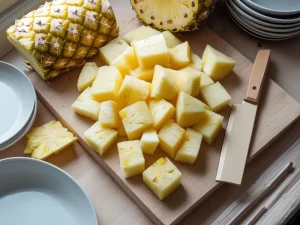
- Cut off the top and bottom, slice away the skin, and cut the fruit into quarters. Remove the tough core, then cut the flesh into chunks small enough for your blender.
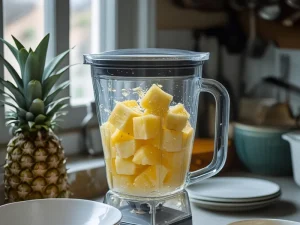
- Add the pineapple chunks, the cold water and the lime juice to the blender. Blend on high for 45 to 60 seconds, until no pieces are left.
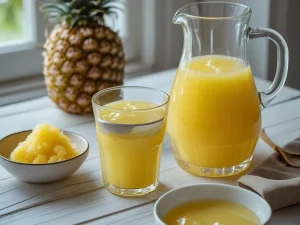
- For a smooth juice, pour it through a fine strainer and press the pulp with a spoon. For a thicker juice with fiber, skip this step. Serve over ice and drink within 24 hours.
Notes
Frequently Asked Questions
How to make pineapple juice in a juicer?
Peel and core the pineapple, cut it into pieces that fit the chute and feed them in slowly. A juicer gives a thinner, pulp-free juice. The blender method here keeps the fruit’s fiber when you do not strain it.
Can I drink pineapple juice with diarrhea?
We found no study on it. If you have diarrhea, ask your doctor what to drink. If you do try it, start with a small glass diluted with water.
Can you just eat pineapple to get bromelain?
Bromelain is an enzyme found in pineapple. We did not find a trial comparing the fruit with the juice, so we cannot say how much you get from each. Eating the fruit is the easy way, and it adds fiber.
What should you not mix pineapple with?
We know of no official list. Stick to flavors that go well with pineapple, such as lime, mint, ginger and coconut water, and taste as you go.
How long does fresh pineapple juice last?
For the best taste, drink it within 24 hours and keep it in a closed jar in the refrigerator. Fresh juice separates as it sits, so stir it before you pour.
How many pineapples do I need for a glass of juice?
About 200 grams of pineapple, one third of the fruit in this recipe, makes one glass of juice once it is blended with water.
Can I make pineapple juice without a blender?
Yes. Grate the pineapple on the coarse side of a box grater, then press the pulp through a fine strainer with a spoon. It takes longer and the juice is thinner.