
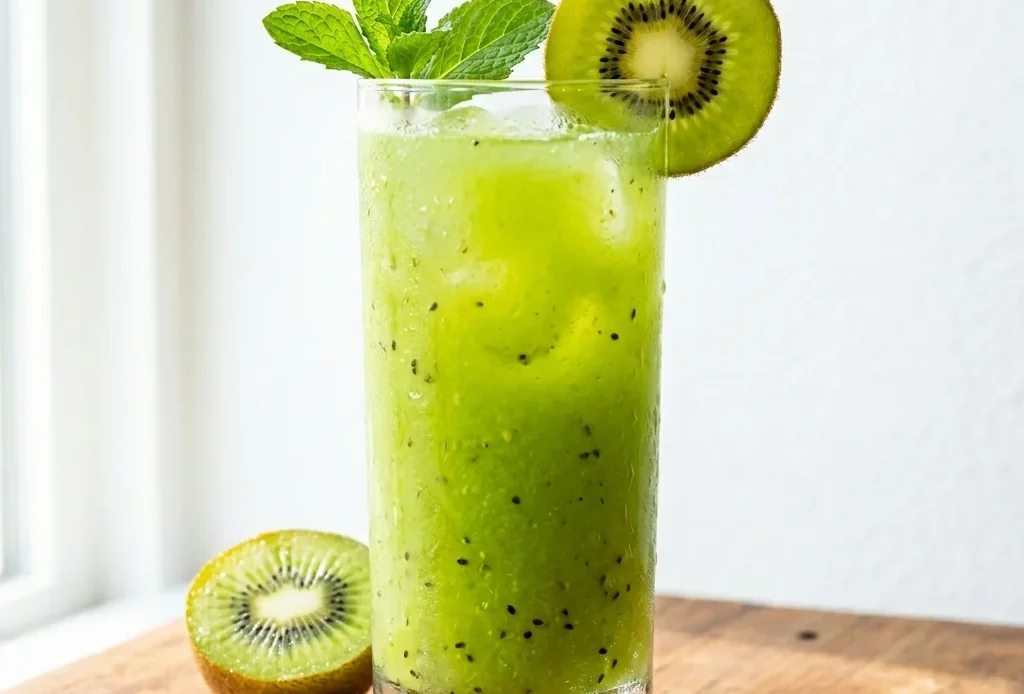
Fresh, electric-green, and done in five minutes — a good kiwi juice recipe doesn’t need a fancy juicer or a complicated process. You need ripe kiwis, a blender, and one check most quick guides skip: testing ripeness before you blend. An underripe kiwi turns the whole glass bitter, and no amount of sweetener fully rescues it.
I started making this after a particularly disappointing bottled kiwi drink I picked up at H-Mart — the kind with a cartoon kiwi on the label and actual kiwi juice listed somewhere around fifth in the ingredients. I had a bag of kiwis sitting on my counter that same weekend, bought for a fruit salad that never happened. That afternoon felt like the right time to try something better.
This version uses a blender-and-strain method that gives a cleaner, brighter result without any special equipment. Peel, blend, strain, done.
Juicer vs. Blender for Kiwi Juice — Which One to Use
You can make kiwi juice with either a juicer or a blender, and the results are genuinely different. A juicer extracts liquid cleanly — no pulp, no straining, just pure juice with a thinner texture. A blender breaks down the whole fruit, pulp included, which gives a slightly thicker result that needs one pass through a fine-mesh strainer to get smooth.
For most home kitchens, the blender is the better choice. Kiwi skin is thin and edible, so blending with the skin on is fine — it adds fiber and keeps the color deeper green. If you prefer a completely clear juice with no pulp trace, a centrifugal or masticating juicer does a cleaner job with less effort. Either way, the recipe below works for both methods.
One thing that applies to both: the kiwi must be ripe. A firm, underripe kiwi will taste bitter and sharp regardless of your equipment. Press your thumb gently against the skin — it should yield slightly, like a ripe avocado, not feel hard or spring back immediately.
Why This Kiwi Juice Recipe Works
Two things make this kiwi juice recipe reliable: ripeness and the straining step. Kiwi is naturally high in acidity — ripe fruit brings its sweetness forward and mellows that tartness. Underripe kiwi has almost no natural sugar to balance the acid, which is why so many first batches come out sharp and unpleasant.
Straining through a fine mesh removes the tiny seed fragments and most of the skin’s fuzzy texture. Both leave a slightly rough, bitter note even after thorough blending. The straining step takes thirty extra seconds and makes a real difference in both flavor and color.
Water ratio matters too. Too little and you get a thick purée. Too much and the kiwi flavor fades. The amounts in the recipe card below are the ratio I landed on after testing several batches, and it holds well across both green and gold varieties.
Key Ingredient Notes
Kiwis are the obvious star, but variety changes the result noticeably. Zespri SunGold kiwis — the golden-fleshed type — are sweeter and less acidic than standard green Hayward kiwis. Found at Asian grocery stores and some Whole Foods, they make a mellower juice that needs no added sweetener.
Standard green kiwis work fine. Press your thumb gently against the skin — it should yield slightly, like a ripe peach. Firm means underripe. Mushy means over the peak, likely fermented-tasting at the core. When in doubt, leave them on the counter for two more days.
Lemon juice does double duty. A teaspoon added before blending slows oxidation and keeps the juice a vivid green for longer in the fridge. Skip it and the color turns dull olive within an hour of air exposure.
Looking for more fruit drink ideas? The fruit drinks hub covers fresh juices, agua fresca, and blended recipes — all using the same simple, no-equipment approach as this kiwi juice recipe.
What I Learned Testing This Kiwi Juice Recipe
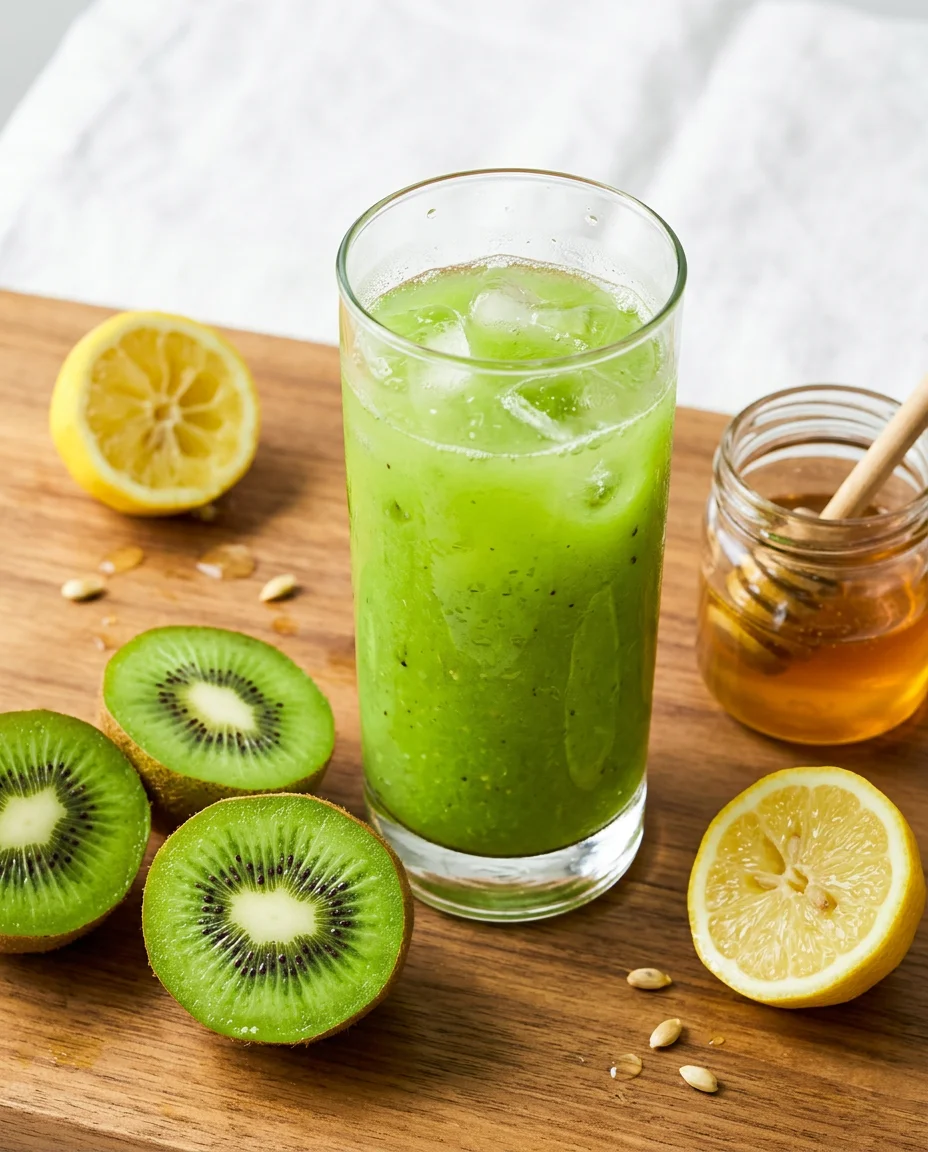
My first batch used two kiwis grabbed straight from the grocery bag — still firm, a thumbnail barely dented the skin. I blended, strained, tasted, and immediately reached for the honey. Half a teaspoon. Still sour. Added lime juice, thinking the acid would balance things. It made everything worse. I ended up pouring the whole glass down the sink.
After that, I started buying kiwis two days ahead and leaving them on the counter to ripen. When you get the timing right and open the blender lid, the smell that hits you is sharp and almost floral — a clean fruit hit that fills the kitchen instantly, nothing like the faint green note you’d expect. That smell is the signal you got it right.
I also tested three approaches: blender with straining, blender without straining, and a slow juicer run. Blender with straining won for both color and flavor. A slow juicer run left the juice slightly paler. Skipping straining left a gritty texture from the seeds that was hard to ignore past the first sip.
Calories in This Kiwi Juice Recipe
One glass made from 3 to 4 medium green kiwis runs about 60 to 75 calories before any sweetener. According to USDA FoodData Central, a medium green kiwi contains around 42 calories — so a three-kiwi glass with water comes in well under 150 calories even with a teaspoon of honey added.
Gold kiwis run slightly higher in natural sugar, so expect 80 to 90 calories per glass. Still one of the lighter fruit juices you can make at home compared to orange juice or mango blends.
I make a glass most spring mornings before anything else. At peak ripeness the kiwis are sweet enough that I skip the sweetener entirely, which keeps it closer to 65 calories. If you’re watching what you add, taste the juice first before reaching for honey.
Tips and Variations
Mint Kiwi Juice
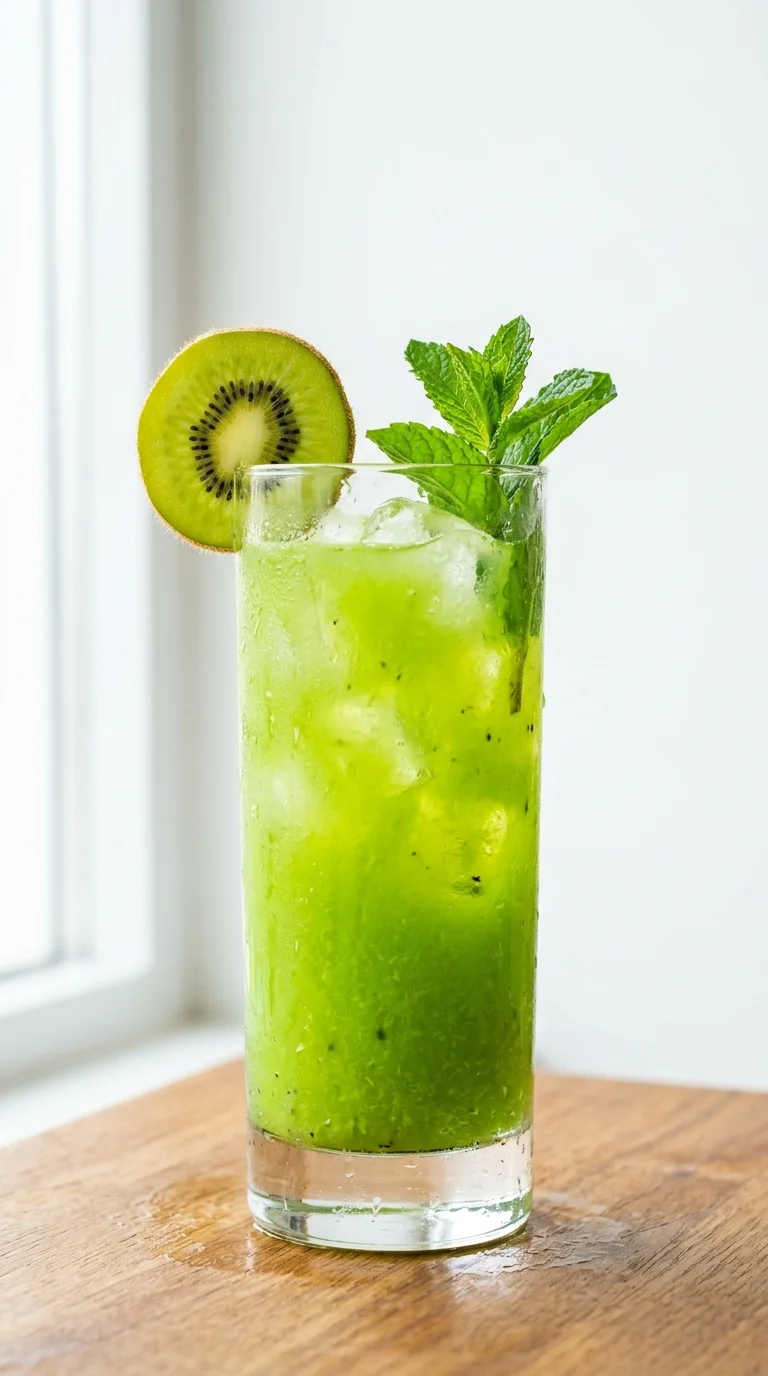
Add 4 to 5 fresh mint leaves to the blender before blending. The mint gives a cooling note that works well over ice in summer — it doesn’t overpower the kiwi, just rounds out the sharpness a little.
Kiwi-Apple Blend
Blend one small green apple with four kiwis. Apple adds natural sweetness and cuts tartness without any added sugar. This is the version I make when the kiwis are slightly less ripe than I’d like — the apple covers the gap without masking the kiwi flavor.
Gold Kiwi Version
Swap green Hayward kiwis for Zespri SunGold. You get a yellow-hued juice with noticeably more sweetness and less acid — no honey needed. Worth trying if you can find them at your local Asian grocery store or Whole Foods.
Kiwi with Lemon
Juice of half a lemon per two kiwis brightens the color and sharpens the flavor without masking the kiwi. Different from the preservation teaspoon in the base recipe — this is enough lemon to actually taste, giving the juice a citrus edge.
Frozen Kiwi Juice Cubes
Pour leftover juice into ice cube trays and freeze. Kiwi juice cubes work well in sparkling water or blended into smoothies. A good way to use a batch that’s starting to oxidize — freeze it before it goes dull rather than tossing it.
Troubleshooting Your Kiwi Juice Recipe
Tastes bitter or very sour. Almost always an unripe kiwi problem. Check ripeness before blending — the fruit should yield slightly under thumb pressure. A small amount of honey helps, but it won’t fully fix a very underripe batch. Better to wait another day.
Color turns brown or olive within an hour. Oxidation is fast with kiwi. Add one teaspoon of fresh lemon juice before blending — it slows the color change significantly. Store in a sealed glass jar, not an open container, and drink within 24 hours for the best color.
Texture is too thick or sludgy. Either too little water or not enough straining. Add water one tablespoon at a time and blend briefly. Pressing the pulp firmly with the back of a spoon in the strainer extracts more liquid and reduces the thick, pulpy consistency.
Flavor is faint, watery. Too much water, or the kiwis weren’t very ripe. Start with less water next time — 3 tablespoons per kiwi is the floor. If the kiwis are the problem, blend a fourth kiwi in and re-strain.
More Fruit Drink Recipes You’ll Love
Kiwi is one of the most rewarding fruits to juice at home — the color is vivid, the flavor is specific, and this kiwi juice recipe takes less time than a trip to a juice bar. If you want to keep going with fresh fruit drinks, there’s plenty more to try.
The fruit drinks hub has the full collection sorted by fruit and difficulty. The nelli fruit juice recipe uses a fruit that’s harder to find but worth the effort — tart, sweet, and unlike anything bottled. For something with a little more bite, the cactus fruit juice recipe is just as quick and produces a color that gets everyone in the room asking what it is. All three are built on the same simple blender-and-strain approach as this kiwi juice recipe.
Homemade Kiwi Juice Recipe
Equipment
- 1 Blender
- 1 Fine mesh strainer essential for clean texture
- 1 Tall glass
- 1 Spoon or spatula for pressing pulp in strainer
Ingredients
Main Ingredients
- 3 ripe kiwis green Hayward or gold Zespri SunGold — must be ripe, not firm
- 1/2 cup cold water adjust to thin or thicken to taste
- 1 tsp fresh lemon juice prevents oxidation — keeps juice vivid green
- 1 cup ice cubes for serving
Optional
- 1 tsp honey or agave only if kiwis need sweetening — taste first
- 4 fresh mint leaves for mint variation or garnish
- 1 slice kiwi for garnish
Instructions
Prep
- Check ripeness: press your thumb gently against each kiwi skin. It should yield slightly — like a ripe peach. If it feels firm, leave on the counter for 1-2 more days before juicing.
- Peel the kiwis completely. Slice each one in half, then cut into rough chunks. No need for precise cuts — the blender handles everything.
- Add the kiwi chunks, cold water, and lemon juice to the blender. If using honey or mint, add them now before blending.
Blend and Strain
- Blend on high for 45 to 60 seconds until completely smooth. The mixture will be thick and bright green.
- Set a fine mesh strainer over a large glass or measuring cup. Pour the blended kiwi mixture into the strainer.
- Use the back of a spoon or a spatula to press the pulp firmly against the strainer. This step extracts the remaining liquid and gives you a clean, non-gritty texture. Discard the pulp left in the strainer.
- Taste the strained juice. Add a small amount of honey if the kiwis were slightly underripe. Do not over-sweeten — the natural kiwi flavor should come through.
- Fill a glass with ice, pour the kiwi juice over the ice, and serve immediately. Garnish with a kiwi slice or mint sprig if using.
Notes
Frequently Asked Questions
Is kiwi juice good for you?
Yes. Kiwi is rich in vitamin C, potassium, and folate. One medium kiwi contains more vitamin C than a medium orange. Fresh kiwi juice delivers these nutrients quickly, though juicing removes most of the fiber found in whole fruit. Drinking it fresh within 24 hours maximizes the nutrient content.
Can you juice kiwi with the skin on?
Kiwi skin is edible and contains vitamin E, folate, and antioxidants. You can blend it with the skin intact in a high-powered blender, but the fuzzy texture can add a slightly bitter note to fresh juice. For the cleanest flavor in a strained juice, peel the kiwis fully before blending.
How long does kiwi juice last in the fridge?
Fresh kiwi juice lasts 2 to 3 days in a sealed glass container in the fridge. It oxidizes quickly — the bright green color fades to dull olive within hours if left uncovered. Adding one teaspoon of lemon juice before blending slows oxidation and keeps the color vibrant longer.
Do you need to peel kiwi before juicing?
Not strictly — kiwi skin is edible and nutritious. For fresh juice with a clean, mild flavor and minimal bitterness, peeling first gives a better result. If you’re blending into a smoothie where texture matters less, leaving the skin on is fine and adds extra nutrients.
How many kiwis do you need to make a glass of kiwi juice?
About 3 to 4 medium kiwis make one standard glass (roughly 240ml) of strained juice. Gold kiwis tend to be juicier than standard green varieties, so you may need slightly fewer. Always account for pulp left in the strainer — yield is lower than it looks before straining.
What can you mix with kiwi juice?
Kiwi pairs well with green apple, fresh mint, cucumber, lemon, and coconut water. Apple adds natural sweetness and cuts tartness. Mint adds a cooling note that works particularly well served over ice. Avoid adding strong ingredients like large amounts of ginger — they overpower the kiwi flavor quickly.
Why is my kiwi juice bitter?
Almost always an underripe kiwi. Unripe kiwi has very little natural sugar to balance its high acidity, which makes the juice taste sharp and bitter. Test ripeness before blending — the fruit should yield slightly under thumb pressure, like a ripe avocado. A small amount of honey can help, but it won’t fully fix a very underripe batch. Wait another day if the kiwi feels firm.
Can you use a juicer to make kiwi juice?
Yes. Both centrifugal and masticating juicers work for kiwi. A masticating (cold press) juicer gives a cleaner extract with better color retention and less oxidation. A centrifugal juicer is faster but produces slightly more foam. Either way, peel the kiwi first if you want a milder flavor, or leave the skin on for more fiber and a deeper green color.
More Fruit Drink Recipes
- Nelli Fruit Juice — Simple, authentic, made from Indian gooseberry.
- Cactus Fruit Juice — What I wish I knew before juicing prickly pear.
- 3-Day Juice Reset — Seven recipes and a simple daily schedule.
- All Fruit Drink Recipes — Juices, smoothies, agua fresca — the full hub.


Finally got a non-bitter kiwi juice. The ripeness check is key, I had no idea that was the issue. No juicer and still comes out silky.
Blended version came out vibrant and bright — the natural sweetness of a ripe kiwi is enough without adding sugar.