
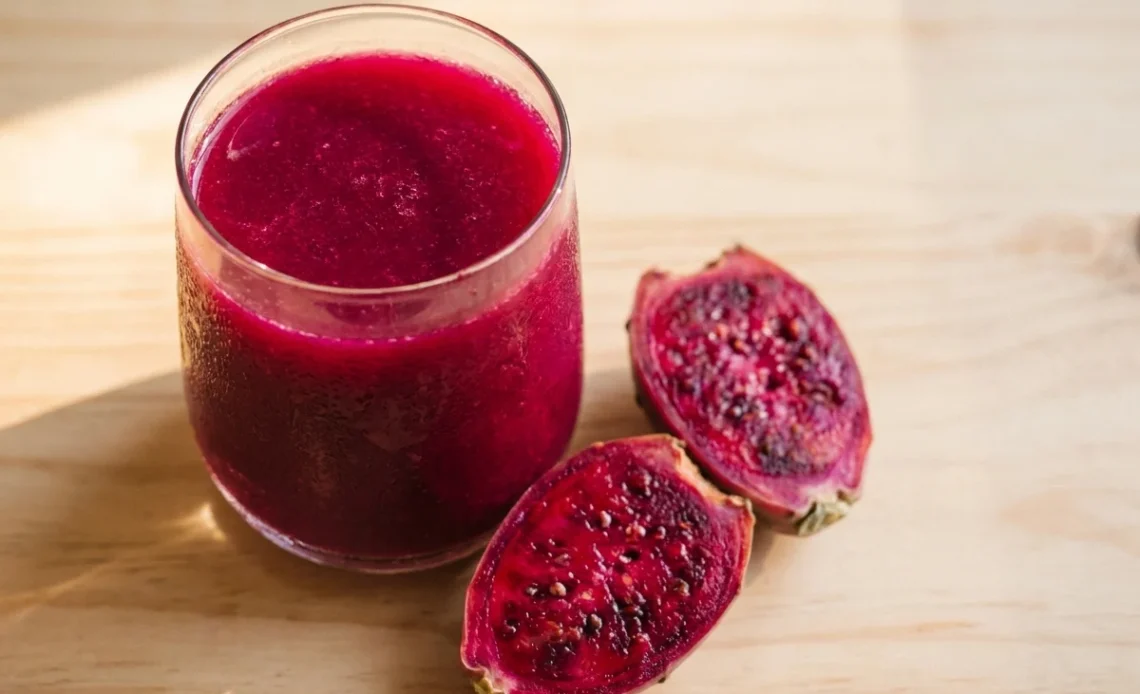
My first glass of cactus fruit juice looked like I’d spilled something fictional. The color is a deep, impossible magenta — it stained my cutting board, my blender, and two dish towels before I finished a single batch.
I first spotted cactus fruit at a Mexican grocery near my apartment in late September, after ordering a bright pink agua fresca at a restaurant down the street and having no idea what made it that color. Juicing cactus fruit at home turned out to be simpler than I expected, but there are a few things worth knowing before your first batch — about the spines, the yield, and why the juice turns brown if you’re not careful with timing.
What you’re aiming for is prickly pear cactus fruit juice that holds onto the deep magenta color and the slight earthy sweetness — not the watered-down version you get when the fruit is underripe or the strainer is too coarse. The next sections walk through how to pick the right fruit, the safest way to handle the spines, and the exact ratio I landed on after four ruined batches.
Why Juicing Cactus Fruit Works
Prickly pear flesh is mostly water, with enough natural sugar to produce a sweet, mildly earthy juice without any added sweetener. Two things make this recipe reliable: removing the outer skin before blending (not after), and straining twice. Skin-on blending adds a waxy, slightly bitter note that a single pass through a sieve will not fully remove.
That vivid magenta color comes from betalains — the same family of pigments that gives beets their deep red. Betalains are water-soluble and release the moment you cut into the fruit. Ripe, dark-skinned prickly pear produces the striking color you’re after; an underripe pale-pink fruit gives you a dull, washed-out result no matter how carefully you juice it.
How to Pick Ripe Cactus Fruit
Look for fruits with deep red to dark purple skin — not pale pink and definitely not green. A ripe prickly pear gives slightly when pressed, similar to a ripe avocado. Rock-hard fruit needs two to three days on your counter before it’s ready to juice.
Size varies by variety. Smaller fruits tend to be sweeter; larger ones give more juice but can be slightly tart. When juicing cactus fruit, budget four to five medium fruits for about 3/4 cup of strained juice. For a full two cups, use eight to ten fruits.
Key Ingredient Notes
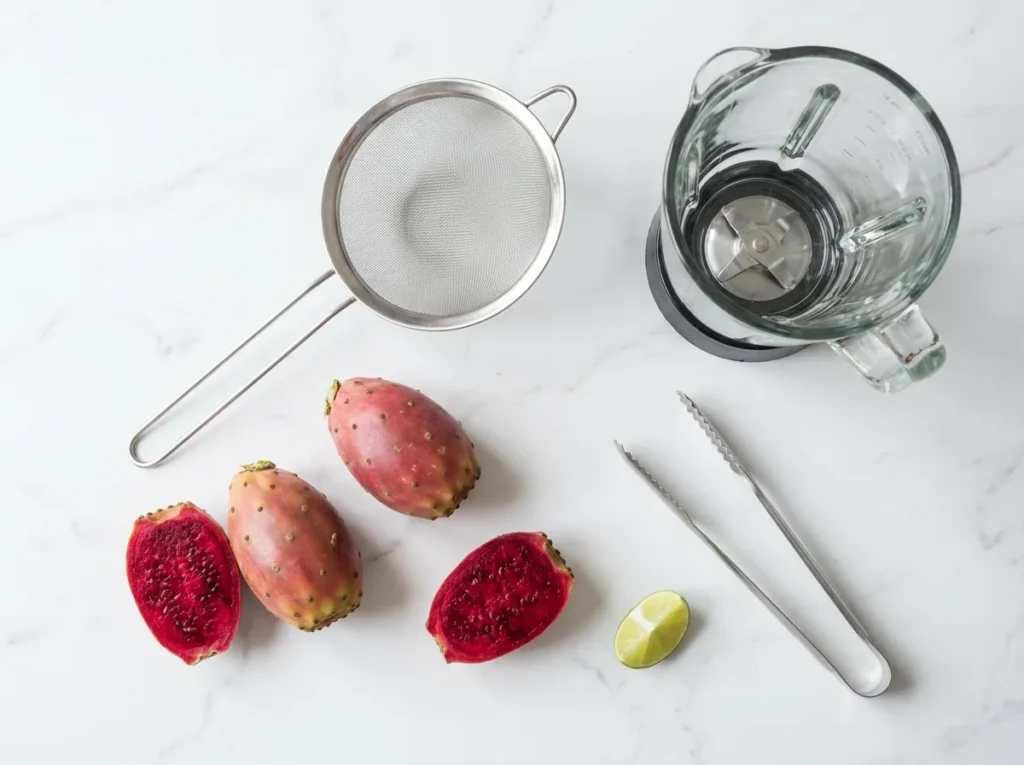
Ripe cactus fruit (prickly pear) is the only essential ingredient. In the US, it turns up reliably at Mexican and Latin groceries, usually sold loose in the produce section by the kilo or by the piece. Some Asian markets carry them in late summer and early fall. Specialty grocers stock them seasonally. Prickly pear spans dozens of species — for juice, look for varieties with deep red interiors (Opuntia ficus-indica types); they give the best yield and that distinctive color.
Fresh lime juice is optional but worth adding. A teaspoon per cup stops oxidation and brightens the flavor without making it taste citrusy. If you have no lime, a small squeeze of lemon does the job.
For juicing cactus fruit at home, a standard countertop blender is all you need. A fine-mesh metal sieve is non-negotiable. Metal tongs or thick kitchen gloves are mandatory — the glochids on the fruit skin are nearly invisible and unpleasant to find in your fingertips an hour later.
What I Learned Testing This
I tested three batches on a Saturday in early October, starting with four fruits each time. My first mistake was skipping the gloves. I used a folded kitchen towel to hold the fruit while cutting, and by the second one I had a cluster of glochids — hairlike micro-spines — embedded in the heel of my hand. They’re nearly invisible and take a solid ten minutes with tweezers to deal with. Switching to metal tongs for every step until the skin was fully off made juicing cactus fruit completely manageable.
Yield is lower than you’d expect. Four medium fruits gave me about 3/4 cup of strained juice — enough to taste, not enough to fully satisfy. Start with eight fruits minimum if you want a real serving.
Is Cactus Fruit Juice Healthy?
Prickly pear has a solid nutritional profile for a juice base. According to USDA FoodData Central, raw prickly pear comes in at roughly 42 calories per 100g, with natural sugars as the primary carbohydrate. It provides vitamin C, magnesium, and some potassium.
The betalain pigments that make cactus fruit juice so striking have been studied for antioxidant and anti-inflammatory properties. Research indexed on PubMed shows measurable antioxidant activity in laboratory conditions, though large-scale human trials are still limited. As a juice option, it compares favorably to apple or grape juice — better color, more micronutrient variety, similar natural sugar content.
Tips and Variations
Juicing cactus fruit gives you a base that works well on its own and takes well to mixing. A few variations worth trying:
- Mix juice with sparkling water in a 1:3 ratio for a light, fizzy cactus fruit spritzer
- Add lime juice and a pinch of sea salt for a quick agua fresca-style drink
- Blend a few fresh mint leaves with the fruit before straining for an herbal twist
- Pair with coconut water and a splash of passion fruit for an easy mocktail base
- Freeze strained juice in ice cube trays and drop cubes into lemonade or iced tea
- Pale, dull-pink juice means underripe fruit — replace the batch rather than trying to fix it with sweetener
If you’re deciding between a blender, a centrifugal juicer, or doing it by hand, here’s how the three methods stack up from my own testing across batches.
| Method | Yield (per 4 fruits) | Cleanup | Clog risk | Verdict |
|---|---|---|---|---|
| Blender + fine strainer | 3/4 cup | Easy — strainer rinse | Low (seeds stay whole) | Best for home cooks |
| Centrifugal juicer | 1 cup | Hard — pulp clogs blade | High (pulp jams chute) | Skip — not worth the cleanup |
| Manual masher + cheesecloth | 1/2 cup | Moderate — cheesecloth toss | None | Best for small batches or no power |
Troubleshooting
Juice turned brown quickly
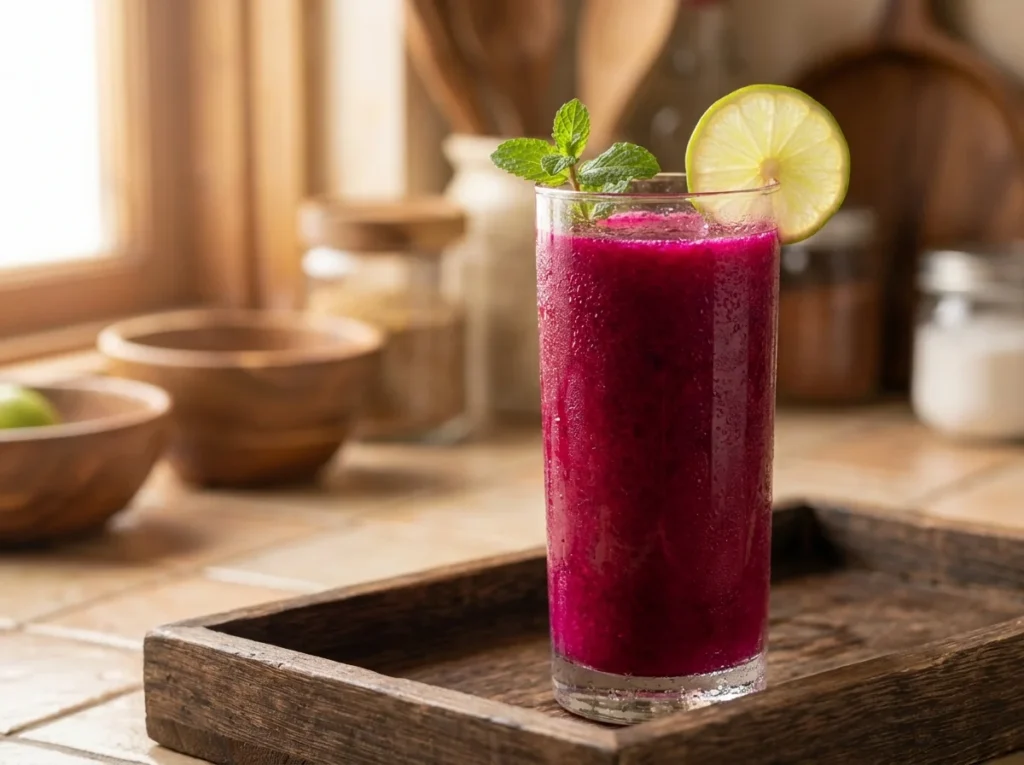
Oxidation moves fast on prickly pear — the magenta starts dulling within twenty minutes if the juice sits open. Squeeze in half a lime per cup right after straining and refrigerate in a sealed jar. The acid slows the color shift and adds a citrus edge that fits the agua de tuna profile.
Juice tastes bitter
Bitterness comes from underripe fruit — a green tinge near the stem is the giveaway. Fully ripe tunas are deep magenta with no green left, and they yield to gentle thumb pressure. If you already blended a bitter batch, mix it 1:1 with ripe-fruit juice and a splash of agave to rebalance.
Yield was much lower than expected
Smaller fruit and dehydrated fruit both drop yield — I once got barely half a cup from four small grocery-store tunas. Look for fruit that feels heavy for its size and has plump, slightly soft skin. Larger Mexican-variety tunas from a Latin grocery typically give 3/4 to 1 cup of juice from four fruits.
More Recipes You’ll Love
If juicing cactus fruit gave you a taste for vibrant homemade juice, here are three more from the kitchen. Each one carries the same approach: real testing notes, exact ratios, and honest failures.
- Fruit drink recipes — the full pillar of homemade juices, agua frescas, and smoothies.
- Nelli Fruit Juice Recipe — another off-the-beaten-path fruit juice with a similar discovery story.
- Cherry Blossom Iced Tea — same vibrant-pink visual energy, this time from sakura petals and white tea.
- Jungle Juice Recipe — Tangy, Bright, and Ready in 5 Minutes
Prickly Pear Cactus Fruit Juice
Equipment
- 1 Thick kitchen gloves or metal tongs essential for handling cactus fruit safely
- 1 Sharp knife
- 1 Blender
- 1 Fine-mesh sieve used twice for a clean result
- 1 Large bowl
- 1 Airtight glass jar for storage
Ingredients
For the Juice
- 8 medium cactus fruits (prickly pear) ripe, deep red-purple skin
- 1 tbsp fresh lime juice about 1/2 lime, freshly squeezed
For Serving
- ice cubes optional
Instructions
Prepare the Cactus Fruits
- Put on thick kitchen gloves or keep metal tongs in hand at all times before touching the cactus fruit. Never handle with bare hands — glochids (hairlike spines) are nearly invisible and embed instantly in skin on contact.
- Hold each fruit with tongs and rinse it under cold running water while rolling it slowly to dislodge surface glochids. Repeat the rinse at least twice per fruit before moving on.
- Use a sharp knife to cut off both ends of each fruit. Score the skin lengthwise from end to end, then use the knife tip to peel the skin away completely. Discard all skin — no skin should remain on the flesh before blending.
Juice the Fruit
- Roughly chop all peeled fruit into chunks and place them directly into the blender. Do not add water — the fruit contains enough natural moisture to blend on its own without diluting the flavor.
- Blend on medium speed for 15 to 20 seconds only. Stop at the 20-second mark — over-blending crushes the seeds and releases bitter compounds into the juice that cannot be strained out.
- Pour the blended fruit through a fine-mesh sieve set over a large bowl. Press firmly and steadily with the back of a spoon to push as much juice through as possible. Discard the remaining solids.
- Rinse the sieve, then pass the collected juice through it a second time. This removes remaining seed fragments and gives the juice a smoother, cleaner texture.
Finish and Serve
- Immediately stir in 1 tablespoon of fresh lime juice right after the second straining. This slows oxidation, keeps the color vibrant, and brightens the natural sweetness of the prickly pear.
- Taste and adjust — add a small squeeze more lime if needed. Serve immediately over ice for the best color and flavor. To store, pour into an airtight glass jar with a layer of plastic wrap pressed directly onto the juice surface, then refrigerate for up to 24 hours.
Video
Notes
Ripeness: deep red-purple skin = ripe and ready. Pale pink = underripe — leave on the counter 2 to 3 days before juicing.
Oxidation: juice turns brown quickly if left uncovered at room temperature. Add lime immediately after straining and always store in an airtight jar.
Bitterness fix: if juice tastes bitter, reduce blending to 15 seconds max next time and always strain twice.
Frequently Asked Question
How do you juice cactus fruit at home?
Peel the cactus fruit using tongs and a knife — never bare hands — chop the flesh, and blend for 15–20 seconds on medium speed. Strain twice through a fine-mesh sieve. Add fresh lime juice immediately after straining to stop oxidation. No juicer required.
Do you need to remove the skin before juicing cactus fruit?
Yes. Always remove the skin before blending. The outer skin carries a waxy, slightly bitter flavor that straining won’t fix. Cut off both ends, slice the skin lengthwise with a knife tip, and peel it away before the fruit goes into the blender.
What does cactus fruit juice taste like?
Cactus fruit juice is mildly sweet with a lightly earthy, subtly floral background. It’s not as sharp as citrus and not as intense as beet juice. The flavor is gentle — closer to watermelon juice in character. The color is far bolder than the taste suggests.
Is cactus fruit juice good for you?
Prickly pear juice contains vitamin C, magnesium, and betalains — pigment compounds with antioxidant properties. It’s lower in calories than most commercial fruit juices and provides more micronutrient variety than standard apple juice. A reasonable everyday juice option for most people.
How do you get rid of the spines on cactus fruit before juicing?
Use metal tongs throughout until the skin is fully off. Roll each fruit under cold running water with tongs to dislodge surface glochids, cut off both ends, then peel the skin away with the knife tip. Never touch the fruit with bare hands until the skin is completely removed.
Can you juice cactus fruit without a juicer?
Yes — a countertop blender works better than a juicer for cactus fruit. Blend the peeled flesh for 15–20 seconds, then strain twice through a fine-mesh sieve. A juicer can clog on the sticky pulp; the blender-and-sieve method is more practical and easier to clean.
How long does cactus fruit juice last in the fridge?
Freshly strained cactus fruit juice keeps for up to 24 hours in an airtight jar in the refrigerator. Add lime juice right after straining to slow oxidation. After 24 hours the color dulls and the flavor flattens — safe to drink but noticeably less vibrant.
What is the best way to strain cactus fruit juice?
A fine-mesh metal sieve pressed with the back of a spoon, run twice. First pass removes large seed fragments and pulp; second pass clears finer particles that cause bitterness. Cheesecloth works as a substitute if no sieve is available, though it’s slower.
How do I make cactus fruit juice?
To make cactus fruit juice, peel four ripe prickly pear tunas with tongs, blend them on low with 1/4 cup water for fifteen seconds, then strain through a fine-mesh sieve to catch the rock-hard seeds. Four medium tunas yield about 3/4 cup of magenta juice. Squeeze in lime right after straining to keep the color vivid.
Last updated: April 27, 2026
For more drinks in this style, browse the complete Fruit Drink Recipes collection.
I used to eat this fruit, but I’ve never used it in a juice. I’ll try this recipe thank you!
The spine removal guide was actually what I needed, I’ve been nervous to try prickly pear for ages. Took me 20 minutes total and the color is insane.
Sourced prickly pear at a farmers market and followed this exactly. The straining step is essential — don’t skip it.
The magenta color alone is worth making this for. The flavor is mild but beautiful — really striking in a glass.