
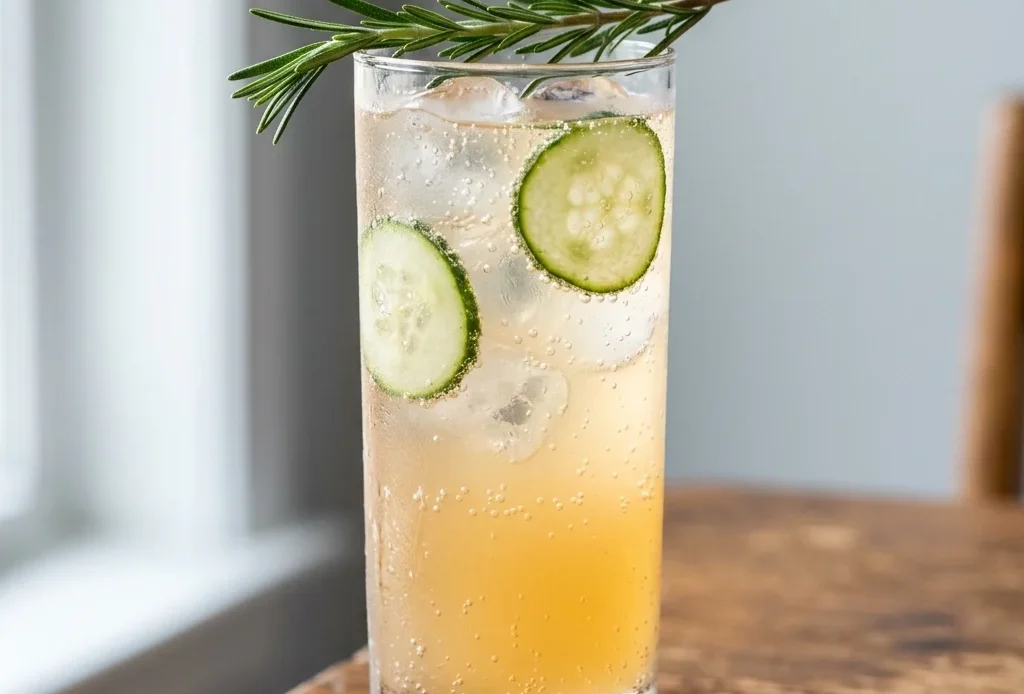
The first time I used yuja-cheong in a yuzu mocktail, I stirred in two tablespoons and immediately thought it was too much. The flavor was punchy, almost overwhelming on its own. Then I poured in the sparkling water and it transformed — the carbonation stretched it into something light and citrus-bright, complex in a way that lemon or lime can’t quite match on their own. If you have been looking for a great yuzu mocktail recipe recipe, this is it.
Yuja cheong is a Korean honey-citrus preserve made from yuzu (called yuja in Korean), sugar, and honey. One jar does the work of citrus juice, zest, and sweetener combined. For a yuzu mocktail, it means fewer ingredients, less prep, and a flavor depth that’s genuinely hard to replicate with fresh fruit alone.
Yuzu Mocktail Recipe: Why This Yuzu Mocktail Works
Yuzu has a flavor profile that sits between grapefruit, Meyer lemon, and mandarin — tart and floral at the same time, with a slight bitterness in the background that keeps it from reading as just “citrusy.” That complexity is what makes a yuzu mocktail more interesting than a straightforward lemon spritz.
The yuja-cheong preserve carries both the juice and the zest, which means the yuzu flavor is full rather than one-dimensional. When you stir a tablespoon into sparkling water, the oils from the preserved zest disperse through the drink and add an aromatic layer that’s noticeable on the nose before the first sip.
Cucumber and rosemary might seem like unusual additions, but they serve a specific purpose. Cucumber slices add a clean, cool note that cuts through the sweetness of the yuja-cheong. Rosemary sharpens the floral quality in the yuzu rather than competing with it. Together they make the drink feel more sophisticated without adding complexity to the prep.
Yuzu Mocktail Recipe: Key Ingredient Notes for Your Yuzu Mocktail
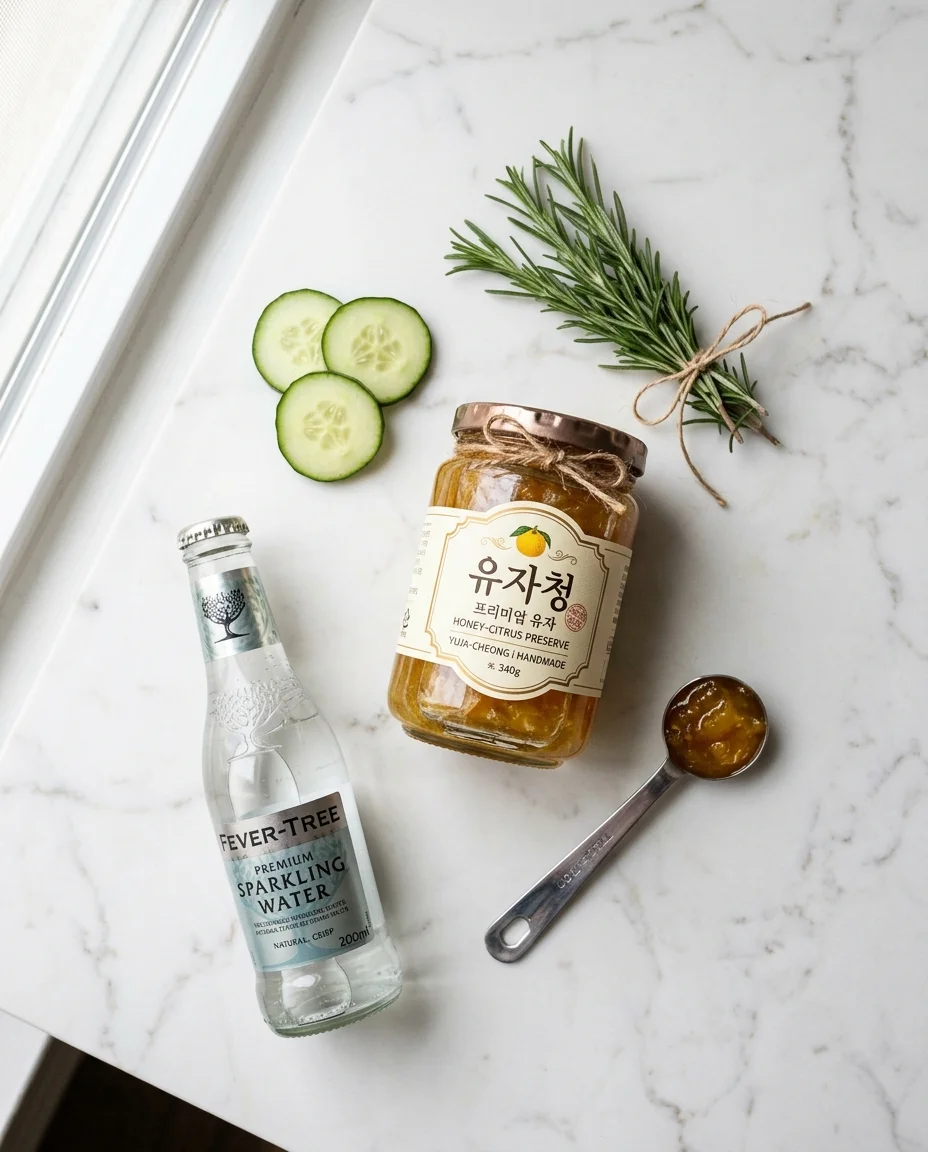
Yuja-cheong (yuja tea / honey citrus preserve): Look for this in Korean grocery stores or Asian supermarkets, usually in the tea aisle. The jar will say “yuzu honey” or “yuja citron tea” in English. Online options include Amazon and Korean specialty food retailers. The preserve is thick and marmalade-like — the rind pieces are edible and can go into the glass or be strained out depending on preference.
Sparkling water: Use plain sparkling water rather than tonic or club soda. Tonic adds its own bitterness and flavor that competes with the yuzu. Plain sparkling water lets the preserve speak for itself. A higher carbonation level keeps the drink more effervescent throughout — brands like Gerolsteiner or San Pellegrino work well.
Cucumber and rosemary: Fresh is the only option here. A dried rosemary sprig tastes medicinal rather than herbal. Cut the cucumber into thin slices just before serving — pre-cut cucumber sitting in water starts tasting flat within twenty minutes.
Looking for another fruit-forward mocktail with real depth? The passion fruit mocktail uses a similar approach — a concentrated flavor base that opens up in sparkling water.
Yuzu Mocktail Recipe: What I Learned Testing This Yuzu Mocktail
Ratio matters more than I expected. One tablespoon of yuja-cheong per 200ml of sparkling water is the sweet spot — enough flavor to be distinct but not so much that the sweetness dominates. Two tablespoons makes it feel like a juice rather than a spritz. Less than one tablespoon and the yuzu barely comes through the carbonation.
I also tried making a large batch by stirring the preserve into a full bottle of sparkling water. It worked, but the carbonation flattened faster than individual glasses because of all the stirring. For groups, I now stir the yuja-cheong into a small amount of still water first to dissolve it, then top with fresh sparkling water per glass. The result stays effervescent much longer.
Tips and Variations for Your Yuzu Mocktail
Garnish adjustments
The cucumber and rosemary combination is the default, but it’s not the only option. Thin slices of fresh ginger add heat and pair well with the citrus notes. A small strip of lemon peel (without the white pith) reinforces the citrus profile. Mint works if you prefer a cooler, more refreshing direction over the floral one.
Adjusting sweetness
Yuja-cheong is already sweetened with honey. If you want a less sweet yuzu mocktail, reduce the preserve to half a tablespoon and add a squeeze of fresh lemon juice to maintain the citrus intensity. This gives a slightly tarter, more dry profile that works well as a food pairing drink.
Where to serve it
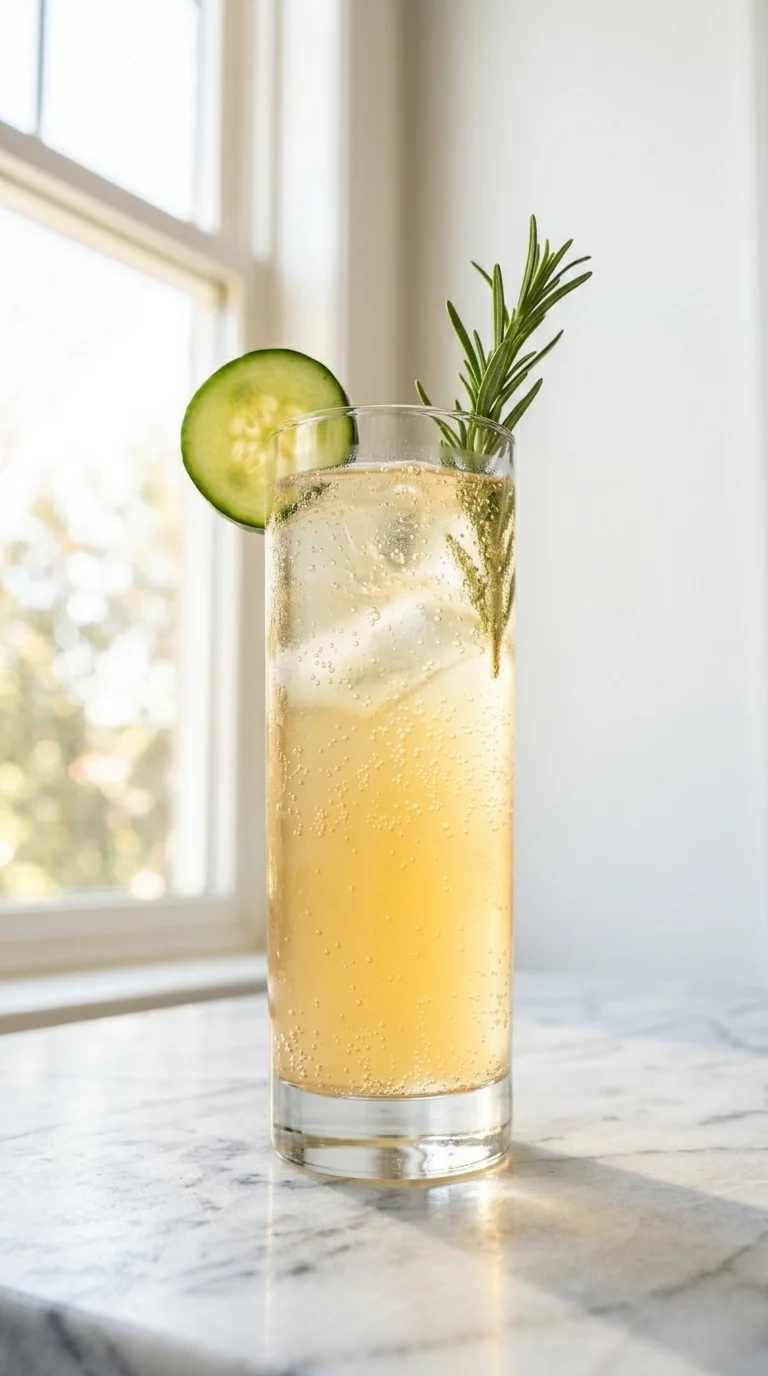
The yuzu mocktail is naturally elegant — pale yellow-orange color, herbal garnish, tall glass. It works as a welcome drink before a dinner party because it looks impressive and the flavor is interesting without being polarizing. Most people who try it ask what the ingredient is, which opens a good conversation.
Troubleshooting Your Yuzu Mocktail
Too sweet: Reduce the yuja-cheong to half a tablespoon and add a small squeeze of fresh lemon juice. The lemon adds tartness without changing the yuzu character significantly.
Can’t find yuja-cheong locally: Order online — it’s widely available on Amazon and from Korean food retailers. Alternatively, a combination of yuzu juice (sold in small bottles at Japanese grocery stores) and a small amount of honey makes a workable substitute, though the flavor is flatter without the preserved zest.
Drink goes flat quickly: You’re stirring too vigorously. Stir the preserve into a small amount of still water first to dissolve it, then pour cold sparkling water over the top rather than stirring it in. This preserves most of the carbonation.
More Mocktails You’ll Love
If the yuzu mocktail is your kind of drink, try these next:
- Passion Fruit Mocktail — tropical and bright, same sparkling water approach
- Mocktail Aperol Spritz — bittersweet and bubbly, great for similar occasions
- All Mocktail Recipes — the complete non-alcoholic drinks guide
This yuzu mocktail recipe is best served fresh — flavors are brightest right after assembly.
Yuzu Mocktail Recipe (Yuja Citrus Spritz)
Equipment
- 1 Tall glass
Ingredients
For the Yuzu Mocktail
- 2 tbsp yuja-cheong (Korean yuzu honey preserve) available at Korean grocery stores; look for yuja-cheong or yuja-cha in the tea aisle
- 6 oz cold sparkling water high-carbonation brand
- ice as needed
- 2 leaves fresh mint optional garnish
Instructions
Build the Drink
- Place 2 tablespoons of yuja-cheong in a tall glass. On its own it tastes punchy and concentrated — that’s correct. The carbonation stretches it into something balanced and bright.
- Fill the glass with ice over the yuja-cheong.
- Pour cold sparkling water slowly over the ice. The carbonation will lift the yuja-cheong upward as it dilutes — stir gently from the bottom once to combine.
- Taste before adding more. If you want a stronger yuzu flavor, add another teaspoon of yuja-cheong and stir. If it’s too sweet, add a small squeeze of fresh lemon to balance.
- Add 2 mint leaves if using. Press them gently against your palm first to release the oils. Serve immediately.
Notes
Nutrition
Frequently Asked Questions
What is a yuzu mocktail made of?
A yuzu mocktail is made from yuja-cheong (Korean honey-citrus preserve), sparkling water, ice, and garnishes like cucumber and rosemary. Yuja-cheong is a thick marmalade-like preserve that combines yuzu juice, zest, sugar, and honey — it does the work of citrus juice and sweetener in one ingredient.
What does yuzu taste like in a mocktail?
Yuzu has a layered citrus flavor — tart like grapefruit, floral like Meyer lemon, and slightly bitter at the finish. In a mocktail, it reads as a more complex and aromatic citrus than standard lemon or lime. The floral and zesty notes are most noticeable in the aroma before the first sip.
Where can I buy yuja-cheong?
Yuja-cheong is sold in Korean grocery stores and Asian supermarkets, usually in the tea or condiment aisle. It may be labeled “yuzu honey,” “yuja citron tea,” or “yuzu tea.” It is also widely available online through Amazon and Korean food specialty retailers.
Can I substitute yuzu juice for yuja-cheong?
Yes, but the result is flatter. Yuzu juice is sold in small bottles at Japanese grocery stores and some specialty food shops. Use it with a small amount of honey to approximate the preserve. You will lose the depth from the preserved zest, which contributes both flavor and aroma to the drink.
Is a yuzu mocktail alcoholic?
No. A yuzu mocktail is fully non-alcoholic — it is made entirely from yuja-cheong, sparkling water, and garnishes. It contains no wine, spirits, beer, or alcohol-derived ingredients of any kind.
How long does yuja-cheong keep after opening?
Opened yuja-cheong keeps in the refrigerator for up to 6 months. The high sugar content acts as a preservative. Store it in an airtight glass jar and use a clean spoon each time you serve from it.


Made this alongside the omija mocktail for a Korean-themed dinner and both were complimented throughout the evening.
Three minutes and it looks and tastes like something from a serious cocktail bar. The carbonation level is just right.
The yuzu citrus is harder to find fresh but the bottled juice works really well here. Bright, floral, and genuinely distinctive.