

A jar of strong, dark tea sitting in the fridge means a glass of iced tea is always five seconds away, no kettle, no steeping, no waiting. This homemade tea concentrate recipe is the batch-prep trick I wish I’d started years earlier, since one jar covers a whole week of glasses instead of starting from scratch every single time.
Why This Homemade Tea Concentrate Recipe Works
A concentrate is just tea brewed at double or triple normal strength, meant to be diluted with cold water or ice right before drinking rather than served as-is. Brewing it strong up front means each glass only needs a splash of concentrate topped with water, which is faster than steeping a fresh batch every time and uses far less counter space than a full pitcher.
The dilution ratio depends on how the tea was brewed and how strong you like it, but a good starting point is one part concentrate to three parts water. Black tea concentrate can usually take a bit more water than green tea, since green tea’s flavor gets lost faster when diluted too far.
Bitterness in the concentrate itself almost always comes down to tannins, the same compounds responsible for the dry, puckery feeling in a glass of red wine. A tannin’s astringent effect is a real, documented property of tea, and it gets stronger the longer and hotter the tea steeps. This homemade tea concentrate recipe avoids that by using more tea bags for strength instead of steeping longer, keeping the bitterness down even at full potency.
Key Ingredient Notes
Any tea works here, but black tea makes the most versatile base since it holds up well against both dilution and sweetener. Green tea concentrate is more delicate and best used within a couple of days, since its flavor fades faster than black tea’s does.
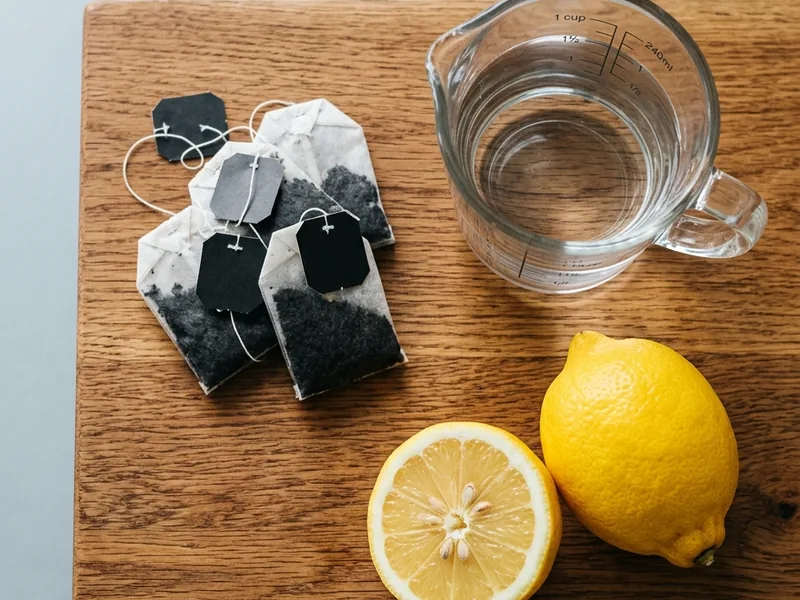
Loose leaf tea gives a cleaner flavor than bagged, but bagged tea is far more practical for a concentrate meant to be strained and stored, since fishing out dozens of loose leaves from a full jar gets tedious fast. Filtered water matters more here than in a single cup, since off-flavors get concentrated right along with the tea.
Sweetener is entirely optional, but if you’re adding it, do it while the concentrate is still hot rather than after it’s chilled. Sugar and honey both dissolve almost instantly in hot tea and stay grainy or separated in cold, which is a small detail that makes a real difference once the jar goes in the fridge.
What I Learned Testing This
I started making this homemade tea concentrate recipe on a Sunday evening last spring, mostly out of frustration with how much counter space a full pitcher of iced tea took up in a kitchen that didn’t have much to spare. My first batch used way too many tea bags for the amount of water, and the concentrate came out so strong that even heavily diluted, it still tasted more like steeped tea leaves than tea.
Cutting the tea bags back by about a third on the second batch fixed it completely, landing on a strength that held up to dilution without needing to be babied. The smell while it steeps is sharper and more concentrated than a regular cup, almost like walking past an actual tea shop instead of making tea at home.
A few weeks in, I settled into a Sunday habit: brew a fresh jar of this homemade tea concentrate recipe while doing something else in the kitchen, let it cool, and forget about tea entirely until the jar runs low again. It’s not a dramatic change to how the week goes, just one less small decision to make every afternoon.
Tips and Variations
A few things make this homemade tea concentrate recipe more reliable batch to batch:
- Start with a 1:3 concentrate-to-water ratio and adjust from there to taste.
- Sweeten the concentrate itself while it’s still warm, since sugar dissolves faster in hot liquid than cold.
- Add a few slices of fresh ginger or a cinnamon stick to the steeping water for a spiced variation.
- Store in a glass jar rather than plastic, since glass doesn’t hold onto flavors from whatever was in it before.
Troubleshooting This Homemade Tea Concentrate Recipe
- Tastes bitter even diluted: too many tea bags steeped too long. Use fewer bags next time rather than steeping longer for strength.
- Flavor is weak after diluting: not enough tea bags for the water used. Increase the bag count rather than steeping longer.
- Concentrate turns cloudy: normal with some teas once refrigerated, especially if sweetened. It doesn’t affect flavor or safety.
- Tastes flat after a few days: tea concentrate loses brightness over time. Use within 5 to 7 days for the best flavor.
This homemade tea concentrate recipe also scales up easily for a crowd or a longer stretch without refilling. Double the tea bags and water proportionally, brew in a larger pot, and store in more than one jar if a single one won’t fit in the fridge door.
More Recipes You’ll Love
If this homemade tea concentrate recipe earns a permanent spot in your fridge, the chai tea drink mix works on a similar make-ahead principle for a spiced, milkier drink. Both live in the full tea drinks collection, and both save real time once they’re part of the weekly routine.

Homemade Tea Concentrate
Equipment
- 1 Glass jar or pitcher for storage
- 1 Kettle or saucepan
Ingredients
For the Concentrate
- 8 black tea bags
- 2 cup water for steeping
- 2 tablespoon sweetener of choice optional, sugar or honey
- 1 wheel lemon for garnish
- 1 sprig fresh mint for garnish, optional
Instructions
Brew the Concentrate
- Bring the water to a boil.
- Remove from heat, add the tea bags, and steep 5 to 7 minutes.
- Squeeze and discard the tea bags.
- Stir in sweetener while the tea is still hot, if using.
Cool and Store
- Let the concentrate cool to room temperature.
- Transfer to a glass jar and refrigerate until cold.
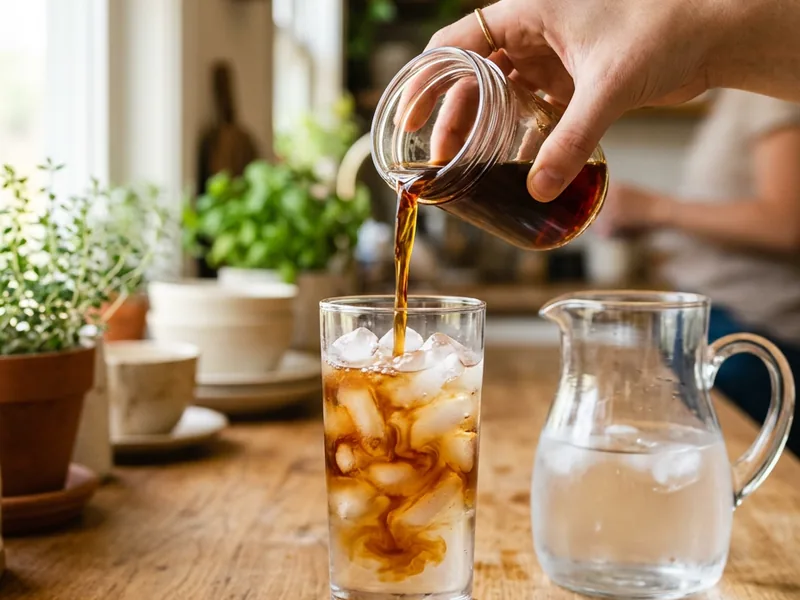
- For each glass, combine 1 part concentrate with 3 parts cold water or ice.
- Garnish with a lemon wheel and mint, then serve.
Notes
Nutrition
Frequently Asked Questions
What is a tea concentrate?
A tea concentrate is tea brewed at double or triple normal strength, meant to be diluted with cold water or ice right before drinking. It’s a batch-prep method that saves steeping a fresh cup every time.
What’s the right dilution ratio for tea concentrate?
A good starting point is one part concentrate to three parts water, adjusted to taste. Black tea usually takes a bit more water than green tea, since green tea’s flavor fades faster when diluted too far.
Why does my tea concentrate taste bitter?
Bitterness comes from tannins, which build up when tea steeps too long or in water that’s too hot. Use more tea bags for strength instead of steeping longer, and pull the bags as soon as steeping time is up.
How long does homemade tea concentrate keep in the fridge?
About 5 to 7 days for black tea, stored covered in a glass jar. Green tea concentrate is more delicate and best used within 2 to 3 days for the freshest flavor.
Can I sweeten tea concentrate after it’s chilled?
You can, but sugar and honey dissolve much better in hot liquid. Sweetening the concentrate while it’s still warm avoids the grainy or separated texture that comes from adding sweetener to cold tea.
Does the tea type matter for a concentrate?
Black tea is the most versatile base since it holds up well to both dilution and sweetener. Green tea works too but loses brightness faster, so it’s best made in smaller batches used within a couple of days.