
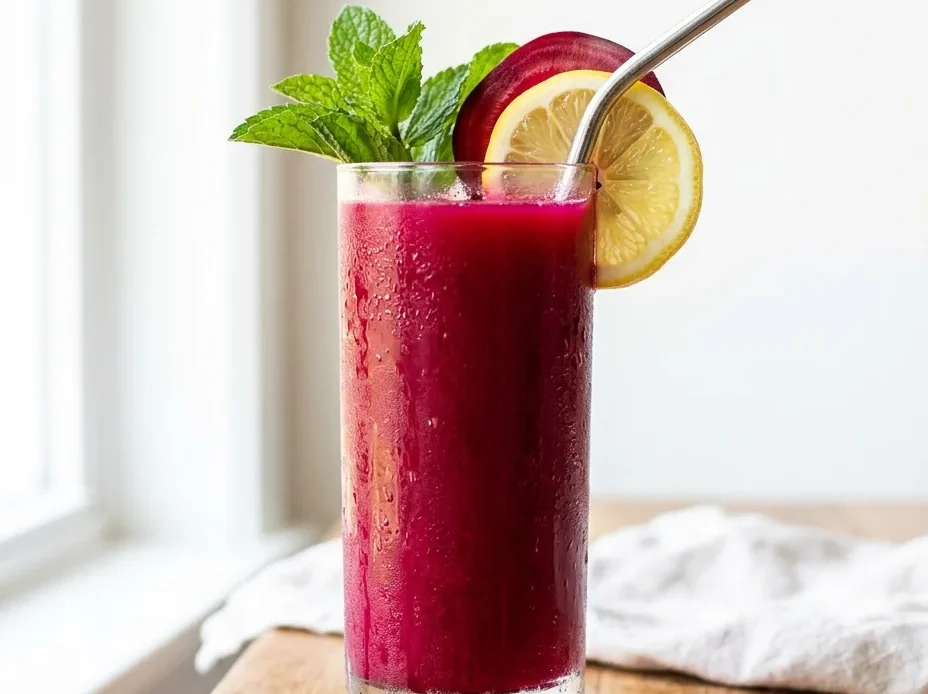
My first attempt looked like grape soda and tasted like dirt. Three batches later, on a Sunday this spring, I landed on a ratio that actually works for a beet juice recipe: beet, apple, carrot, ginger, and lemon, balanced so you still taste beet instead of just apple juice with a pink tint. This one uses a juicer or a blender, whichever you have, and it covers something almost no other beet juice recipe mentions — how much you should actually drink, and who should be careful with it.
Below is exactly how I make it, plus a troubleshooting section and the dosage numbers most recipe blogs skip entirely.
Why This Recipe Works
Beets taste like dirt to a lot of people, and that is not an insult. It comes from geosmin, the same compound responsible for the smell of soil after rain, and beets produce more of it than almost any other common vegetable. Balancing that flavor takes acid and natural sugar, not sweetener.
Apple brings natural sugar and a thin body that will not water down the color. Lemon cuts the earthiness and brightens the whole glass. Ginger adds a sharp note that distracts your palate from the vegetal side of the beet, which is why almost every version of this recipe includes it in some form.
Carrot is optional, but it helps if your beets run bitter — it adds body without adding more sweetness. The ratio here favors beet over the other four ingredients combined, unlike some blended versions that drown it out completely. You should still taste beet, not just a pink-tinted apple drink.
Key Ingredient Notes
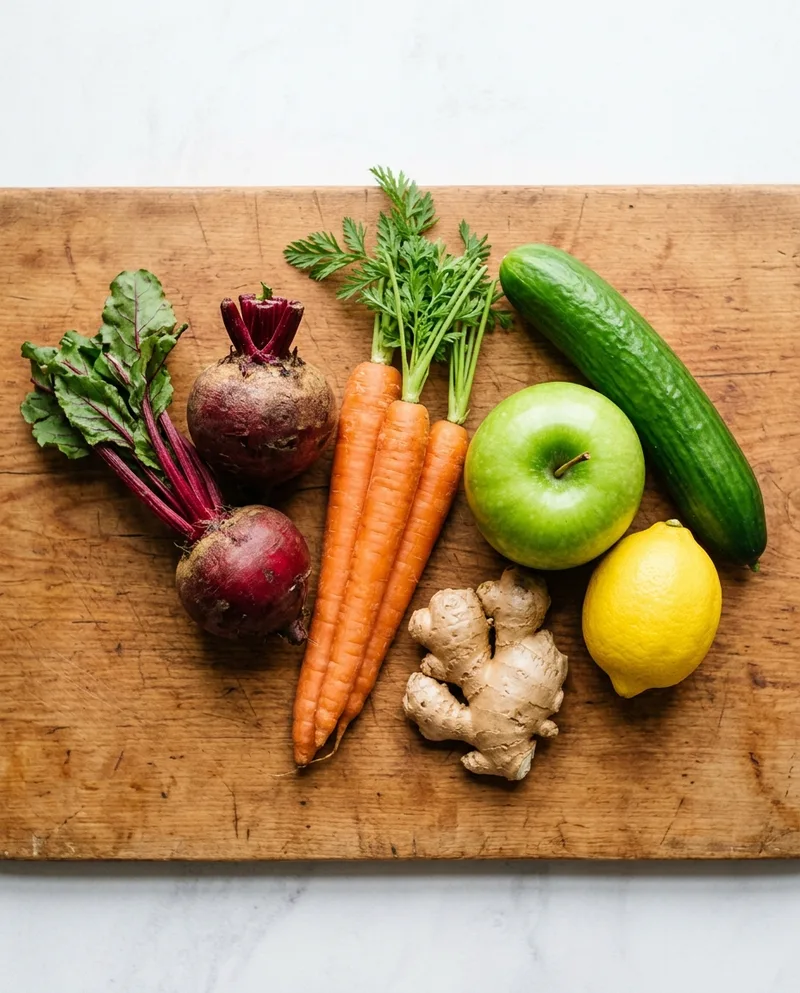
This beet juice recipe uses five ingredients: beets, apple, carrot, ginger, and lemon. Regular beets from the grocery store work fine here. I look for ones with the greens still attached when I can find them, since it is usually a sign they were pulled more recently, and the greens are worth saving for a saute later. Skip the pre-cooked, vacuum-packed beets some stores sell; they give a softer, muddier color and a cooked flavor instead of the bright, slightly peppery taste raw beets have.
For the apple, a firm variety like Honeycrisp or Fuji juices cleaner than a soft one like McIntosh, which tends to foam more in a juicer. Fresh ginger keeps longer than it looks; a knob that has gone slightly soft on the outside is usually still fine once you peel past the skin. Skip bottled lemon juice if you can. Fresh lemon has a brighter top note that bottled juice loses within weeks of processing.
How Much Beet Juice Should You Drink?
A 2024 systematic review and meta-analysis found that 200 to 800 milligrams of dietary nitrate from beetroot juice, taken daily, lowered clinical systolic blood pressure by an average of about 5 points in people with hypertension. That is not the same as a fixed cup measurement, since nitrate content varies with how concentrated the beets are and how you juice them, but it is a useful anchor. A standard glass from this recipe, roughly one cup, sits in a reasonable range for that target without needing to guess.
Diastolic pressure and 24-hour readings did not move as much in the same review, so treat this as one part of managing blood pressure, not a replacement for medication or a doctor’s plan.
Who Should Be Careful With Beet Juice
Beets rank high on the National Kidney Foundation’s oxalate list, and oxalate is one of the things that can combine with calcium to form kidney stones. If you have had calcium oxalate stones before, that is a real reason to keep beet juice occasional rather than daily. Pairing a glass with a small source of calcium, like a splash of yogurt on the side, helps bind some of the oxalate before it reaches your kidneys.
Beet juice also lowers blood pressure through the same nitrate pathway as some blood pressure medications. If you take an ACE inhibitor or a nitrate-based medication, or your blood pressure already runs low, start with half a glass and check how you feel before working up to a full one.
What I Learned Testing This
I ran three ratios back to back one Sunday afternoon this spring, right when the farmers market beets were still small and sweet. First try: straight beet and water, drinkable but rough, like biting into raw dirt. Adding a whole apple fixed the flavor but muted the color to a dull maroon instead of the bright magenta you want.
Cutting the apple back by half and leaning on lemon instead finally got it right. My kitchen smelled like fresh soil and citrus zest for an hour afterward, not unpleasant, just unmistakably beet. That ratio is the one in this recipe now.
Tips and Variations
Once you have made this once, the ratio becomes a starting point rather than a rule. Most beet juice recipes online stick to one fixed combination — this one is built so you can adjust it based on what is actually in your kitchen.
- Swap the apple for pear if that is what you have on hand; it is slightly less sweet, so add a touch more lemon.
- Add a small piece of raw carrot for extra body if your beets taste more bitter than usual.
- For a lighter, more diluted glass, top the finished juice with sparkling water instead of drinking it straight.
- In warmer months, add a few cucumber slices for a cooler, more refreshing finish.
- In cooler months, swap the lemon for orange and add a small pinch of cinnamon for a warmer profile.
Once you have the ratio down, the variations are basically endless.
Troubleshooting
Four problems come up regularly with this beet juice recipe, and each one has a direct fix.
Juice tastes overwhelmingly like dirt. You are juicing too much beet relative to apple and lemon. Cut the beet by about a third and add an extra squeeze of lemon.
Juice separates and looks murky after 20 minutes. That is oxidation, not spoilage. Give it a stir or a quick shake before you finish the glass; it is still fine to drink.
Blender method comes out gritty instead of smooth. Strain through a fine mesh strainer or a nut-milk bag. Blending leaves more fiber in the liquid than a juicer does, so straining is not optional with this method.
Color turns dull brown-red instead of bright magenta. Old beets, or beets stored too long, lose pigment fast. Buy beets with the greens still attached when you can; it is usually a sign of a fresher root.
More Recipes You’ll Love
This one fits naturally next to the other wellness drinks on the site. If the sourced, no-guessing approach here is useful, the ginger water recipe and the turmeric shot recipe follow the same logic — real ratios, real limits, nothing invented.
- Ginger Water Recipe — a 5-minute infused water with a lemon variation
- Turmeric Shot Recipe — ginger, lemon, and black pepper for absorption
- More wellness drinks on the Juice Fasting Detox Recipes page
This beet juice recipe takes about 10 minutes start to finish. Get the ratio right once, and everything after that is just adjusting to taste.
Beet Juice Recipe
Equipment
- 1 Juicer or high-speed blender
- 1 Fine mesh strainer or nut-milk bag blender method only
Ingredients
For the Juice
- 2 medium red beets peeled and chopped
- 1 medium apple Honeycrisp or Fuji, cored and chopped
- 1 medium carrot chopped, optional
- 1/2 lemon peeled
- 1 inch fresh ginger peeled
- 1 cup cold water blender method only
Instructions
Prep the Produce
- Scrub the beets clean, then peel with a vegetable peeler. Chop into rough 1-inch pieces so they feed through the juicer or blender easily.
- Core the apple and carrot if using, peel the ginger, and peel half the lemon. Chop the apple and carrot into similar-sized chunks.
Juice or Blend
- Feed the beets, apple, carrot, ginger, and lemon through the juicer in that order, alternating hard and soft produce so nothing clogs the chute.
- Add all the produce to the blender with 1 cup cold water and blend on high for 45 to 60 seconds until fully broken down.
- For the blender method only, pour the mixture through a fine mesh strainer or nut-milk bag, pressing with a spoon to extract as much liquid as possible.
Finish and Serve
- Taste the juice. If it tastes too earthy, add a small squeeze more lemon. If it tastes too sharp, add a splash more apple juice or water.
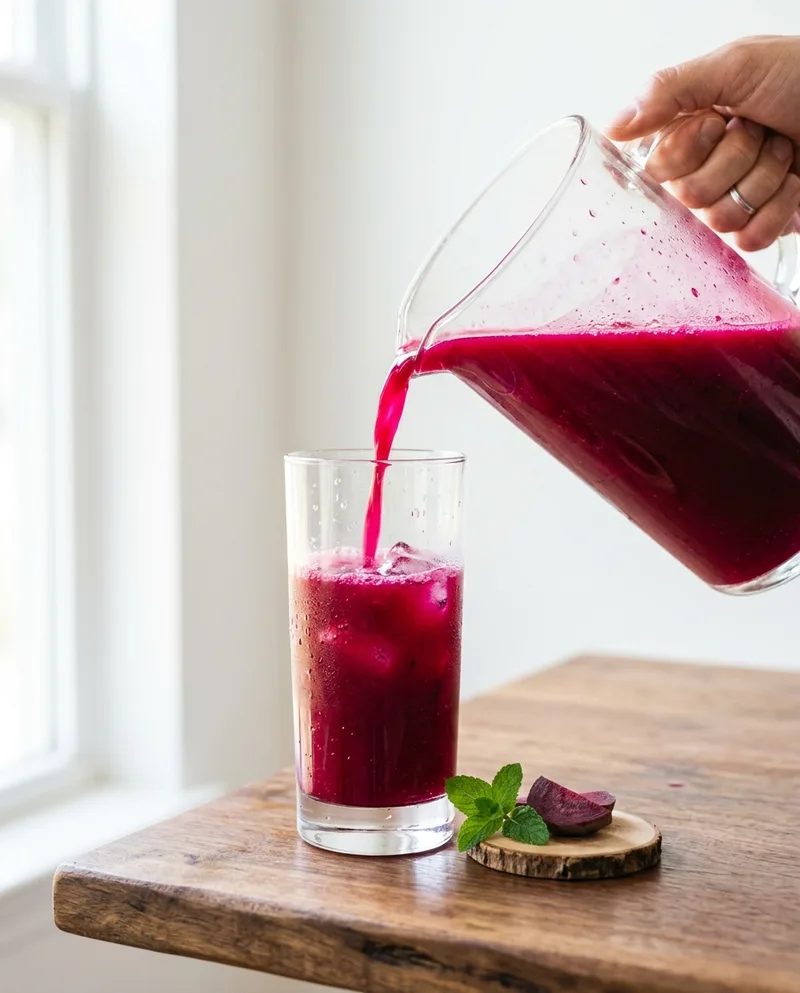
- Pour over ice and serve right away for the brightest color and flavor. Beet juice starts to oxidize and dull in color within 20 to 30 minutes.
Notes
Nutrition
Frequently Asked Questions
How much beet juice should I drink per day?
A 2024 review found that 200 to 800 milligrams of dietary nitrate from beetroot juice daily helped lower blood pressure in people with hypertension, which lines up with roughly one glass. Start with half a glass if it is your first time and see how you feel before drinking more.
Who should avoid beet juice?
People with a history of calcium oxalate kidney stones should keep it occasional, since beets are high in oxalate. Anyone on blood pressure medication or with naturally low blood pressure should start with a small amount, since beet juice lowers blood pressure through the same pathway as some medications.
Can I make beet juice without a juicer?
Yes. Blend the beets, apple, carrot, ginger, and lemon with a cup of cold water until smooth, then strain through a fine mesh strainer or nut-milk bag. The texture is different from a juicer, but the flavor is the same.
Why does my beet juice taste like dirt?
That earthy flavor comes from geosmin, a natural compound in beets. Cutting the beet slightly and adding more apple or lemon balances it out without losing the beet flavor entirely.
How long does homemade beet juice last?
It is best within 20 to 30 minutes for color and flavor, since beet juice starts to oxidize quickly. Refrigerated in an airtight container, it keeps for up to 24 hours; shake well before drinking.
Does beet juice actually lower blood pressure?
Research supports it, but modestly. A 2024 meta-analysis found beetroot juice lowered clinical systolic blood pressure by about 5 points on average in people with hypertension, though it did not significantly move diastolic pressure or 24-hour readings in the same review.