
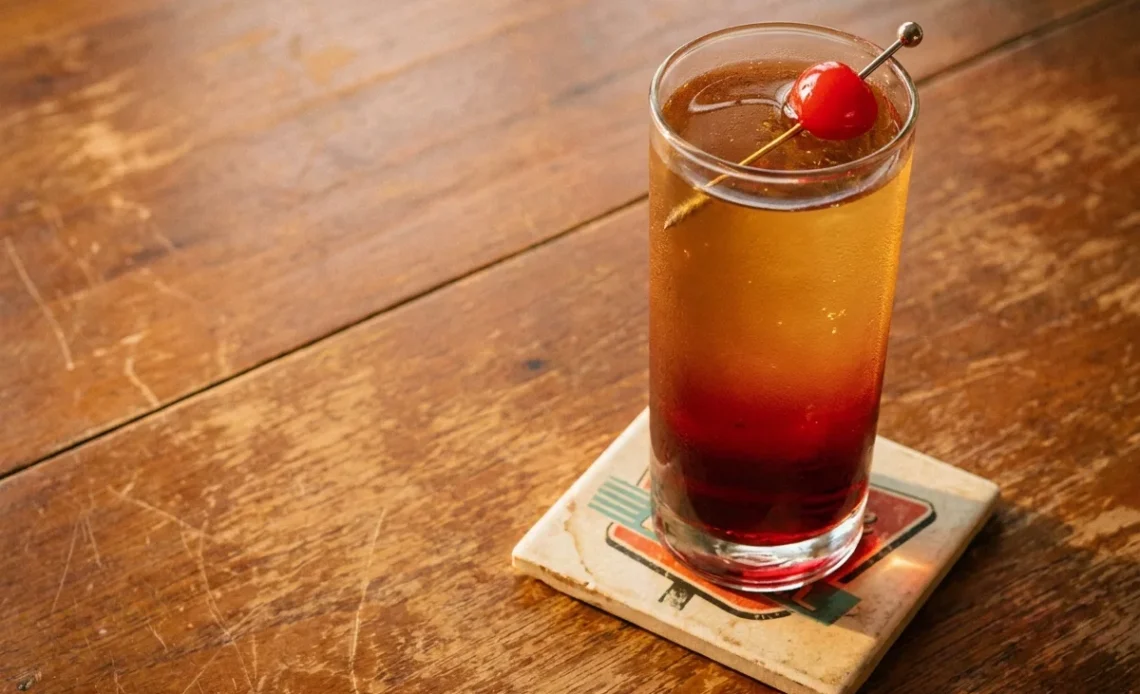
Last Dry January, my sister called me from the grocery store, looking for drinks to bring to a party where half the guests weren’t drinking. “Just grab mocktail stuff,” I told her. Long pause. “But what is a mocktail, exactly?”
Fair question. A mocktail is a non-alcoholic drink built with the same structure as a cocktail — layered flavors from fruit juices, herbs, syrups, and sparkling mixers — without any alcohol. Same craft. Same glass. Zero proof.
Mocktail market sales have grown around 5.7% annually since 2022, and Dry January now draws tens of millions of participants worldwide each year. A whole generation is drinking less and demanding better options. This guide covers everything: what mocktails are, where they came from, how to build one that actually tastes good, and what to do when your first attempt falls flat.
What Is a Mocktail? — The Definition
A mocktail is a non-alcoholic mixed drink built with the same structure as a cocktail — layered flavors from fruit juices, herbs, syrups, and sparkling mixers, with zero alcohol. Merriam-Webster defines it as “a usually iced drink made with any of various ingredients (such as juice, herbs, and soda water) but without alcohol.” The word combines “mock” (to imitate) and “cocktail” — same craft, same glass, same presentation. No spirits.
The word “mocktail” comes from “mock” — to imitate — and “cocktail.” It literally means a drink that imitates a cocktail without the spirit. In practice, the best mocktails aren’t imitations at all. They’re built from scratch with their own flavor logic.
Mocktails differ from other non-alcoholic drinks in one key way: they’re crafted. A glass of orange juice is not a mocktail. A Shirley Temple — ginger ale, grenadine, and a maraschino cherry — is. The intent matters. Balance, presentation, and layering are what separate a mocktail from juice in a cup.
A Brief History of Mocktails
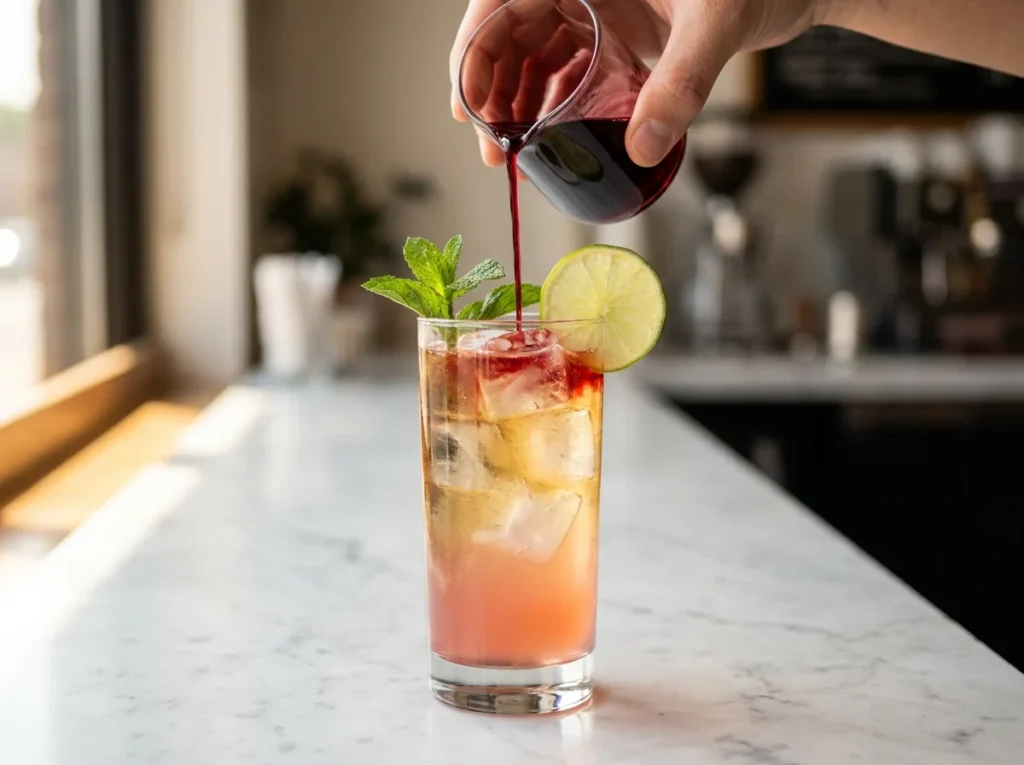
Non-alcoholic mixed drinks are older than most people think. In 1862, bartender Jerry Thomas published the first American cocktail guide, Bar-Tenders Guide. Alongside his alcoholic recipes, Thomas included “temperance drinks” — non-alcoholic mixed drinks designed for guests who didn’t drink. These weren’t afterthoughts. They were built with the same care as his cocktails.
Temperance culture in the 19th century pushed non-alcoholic drinking into the mainstream. By the time Prohibition hit in 1920, American bars were already well-practiced at making complex drinks without spirits. Non-alcoholic mixed drinks track directly from those temperance roots through Prohibition and into the mid-20th century.
Two drinks in the 1950s and 60s became cultural touchstones. Shirley Temple — created in the 1930s allegedly for the child actress herself at Chasen’s restaurant in Hollywood — mixed ginger ale with grenadine and orange juice. Roy Rogers was its masculine counterpart: cola with grenadine. Both became the default “non-alcoholic” order for decades, at diners and bars across the country.
Arnold Palmer added a layer of sophistication in the 1960s. Named after the golfer who famously mixed iced tea with lemonade at country clubs, it became one of the most-ordered alcohol-free drinks in the U.S. It’s still on menus everywhere today — and it’s technically a mocktail, even if no one called it that at the time.
Modern mocktail culture shifted in 2013 when Alcohol Change UK launched Dry January — a month-long alcohol-free challenge that has since been taken up by over 175 million people worldwide. Alcohol Change UK’s Dry January campaign is now the single biggest driver of mainstream mocktail awareness globally. Bars that had no non-alcoholic menu in 2012 were building dedicated mocktail programs by 2016.
Since 2020, a new category split from mocktails entirely: zero-proof spirits. Brands started bottling distilled, non-alcoholic liquor alternatives designed to behave like gin, rum, or whiskey in a glass. Bars now carry full zero-proof menus. What was once a category of apology has become a category of intention.
Mocktail vs. Cocktail — What’s Actually Different?
Alcohol is the obvious difference, but the real distinction goes deeper. Alcohol in a cocktail does three jobs simultaneously: it carries flavor, it creates warmth on the palate, and it adds a dry bitterness that balances sweetness. Remove the alcohol and you lose all three at once. A good mocktail has to compensate for each.
Cocktails also have a structural backbone that spirits provide. Vodka or gin acts as the “body” of the drink — it gives the liquid weight and presence. Replace it with extra juice and the drink collapses into something thin and one-dimensional. Good mocktails solve this with shrubs (drinking vinegars), cold-brew tea, kombucha, or ginger beer — ingredients that carry enough acid and tannin to give the drink real structural weight.
Calorie-wise, the gap is real. Alcohol adds approximately 7 calories per gram — nearly as dense as fat. A standard margarita runs 250-300 calories. A mocktail version, depending on syrup volume, typically lands between 80-120 calories. That difference compounds fast over an evening.
Mocktail vs. Virgin Cocktail — Is There a Difference?
People use “mocktail” and “virgin cocktail” interchangeably, but there’s a useful distinction. A virgin cocktail is a direct alcohol-free copy of an existing cocktail — a Virgin Mojito removes the rum, a Virgin Mary removes the vodka. The recipe template is fixed; you’re just omitting the spirit.
A mocktail is broader. It includes virgin cocktails but also original recipes built from scratch with no alcoholic counterpart. A Shirley Temple has no cocktail equivalent — it’s its own drink. Dirty sodas, soda-shop creations, and most modern non-alcoholic menus fall here too. Virgin cocktails are a subset of mocktails, not the other way around.
In professional bar settings, the word “mocktail” is sometimes avoided — it implies the drink is lesser than something “real.” High-end bars now use zero-proof cocktail or just the drink’s own name. For home use, the terms are interchangeable.
Mocktail vs. Zero-Proof Spirit — A 2026 Distinction Worth Knowing
This trips people up at the bottle shop. A zero-proof spirit — also called a non-alcoholic spirit or NA spirit — is a bottled product made to taste like gin, whiskey, rum, or tequila without the ethanol. Brands distill botanicals, grains, or fruit through processes similar to traditional spirits, then remove the alcohol.
A mocktail doesn’t require a zero-proof spirit. You can build a perfectly good mocktail from nothing but fresh juice, a flavored syrup, citrus, and sparkling water. Zero-proof spirits are a premium option — they add depth and complexity that basic mocktails sometimes lack, especially if you’re trying to replicate a gin and tonic or an old fashioned without the spirit.
Think of it this way: every mocktail made with a zero-proof spirit is still a mocktail. But most mocktails don’t contain one. The mocktail is the category; the NA spirit is an ingredient option within it. Knowing the difference saves you real money at the store.
Why People Choose Mocktails
People choose mocktails for reasons that have nothing to do with inability to drink and everything to do with considered preference. Here are the main ones — and why they hold up in practice.
- Sober-curious lifestyle. The sober-curious movement isn’t about quitting permanently. It’s about drinking less deliberately, not by default. Many people find that a well-built mocktail satisfies the same ritual a cocktail used to — a complex drink at a social occasion — without the next-day cost.
- Health and fitness goals. Alcohol disrupts sleep quality, adds empty calories, and affects physical recovery. Athletes, people in a weight-management phase, or anyone mid-challenge often order mocktails not because they can’t drink but because they’ve run the cost-benefit calculation.
- Pregnancy. Medical guidance on alcohol during pregnancy is clear and strict. Mocktails give pregnant guests a real drink at events — not a sad glass of sparkling water with a lemon.
- Religious observance. Islam, certain strands of Christianity, Mormonism, and other faiths restrict alcohol. Mocktails make shared social rituals possible without exclusion or awkwardness.
- Designated driving. Simple and practical. A mocktail keeps you social through a long dinner without affecting your ability to drive home safely afterward.
- Medication interactions. Many common medications — SSRIs, certain antibiotics, blood pressure drugs — interact badly with alcohol. A mocktail removes the interaction risk entirely while keeping the drink ritual intact.
Key Ingredients in a Mocktail
Every mocktail is built from the same four ingredient categories, regardless of flavor profile. Learning these categories makes any recipe easy to reverse-engineer — or invent from scratch.
- Base. The dominant liquid that carries the flavor. Ginger beer, cold-brew tea, kombucha, hibiscus water, and sparkling water are common choices. Ginger beer is the best starting base for beginners — enough spice and carbonation to make the drink feel intentional immediately.
- Acid. Fresh citrus juice — lime, lemon, or grapefruit. Acid cuts through sweetness and stops a mocktail from tasting like juice. Always use fresh-squeezed. Bottled citrus has a different acidity profile and often tastes slightly chemical — not a subtle difference.
- Sweet. Simple syrup, honey syrup, agave, or flavored syrups (hibiscus, lavender, raspberry, passionfruit). A good flavored syrup does the work of three ingredients at once — adding color, aroma, and sweetness in a single pour.
- Fizz. Sparkling water, tonic, ginger ale, or ginger beer used as a topper. Fizz goes in last, never stirred hard. You’re folding it in gently to preserve carbonation.
Specialty ingredients add depth to these four pillars. Shrubs — drinking vinegars made with fruit, sugar, and vinegar — replace the dry acidic note that spirits usually provide. Non-alcoholic bitters (Angostura makes one worth keeping in the cabinet) add complexity in a few drops. Fresh herbs like mint and basil contribute aroma you smell before you taste — which accounts for a larger share of flavor perception than most people realize.
Types of Mocktails
Mocktails fall into a few broad categories based on how they’re built and what they’re trying to do.
- Virgin classics. Direct adaptations of cocktails — Virgin Mojito, Virgin Margarita, Virgin Piña Colada. These replace the spirit with extra base liquid and sometimes a NA spirit alternative. Results vary: a Virgin Mojito usually works well. A Virgin Martini is a very different challenge.
- Original mocktails. Built from scratch with no cocktail counterpart. Dirty sodas are the best example — cream soda with coconut cream and a flavored syrup isn’t a “virgin” anything. It’s its own category, with its own fan base.
- Sparkling mocktails. Champagne-style drinks built with sparkling water, white grape juice, and elderflower cordial for occasions where you’d normally pour prosecco. Popular at weddings and celebrations where not everyone drinks.
- Functional mocktails. Drinks built around a health claim — adaptogens like ashwagandha, prebiotics from apple cider vinegar, or CBD-infused sparkling water blends. Quality varies widely. Taste should still come first; a drink that’s good for you but doesn’t taste good won’t get finished.
The 4-Component Formula for Every Great Mocktail
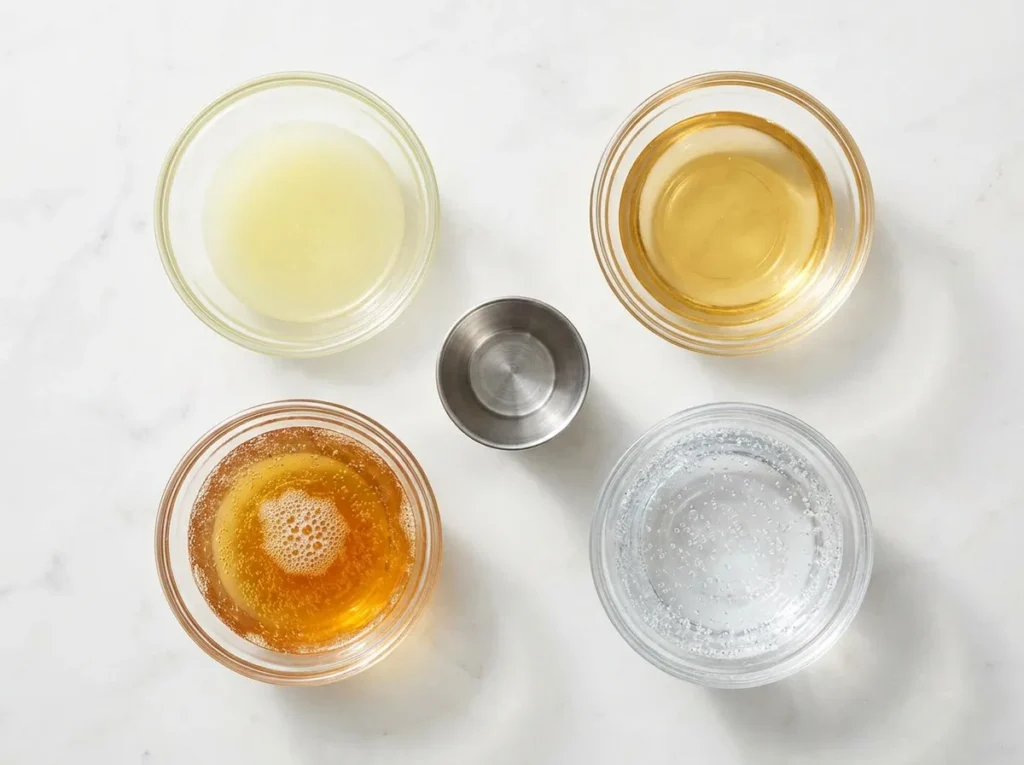
After testing dozens of recipes, I kept coming back to the same ratio: 3 oz base, 0.75 oz acid, 0.5 oz sweet, topped with 2-3 oz fizz. Not a rigid rule — a starting point that works across almost every flavor combination.
Here’s what each component does in the drink:
- Base (3 oz). Sets the character and dominant flavor. Ginger beer → warm and spicy. Hibiscus water → tart and floral. Cold-brew tea → earthy and slightly tannic. Your base choice determines everything else.
- Acid (0.75 oz). Fresh lime or lemon juice. This is the most important ingredient in the formula. Drop the acid ratio and you get a sweet, flat drink. Keep it and the whole mocktail snaps into focus.
- Sweet (0.5 oz). Plain simple syrup is the neutral option. Flavored syrups add personality. Honey syrup adds warmth and a slightly thicker mouthfeel. Start at 0.5 oz, taste, then adjust — you can always add more, never subtract.
- Fizz (2-3 oz to top). Sparkling water for clean, neutral bubbles. Tonic if you want bitterness. Ginger ale for gentle sweetness. Pour slowly down the inside wall of the glass — never dump and stir.
Build your first mocktail exactly to this ratio. Taste it. Then adjust — more acid if too sweet, more sweet if too sharp, a different base if the flavor profile isn’t landing. Two or three iterations and you’ll understand the drink by feel, not by recipe.
How to Make a Mocktail at Home — Step by Step
Once your four components are ready, the build takes under two minutes.
- Fill your glass with large ice. A tall highball or Collins glass works for most mocktails. Large-format ice cubes melt slower and keep the drink cold longer without diluting it as fast as standard tray ice.
- Add the base first. Pour your 3 oz of ginger beer, cold-brew tea, or chosen base liquid over the ice.
- Add the acid. Squeeze 0.75 oz of fresh citrus juice directly into the glass. Use a small strainer or squeeze with your hand held over the glass to catch seeds.
- Add the sweet. Pour 0.5 oz of your chosen syrup. For a colored flavored syrup, pour slowly along the side of the glass to create a visible gradient as it settles.
- Top with fizz. Pour your sparkling water or ginger ale gently down the inside wall of the glass. This preserves carbonation. Stir once or twice very gently — just enough to combine without flattening the bubbles.
- Taste before garnishing. Take a small sip. Adjust acid or sweet if needed. A drink can be corrected at this stage — once the garnish is on, the presentation is set.
- Add garnish. A citrus wheel, a sprig of fresh mint, or a skewered berry. Press the mint firmly between both palms before placing it — this releases the aroma oils that make the garnish functional, not just decorative.
What I Learned Testing This
I spent two weekends in February working through this formula across eight different flavor combinations. My kitchen counter looked like a bar — open bottles of ginger beer, three types of citrus, four syrups, and a growing pile of used tasting straws by Sunday afternoon.
Biggest lesson: bottled lime juice is not a substitute for fresh. On day one, I ran out of fresh limes mid-session and finished a batch of hibiscus-ginger mocktail with ReaLime. It tasted flat and slightly chemical — the acidity is there but the brightness isn’t. Fresh citrus carries volatile aromatic compounds that evaporate out of bottled juice. It’s a different ingredient with a meaningfully different result.
Second: most mocktails taste too sweet because the syrup goes in before the acid. Add your citrus first, let the sharpness register, then add sweet incrementally. Start with syrup and you lose your reference point — you’ll keep adding more trying to find flavor that sugar was never going to deliver on its own.
Ginger beer consistently produced the most “cocktail-like” result across every flavor profile I tested. Something about the combination of spice and carbonation gives the drink a presence and structure that plain sparkling water can’t match. If you’re new to mocktail-making, start with ginger beer as your base. It does significant structural work before you add anything else.
Why Most Homemade Mocktails Taste Flat (and How to Fix It)
Most first-attempt mocktails share the same problem: they taste like watered-down juice. Sweet, thin, and forgettable. Here’s what’s actually going wrong — and a direct fix for each issue.
- Problem: Too sweet with no depth. You’re under-measuring or skipping the acid. Double your citrus juice and taste again. Also check your base — if you used a sweetened sparkling juice as your base, it’s adding sugar you didn’t account for. Switch to plain sparkling water or unsweetened ginger beer.
- Problem: Flat despite having bubbles. Almost certainly bottled citrus juice. Switch to fresh. Also check whether you stirred hard after adding fizz — vigorous stirring collapses carbonation within about a minute. One gentle fold-stir and stop.
- Problem: One-note and boring, no complexity. You’re missing a fourth flavor dimension. Add 1-2 dashes of NA bitters, a small splash of pomegranate juice for tannin, or squeeze a strip of orange peel over the glass and drop it in. Any of these cuts the monotone sweetness immediately.
- Problem: Watery after five minutes. Ice quality. Crushed ice melts two to three times faster than large-format cubes. Use large ice or fill the glass to the rim with standard tray ice — more ice means lower glass temperature and slower melt rate.
- Problem: Looks dull and uninviting. A drink that’s one uniform shade of pale yellow won’t look worth drinking. Use a colored syrup — hibiscus, raspberry, or pomegranate — and layer it in slowly to create a gradient. Add a fresh herb and a citrus wheel. Visual presentation affects taste perception more than people account for.
Essential Tools and Equipment
You don’t need a full bar setup to make great mocktails. Here’s what actually matters — and what you can skip.
- Jigger or small measuring cup. Precision matters at the start. A 1 oz / 0.5 oz double-sided jigger costs around $6 and removes all guesswork. Once you’ve made the same drink twenty times, you can eyeball it — but not before.
- Citrus press (handheld squeezer). Fresh juice is non-negotiable. A lime-sized citrus squeezer makes it fast. Squeezing by hand takes three times longer and extracts less juice per fruit. About $10 at any kitchen store.
- Bar spoon or long spoon. For the final gentle fold-stir. A clean chopstick is a perfectly functional substitute.
- Fine mesh strainer. For removing seeds and pulp from fresh-squeezed citrus. Not mandatory but you’ll want one after the first few batches.
- Tall highball glasses. Collins or highball glasses show off color and garnish better than short rocks glasses, and hold more ice to slow dilution.
- Large-format ice tray. Large ice cubes are worth the $8 investment. Standard tray ice works but your drink dilutes noticeably faster.
Garnishing Tips That Actually Make a Difference
Garnish is where a mocktail looks like a serious, crafted drink rather than juice in a nice glass. A few things that hold up in practice:
- Clap the mint before placing it. Press the sprig firmly between both palms, then place it in the drink. This bruises the leaves and releases the aromatic oils — you smell the mint on the first sip before you taste anything else. Without this step, mint is purely visual.
- Citrus wheels over wedges. A thin wheel resting on the rim looks deliberate. A wedge dropped in after squeezing looks like something assembled quickly behind a fast food counter.
- One garnish done well, not three done carelessly. A sprig of mint, a citrus wheel, and three skewered blueberries is too busy. Pick one or two elements that relate to the flavor of the drink and stop there.
- Edible flowers for occasions. Dried hibiscus petals or fresh viola flowers add visual impact that nothing else replicates at the same price point. Most specialty grocery stores carry them. Order online if yours doesn’t.
More Mocktail Recipes You’ll Love
Ready to start building? These are the best places to go next on this site — each recipe uses the same 4-component formula above and has been tested to work on the first attempt.
- Dirty Soda Recipes — the best entry point if you want something simple, fast, and crowd-pleasing
- Homemade Ginger Infusion — build your own ginger base from scratch for deeper flavor than any store-bought ginger beer
- Complete Mocktail Recipes Guide — the full index of every recipe on this site, organized by flavor profile and occasion
- Homemade Sodas — go deeper on the carbonated base side of mocktail building
A mocktail is a non-alcoholic drink worth approaching with real technique — balanced with acid and sweet, built over the right ice, and finished with a garnish that means something. Start with the 4-component formula, use fresh citrus every time, and taste before you garnish. That’s the whole foundation.
Frequently Asked Questions
What does mocktail mean?
The word mocktail combines ‘mock’ (to imitate) and ‘cocktail.’ It means a drink that imitates a cocktail in appearance and flavor but contains no alcohol. The term was popularized in the 1970s and is now in the Merriam-Webster dictionary.
What is the difference between a mocktail and a virgin cocktail?
A virgin cocktail is a specific alcohol-free version of an existing cocktail (Virgin Mojito, Virgin Mary). A mocktail is broader — it includes virgin cocktails but also original recipes with no cocktail counterpart. All virgin cocktails are mocktails, but not all mocktails are virgin cocktails.
What are the main ingredients in a mocktail?
Most mocktails use four components: a base liquid (ginger beer, tea, sparkling water, juice), an acid (fresh citrus juice), a sweetener (simple syrup, honey, agave), and a fizzy topper (soda water, tonic, ginger ale). Fresh citrus juice is the most important single ingredient for flavor depth.
Are mocktails healthy?
Mocktails are alcohol-free, removing ethanol’s health risks. They can still be high in sugar depending on ingredients — syrups and fruit juices add up. A mocktail made with sparkling water, fresh citrus, and a small amount of syrup is low-calorie and low-sugar. Whether it’s healthy depends on the specific recipe, not the category.
Popular Mocktail Recipes to Try Next
- 10 Most Popular Mocktails — The drinks people actually make repeatedly.
- Strawberry Lemonade Mocktail — Sparkling, batch-ready, done in 10 minutes.
- Passion Fruit Mocktail — Bold tropical flavor built around real passion fruit.
- Complete Recipe Index — Every non-alcoholic drink recipe on this site.
What is a mocktail?
A mocktail is a non-alcoholic drink built with the same structure as a cocktail — layered flavors from fruit juices, herbs, syrups, and sparkling mixers — without any alcohol. The word combines “mock” (to imitate) and “cocktail.” Good mocktails are crafted for flavor balance, not just as a substitute.
What is the difference between a mocktail and a cocktail?
A cocktail contains alcohol (spirits like vodka, gin, or rum) while a mocktail contains none. Beyond alcohol, cocktails rely on spirits for body, warmth, and dry bitterness. Mocktails compensate with ginger beer, shrubs, cold-brew tea, or tonic to achieve the same structural weight without ethanol.
Are mocktails completely alcohol-free?
Traditional mocktails are completely alcohol-free. Some modern recipes use NA spirits — distilled non-alcoholic alternatives — which contain trace amounts of alcohol (typically under 0.5% ABV, the legal threshold for alcohol-free labeling). Always check the label if strict zero-alcohol is required.
Can you make mocktails at home without special equipment?
Yes. You need a jigger or measuring cup, a citrus squeezer, and a tall glass. A fine mesh strainer is useful but optional. The most important thing isn’t equipment — it’s using fresh citrus juice instead of bottled, and measuring your acid and sweet ratios rather than estimating.
Are mocktails healthy?
Mocktails are lower in calories than cocktails (typically 80–120 calories vs. 200–300) since alcohol adds about 7 calories per gram. How healthy a mocktail is depends entirely on the syrup volume and base used. Mocktails made with fresh juice and minimal added sugar are a reasonable choice; those built on sweetened syrups are not significantly healthier than soda.
What is the difference between a mocktail and a zero-proof spirit?
A mocktail is a category of drink — any non-alcoholic mixed drink built for flavor complexity. A zero-proof spirit is a specific bottled product designed to replicate the taste of gin, whiskey, or rum without alcohol. You can make a mocktail without a zero-proof spirit; they are an optional premium ingredient, not a requirement.
What are the most popular mocktail ingredients?
Fresh lime juice, ginger beer, simple syrup, and sparkling water form the foundation of most mocktails. Grenadine, hibiscus syrup, and elderflower cordial are among the most-used flavoring syrups. Fresh mint and citrus wheels are the standard garnishes. NA bitters and shrubs (drinking vinegars) are specialty additions worth trying.
What is Dry January and how did it grow the mocktail category?
Dry January is a month-long alcohol-free challenge launched by Alcohol Change UK in 2013. Over 175 million people have now participated worldwide. It created mainstream demand for bar-quality alcohol-free options, pushing restaurants and bars to build dedicated mocktail programs and driving the growth of zero-proof spirit brands across the market.
This what is a mocktail is best served fresh — flavors are brightest right after assembly.
Hi there to every one, the contents existing at this web page are really amazing
for people experience, well, keep up the nice work
fellows.
Sent this to a friend who’s pregnant and trying to find fun drinks for parties. She made the virgin mojito variation and said it was the first time in months she didn’t feel left out at a gathering. Really good resource.
Really clear breakdown. I’d been calling anything non-alcoholic a mocktail for years without thinking about it — this explains the distinction in a way that actually makes sense. Sent the link to a friend doing a dry month.
Excellent post , Thank you for tis recipe
Kudos!