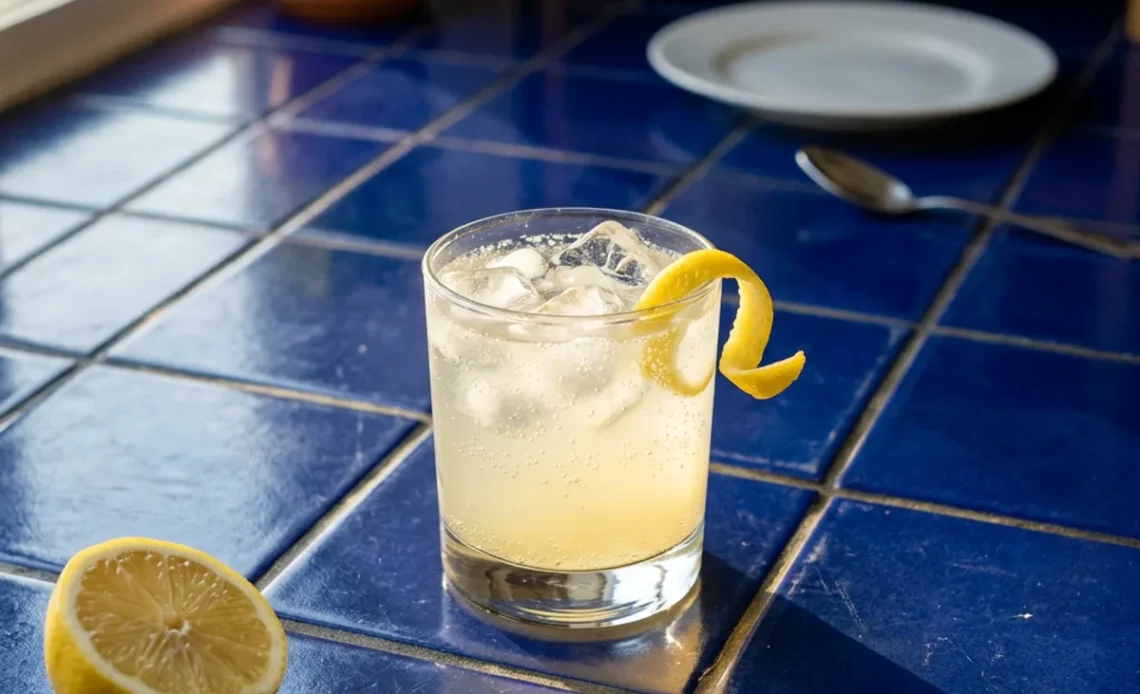
This lemon mocktail recipe presses strips of lemon peel into a little sugar so it soaks up the oils, shakes that quick syrup with fresh lemon juice and ice, then tops each glass with cold sparkling water. Each glass comes to about 39 calories. The exact amounts are in the recipe card.
Good balance is not more sugar. It is the right acid and a lot of aroma. Most of the lemon’s perfume sits in the peel, not in the juice, so that is where I start. The sugar pulls the oils out of the peel in ten minutes, and the drink tastes more of lemon with less sweetness.
| Version | What goes in one glass | Calories (USDA estimate) | What studies show | Main caution |
|---|---|---|---|---|
| Sparkling lemon mocktail (this recipe) | 2 tbsp lemon juice, 2 tsp sugar pressed with peel, 1/2 cup sparkling water | about 39 | No study on the drink; lemon juice trials below | Added sugar counts toward the AHA daily limit |
| Lemon drop mocktail recipe | 2 tbsp lemon juice, 2 1/2 tsp sugar, shaken and served up | about 47, plus the rim | No study found | Same as above |
| Mango Meyer lemon margarita mocktail | Blended mango, Meyer lemon juice, sparkling water, no added sugar | about 56 | No study found | Same as above, the sugar here is the fruit’s own |
The Ratio Behind This Lemon Mocktail Recipe
Per glass, I use 2 tablespoons of lemon juice to 2 teaspoons of sugar, and 1/2 cup of sparkling water on top. That is three parts sour to one part sugar, on the tart side for a lemon mocktail. The bubbles and the dilution from the ice soften it.
The one detail that matters is the peel. Without it, a lemon mocktail with this little sugar tastes thin and sharp. With it, the glass smells of lemon before you drink, and your tongue reads that aroma as roundness. Adjust the sweetness to your taste: one more teaspoon of sugar for two glasses makes it softer, one less makes it brisker.
Lemon Mocktail Numbers Per Glass
| One glass | Calories | Carbohydrates |
|---|---|---|
| This sparkling lemon mocktail | about 39 | about 11 g |
| The lighter glass (1 tsp sugar) | about 21 | about 5.8 g |
| Lemon drop mocktail, without the rim | about 47 | about 12.6 g |
| For comparison: a 12 oz can of lemon-lime soda | about 152 | about 38.5 g |
Values are USDA estimates. Almost all of the calories come from the 2 teaspoons of sugar in each glass. The American Heart Association suggests keeping added sugar to about 6 teaspoons a day for most women and 9 for most men, and notes that one 12-ounce can of regular soda has about 10. Letting the peel carry the flavor helps with keeping a sweet drink light, without making it taste like a diet version.
A Lemon Peel Syrup With No Stove
Classic simple syrup is equal parts sugar and water, warmed until clear. Here the sugar never sees any heat. Pressed with the peel, it draws out the lemon oils, and a spoonful of cold water dissolves it. Bar staff call the result oleo saccharum; at home, it is just the fastest lemon syrup you can make.
Peel only the yellow layer with a vegetable peeler. The white pith underneath is bitter. Wash and dry the lemon first, since the peel goes into the drink.
Want a jar of it for the week? Press the peel of 2 lemons into 1/2 cup of sugar, wait 30 minutes, add 1/2 cup of cold water and shake until clear, then strain. Use 1 tablespoon per glass. Our simple syrup recipe explains the 1:1 and rich 2:1 ratios and how long each keeps in the fridge.
Fresh Lemon Juice or Bottled?
Fresh, if you can. Bottled lemon juice is sour but flat, and it has lost the bright top notes that make a lemon mocktail taste alive. Squeeze the lemons after you peel them, so nothing goes to waste, and measure the juice: lemons vary a lot in size.
Roll each lemon on the counter under your palm before you cut it. It softens the inside and the juice comes out more easily.
Lemon Mocktail Recipe, Step by Step
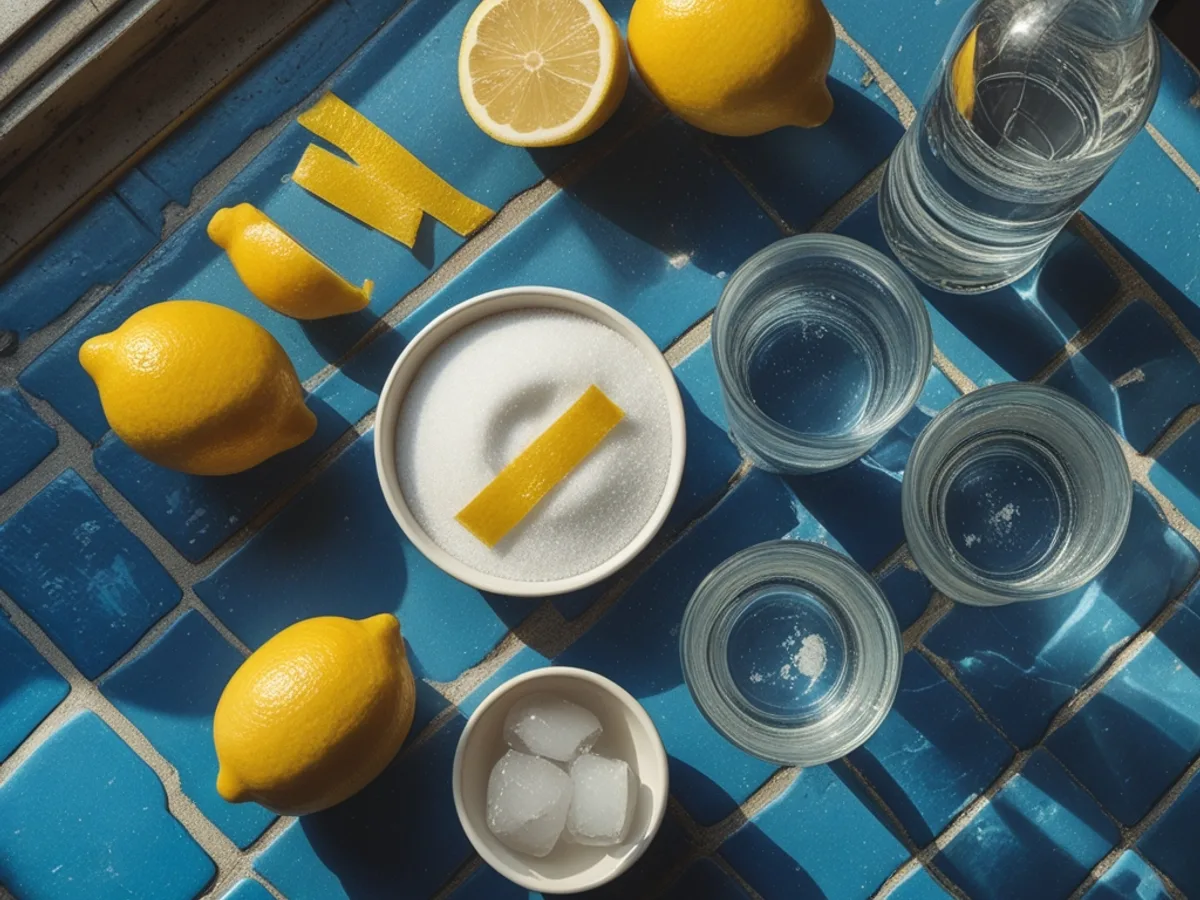
The card has the measures. Here is why each move matters in a lemon mocktail.
Step 1: Press the peel into the sugar
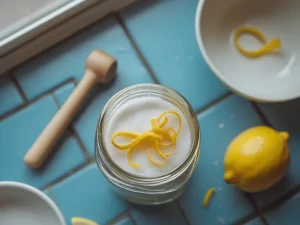
Press firmly, not hard. You want damp, fragrant sugar, not shredded peel. The 10-minute rest does most of the work; this is the mise en place step, so squeeze the lemons while you wait.
Step 2: Shake with lemon juice and ice
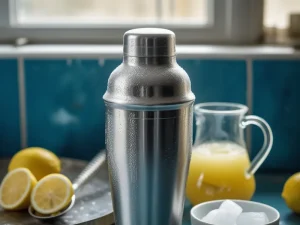
Shaking does three things at once: it chills the base, adds a little water, and whips in fine bubbles that give the top a light foam. Fifteen seconds is enough.
Step 3: Strain, then bubbles last
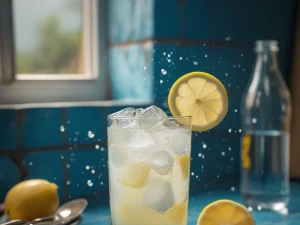
Strain onto fresh ice, so the shaken ice does not keep melting into the glass. Pour the sparkling water down the side, not onto the ice, to keep the fizz, and stir once from the bottom.
Quick to pull together and delicious in the glass: Mathieu M made it just as written, found the texture exactly right, and would be happy to shake another round.
Shake or Stir?
Shake when you want your lemon mocktail cold, slightly foamy and fast. Stir when you have no shaker: build the base in a glass with ice, stir for 20 seconds, then strain into a fresh glass of ice. A jar with a tight lid works as a shaker too. The drink is the same; the shaken one simply has a softer, rounder top.
Which Bubbles to Pour
Plain sparkling water or club soda keeps a sparkling lemon mocktail lightest and lets the lemon lead. An unsweetened lemon sparkling water adds aroma with no sugar.
Tonic water brings bitterness and its own sugar, which suits a drier, more grown-up glass; reduce the sugar in Step 1 if you use it. Ginger ale turns it sweet and soft. Whatever you choose, keep it very cold: warm bubbles go flat in the glass.
Lemon Drop Mocktail Recipe
The lemon drop mocktail is the same idea, served short and cold, with no bubbles. Per glass, press the peel of half a lemon into 2 1/2 teaspoons of sugar, add 2 1/2 teaspoons of cold water, then shake hard with 2 tablespoons of fresh lemon juice and ice for 20 seconds. Strain into a chilled glass. It is sweeter than the sparkling version, about 47 calories a glass, because there is no water to stretch it.
Lemon Drop Martini Mocktail Recipe With a Sugar Rim
To serve the lemon drop like a martini, put a coupe or martini glass in the freezer for 10 minutes first. Run a cut lemon around the rim, dip it in a saucer of sugar, then strain the shaken lemon drop into it. A thin twist of peel on the edge finishes it. The rim adds a little more sugar, depending on how much sticks, so a half rim gives your guest the choice.
Lemon Mint Mojito Mocktail Recipe
For a minty lemon mocktail, add 8 fresh mint leaves per glass to the peel and sugar in Step 1 and press them together. Bruise the mint, do not tear it: torn leaves turn grassy and bitter. Shake and strain as written, then top with sparkling water and a mint sprig. The calories stay at about 39 a glass.
Mango Meyer Lemon Margarita Mocktail Recipe
Here the fruit does the sweetening. For one glass, blend 82 g (about 1/2 cup) of ripe mango chunks with 2 tablespoons of Meyer lemon juice and 1/4 cup of cold water until smooth.
Rub a lemon wedge on the rim and dip it in a little coarse salt. Pour the mango over ice and top with a splash of sparkling water. Meyer lemons are softer and less sour than regular lemons; regular lemon works too, with a little more water.
There is no added sugar in this one. It comes to about 56 calories a glass, from the mango and the lemon, and the whole fruit brings about 1.3 g of fiber that a juice would not.
More Ways to Change It
- Berries. Press 4 raspberries or 3 sliced strawberries with the peel in Step 1, then strain well for a pink lemon mocktail.
- Rosemary. Add a small rosemary sprig to the sugar and peel. It gives a piney, almost savory note.
- Half lime. Swap half of the lemon juice for lime juice for a sharper, greener sour.
- Other sweeteners. See below.
Like lemon with berries? Our pink lemonade gets its color from real fruit, still and poured from a pitcher, a different drink from this shaken glass.
Other Sweeteners That Work
No sugar on hand? Use 2 teaspoons of maple syrup or 1 1/2 teaspoons of agave syrup per glass, stirred into the lemon juice. You lose the peel step, so add a long twist of peel to the glass for aroma. Plain simple syrup works too: 1 tablespoon per glass.
Lemon Mocktails for a Crowd
For 8 glasses of lemon mocktail, press the peel of 4 lemons into 1/3 cup of sugar in a bowl, wait 10 minutes, add 1/3 cup of cold water and stir until clear. Add 1 cup of fresh lemon juice, strain into a pitcher and keep it covered in the fridge for up to a day.
To serve, shake 1/4 cup of the base with ice for each glass, or stir the whole pitcher with ice for 30 seconds, then pour over fresh ice and top with sparkling water. Need more ideas for the same table? Our 10 most popular mocktails covers the classics, and the mocktail recipes guide has the rest of the site’s alcohol-free drinks.
What the Research on Lemon Juice Shows
No study has looked at a lemon mocktail recipe. A small group of trials has looked at lemon juice drunk with a starchy meal.
In a 2021 randomized crossover trial (PMID 32201919), healthy adults ate 100 g of bread with 250 ml of water, black tea or lemon juice. With lemon juice, the average blood sugar peak was 30% lower and came more than 35 minutes later. Tea changed nothing, and none of the drinks changed how much people ate three hours later.
A 2022 follow-up (PMID 35013789) with 10 participants used MRI. Diluted lemon juice again gave a lower blood sugar response, by 35% at 55 minutes, and the stomach emptied faster. Appetite did not differ.
These are short, small trials in healthy people, with lemon juice and bread, not a sweetened drink. The authors think the acid slows the enzyme in saliva that starts breaking down starch. So the lemon in your glass is there for flavor; any effect on blood sugar is not shown for a mocktail, and the sugar you add still counts.
A Short Safety Note
The sugar here is added sugar, and it counts toward the American Heart Association’s daily limit given above; the lighter glass keeps it to 1 teaspoon. The peel goes into the drink, so wash and dry the lemons well before you peel them. If you manage your blood sugar, count the carbohydrates of each glass like any sweet drink, and ask your health care provider if you are unsure.
Where the Numbers Come From
- USDA FoodData Central: raw lemon juice, granulated sugar, raw mango and lemon-lime soda, for the values per glass and the comparison. USDA has no separate entry for Meyer lemons, so their juice is counted as regular lemon juice.
- American Heart Association: Added sugars.
- PubMed: the two trials linked above with their PMID.
Peel, sugar, lemon, ice and bubbles. Five simple ingredients, made from scratch in fifteen minutes: that is the whole lemon mocktail recipe, and the sweetness stays in your hands.
Sparkling Lemon Mocktail
Ingredients
Lemon peel syrup, made in the shaker
- 1 lemon peel 4 or 5 wide strips from 1 washed lemon, yellow part only
- 4 tsp granulated sugar
- 4 tsp water cold
To shake and serve
- 4 tbsp lemon juice 60 ml, freshly squeezed from the peeled lemons
- 2 cup ice cubes, half for the shaker and half for the glasses
- 1 cup sparkling water 240 ml, very cold
- 2 lemon wheels or 2 thin peel twists, for the garnish
Instructions
- Put the lemon peel strips and the 4 teaspoons of sugar in a cocktail shaker or a jar. Press them with a muddler or the back of a spoon for about 30 seconds, until the sugar looks damp and smells of lemon, then let it sit for 10 minutes. Add the 4 teaspoons of cold water and stir until no sugar crystals are left.
- Pour the 4 tablespoons of fresh lemon juice into the shaker, add a cup of ice cubes and close it. Shake hard for 15 seconds, until the outside of the shaker feels very cold.
- Fill 2 glasses with fresh ice and strain half of the lemon mixture into each, leaving the peel behind. Pour 1/2 cup of very cold sparkling water slowly down the side of each glass, give one gentle stir and finish with a lemon wheel or a peel twist. Serve right away.
Notes
Nutrition
Frequently Asked Questions
What can I use instead of lemon juice in cocktails?
Fresh lime juice is the closest swap, one for one, with a slightly more floral sourness. Grapefruit or yuzu juice also work in a mocktail, though grapefruit is less sour, so use a little more and taste before adding sugar.
What are the 10 most popular mocktails?
Lists vary, but the classics that come back are the virgin mojito, Shirley Temple, virgin piña colada, Arnold Palmer, virgin margarita, Roy Rogers, Moscow mule mocktail, sparkling lemonade, Cinderella and a virgin Bloody Mary. Our 10 most popular mocktails page goes through them one by one.
What is cocktail and mocktail?
A cocktail is a mixed drink that contains alcohol. A mocktail is built the same way, with juice, syrup, bubbles and garnish, but with no alcohol at all, so anyone can drink it.
What is a Cinderella mocktail?
The Cinderella is a classic alcohol-free mix of orange juice, pineapple juice and lemon juice, often topped with sparkling water or ginger ale and a splash of grenadine. Like this lemon mocktail, it is usually shaken with ice and served cold.
Can I make this lemon mocktail recipe without a shaker?
Yes. Press the peel and sugar in a jar with a tight lid, then add the lemon juice and ice and shake the jar. Or stir the base with ice in a glass for 20 seconds before you strain it.