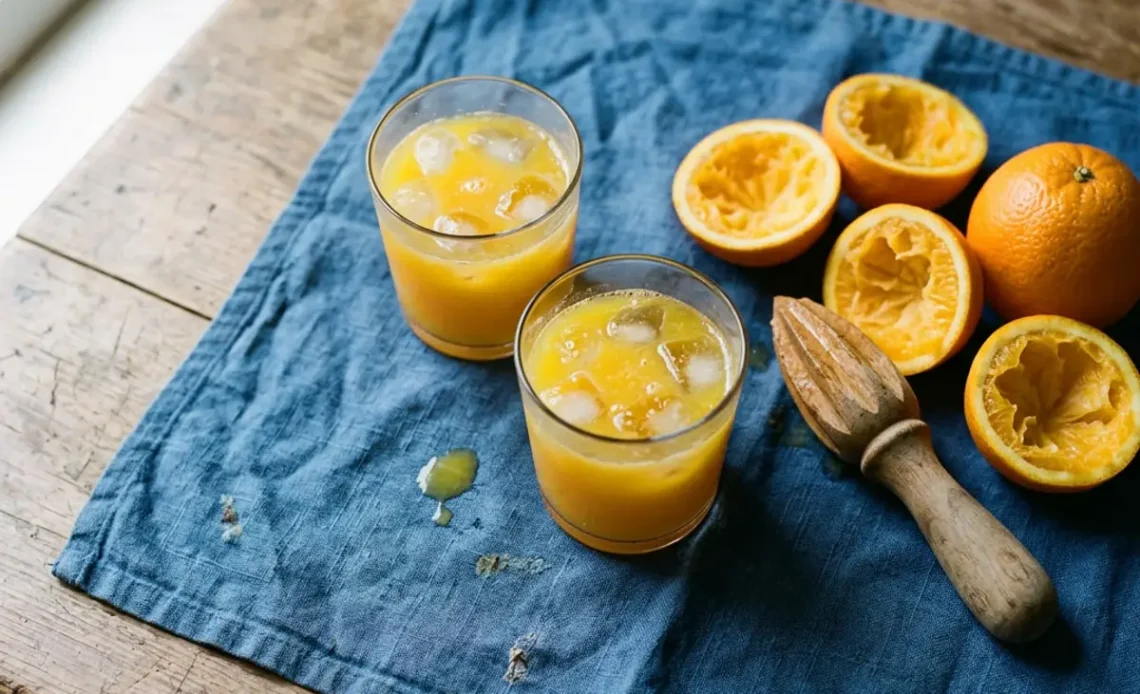
The one detail that matters with homemade orange juice is temperature: an orange from the counter gives up its juice far more easily than one straight from the refrigerator.
The short version: roll 8 medium room-temperature oranges, halve them and squeeze them on a reamer without crushing the white pith. Strain through a coarse sieve and stir the pulp back in. You get about 2 3/4 cups, three small glasses, in 10 minutes, with no added sugar.
The recipe card holds the three steps. Below are the choices behind them, a blender version that keeps the whole fruit, and the questions people ask most.
Which oranges make the best juice
Any sweet orange works, but two varieties do most of the work in American kitchens.
- Valencia. The classic juicing orange, in stores mostly in spring and summer. Thin skin, lots of juice, a few seeds, and the flavor stays sweet for hours.
- Navel. The winter orange. Easy to peel and seedless, but its juice can turn bitter if it sits, so squeeze it just before you pour.
- A mix. Half navel and half Valencia, or a couple of tangerines or a blood orange in the bowl, gives a rounder glass with more color.
Pick fruit that feels heavy for its size, with thin, smooth skin that gives slightly under your thumb. Light, thick-skinned oranges are mostly peel.
How many oranges for a glass of juice
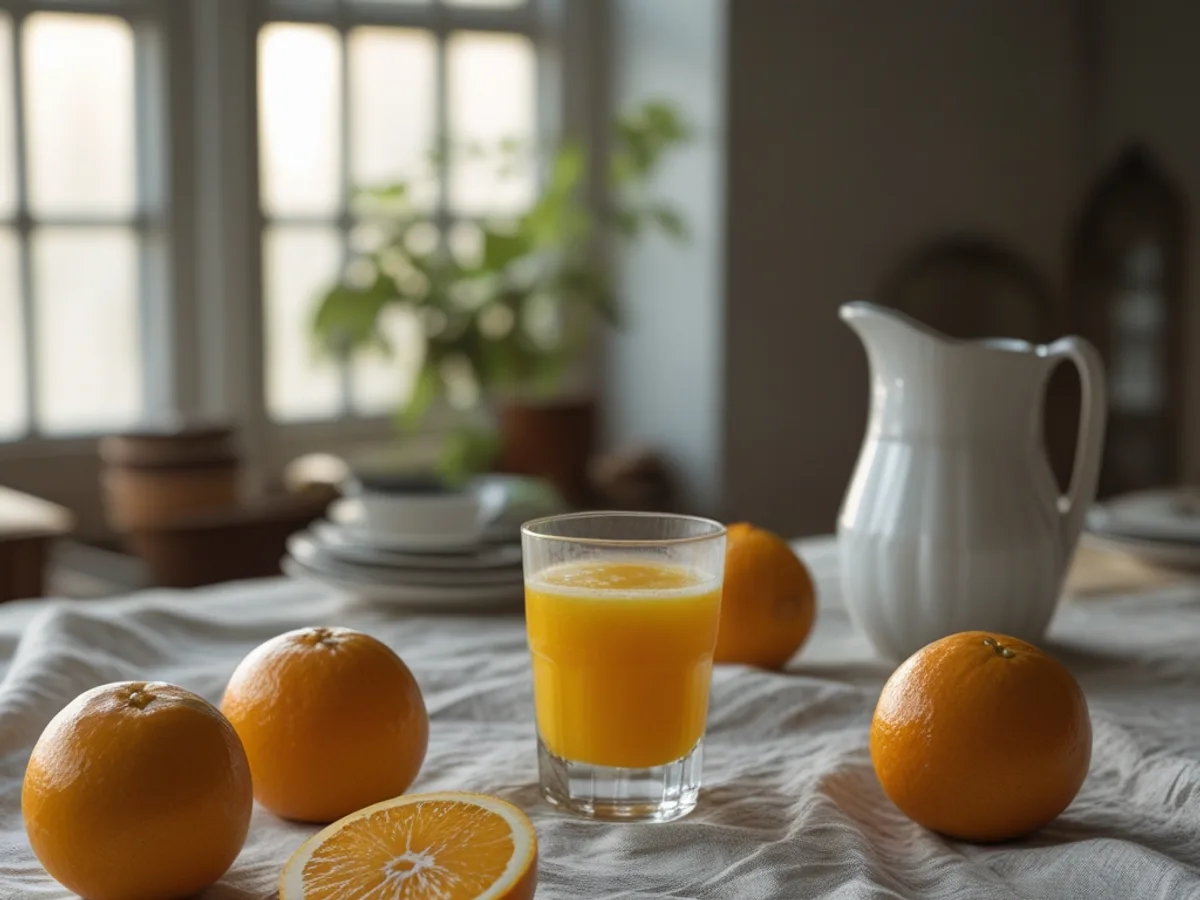
According to USDA FoodData Central, one orange yields about 86 g of juice, a little over a third of a cup. That is why the recipe card asks for 8 medium oranges for about 2 3/4 cups, three small glasses. Large Valencias give more, small navels less, so buy one or two extra.
Hand, reamer, press or blender
Each tool changes the yield, the effort and how much pulp ends up in your glass.
| Method | Effort | Pulp in the glass | Best for |
|---|---|---|---|
| By hand | High | Little | One glass, no tools |
| Wooden or glass reamer | Medium | Some, easy to keep | Two or three glasses |
| Lever citrus press | Low | Little | Big batches, weak grip |
| Blender, whole peeled orange | Low | All of it | A thicker, high-fiber glass |
| Electric juicer | Low | Almost none | Large amounts, very smooth juice |
A reamer is my choice for this recipe. It costs little, you control the pressure, and the pulp lands in the bowl with the orange juice.
If you want a vegetable juice next, our carrot juice recipe is a good place to start.
Delicious, easy and quick, with the texture hoped for: that was Mathieu M’s verdict after following this card to the letter, and the recipe would be made again.
Roll each orange firmly on the counter before cutting: the pressure breaks some of the juice cells inside, and the halves give up their juice with less effort. Then twist, do not grind. The white pith and the peel hold bitter compounds, and squeezing them hard is the most common reason homemade juice tastes harsh.
Keep the pulp in your homemade orange juice
Here is where homemade juice can beat a carton. USDA FoodData Central lists 2.4 g of fiber per 100 g of raw orange, against 0.2 g per 100 g of orange juice. Almost all of the fruit’s fiber stays behind with the membranes and the pulp you strain out.
Two simple habits help with keeping more of it:
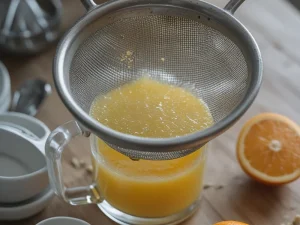
- Strain through a coarse sieve, or not at all. Pick the seeds out with a spoon and stir the pulp back in.
- Make the whole-orange version. Peel 4 medium oranges, cut away as much white pith as you can and remove the seeds. Blend the segments with 1/2 cup of cold water for about 30 seconds, then pour it as it is or pass it through a coarse sieve. You get a thicker, almost smoothie-like glass that keeps the membranes.
The fruit’s own sugar carries the flavor either way. Homemade orange juice needs no added sugar or syrup, which keeps every glass free of added sugar.
What trials found when fiber went back into orange juice
A handful of small trials looked at what happens to blood sugar when orange fiber is added back to juice. None of them tested a home recipe, and several were funded or co-run by juice companies, so read them as a hint, not a promise.
- Healthy adults, two studies. Adding 5 g of fiber from orange pomace, the pulp and membranes left after juicing, lowered the highest blood sugar point after drinking compared with plain juice, to a level close to eating whole oranges. The total rise over two hours was not significantly lower (PMID 33704466).
- Men with higher cardiometabolic risk. Thirty-six men drank juice with 5.5 g of added pomace fiber at breakfast; their peak glucose and insulin rises were smaller than with regular juice (PMID 27170728).
- Ten healthy adults. Juice enriched with citrus fiber lowered glucose and insulin at the 15-minute mark and people reported feeling fuller (PMID 31835476).
So keeping more pulp in your glass helps with a gentler drink, but these were short, small studies, and the clearest result in them came from eating the whole fruit.
Tropical twists and other blends
Once the basic juice is in the pitcher, it mixes well:
- Orange and pineapple. Two parts orange juice to one part homemade pineapple juice gives a sweet, tropical glass.
- Orange and mango. Blend 1 cup of ripe mango chunks into 2 cups of orange juice for a thick, golden drink. If you like it even thicker, our mango smoothie goes further.
- A sparkling glass. Half juice, half cold sparkling water, over ice. It feels festive and halves the natural sugar per glass.
- A brunch mocktail. Orange juice is the base of our alcohol-free mockmosa.
For more fresh juices and coolers, browse our fruit drinks collection.
For a layered sunrise look, pour fresh orange juice over grenadine in our sunrise mocktail recipe.
How long does homemade orange juice last?
Homemade orange juice tastes best within the first hours. The aroma fades fast, and navel juice can turn bitter. If you have some left, pour it into a clean jar filled almost to the top, close it and keep it cold in the refrigerator, then shake it before pouring, because the pulp settles.
To keep it longer, freeze it in ice cube trays and move the cubes to a freezer bag. Thaw them in the refrigerator or drop them straight into a glass of sparkling water. Throw out any juice that smells fermented or tastes fizzy.
Safety: who should be careful with fresh juice
Fresh-squeezed juice is not pasteurized. The FDA notes that untreated juice carries a higher risk of serious illness for children, older adults, pregnant women and people with weakened immune systems, and asks you to wash produce under running water before cutting. That is why step 1 starts at the sink.
Quick fixes for bitter or sour juice
- Bitter. The pith was squeezed too hard, or navel juice sat too long. Twist gently next time and serve navels right away.
- Sour. The fruit was underripe. Mix in a sweeter orange, or a splash of pineapple juice, rather than sugar.
- Flat. The juice is warm. Squeeze room-temperature fruit for yield, then chill the orange juice or pour it over ice.
- Too thick from the blender. Add cold water a few spoonfuls at a time.
Nutrition per glass
One glass, a third of the recipe, is about 103 calories, 24 g of carbohydrate, 2 g of protein and 2 mg of sodium. The figures come from USDA FoodData Central values for raw orange juice and stay an estimate. They count the juice only, so a glass of homemade orange juice with more pulp holds a little more fiber.
Where the numbers come from
- Orange juice, raw, USDA FoodData Central
- Oranges, raw, all commercial varieties, USDA FoodData Central
- What You Need to Know About Juice Safety, U.S. Food and Drug Administration

Homemade Orange Juice With the Pulp Left In, by Hand or Blender
Ingredients
- 8 medium juicing oranges Valencia or navel, left at room temperature; about 2 3/4 cups (650 ml) of juice
- 1 cup ice cubes optional, for serving
Instructions
- Wash the oranges under running water and dry them. Press each one firmly under your palm and roll it on the counter for a few seconds, then cut it in half across the middle.
- Juice each half on a reamer or in a citrus press over a wide bowl, twisting until only the membranes are left. Stop before you crush the white pith, which turns the juice bitter.
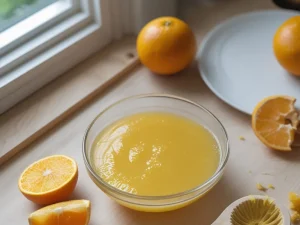
- Pour the juice through a coarse sieve into a pitcher, pick out the seeds and stir the pulp back in. Serve right away, chilled or over ice.
Notes
Nutrition
Frequently Asked Questions
How to make concentrated orange juice at home?
Real frozen concentrate is made in plants that remove most of the water, which a home kitchen cannot copy well. The practical version is to freeze fresh juice in ice cube trays and drop a few cubes into a glass, or let them melt slowly in the refrigerator.
How long can fresh orange juice be stored?
It tastes best the day you squeeze it. Keep any leftover juice covered in the refrigerator and drink it soon; freeze it in cubes if you need to keep it longer, and throw it out if it smells fermented or tastes fizzy.
Do you add water to freshly squeezed orange juice?
No, freshly squeezed juice is ready to drink as it is. You can stretch it with cold still or sparkling water if you want a lighter glass with less natural sugar per serving.
How much sugar is in orange juice?
According to USDA FoodData Central, raw orange juice has 8.4 g of sugars per 100 g, about 20.8 g in a 1 cup (248 g) glass. All of it comes from the fruit, so homemade juice needs no added sugar.
Is it better to blend or squeeze oranges?
Squeezing gives a classic, smooth juice. Blending a peeled whole orange keeps the membranes and pulp, so the drink is thicker and holds far more of the fruit’s fiber.