

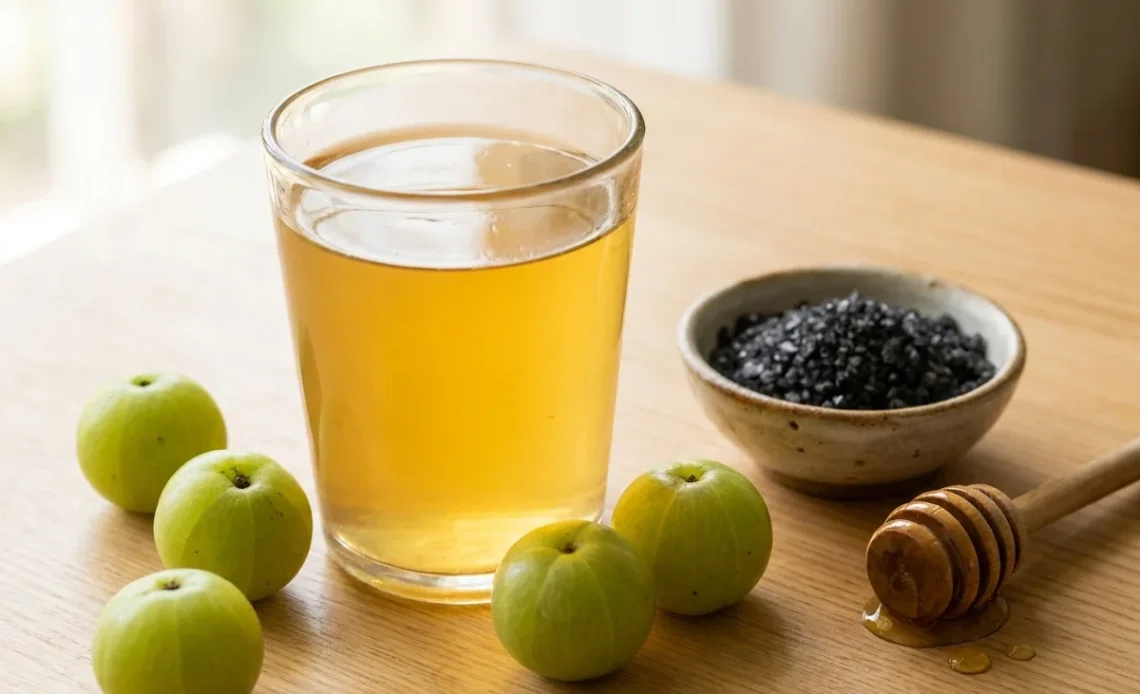
Growing up, my grandmother in Colombo called it nelli. The small, pale-green fruit sat in a clay bowl on her kitchen counter, and the first time I bit into one as a child, I got a punch of tart heat that made my eyes water.
It took me years to connect “nelli” with “amla” — the name I kept seeing on Indian grocery labels in London. Both point to the same fruit: Indian gooseberry (Phyllanthus emblica), a plant with deep roots in Ayurvedic tradition across South and Southeast Asia. In Tamil it’s nelli. In Hindi, amla. In Kannada, nellikai. Same fruit, same sharp personality.
Making nelli fruit juice at home is a different experience from anything you’ll find bottled. A good glass is sharp, slightly piney, and finishes with a sweet echo that lingers far longer than you’d expect. Getting there takes a few tries — I burned through two batches before landing on a ratio that actually works.
Why This Nelli Fruit Juice Recipe Works
Straight nelli juice is intensely astringent. Without the right dilution, even a high-quality batch tightens the throat rather than refreshing it. Most recipes online give you a ratio and stop there — which is exactly where new batches go wrong.
This version uses a 1:6 ratio — one part strained juice to six parts cold water — with raw honey and black salt added per glass. Raw honey softens the tartness without amplifying the astringency the way refined sugar does. Black salt (kala namak) adds a faint warmth that makes the sweet finish push through instead of getting buried under bitterness.
A squeeze of lime can go in for extra brightness — it’s optional, but it also slows oxidation, which nelli juice does quickly. These three elements together are what separate a genuinely drinkable glass from a punishing one.
Key Ingredient Notes
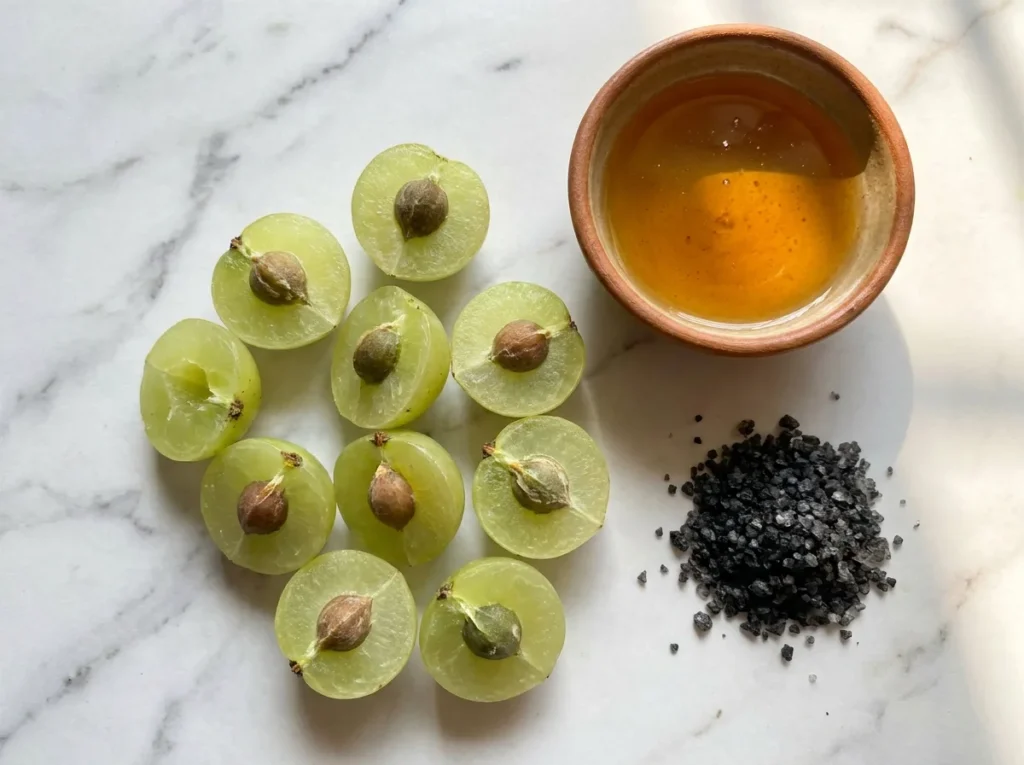
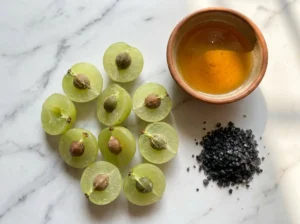
Fresh nelli fruits are the gold standard. Look for them at South Asian grocery stores — Indian, Sri Lankan, and Tamil specialty shops carry them seasonally, typically from October through February. Fresh fruits are small, round, and pale yellowish-green with a slightly ribbed skin. Buy more than you think you need; the seed takes up a fair amount of the fruit.
Frozen amla chunks are the most practical year-round option and behave almost identically to fresh in juice. Thaw completely before blending — partially frozen chunks don’t break down properly and leave behind a grainy texture. Most Indian grocery chains carry them in the freezer section.
Avoid amla powder as a swap. The color goes murky brown instead of the clear gold you get from properly strained nelli fruit juice, and the flavor profile shifts in a way that reads as earthy rather than tart. Raw honey is the preferred sweetener here. Black salt (kala namak) is available at any Indian grocery and is worth the extra trip.
What I Learned Testing This
I worked through this recipe over two Sunday mornings in early January, testing three different water ratios after my first batch came out close to undrinkable. The 1:4 ratio was too concentrated — sharp in a way that made my throat constrict on the second sip. The 1:8 ratio was flat and barely tasted of anything. The 1:6 ratio with raw honey and a pinch of black salt landed exactly where I wanted it: present, tart, and genuinely refreshing.
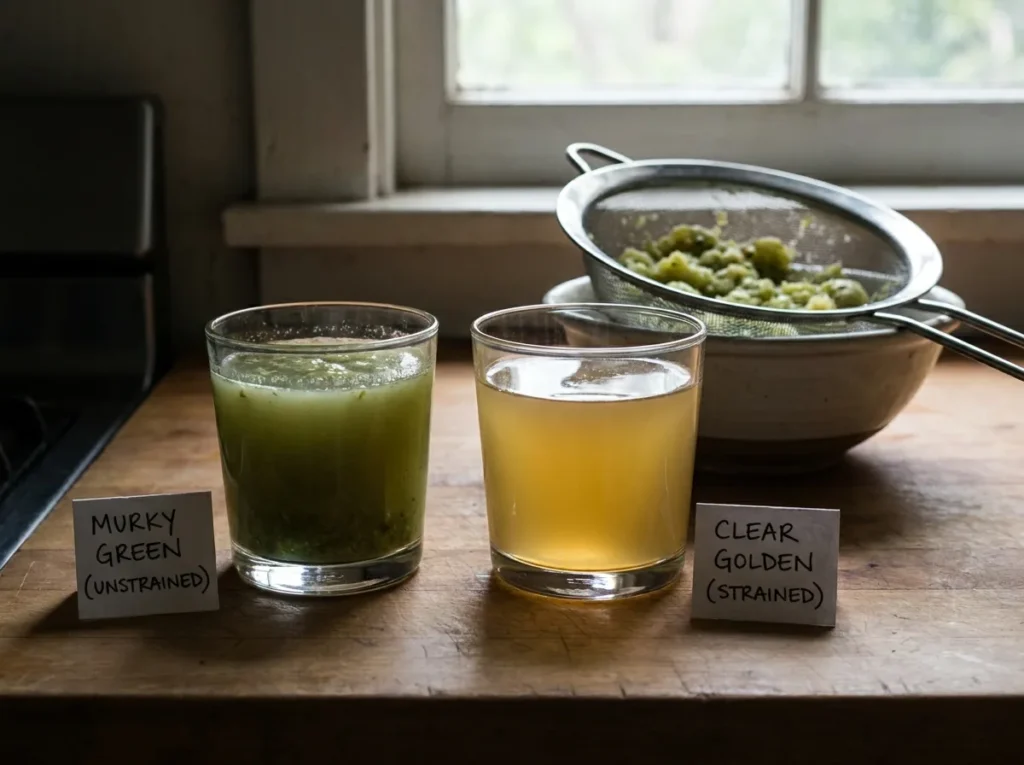
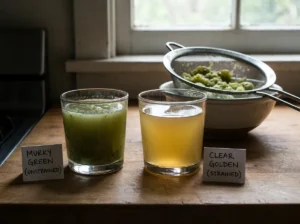
My bigger mistake that first morning was using a blender without straining afterward. Nelli pulp doesn’t break down fully even on high speed, and the result was a thick, gritty green liquid that coated the mouth in a way I didn’t enjoy. Running the blend through a fine-mesh strainer changed the drink entirely — the color shifted from murky green to clear golden yellow and the texture went smooth and clean.
Is Nelli Fruit Juice Healthy?
Nelli — called amla in Hindi and Indian gooseberry in English — is one of the richest plant sources of vitamin C available. According to USDA nutritional data, 100g of Indian gooseberry contains roughly 300–450mg of vitamin C, which is several times higher than an equivalent amount of orange juice. For context, the daily recommended intake for an adult is around 65–90mg.
Research indexed through NCBI also points to amla’s antioxidant compounds — gallic acid and ellagic acid specifically — as contributors to anti-inflammatory effects. Drinking nelli fruit juice is not a medical treatment, but as a regular addition to a balanced diet, the nutritional density is real and well-documented in clinical literature.
Store-bought nelli and amla juices vary widely. Many commercial versions add sugar, citric acid, or preservatives. If purity matters to you, homemade from fresh or frozen nelli is the only way to control exactly what goes into the glass.
Tips and Variations
A few changes take this in different directions depending on what you’re after.
- Nelli + ginger: Add a 1-inch piece of fresh ginger to the blender before processing. The result is warmer and spicier — closer to a traditional Ayurvedic preparation. Good in cooler months.
- Nelli + honey + black pepper (shot format): Skip the dilution. Use a pinch of black pepper and a teaspoon of honey, serve in a 2oz shot glass. A traditional Indian home remedy format — not a sipping drink.
- Sweetener swap: Jaggery works in place of honey and adds a mild caramel note that pairs well with the tartness. White sugar is the one to avoid — it amplifies astringency rather than softening it.
- Dilution adjustment: Start at 1:6 if you’re new to nelli. Once you’re used to the tartness, try a 1:4 ratio for a more concentrated glass with a stronger vitamin C hit.
- Storage: Nelli juice oxidizes within 20 minutes and turns brown. Serve immediately. A squeeze of lime at the straining stage slows this significantly, but same-day consumption is still best.
Troubleshooting
- Too bitter: Add more raw honey and a pinch of black salt. Adding more water alone dilutes flavor without cutting bitterness. The salt is what does the work on the bitter edge.
- Juice turned brown: Normal oxidation — the flavor is still fine, it’s cosmetic. Add a squeeze of lime directly into the juice after straining to slow it on the next batch. If already brown, drink it anyway.
- Grainy or pulpy texture: The strainer mesh is too coarse. Switch to a fine-mesh strainer, or line a regular strainer with cheesecloth and press the pulp through gently.
- Can’t find fresh nelli: Frozen amla chunks from an Indian grocery are a direct swap. Thaw fully before blending. Amla powder produces a noticeably different result and isn’t a reliable substitute for juice.
More Recipes You’ll Love
If making nelli fruit juice from scratch appealed to you, these follow the same low-ingredient, high-reward approach.
Nelli Fruit Juice
Equipment
- 1 Blender
- 1 Fine mesh strainer
- 1 Large bowl or jug
- 1 Small knife
Ingredients
For the Juice
- 12 fresh nelli (amla / Indian gooseberry) fruits halved and pitted — substitute: 200g frozen amla chunks, fully thawed
- 1 1/2 cups cold water for blending
- 2 cups cold water for diluting — adjust to taste
- 2 tsp raw honey 1 tsp per glass — adjust to taste
- 2 small pinches black salt (kala namak) 1 pinch per glass
- 1 tsp fresh lime juice optional — slows oxidation
Instructions
Prepare the Fruit
- Rinse all 12 fresh nelli fruits thoroughly under cold running water. Remove any stems and discard any damaged or bruised spots you find.

- Cut each fruit in half through the center. Use a small knife or your fingers to pop out the hard seed from each half. Roughly chop the flesh into smaller pieces to help the blender work more efficiently.
Blend
- Place all of the pitted nelli flesh (or fully thawed frozen amla chunks) into a blender. Pour in 1 1/2 cups of cold water — this is the blending water only, not the diluting water.
- Secure the blender lid and blend on high speed for 30 to 45 seconds. Keep going until the mixture is completely smooth and no large pieces of fruit remain.
Strain
- Set a fine-mesh strainer over a large bowl or jug. Make sure it sits stably before you start pouring so the strainer does not tip.
- Pour the blended nelli mixture through the strainer in a slow, steady stream. Once it has drained, press firmly all over with the back of a spoon to push every last drop of juice through. Discard the dry pulp left in the strainer.
Dilute and Serve
- Add the remaining 2 cups of cold water to the strained juice and stir well to combine. This gives you roughly a 1:6 dilution ratio — a good starting balance for most first-timers. Add a little more water if the taste is too intense.
- Fill two glasses with ice, then divide the juice evenly between them. Stir 1 teaspoon of raw honey and 1 small pinch of black salt (kala namak) into each glass until the honey has fully dissolved.
- If using lime juice, stir it in now — it slows oxidation and helps the juice hold its green-yellow color for longer. Taste each glass and adjust honey or water to your liking. Serve immediately for the best flavor, color, and vitamin C content.
Video
Notes
Raw honey works better than white sugar here — sugar tends to amplify the natural astringency of amla rather than soften it.
For a stronger, more concentrated version, try a 1:4 water-to-juice ratio. Start at 1:6 if you are new to nelli or amla.
Frozen amla chunks from Indian grocery stores work year-round and produce nearly identical results to fresh nelli fruits.
Frequently Asked Question
What fruit is Nelli?
Nelli is the Tamil and Sinhala name for Indian gooseberry, a small pale-green fruit native to South and Southeast Asia. Known botanically as Phyllanthus emblica, it has deep roots in Ayurvedic medicine. The same fruit goes by amla in Hindi and Urdu, and nellikai in Kannada and Telugu.
What is the English name for Nelli?
The English name for nelli is Indian gooseberry. It is also widely labeled as amla on South Asian grocery products. Despite the different regional names — nelli, amla, nellikai, Indian gooseberry — they all refer to the same fruit, Phyllanthus emblica, with the same nutritional profile and flavor.
What are the benefits of Nelli?
Nelli (amla) is exceptionally high in vitamin C — roughly 300–450mg per 100g, several times more than orange juice. It also contains antioxidant compounds including gallic acid and ellagic acid, linked to anti-inflammatory effects. Traditional Ayurvedic practice associates regular consumption with immune support, digestion, and skin health.
Which Amla juice is 100% pure?
Most store-bought amla and nelli juices include added sugar, citric acid, or preservatives. For truly pure juice, homemade from fresh or frozen nelli with no additives is the only reliable option. It takes about 10 minutes and gives you full control over every ingredient in the glass.
How do I store nelli fruit juice?
Nelli juice oxidizes fast and turns brown within 20 minutes of straining. Store in a sealed glass jar in the refrigerator and consume within 24 hours. Adding a small squeeze of lime at the straining stage slows the oxidation. For the best color and flavor, serve immediately after making.
Can I use frozen amla instead of fresh nelli?
Yes — frozen amla chunks are a direct substitute and produce nearly identical results. Thaw the chunks completely before blending. Most Indian grocery stores carry frozen amla year-round, making it the most practical option outside of nelli’s seasonal window from October through February.