
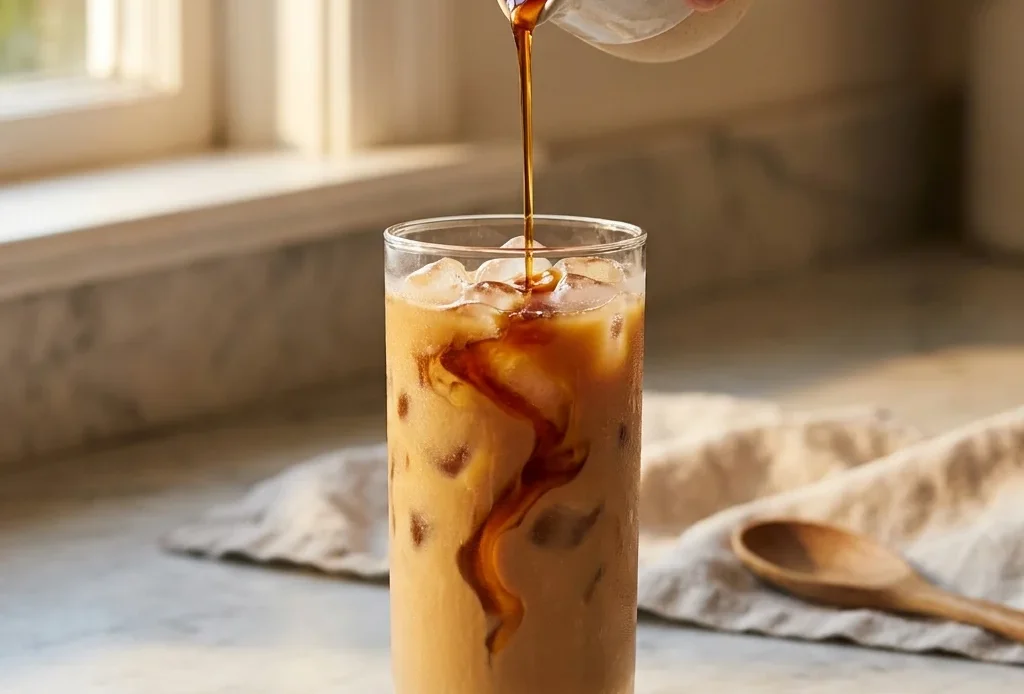
Paying $6.50 for a maple latte pushed me over the edge. I asked the barista what syrup they used — she smiled and said nothing. So I went home and figured it out. This mapleine syrup recipe uses three pantry staples and takes five minutes on the stove. Once you have a jar of this mapleine syrup ready in the fridge, you’ll use it in coffee, dirty sodas, and on pancakes more than you expect. Mapleine is a concentrated imitation maple flavoring made by Crescent, and a little goes a long way. If you’ve never cooked with it before, start with this mapleine syrup recipe — it’s forgiving, cheap, and done before your coffee gets cold.
Why This Mapleine Syrup Recipe Works
This mapleine syrup recipe relies on two variables: the sugar ratio and when you add the extract. A 2:1 sugar-to-water ratio gives you a syrup thick enough to coat a spoon and stay in suspension in a cold drink. Push it higher and the syrup crystallizes in the fridge. Drop it lower and you get a thin liquid that doesn’t cling to anything.
Mapleine is concentrated — adding it off the heat, after you’ve pulled the pan from the stove, keeps the flavor forward rather than cooked-flat. High heat drives off the volatile compounds that give the extract its character, so timing matters more than it looks. Every mapleine syrup recipe that skips this step ends up tasting flat by comparison.
A batch made with half white sugar and half brown sugar lands in the best position: amber, slightly molasses-forward, and versatile. Real maple syrup takes hours of sap reduction to produce that depth of flavor. This mapleine syrup recipe gets you most of the way there in five minutes.
Key Ingredient Notes
Mapleine is made by Crescent, a brand producing this imitation maple flavoring since 1908. Most grocery stores carry the small green-and-white bottle in the baking aisle alongside vanilla and almond extract. I found mine at H-Mart, wedged between the vanilla and the almond bottles — one 2-oz bottle covers around 12 mapleine syrup recipe batches at half a teaspoon each. It’s also easy to find from major online retailers. If Mapleine is unavailable, McCormick’s pure maple extract works as a direct substitute, though the flavor lands lighter and less sharp.
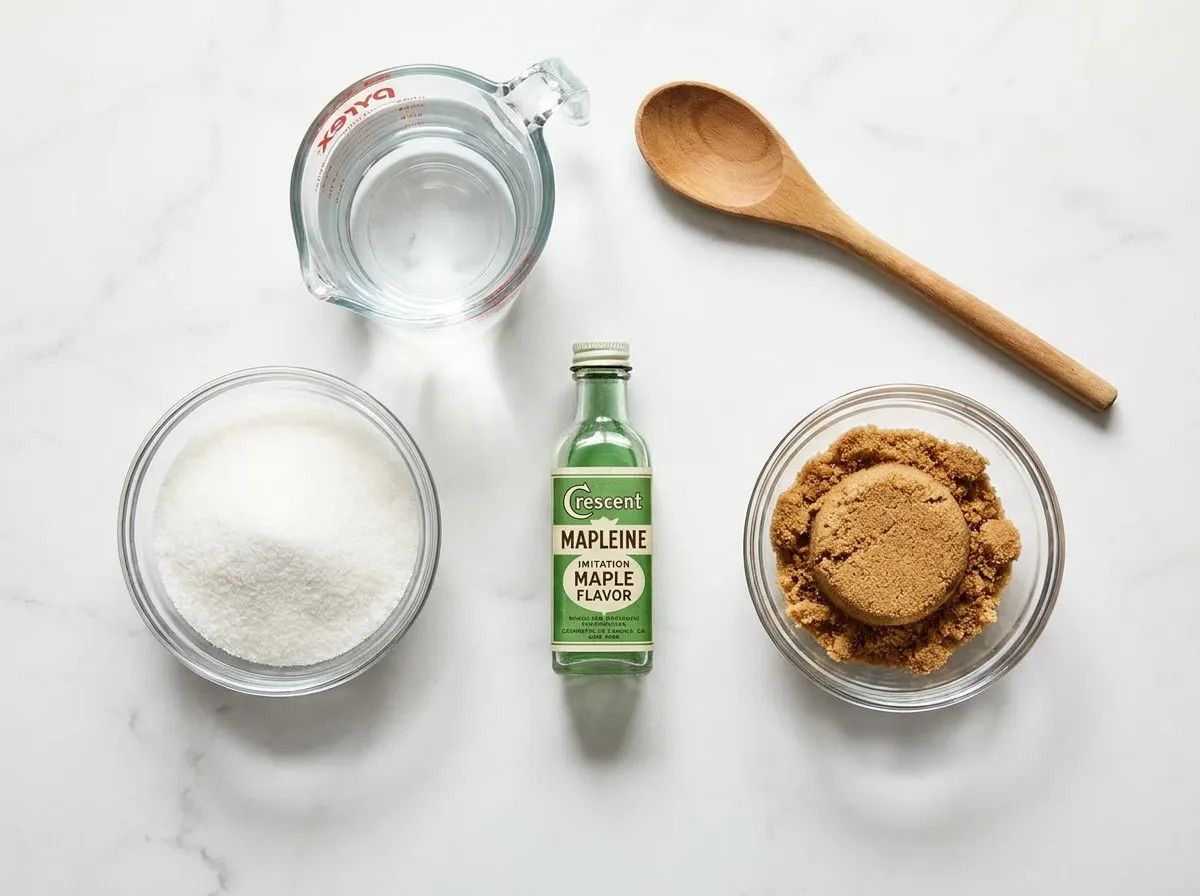
Sugar choice shapes the finished syrup more than people expect. White sugar produces a clean, lighter syrup with no competing flavor. Brown sugar gives a deeper, caramel-adjacent quality — good in coffee drinks, slightly heavy for pancakes. A 1:1 mix of white and brown is the combination I return to every mapleine syrup recipe batch.
Corn syrup is optional but worth adding. One tablespoon per batch prevents crystallization and gives the finished syrup a glossier texture that holds up better after a week in the fridge. Honey works in a pinch but produces a thinner result and reads as honey-forward rather than maple. Corn syrup’s glucose structure interrupts crystal formation in a way honey doesn’t replicate — important for any mapleine syrup recipe you want to store longer than two weeks.
What I Learned Testing This
Three batches, one slow Sunday in February, somewhere between my second and third cup of coffee. Testing this mapleine syrup recipe meant running Batch A with straight white sugar at a 2:1 ratio, Batch B with half white and half brown sugar plus a tablespoon of corn syrup off heat, and Batch C using all brown sugar and no corn syrup.
Batch B won — better texture after 24 hours in the fridge, cleaner maple flavor without bitterness, and no graininess by day three. Batch C had a richer color but tipped toward slightly bitter by day two, especially in coffee. That result is now baked into this mapleine syrup recipe as the default ratio.
My first attempt crystallized overnight. I’d pushed the ratio closer to 3:1 — too much sugar — and skipped the corn syrup. Next morning I reheated the jar in a pan of warm water, added a splash of water, and stirred it back to liquid. It worked, but the texture was never quite the same. Running this mapleine syrup recipe at a strict 2:1 and adding corn syrup prevents that entirely.
And the moment Mapleine hits the hot sugar syrup — the kitchen fills with that sharp caramel-maple scent, the exact smell of a diner at 7am. Specific and unmistakable. It’s gone in a few minutes as the syrup cools, but for that short window the whole kitchen smells like a breakfast counter you’d actually want to sit at.
Tips and Variations
This mapleine syrup recipe is easy to adjust once you’ve made it once. For a thinner syrup, add an extra quarter cup of water. For thicker, use slightly less. Pull the pan off heat before the syrup reaches the consistency you want in the jar — it thickens more as it cools, and overshooting is harder to fix than undershooting.
- All white sugar: lightest color, cleanest maple flavor, works best in delicate drinks like sparkling water or light mocktails
- All brown sugar: deep mahogany color, rich and slightly bitter — best in coffee drinks or paired with ginger
- 1:1 white + brown: the balanced middle — amber color, smooth flavor, most versatile across drinks and food
- Honey swap: replace corn syrup with an equal amount of honey for a floral undertone, but expect a thinner final texture
- Color control: half a teaspoon of Mapleine produces amber; a full teaspoon turns the syrup deep mahogany — adjust by sight and taste
Storage: a finished mapleine syrup recipe batch keeps in a sealed glass jar in the refrigerator for up to six weeks. Shake or stir before using. If graininess appears after a few days, a quick reheat with a tablespoon of warm water and a stir brings it back without any flavor loss.
How to Use Mapleine Syrup in Drinks
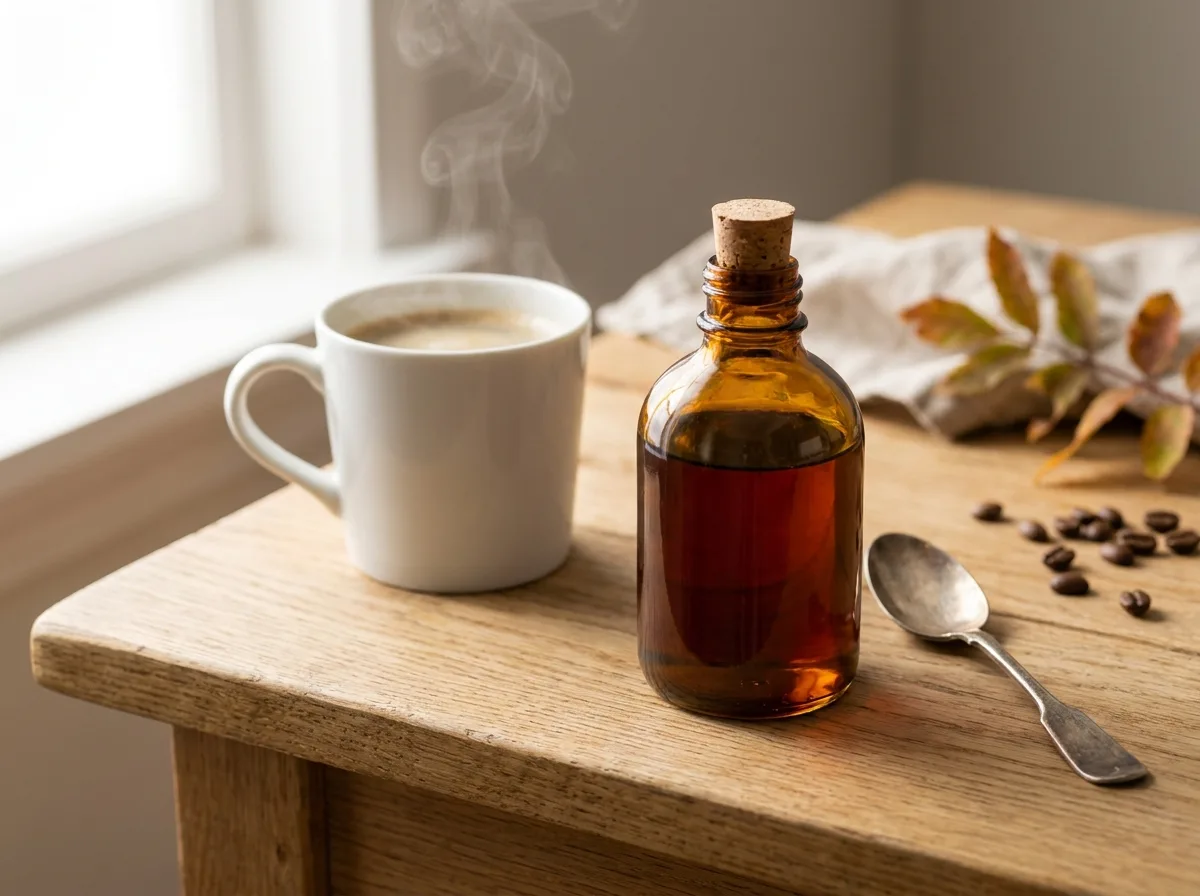
Most people stop at pancakes. A jar of mapleine syrup recipe output is wasted if it never makes it past the breakfast plate.
Coffee drinks are where this mapleine syrup earns its place. One tablespoon stirred into black coffee gives you a rough maple Americano. Two tablespoons in cold brew with a splash of cream gets you about 80% of what a café charges $6.50 to deliver. Add a pinch of cinnamon and that gap closes further.
Dirty sodas pair naturally with the mapleine syrup recipe flavor profile. A tablespoon added to a glass before pouring in cream soda and a float of half-and-half produces a maple cream dirty soda in about two minutes. For a maple version of a dirty Dr Pepper, try half a tablespoon in the glass before the soda goes in — the flavors layer without fighting. See the full build collection in our dirty soda recipes guide.
For mocktails, a tablespoon of this mapleine syrup in sparkling water with a squeeze of lemon, a few ice cubes, and a sprig of rosemary rounds out as something you’d order at a restaurant. It also balances well with ginger — a half tablespoon in a ginger beer base cuts the heat slightly and gives it a diner-maple warmth.
Troubleshooting
Syrup crystallized or turned grainy in the fridge: too much sugar in the ratio, or no corn syrup to stabilize. Reheat the jar gently in a pan of warm water, add one tablespoon of water at a time, and stir until liquid again. Add a teaspoon of corn syrup before re-sealing. Running the mapleine syrup recipe at a 2:1 ratio with corn syrup prevents this from the start.
Flavor is too intense or reads as medicinal: Mapleine is roughly three times stronger than pure maple extract. Reduce to a quarter teaspoon next mapleine syrup recipe batch and taste before adding more. You can always increase — you can’t pull it back once it’s in.
Syrup is too thin: boil for one additional minute before removing from heat, or reduce the water by a quarter cup next time. Remember the syrup thickens further as it cools completely, so wait 15 minutes before judging the final texture.
Color turned darker than expected: more Mapleine produces a deeper color as well as a stronger flavor. Cut to a quarter teaspoon for a light amber finish. Dark brown sugar also deepens the color independently of the extract amount.
More Recipes You’ll Love
If this mapleine syrup recipe gave you a fresh jar to work through, these are good starting points for putting it to use in your drinks:
- Dirty Dr Pepper Recipe — add half a tablespoon of this mapleine syrup recipe output to the glass before the soda and it becomes something noticeably different
- Dirty Soda Recipes — a full roundup of builds that work well with a flavored homemade syrup base
- Homemade Soda Recipes — the complete collection, from dirty sodas to fresh grapefruit soda made from scratch
Mapleine Syrup Recipe
Equipment
- 1 Small saucepan
- 1 Glass jar or squeeze bottle for storing syrup
- 1 Whisk or wooden spoon
Ingredients
For the Mapleine Syrup
- 1 cup white sugar
- 1 cup brown sugar packed; the 1:1 white-to-brown mix gives depth without being too molasses-forward
- 1 cup water
- 1/2 tsp Mapleine extract Crescent brand; start with 1/4 tsp if you prefer subtle maple — add off the heat only
- 1 tbsp corn syrup optional but recommended — prevents crystallization and adds gloss
Instructions
Make the Syrup
- Add white sugar, brown sugar, and water to a small saucepan. Stir to combine. The 2:1 sugar-to-water ratio (2 cups sugar total to 1 cup water) gives you a syrup thick enough to coat a spoon and stay in suspension in cold drinks without settling to the bottom.
- Place over medium heat and stir constantly. You are waiting for all sugar crystals to dissolve completely — the moment the liquid is clear with no visible crystals, remove the pan from the heat. Do not boil. Boiling is not necessary and can cause crystallization.
- This step is critical. Remove the pan from the stove before adding the Mapleine. High heat drives off the volatile maple compounds that give the extract its character. Add 1/2 teaspoon and stir immediately. Start at 1/4 teaspoon if you prefer a subtler maple flavor — taste and add more if needed.
- Stir in 1 tablespoon of corn syrup if using. This interrupts crystal formation and gives the finished syrup a glossier texture that holds up better after a week in the fridge. Honey is a workable substitute but produces a thinner syrup with a honey-forward flavor.
Cool and Store
- Let the syrup cool on the counter for at least 20 minutes before bottling. Pouring hot syrup into a glass jar can crack it. Do not add it to cold drinks while still warm — temperature shock causes separation.
- Transfer to a clean glass jar or squeeze bottle. Store in the fridge for up to 3 weeks. If the syrup crystallizes in a very cold fridge, warm the sealed jar in a saucepan of warm water for 2 to 3 minutes — it dissolves back completely. Use 1 to 2 tablespoons per serving in coffee, dirty sodas, or over pancakes.
Notes
Nutrition
Frequently Asked Questions
What are the ingredients in Mapleine?
Mapleine is an imitation maple flavoring made by Crescent. Its main components are propylene glycol, artificial maple flavor, and caramel color. It contains no actual maple sap. A small amount — typically half a teaspoon per cup of syrup — delivers a strong, recognizable maple flavor to homemade syrups and baked goods.
How do you use Mapleine in a recipe?
Add Mapleine off the heat after your sugar syrup has boiled and been removed from the stove. Stirring it in while the pan is still on the burner cooks off the volatile compounds that carry the maple flavor. Start with a quarter teaspoon, taste after 30 seconds, and add more if you want a deeper or darker result.
How long does homemade mapleine syrup last in the fridge?
Stored in a sealed glass jar, homemade mapleine syrup keeps for up to six weeks in the refrigerator. Batches made with corn syrup tend to stay smooth longer. If any graininess or crystallization appears, reheat the jar gently in warm water, add a tablespoon of water, and stir until the syrup is liquid again.
Can you make mapleine syrup without corn syrup?
Yes. Corn syrup prevents crystallization but is not required. A batch made without it will still taste good but may turn grainy after several days in the fridge, especially if the sugar ratio is high. If you skip corn syrup, use the syrup within two weeks and stir before each use to redistribute any settled sugar.
What is the difference between Mapleine and pure maple extract?
Mapleine is an imitation maple flavoring approximately three times stronger than pure maple extract. A recipe calling for one teaspoon of pure maple extract would need only a quarter to a third teaspoon of Mapleine. Pure maple extract uses real maple compounds; Mapleine uses artificial flavoring and caramel color to replicate the taste at a much lower cost per batch.
Can I use mapleine syrup in coffee?
Yes — and it works very well. One tablespoon in black coffee or cold brew produces a clean maple flavor without sweetening the drink excessively. Two tablespoons in cold brew with a splash of cream comes close to a cafe maple latte. The syrup dissolves fully even in cold liquids, which is an advantage over raw brown sugar or honey in iced drinks.
Is mapleine syrup the same as real maple syrup?
No. Real maple syrup is made by reducing maple tree sap and contains natural sugars, minerals, and a complex flavor profile that develops during evaporation. Mapleine syrup is a simple sugar syrup flavored with imitation maple extract. Both are sweet and maple-flavored, but they are different products with different costs, nutritional profiles, and best uses.
Recipes That Use This Syrup
- Dirty Dr Pepper — McDonald’s copycat done 3 ways — mapleine is the key.
- Raspberry Vanilla Dirty Soda — The combination everyone comes back to.
- All Dirty Soda Recipes — The full roundup: 7 easy viral dirty sodas.
- All Homemade Soda Recipes — The full hub — quick, dirty, and fermented.
Prefer something less sweet? The homemade cream soda recipe uses this same simple-syrup method, just with vanilla instead of mapleine.


Three ingredients and it’s better than anything from a bottle. Made a double batch because it goes fast.