
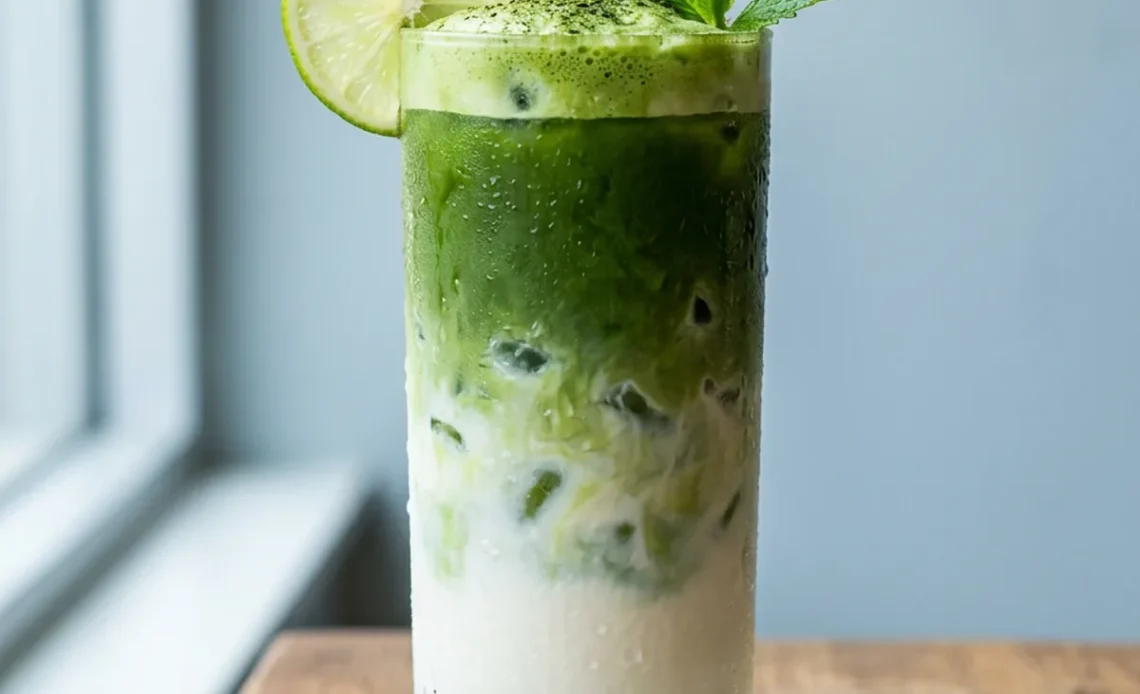
An iced matcha latte should taste grassy and a little sweet, not chalky and bitter, and the difference almost always comes down to two things nobody explains clearly: the matcha-to-water ratio and the grade of powder you started with. I ruined my first three attempts before I figured out why the café version tastes smooth and mine kept turning out clumpy and thin. Below is the ratio that fixed it, the grade that’s actually worth the extra cost, and the mistakes that wasted a lot of good matcha before I got there.
Why This Iced Matcha Latte Works
Matcha powder is pure ground tea leaf, not a leaf steeped and strained, so it never fully dissolves; it stays suspended, which is exactly why whisking technique matters more than it does for regular tea. Sifting the powder before whisking breaks up the compressed clumps that form during storage; skip that step and you get gritty pockets of pure matcha floating in your glass no matter how hard you whisk after.
Whisking with a small amount of hot water first, before any milk or ice touches the bowl, is the second piece. Hot water dissolves matcha’s natural pectin-like texture in a way cold liquid can’t, so a proper iced matcha latte still starts hot in the bowl even though it ends up cold in the glass.
Key Ingredient Notes
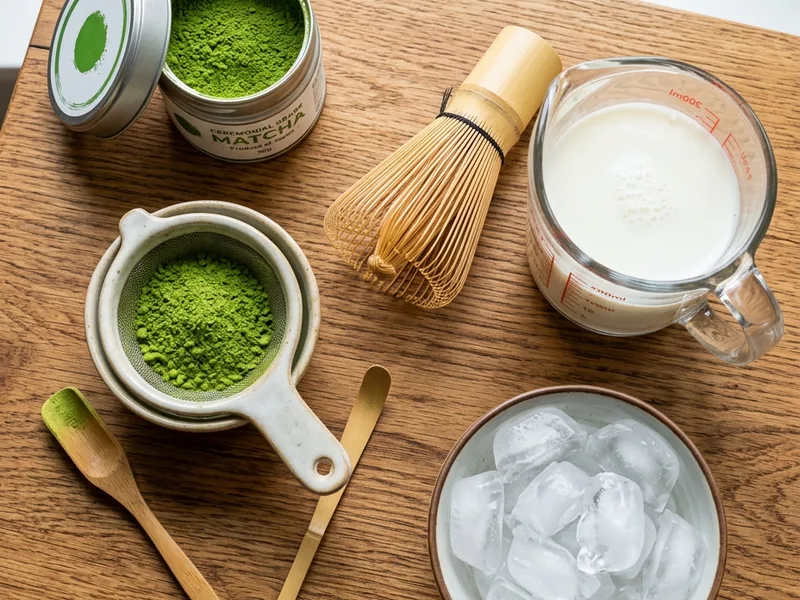
Ceremonial grade matcha is the right call for this iced matcha latte specifically, even though it costs more than culinary grade — culinary grade is bred for baking and cooking, where it gets masked by sugar and butter, and it tastes noticeably more bitter and dull green when it’s the star of a drink. A tin runs $18-$25 for enough to make a couple dozen lattes, and it keeps for months in the fridge sealed away from light and air.
Whole milk gives the creamiest texture, but oat milk is the closest dairy-free match — its natural sweetness and body hold up against matcha’s bitterness better than almond or coconut milk, which both turn thin and let the bitterness dominate.
Iced Matcha Latte vs. Dirty Matcha Latte
A dirty matcha latte is this same drink with a shot of espresso poured on top for a caffeine boost and a deeper, slightly bitter contrast — genuinely a different drink, not just a stronger version. This plain iced matcha latte stays milder and grassier, closer to what most cafés serve by default before anyone asks for the “dirty” add-on.
What I Learned Testing This
I started making this at home last July during a heatwave, mostly to stop paying almost seven dollars for the coffee-shop version every other afternoon. My first batch used culinary-grade matcha I already had in the pantry from a baking project, and it came out so bitter and dull-colored that I dumped half of it. Switching to ceremonial grade the next week, plus sifting before whisking instead of just stirring it in, fixed both the clumping and the bitterness in one try.
Is Iced Matcha Latte Healthy?
Matcha’s caffeine and L-theanine numbers are the part most recipes skip entirely. A peer-reviewed compositional study measured matcha at roughly 16.1mg of caffeine and 9.85mg of L-theanine per gram of powder, so a standard 2-gram serving works out to about 32mg of caffeine — well under a drip coffee’s 95mg average. L-theanine is the amino acid credited with smoothing that caffeine into a steadier lift instead of a spike and crash, which is the real (and testable) reason this drink feels calmer than coffee, not just a marketing claim.
Two grams of matcha per iced matcha latte, once or twice a day, stays comfortably within the FDA’s general 400mg daily caffeine guidance for healthy adults. Anyone pregnant, caffeine-sensitive, or on medication that interacts with caffeine should check with a doctor before making this a daily habit.
Tips and Variations
A few ways to change up this iced matcha latte once the base ratio is dialed in:
- Swap in oat milk for the creamiest dairy-free version that still holds up against the bitterness.
- Add a half teaspoon of vanilla extract for a rounder, less grassy flavor.
- Layer the matcha shot on top instead of stirring it in for the café-style two-tone look.
- Sweeten with honey or maple syrup instead of white sugar for a rounder finish.
- Top with a shot of espresso for a dirty matcha latte instead, per the comparison above.
Troubleshooting This Iced Matcha Latte
Clumpy or gritty texture: You skipped sifting. Push the matcha through a fine mesh strainer before it ever touches water, every time, no exceptions.
Tastes bitter and dull: That’s almost always culinary-grade matcha standing in for ceremonial grade. The lower grade is meant to be baked or cooked, not sipped straight.
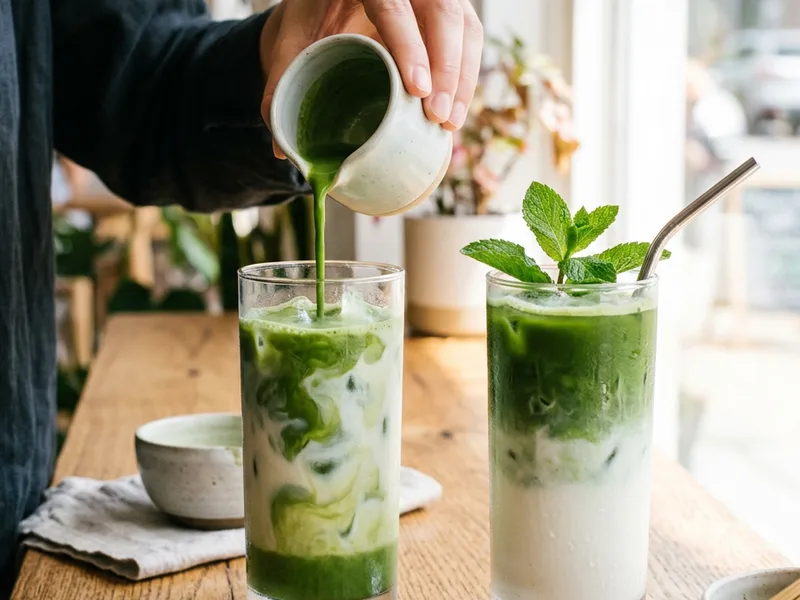
Separates into layers in the glass: Normal if you poured it in without stirring — matcha settles since it’s suspended, not dissolved. A quick stir before drinking fixes it instantly.
Tastes watery instead of rich: Too much ice relative to milk. Fill the glass with milk most of the way first, then add ice on top instead of the other way around.
More Recipes You’ll Love
If matcha is becoming a regular habit, the dirty matcha latte is the natural next stop for anyone who wants an espresso kick alongside it. The rest of the tea drinks collection has plenty more caffeine-conscious options if you’re building out a rotation beyond just matcha.
Quick recap: sift 2 grams of ceremonial-grade matcha, whisk with 2oz of hot (not boiling) water until frothy and clump-free, then pour over ice and fill with milk. Culinary-grade matcha and skipping the sift step are the two mistakes that ruin most homemade batches. Stick to two servings a day to stay well within general caffeine guidance for this iced matcha latte.
Iced Matcha Latte
Equipment
- 1 Fine mesh sifter
- 1 Bamboo whisk or milk frother
- 1 Tall glass
Ingredients
For the Iced Matcha Latte
- 2 grams ceremonial grade matcha powder about 1 teaspoon, sifted
- 2 oz hot water 175F, not boiling
- 6 oz whole milk or oat milk
- 1 cup ice
- 1 tsp honey or simple syrup optional, to taste
Instructions
Whisk the Matcha
- Push the matcha powder through a fine mesh sifter into a small bowl to break up any clumps.
- Pour the hot water (175F, not boiling) over the sifted matcha.
- Whisk briskly in a zigzag motion for 20-30 seconds until the matcha is smooth and lightly foamy, with no visible clumps.
Assemble the Drink
- Fill a tall glass most of the way with ice.
- Pour the milk over the ice, leaving room at the top for the matcha.
- Stir in honey or simple syrup now if using, so it dissolves before the matcha goes in.
- Slowly pour the whisked matcha over the milk. Stir once before drinking, or leave layered for a two-tone look.
Notes
Frequently Asked Questions
How much caffeine is in an iced matcha latte?
A standard 2-gram serving of matcha works out to roughly 32mg of caffeine, based on a peer-reviewed compositional study — well under a drip coffee’s 95mg average. L-theanine in the same serving is credited with smoothing that caffeine into a steadier lift.
What’s the difference between an iced matcha latte and a dirty matcha latte?
A dirty matcha latte adds a shot of espresso on top for extra caffeine and a bitter contrast. A plain iced matcha latte stays milder and grassier without the espresso.
Do I need ceremonial grade matcha for this recipe?
Yes. Culinary grade is bred for baking, where sugar and butter mask its bitterness. Used straight in a latte, it tastes noticeably more bitter and dull-colored than ceremonial grade.
Why does my matcha clump instead of dissolving smoothly?
Matcha never fully dissolves since it’s suspended powder, not steeped leaf. Skipping the sift step before whisking leaves compressed clumps that never break up, even with hard whisking.
Can I make an iced matcha latte dairy-free?
Yes. Oat milk is the closest match to whole milk here — its natural sweetness and body hold up against matcha’s bitterness better than almond or coconut milk, which both turn thin.
How much matcha should I drink per day?
Two grams of matcha once or twice a day stays comfortably within the FDA’s general 400mg daily caffeine guidance for healthy adults. Check with a doctor if pregnant, caffeine-sensitive, or on interacting medication.