
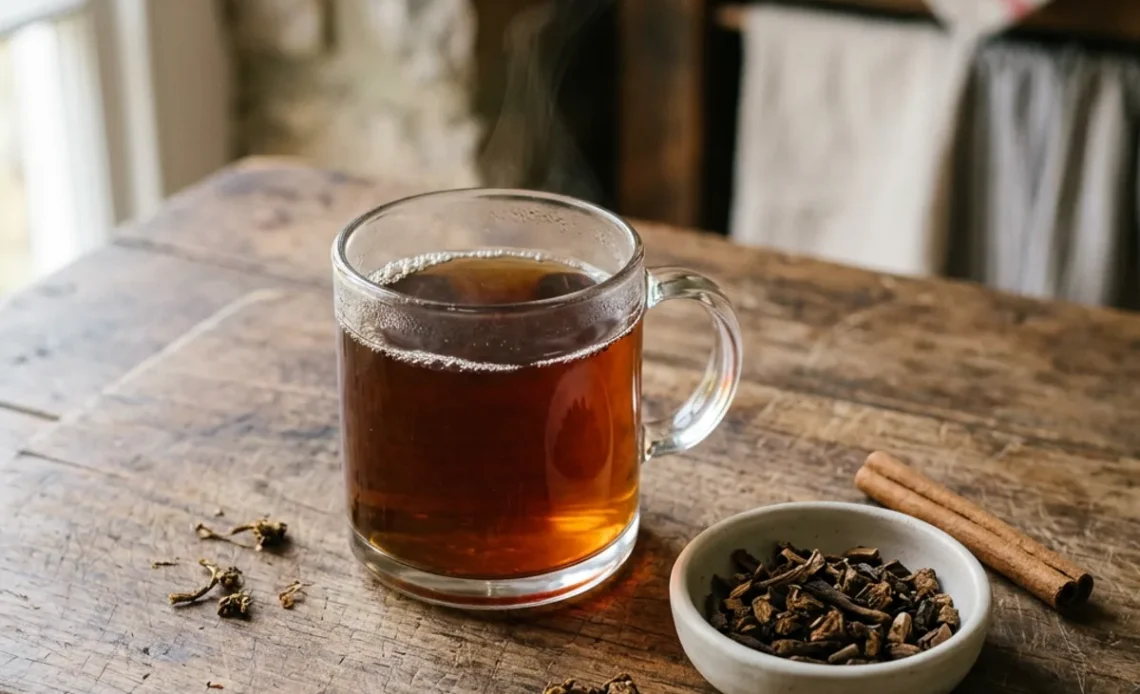
In short: dandelion tea is a caffeine-free herbal infusion made from the roots, leaves or flowers of the common dandelion, Taraxacum officinale. For the richest cup, simmer roasted dandelion root 10 minutes, covered: it tastes toasty and nutty, at about 2 calories a mug unsweetened. Evidence for health effects is thin.
The exact amounts for the simmered root version are in the recipe card.
The difference is in one detail: dandelion root is a root, not a leaf. Pour hot water over it for three minutes like a tea bag and you get a thin, brown water. Give it a covered simmer and it turns into a deep amber cup with real body. Below you will find that method, three other ways to make dandelion tea, and an honest look at the claims.
| Dandelion tea style | What is in the cup (USDA, brewed herbal tea) | What the evidence shows | Main caution |
|---|---|---|---|
| Roasted dandelion root tea | About 2 calories a plain mug, no caffeine | No trial on the tea itself | Talk to your provider if you take a water pill or blood thinner (NCCIH) |
| Dandelion flower tea | Mild floral infusion, about 2 calories plain | No study found on flower tea | Possible reaction if you are sensitive to ragweed or daisies (NCCIH) |
| Dandelion leaf tea | Grassy, more bitter, about 2 calories plain | One small trial on a concentrated leaf extract, not tea | Pick only leaves from ground that was never sprayed |
| Iced dandelion tea | The root tea, brewed strong and poured over ice | No study on this drink | Keep it in the fridge and drink it within 2 days |
Root, leaf or flower: three different cups
The name “dandelion tea” covers three drinks that barely taste alike. Pick the part first, then the method.
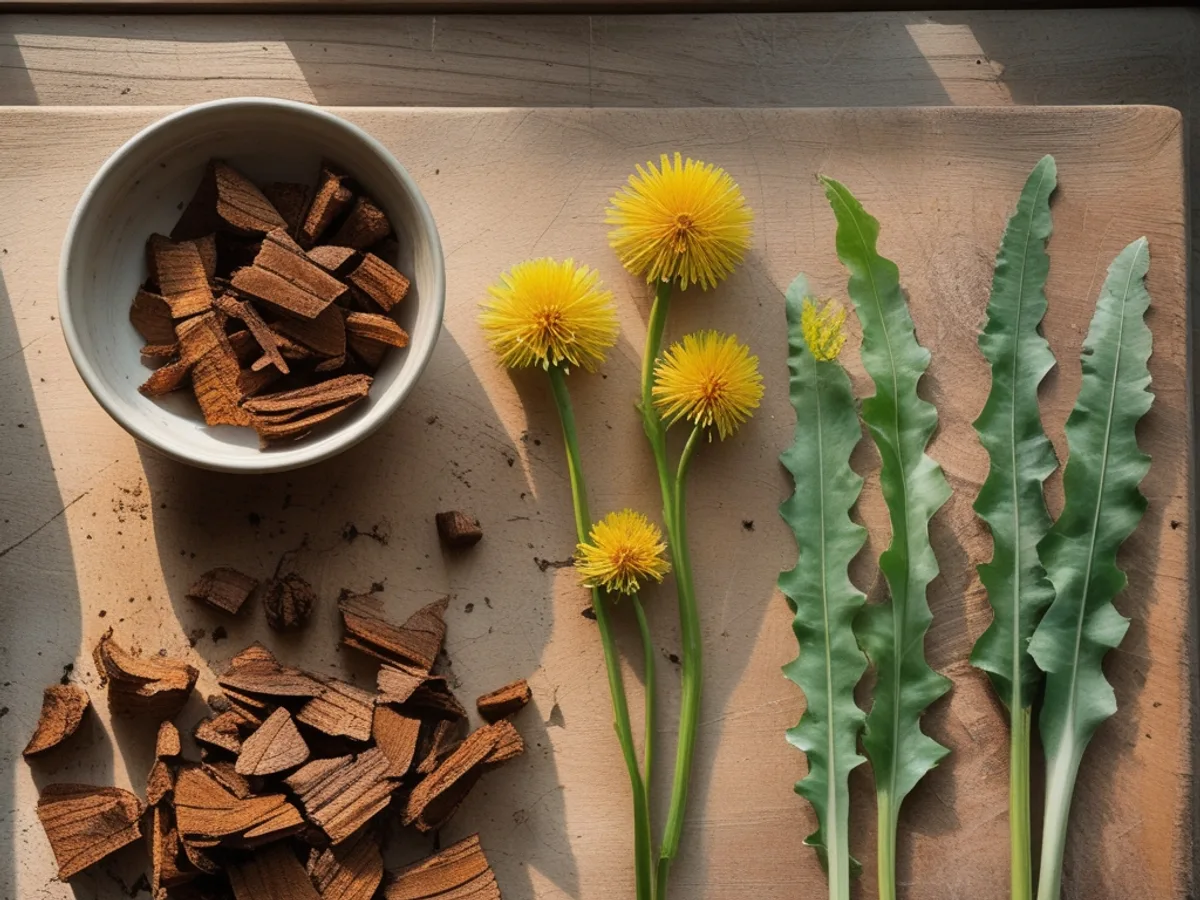
- Roasted root. Dark, nutty and toasty, with a light bitterness and a caramel note from the roast. This is the one sold in boxes and the one closest to coffee. The raw, unroasted root brews lighter and more earthy.
- Leaves. A pale green-gold infusion, grassy and clearly bitter. Young leaves taste milder than old ones.
- Flowers. The gentlest of the three: a pale yellow, softly floral cup with a faint honey note. You will rarely find it in stores, so it is mostly a spring, backyard drink.
All three are caffeine-free. Dandelion is not related to the tea plant, Camellia sinensis, so there is nothing to remove, whatever part you brew. If you want a caffeine-free evening cup with no bitterness at all, our chamomile tea recipe is the softer choice.
How to Make Tea From Dandelion Root
This is the recipe on the card. Mise en place takes two minutes: a small saucepan with a lid, a fine-mesh strainer, a teapot or jug.
The ratio: 1 tablespoon of roasted dandelion root per cup of finished tea, plus a little extra water to make up for what simmers off. For two mugs, that is 2 tablespoons of root in 2 1/2 cups (600 ml) of water.
The method:
- Simmer the root and a cinnamon stick in the water, covered, on low heat for 10 minutes.
- Rest 2 minutes off the heat, then strain into a warmed teapot.
- Taste it plain, and only then decide on sweetener.
Why simmer instead of steep? Root pieces are dense. A short steep only reaches the surface; a gentle, covered simmer (what herbalists call a decoction) pulls flavor from the inside of each piece. If you prefer a softer cup, I would rather cut the simmer to 7 minutes than add sugar to hide the bitterness.
A plain mug of this roasted dandelion root tea comes to about 2 calories, based on USDA values for brewed herbal tea. With 1 teaspoon of maple syrup in each mug, it lands around 20 calories, nearly all of it from the syrup. That makes it a light, caffeine-free swap for an afternoon coffee with cream and sugar, and it helps with cutting back on caffeine late in the day without giving up a dark, warm cup.
Make it your own:
- Creamy: add a splash of warm milk or oat milk to each mug. The roast and the milk together read a lot like a café au lait.
- Ginger: add 3 thin slices of fresh ginger to the pan with the root.
- Spiced: add 2 lightly crushed cardamom pods or 2 cloves next to the cinnamon.
Very little work, a delicious cup and the body Mathieu M was after, all from simmering the root exactly as written, so the saucepan will be back on the stove.
Roasting Your Own Dandelion Roots
Boxed roasted root is consistent and easy. Your own roots take an afternoon, and the reward is a roast level you choose.
- Dig. Late fall or early spring is the usual time to dig. Use a garden fork and loosen the soil around the long taproot before you pull.
- Scrub and chop. Wash off every bit of soil with a stiff brush; do not peel. Chop the roots into pieces about the size of a pea, while they are still fresh and soft. Dried roots are hard to cut.
- Dry. Spread the pieces on a baking sheet and dry them in a low oven, around 200°F (95°C), until they snap rather than bend, usually 2 to 3 hours.
- Roast. Raise the oven to 350°F (175°C) and roast, stirring every 10 minutes, until the pieces are deep brown and the kitchen smells of toast and coffee, about 20 to 30 minutes. Watch the last minutes closely: black means burnt and bitter.
Cool the pieces completely and store them in a sealed jar. Lighter roast, lighter and more herbal cup; darker roast, closer to coffee.
Where to pick: pick only where you know nothing has been sprayed with weed killer or pesticide. Skip roadsides, lawns that are treated, public parks and the edges of farm fields. Your own untreated garden is the safest bet.
Dandelion Flower Tea From Your Yard
Fresh flowers make a light, sunny cup, best in spring when lawns are full of them.
For 2 cups, you need about 1 cup of fully open flower heads, picked on a dry morning from untreated ground.
- Shake each flower gently to send any insects on their way, then give them a quick rinse in cool water.
- Pinch off most of the green base under the petals; it adds bitterness.
- Pour 2 cups of water that has just boiled over the flowers, cover, and steep for 5 to 10 minutes.
- Strain and taste. A thin slice of lemon or half a teaspoon of maple syrup per cup is plenty.
The color is the fun part: the tea comes out a soft gold. If you like pretty, light herbal cups, our hibiscus tea recipe gives a ruby-red, tart counterpart, hot or cold-brewed.
Dandelion Leaf Tea
Leaf tea is the most bitter of the three, so it rewards restraint.
- Choose young leaves, picked before the plant flowers. They are smaller, more tender and noticeably less bitter.
- Use less than you think: about 6 to 8 young leaves, roughly torn, per mug. Dried leaf: 1 teaspoon per cup.
- Steep short: pour on just-boiled water and steep 5 minutes; past 8 minutes the bitterness takes over.
Leaf tea pairs well with mint or a strip of lemon peel. If you dry your own leaves, spread them in one layer in a warm, airy place out of direct sun until they crumble, then store them in a jar.
A note on numbers: USDA lists 1 cup of chopped raw dandelion greens at about 25 calories, with 1.9 g of fiber and 218 mg of potassium. Those values belong to the eaten greens. A leaf tea keeps only part of what dissolves in the water and leaves the fiber behind in the strainer, so do not count them for the cup.
Iced Dandelion Tea
Roasted dandelion root tea makes a surprisingly good iced tea: the caramel and nutty notes hold up cold, and it looks like iced coffee in the glass.
Hot-brew method: make the recipe on the card, but with 3 tablespoons of root instead of 2, so the melting ice leaves it strong enough. Cool it 15 minutes, then pour it over a glass filled with ice.
Cold-brew method: put 3 tablespoons of roasted root in 3 cups (720 ml) of cold water and leave it covered in the fridge for 12 hours. Strain. Cold brewing gives a rounder, less bitter tea, which means you need less sweetener.
Serve it plain, with a splash of cold oat milk for an iced “latte”, or with an orange slice. Keep the pitcher covered in the fridge and drink it within 2 days.
Taming the Bitterness Without a Lot of Sugar
Bitterness is the first complaint about dandelion tea. Sugar hides it, but technique fixes it, and that is what keeps the cup light.
- Choose roasted over raw root. Roasting turns part of the bitterness into toasty, caramel notes.
- Shorten the time. Leaves and flowers: 5 minutes. Root: 7 to 10 minutes of simmering. Longer does not mean better.
- Add a warm spice. Cinnamon reads as sweet without adding sugar. Ginger, cardamom and a strip of orange peel work too.
- Blend it. Roasted root with roasted chicory root is a classic coffee-style blend. Roasted grains work the same way: our boricha recipe shows how a toasty Korean barley tea turns into a sparkling mocktail.
- Sweeten last, and lightly. 1 teaspoon of maple syrup is about 17 calories. Taste the cup first; often half a teaspoon is enough.
Benefits From Dandelion Tea: What Research Shows About Drinking It
Plenty of pages list a dozen benefits of drinking dandelion tea. The research behind them is much smaller than the lists suggest, and very little of it looks at a brewed cup.
- NCCIH summary. The US National Center for Complementary and Integrative Health states that very little is known about dandelion’s effect on human health, and that there is no compelling scientific evidence supporting its use for any health condition. Preliminary laboratory studies have looked at dandelion extracts for anti-inflammatory, antioxidant and antiviral properties.
- The one human trial on water balance. In a pilot study on the diuretic effect of a dandelion leaf extract (PubMed 19678785, 2009), 17 volunteers took 8 mL of a concentrated fresh-leaf extract three times in one day. Urination became more frequent in the 5 hours after the first dose, and the ratio of urine to fluid intake rose after the second; the third dose changed nothing measured. The authors called the extract promising as a diuretic and said more studies are needed. It was a small, one-day pilot study, and it used an extract, not tea.
- Digestion. A review of functional foods with digestion-enhancing properties (PubMed 22010973, 2012) lists dandelion among the bitter plants with a body of research behind their traditional digestive use, along with artichoke, ginger and peppermint.
- Lab and animal work. A systematic review of the genus Taraxacum, from folk medicine to pharmacology (PubMed 41554454, 2026), describes anti-inflammatory and antioxidant activity in experiments and notes that research on heart and brain health remains limited; the authors call for more in vivo studies.
So what does a cup really offer? A caffeine-free, nearly calorie-free warm drink with a lot of flavor. That alone supports a good habit: an evening mug that replaces a sweet drink or a late coffee. Anything more is not established for the tea.
Safety: Who Should Skip Dandelion Tea
Dandelion in the amounts found in food is considered likely safe, according to NCCIH, and less is known about larger amounts. Take care in these cases:
- Allergy to related plants. Dandelion belongs to the daisy family. NCCIH reports conflicting evidence on reactions in people sensitive to ragweed, chrysanthemums, marigolds or daisies, and topical dandelion may cause a reaction in people with atopic dermatitis (eczema). Stop if your mouth itches, your lips swell or you feel unwell.
- Medicines. NCCIH notes theoretical reasons to suspect dandelion might interact with diabetes medicines, blood thinners (anticoagulant and antiplatelet drugs) and water pills (diuretics), among others. If you take any of them, ask your doctor or pharmacist before making dandelion tea a habit.
- Pregnancy and breastfeeding. Little is known about safety in amounts larger than those found in foods. Talk to your health care provider first.
Storing and Buying Dandelion Tea
Dried root, leaves and flowers: keep them in an airtight jar, away from light, heat and moisture. They do not spoil quickly, but the aroma fades with time; smell is the best test.
Brewed tea: cover it and keep it in the fridge; drink it within 2 days. Reheat gently, without boiling it again.
When you buy: read the ingredient list. A good roasted root tea contains one thing, dandelion root. Decide whether you want roasted (dark, coffee-like) or raw (lighter, more bitter), and choose USDA Organic if you care about how the plant was grown. Loose cut root gives you control over strength; tea bags are easier for one mug.
For more caffeine-free and classic cups, hot and iced, browse all our tea drinks.
Sources
- Nutrition: USDA FoodData Central, brewed herbal tea other than chamomile (used for the brewed dandelion tea; USDA has no entry for brewed dandelion), maple syrup and raw dandelion greens. The card shows an estimate per mug, for a batch of two.
- Safety and state of the evidence: NCCIH (NIH), Dandelion.
- Studies: the PubMed records linked above.
A box of roasted dandelion root in the cupboard means a dark, warm, caffeine-free cup is always ten minutes away. Simmer it covered, taste before you sweeten, and let the dandelion tea speak for itself.
How to Make Dandelion Tea From Roasted Root, Flowers or Leaves
Ingredients
- 2 tbsp roasted dandelion root cut and sifted pieces or coarse granules
- 2 1/2 cup water 600 ml; some simmers off, leaving about 2 cups
- 1 cinnamon sticks one stick, about 3 inches
- 2 tsp maple syrup optional, 1 tsp per mug at most; taste first
- ice cubes only for the iced version
Instructions
- Put the roasted dandelion root, the cinnamon stick and the water in a small saucepan. Bring it to a boil, cover, turn the heat to low and let it simmer gently for 10 minutes. The lid matters: it keeps the heat steady and the aroma in the pan.

- Take the pan off the heat and let it stand 2 minutes so the fine bits settle. Pour the tea through a fine-mesh strainer into a warmed teapot or jug and discard the root and the cinnamon. You should have about 2 cups of deep amber tea.
- Taste the tea plain before adding anything. If you want it sweeter, stir 1 teaspoon of maple syrup into each mug. For iced dandelion tea, let the strained tea cool for 15 minutes, then pour it over a glass full of ice.

Notes
Nutrition
Frequently Asked Questions
How good is dandelion tea for you?
A plain mug is caffeine-free and about 2 calories, which makes it an easy swap for a sweet drink or a late coffee. Claims beyond that are thin: NCCIH says there is no compelling scientific evidence supporting dandelion for any health condition.
How to harvest dandelion root for tea?
Dig up whole plants from ground you know has never been sprayed, using a garden fork to loosen the long taproot. Scrub the roots, chop them small, dry them, then roast them as described above before brewing.
What is the difference between dandelion root and dandelion extract?
Dandelion root tea is the cut root simmered in water, so you drink a mild infusion. An extract is a concentrated preparation sold as a supplement, at doses a cup of tea does not reach; ask a health care provider before taking one.
Where can I find organic dandelion root tea loose leaves?
Look in the tea or herbal section of natural food stores, in loose-leaf tea shops and online herb suppliers. Check that the label says USDA Organic and that dandelion root is the only ingredient; strictly speaking it is cut root, not leaves.
Does dandelion tea have caffeine?
No. Dandelion is not a tea plant, so the root, leaves and flowers contain no caffeine, roasted or raw. That is why roasted dandelion root tea works as an evening cup or a coffee stand-in.
Does dandelion tea taste like coffee?
Roasted root tea comes closest: dark, toasty, a little bitter, with a caramel edge. It is softer and less acidic than coffee, so think of it as a gentle cousin rather than a copy.
Can I drink dandelion tea every day?
NCCIH considers dandelion likely safe in the amounts found in food, and says less is known about larger amounts. If you take a diuretic, a blood thinner or diabetes medicine, are pregnant or breastfeeding, check with your provider first.