
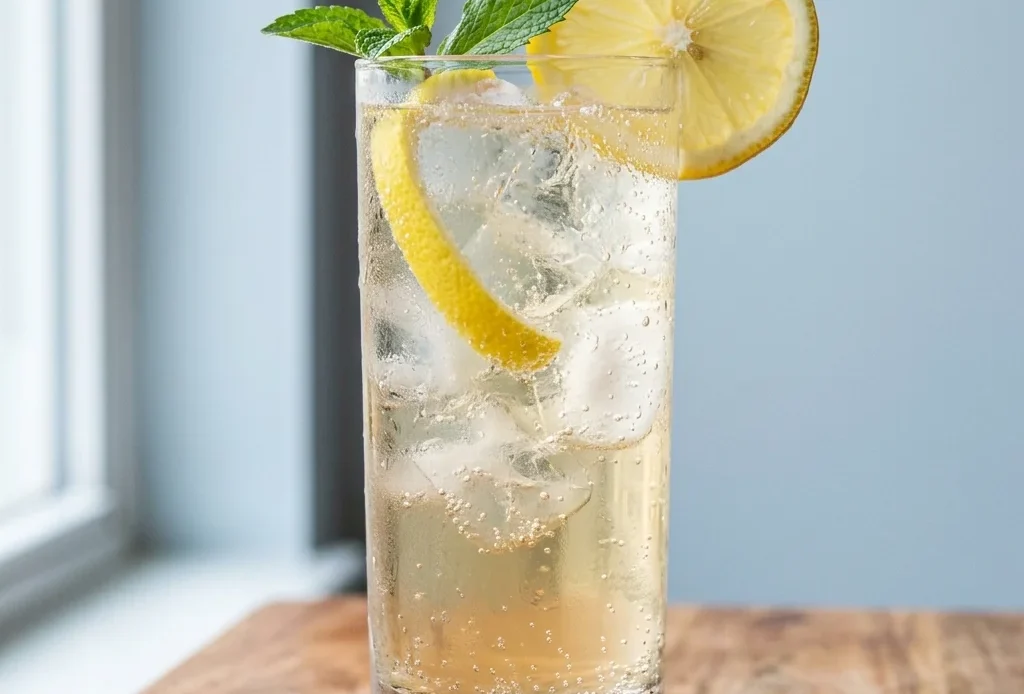
My neighbor’s kid had soccer practice on one of those brutal late-summer afternoons, and I’d run out of the sparkling water I usually bring for the parents standing around the sideline. What I had was lemons, a box of baking soda, and a cooler full of ice. Ten minutes later, three other parents were asking about the lemon water hack I’d just mixed up on a cooler lid. This baking soda lemon and ice recipe is the answer I gave them, and it’s the one I still make more often than anything from a can.
It costs almost nothing, takes about three minutes, and the fizz is real carbonation from an actual chemical reaction, not forced gas from a machine. This baking soda lemon and ice recipe needs no soda maker, no syrup, no bottle to recycle.
Why This Baking Soda Lemon and Ice Recipe Works
Lemon juice is an acid. Baking soda, or sodium bicarbonate, is a base. Drop them together and they react immediately, releasing carbon dioxide gas as one of the byproducts, along with water and sodium citrate. That CO2 is what makes soda fizzy, and it’s the exact same gas, just produced in your glass instead of injected at a bottling plant. It’s why this recipe tastes closer to fizzy lemonade than to plain baking soda water.
Getting the ratio right matters more than people expect. Too much baking soda and the drink turns soapy and mineral-heavy, which is the single biggest reason first attempts at a baking soda lemon water recipe go wrong. Stay light on the baking soda, generous on the lemon, and the sodium citrate byproduct softens what would otherwise taste like straight antacid.
Key Ingredient Notes
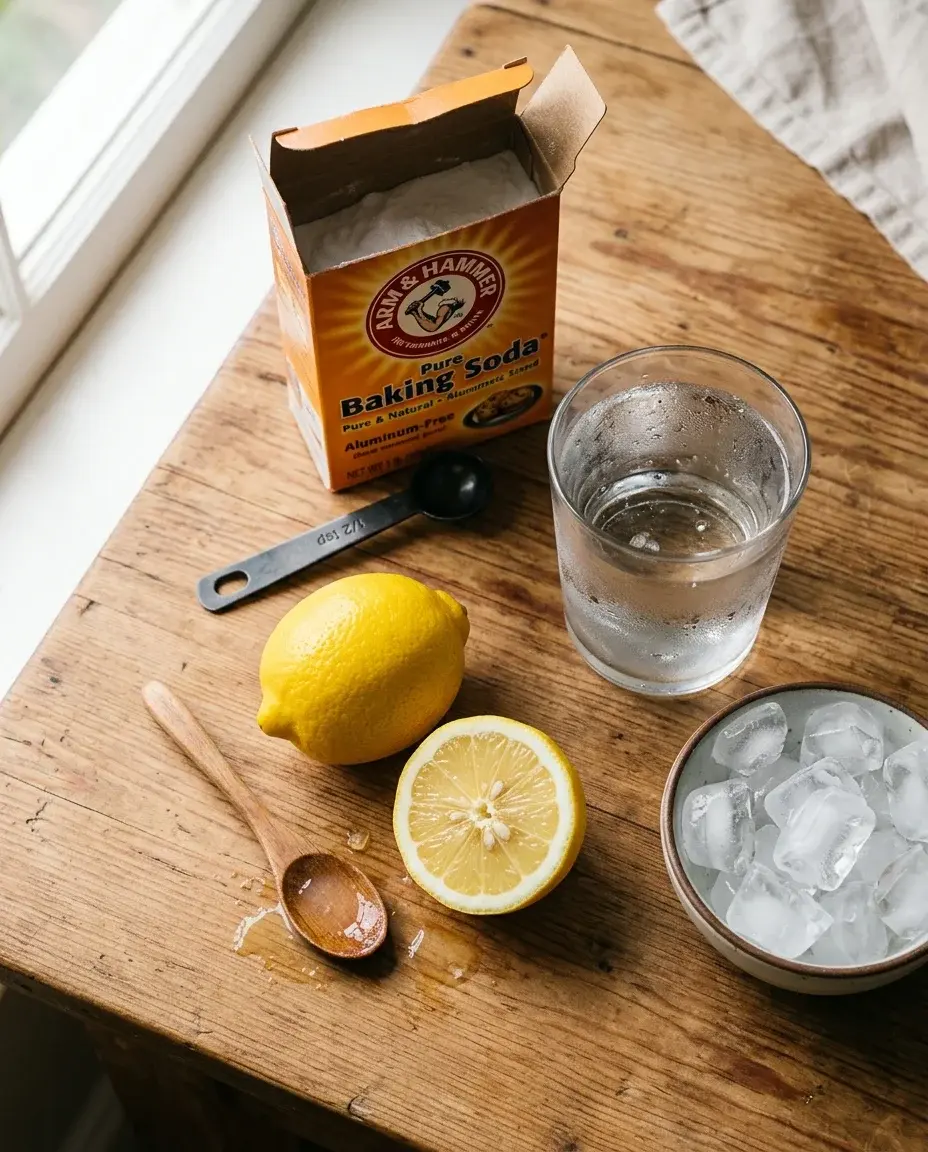
Reach for aluminum-free baking soda if your grocery store carries it — most major brands, Arm & Hammer included, are already aluminum-free by default, but it’s worth checking the label once. The difference isn’t a health scare, it’s taste: aluminum-containing formulas can leave a faint metallic edge that fresh lemon doesn’t fully cover in this baking soda lemon and ice recipe.
Fresh lemon juice earns its place here. Bottled juice has usually oxidized enough to taste flat, and flat is the opposite of what this drink is supposed to be. If mornings are chaotic, juice three or four lemons on a Sunday and keep the juice in a sealed jar. It holds for about four days in the fridge, which covers most of a work week.
Ice does more than chill the glass. Building the drink first, then adding ice last, keeps the fizz from getting diluted before it has a chance to do anything. Add the ice too early and this baking soda lemon and ice recipe turns into flat, watered-down lemon water within a minute.
Drink vs. Shot: Which One Should You Make?
People searching for a baking soda lemon and ice recipe often land here from the same curiosity that drives searches for the baking soda shot, so it’s worth being direct about the difference. The shot uses roughly double the baking soda in a fraction of the liquid, built as a concentrated, occasional dose aimed at settling an upset stomach. This drink is the opposite: more water, less baking soda, built to be sipped slowly as a refreshing afternoon glass, not a functional dose.
If what you actually want is a lighter concentrated shot version, that’s a different ratio and a different goal, and neither one burns fat, so pick based on what you’re after: a functional sip or a refreshing one. This recipe is the refreshing one.
Is It Safe to Drink Daily?
One glass made with an eighth of a teaspoon of baking soda carries around 145mg of sodium, roughly 6 percent of the daily sodium limit the American Heart Association recommends for most adults, according to its guidance on daily sodium intake. Occasional use fits easily inside a normal diet. Drinking it every single day adds up, especially stacked on top of a diet that’s already salty.
Anyone with high blood pressure, kidney disease, or heart failure, or who is pregnant, breastfeeding, or taking diuretics or blood pressure medication, should check with a doctor before making this a habit. Mayo Clinic’s drug information page notes that sodium bicarbonate can interact with several common medications. Kids under 12 should skip it too.
What I Learned Testing This
The first batch of this baking soda lemon and ice recipe I made used bottled lemon juice because that’s what was in the fridge, and it tasted flat enough that I almost gave up on the whole idea. Fresh lemon fixed it completely. I also measured heavy-handed the second time, closer to a quarter teaspoon instead of an eighth, and ended up with something that tasted like biting into a chalk tablet.
The fizz itself sounds like a quiet hiss, almost like opening a can of soda from a few feet away, and it smells faintly of lemon zest with a mineral edge underneath that fades once the ice goes in.
Tips and Variations
A few ways to adjust the baking soda lemon and ice recipe once the basic version feels easy, whether you’re chasing a stronger fizz or a lighter one:
- Swap still water for sparkling water for a stronger, sparkling lemon drink closer to soda-shop style
- Use fresh lime instead of lemon — it’s acidic enough to spark the same reaction, with a sharper edge
- Add a sprig of mint or a tiny pinch of sea salt after a workout, for a cooling note or a bit of extra electrolytes
- Freeze leftover lemon juice in an ice cube tray so a single cube handles both the chilling and the squeezing step
Troubleshooting the Baking Soda Lemon and Ice Recipe
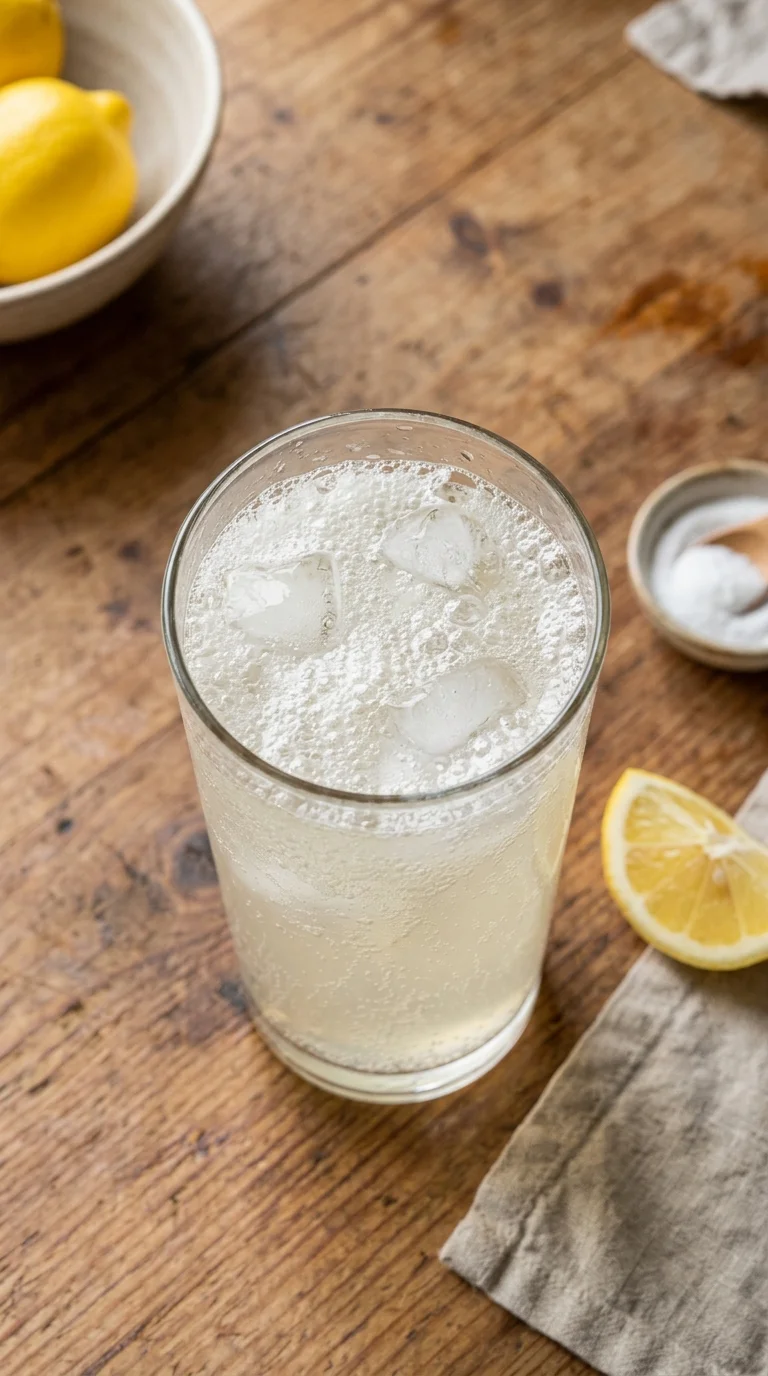
It fizzes over the glass. You likely added the lemon juice too fast or used a glass that’s already too full. Pour the lemon juice in slowly and give the reaction ten seconds to finish before adding water.
It tastes salty or soapy. That’s too much baking soda. Stick to an eighth of a teaspoon and measure it properly instead of eyeballing a heaping spoon.
The fizz disappears fast. This drink doesn’t keep. The bubbles fade within 15 to 20 minutes, so mix one glass at a time and drink it while it’s still active instead of batching a pitcher ahead.
A baking soda lemon and ice recipe this simple doesn’t need much more than a light hand with the baking soda and fresh lemon juice. Keep the ratio small, build it in order, and drink it while the fizz is still working. Whether you call it a fizzy lemonade or a baking soda lemon water, it’s an easy trade for a store-bought soda, and it costs next to nothing to find out if it earns a spot in your regular rotation.
More Recipes You’ll Love
- Baking Soda Shot for Weight Loss — the concentrated, functional version of this same reaction
- Ginger Water Recipe — another 5-minute cold-steeped option for the same shelf
- Chia Seed Water Recipe — a low-sodium daily habit if you want something safe to repeat every morning
- Dr Oz Baking Soda Recipe — the honey variant, and whether the celebrity name behind it actually checks out
- Oat Trick for Weight Loss — a fiber-based pre-meal drink from the same viral-trend shelf
Browse the full collection on the Juice Fasting Detox Recipes hub.

Baking Soda Lemon and Ice Recipe
Equipment
- 1 8 oz glass
- 1 Long spoon for stirring without flattening the fizz
Ingredients
For the Drink
- 1/8 teaspoon baking soda aluminum-free recommended
- 1 tablespoon fresh lemon juice about half a small lemon
- 8 oz cold filtered water
- 4-5 ice cubes
Optional Add-Ins
- 1 sprig fresh mint optional
- 1 pinch sea salt optional, for electrolytes after a workout
Instructions
Build the Reaction
- Drop 1/8 teaspoon baking soda into the bottom of an empty 8-ounce glass so it doesn’t clump when liquid hits it.
- Cut a small lemon in half and squeeze about 1 tablespoon of juice directly onto the baking soda. It will hiss immediately.
- Wait about 10 seconds without stirring so the acid-base reaction can finish releasing carbon dioxide.
Finish and Serve
- Add 8 ounces of cold filtered water in a slow, gentle stream to keep the bubbles alive, then stir once with a long spoon.
- Drop in 4 to 5 ice cubes only after the water is in, so the fizz isn’t diluted before it forms.
- Stir in a mint sprig or a small pinch of sea salt now if using either.
- Serve immediately. The fizz fades within 15 to 20 minutes, so this drink is best mixed fresh, one glass at a time.
Notes
Nutrition
Frequently Asked Questions
What happens when you mix baking soda, lemon, and ice in this recipe?
The lemon juice’s citric acid reacts with the baking soda’s sodium bicarbonate, releasing carbon dioxide as fizz along with water and sodium citrate. The ice chills the drink without killing that reaction if you add it last.
How much baking soda and lemon juice should I use?
An eighth of a teaspoon of baking soda with about a tablespoon of fresh lemon juice per 8 ounces of water is the cleanest ratio. More baking soda tips the flavor toward soapy fast.
Is it safe to drink this every day?
Occasional use is fine for most healthy adults. Daily use adds meaningful sodium over time, so anyone with high blood pressure, kidney issues, or who is pregnant should check with a doctor first.
Is this the same as the baking soda shot?
No. The shot uses roughly double the baking soda in far less liquid as a concentrated, occasional dose. This recipe is more diluted and meant to be sipped as a refreshing drink, not a functional shot.
Why does the fizz disappear so fast?
The carbon dioxide escapes as soon as it’s released, so the bubbles fade within 15 to 20 minutes. Mix one glass at a time instead of batching it ahead.
Can I use bottled lemon juice instead of fresh?
You can, but it tastes noticeably flatter and won’t cut the mineral edge of the baking soda as well. Fresh lemon juice makes a real difference in this recipe.
═══════════════════════════════════════════