
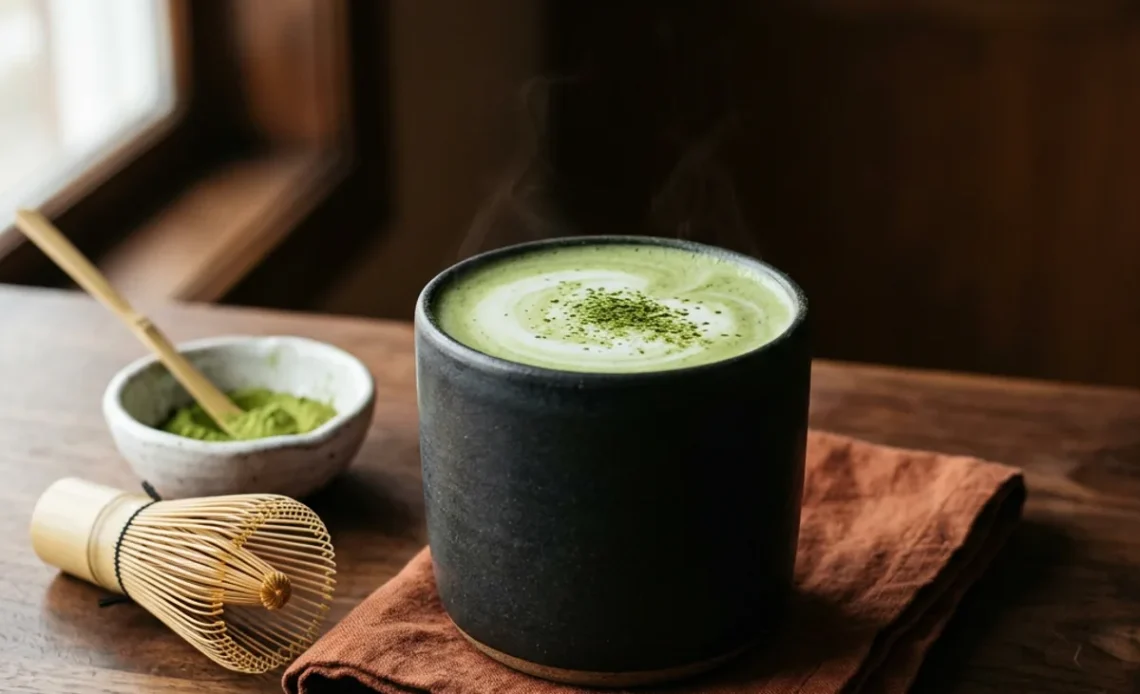
A good matcha latte starts in a small bowl, with a strainer, a teaspoon of bright green powder and a splash of hot water.
In short: sift 1 teaspoon of matcha, whisk it with 3 tablespoons of hot (not boiling) water until foamy, then pour in 1 cup of steaming frothed milk. Sweeten only if you want to: with 1 teaspoon of maple syrup and 2% milk, this hot cup comes to about 139 calories and 8 g of protein.
It takes about 8 minutes, and every quantity is on the recipe card. This is the cozy, slow-morning version, made to be savored with both hands around the mug. For a cold glass, our iced matcha latte has its own ratio.
| Matcha latte you might mean | What is in it | What the evidence shows | Main caution |
|---|---|---|---|
| This hot matcha latte | 1 tsp matcha, hot water, 1 cup 2% milk, 1 tsp maple syrup: about 139 calories, 8 g protein (USDA) | No study on the drink; matcha and L-theanine trials below | About 32 mg caffeine from 2 g of matcha (lab analysis) |
| Matcha tea latte: Starbucks | Milk, classic syrup and matcha: 220 calories, 29 g sugars, 11 g protein (Starbucks, standard recipe) | No study on the drink | About 65 mg caffeine, an approximate value (Starbucks) |
| Soy, oat or almond milk version | The same cup with an unsweetened plant milk: 46 to 116 calories for the milk, 1.6 to 7 g protein (USDA) | No study on the drink | Same caffeine; check the label of sweetened plant milks |
| Iced matcha latte | Matcha shot poured over ice and cold milk | No study on the drink | Same caffeine for the same matcha |
| Dirty matcha latte | The same drink with a shot of espresso | No study on the drink | More caffeine: the espresso adds its own |
What a matcha latte is
Matcha is green tea grown in the shade for the last weeks before harvest, then steamed, dried and stone-ground into a very fine powder. You drink the leaf itself, not an infusion of it. That is why the powder never fully dissolves: it stays suspended in the water, and the whisk is what turns it smooth.
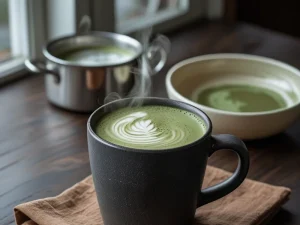
A matcha latte is that whisked tea topped with hot milk. The result is creamier and softer than straight matcha, with a pale jade color and a foam that holds a dusting of powder.
Green tea latte with matcha: why it is whisked, not steeped
A green tea latte made with a tea bag is a steeped tea with milk added: light in color and flavor. A green tea latte with matcha uses the ground leaf, so a single teaspoon gives a much deeper taste and that vivid color. The trade-off is technique. Matcha has to be sifted and whisked, or it clumps.
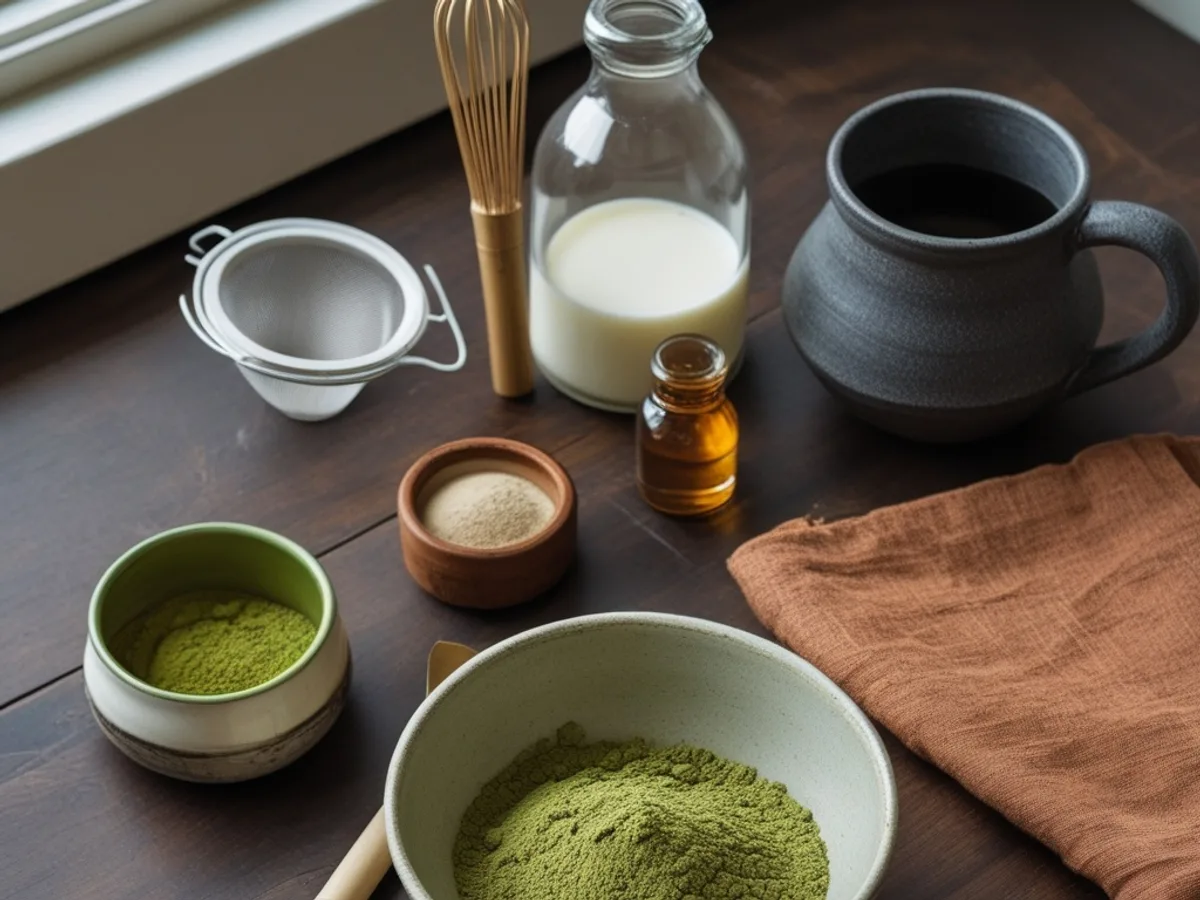
Choosing the matcha for a latte
Look for a powder that is bright, almost spring green, and very fine between your fingers. A dull olive or brownish color usually means older or lower-grade tea, which tastes flat and more bitter.
Ceremonial or culinary grade? Ceremonial grade is made to be whisked with water and drunk on its own, so it is the smoothest choice for a latte. Culinary grade is stronger and more astringent, designed for baking. In a milky, lightly sweetened latte it works, but it tastes more bitter. If you buy one tin for drinks, buy a ceremonial grade, and a lower-priced one is fine since milk covers its finer notes.
The ratio and the water temperature
My base for one mug: 1 teaspoon of matcha (about 2 g), 3 tablespoons of hot water, 1 cup of milk. The small amount of water makes a concentrated shot that still tastes of tea once the milk goes in.
- Stronger: 2 teaspoons of matcha with the same 3 tablespoons of water.
- Milder: 3/4 teaspoon of matcha.
- Water temperature: about 175°F (80°C). Boiling water scorches matcha and brings out its bitterness. Without a thermometer, let freshly boiled water stand in an open cup for a few minutes before you pour it.
Sift the matcha, then whisk without clumps
Fine powders pack into tiny lumps in the tin. Push the matcha through a small fine-mesh strainer with the back of a spoon. It takes ten seconds and saves you from green specks in the last sip.
Then whisk:
- Bamboo whisk (chasen). Move it fast from the wrist in a zigzag or W shape, not in circles. Circles just stir the powder around; the zigzag breaks it up and makes foam.
- Handheld frother. Use a tall, narrow cup so the shot does not splash, and froth for about 15 seconds.
- Small jar. Put the matcha and water in a jar, close it tightly and shake hard. Less foam, but no lumps.
The shot is ready when the surface is covered with fine bubbles and no powder sits at the bottom.
Heating and frothing the milk
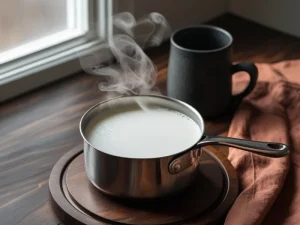
Milk for this drink should steam, never boil. Heat it until small bubbles form at the edge, then stop. Boiled milk tastes cooked and froths poorly.
To froth, use a handheld frother, whisk hard in the saucepan, or pour the hot milk into a jar no more than half full, close it with a towel over the lid and shake. An espresso machine steam wand works too. Pour the milk into the matcha, not the other way round, so the two blend as you pour; spoon the foam on last.
Latte art is optional. A slow pour from close to the surface gives a pale swirl, and a pinch of sifted matcha on top is all the decoration this drink needs.
Picking the milk
Any milk works, and each changes the cup. Per cup, unsweetened, according to USDA:
- 2% milk: 122 calories and 8 g protein. Creamy, with a natural sweetness that softens the tea. This is the milk on the recipe card.
- Soy milk: 80 calories and 7 g protein. The closest plant milk to dairy for protein, and it froths well.
- Oat milk: 116 calories and 1.9 g protein. Naturally sweet and full-bodied, and it foams nicely.
- Almond milk: 46 calories and 1.6 g protein. The lightest, with a thinner foam and a nutty note.
Choosing dairy or soy milk helps with keeping some protein in the cup. Many plant milks are sold sweetened or flavored, so check the label: their sugar comes on top of yours.
Sweeten it to taste
Matcha does not need sugar. Plenty of people drink it plain, and the milk already brings a natural sweetness. If you like it sweeter, add the sweetener to the hot matcha shot, where it dissolves completely, then taste once the milk is in.
According to USDA, 1 teaspoon of maple syrup adds 17 calories and 4.5 g of carbohydrate; the same teaspoon of honey adds 21 calories. Starting at one teaspoon and tasting before adding more helps with keeping added sugar low, since a hot drink often tastes sweeter than you expect.
Variations: what flavor goes best in a matcha latte
- Vanilla: a few drops of vanilla extract in the shot. Round and dessert-like, with no added sugar.
- Cinnamon: a pinch whisked into the matcha, or a cinnamon stick warmed in the milk.
- Honey and lavender: a little dried culinary lavender warmed in the milk, strained, with honey as the sweetener.
- Strawberry: a spoonful of mashed fresh strawberries at the bottom of the mug before the milk goes in.
If you prefer a calmer evening cup built on matcha with adaptogens, our matcha adaptogen drink goes that way.
Matcha tea latte: Starbucks vs homemade
Starbucks describes its Matcha Latte as made with its matcha, milk and classic syrup, and lists the ingredients as milk, classic syrup (sugar, water, natural flavors, potassium sorbate, citric acid) and matcha (ground green tea). For its standard recipe it gives 220 calories, 29 g of sugars, 31 g of carbohydrate and 11 g of protein, with about 65 mg of caffeine as an approximate value. Its own page adds that the numbers move as soon as you customize the order.
The homemade cup on this page sweetens with 1 teaspoon of maple syrup, or nothing. You choose the sugar, and the whisked shot keeps the tea flavor in front.
Iced or dirty?
This recipe stays hot. For a cold version over ice, follow our iced matcha latte, which works out the cold ratio. To add a shot of espresso to the matcha, make the dirty matcha latte instead.
Tips and mistakes: bitter, lumpy or flat
- Bitter: the water was too hot, the matcha too old, or a culinary grade stood in for a drinking grade. Let the water cool a little and keep the tin sealed.
- Lumpy or gritty: the matcha was not sifted, or the water went in all at once on dry powder. Sift, then whisk.
- No foam: the whisk moved in circles. Use quick zigzags from the wrist.
- Thin or milky: too little matcha for the milk. Go up to 1 1/2 teaspoons, or use less milk.
- Powder at the bottom: matcha settles as it sits. Drink it while hot, and give it a stir halfway.
Storing matcha
A finished cup is best right away, since the matcha slowly sinks to the bottom and the foam fades. Keep the powder in a tightly closed, opaque tin in a cool, dark place, away from heat and strong smells: air and light dull its color and flavor.
Quick and easy, Valérie C says, and she would make it again. Her cup came out delicious and with the texture she hoped for, following the card to the letter.
For more hot and iced drinks built on tea, browse our tea drinks collection.
What the research says about matcha
No trial has tested the drink itself. The studies below looked at matcha drinks or at L-theanine, the amino acid that matcha is rich in, and each has limits.
- L-theanine and attention. A 2026 meta-analysis of 31 randomized trials found that L-theanine was safe and gave a short-term benefit on attention in healthy adults; the authors call a possible antidepressant effect something that still needs confirmation in high-quality trials (PubMed 42410082). These trials gave L-theanine itself. One teaspoon of matcha holds about 20 mg, according to the lab analysis cited below.
- Matcha under mild stress. In a randomized, placebo-controlled study of middle-aged and older adults, matcha taken with its caffeine improved attention and work performance under mild psychological stress compared with caffeine alone (PubMed 34067795, 2021). Most of the authors work for a tea company.
- Matcha and anxiety. In a trial of 39 people, a matcha chosen for its high theanine content lowered anxiety compared with a placebo matcha. The authors found the effect depended on the balance of caffeine and catechins against theanine, which varies from one matcha to another (PubMed 30308973, 2018).
In short, matcha supports a calm, alert cup for many people, but the evidence is small, and the amounts in one latte vary with the powder.
Safety: caffeine and who should go easy
One lab analysis measured 16.1 mg of caffeine and 9.85 mg of L-theanine per gram of matcha (PubMed 35624753, 2022), so the 2 g in this matcha latte comes to about 32 mg of caffeine. Powders vary, and a stronger cup with 2 teaspoons doubles it. For comparison, USDA lists 95 mg for an 8 fl oz cup of brewed coffee.
For healthy adults, the FDA puts 400 mg a day as the amount generally not linked to negative effects, and some people feel caffeine at much less. Pregnancy, trying to conceive, breastfeeding, a health condition or a medication that interacts with caffeine are all reasons the FDA gives to check with your health care provider first. Children are a separate case: the FDA points to the Dietary Guidelines, which keep caffeinated drinks away from kids under 2 and put drinks without added sugars first for older children and teens.
According to NCCIH, no safety concerns have been reported for green tea consumed as a beverage by adults. Liver injury, though uncommon, has been reported mainly with green tea extracts in tablet or capsule form. Green tea at high doses lowered blood levels of nadolol, a beta-blocker, and an interaction with raloxifene has been shown; if you take medicine, talk with your health care provider before using green tea supplements.
How we checked the numbers
- Nutrition: USDA FoodData Central, 2% milk, maple syrup, honey, soy milk, oat milk, almond milk and brewed coffee. Matcha has no USDA record; its small amount is left out of the estimate.
- Daily caffeine limits for adults, pregnancy and children: the FDA consumer page Spilling the Beans.
- Green tea safety: NCCIH, Green Tea.
- Starbucks: Matcha Latte nutrition.
- Studies: the PubMed records linked above.
Sift, whisk, pour: once the strainer and the whisk live next to the kettle, this matcha latte becomes a five-minute habit to savor on cold mornings.
Matcha Latte at Home, Whisked Hot and Sweetened Only as Much as You Like
Ingredients
Matcha
- 1 tsp matcha powder about 2 g, sifted
- 3 tbsp hot water 45 ml, about 175°F / 80°C, not boiling
- 1 tsp maple syrup optional: honey or sugar also work, or leave it out
Milk
- 1 cup milk 240 ml, 2% milk or the milk you like
Instructions
- Sift the matcha through a small fine-mesh strainer into a wide bowl. Pour in the hot water and whisk briskly from the wrist in a zigzag (W) motion for 15 to 20 seconds, until no specks are left and a fine foam covers the surface. Stir in the maple syrup now if you are sweetening.
- Warm the milk in a small saucepan over medium-low heat, or in the microwave, until it steams and tiny bubbles appear at the edge. Do not let it boil. Froth it with a handheld frother, a small whisk or a tightly closed jar until it is foamy and has grown in volume.
- Pour the whisked matcha into a warm mug. Pour the hot milk into the center, holding back the foam with a spoon, then spoon the foam on top. Taste, add a little more sweetener if you want it, and serve right away.
Notes
Nutrition
Frequently Asked Questions
What exactly is a matcha latte?
A matcha latte is powdered green tea whisked with a little hot water, then topped with steamed, frothed milk. Unlike a tea bag latte, the whole ground leaf goes into the cup, which gives it the bright green color and the round, grassy taste.
How to correctly make a matcha latte?
Sift the matcha, whisk it with a small amount of hot but not boiling water until it is smooth and foamy, then add hot frothed milk. Sweeten the matcha shot, not the milk, so the sweetener dissolves evenly.
What does a matcha latte taste like?
Creamy and gently vegetal, with a grassy, slightly savory note from the tea and a soft bitterness at the end. Milk rounds the bitterness off, and a teaspoon of maple syrup or honey makes it taste closer to a café drink.
Is matcha latte stronger than coffee?
Not in caffeine, at this dose. One teaspoon (about 2 g) of matcha holds about 32 mg of caffeine according to one lab analysis, while USDA lists 95 mg for an 8 fl oz cup of brewed coffee.
What flavor goes best in a matcha latte?
Vanilla is the classic match, followed by honey, maple, cinnamon and a little lavender. Fruit works too: a spoonful of mashed strawberries at the bottom of the mug gives a pink and green drink.
Is drinking matcha latte good for you?
It can fit a balanced diet: a latte with milk brings protein, and you decide how much sugar goes in. Research on matcha and L-theanine is promising on attention and stress, but small, and no study has tested the latte itself.
Can matcha help lose belly fat?
No matcha latte has been shown to target belly fat. A meta-analysis of green tea extract supplements found small drops in body weight, BMI and body fat percentage, with no effect on fat mass; extracts are not a latte, and NCCIH links liver injury mainly to extract pills.