

Cinnamon sticks, a few cardamom pods and a box of black tea are all this iced chai tea recipe needs, and the full steps are on the recipe card below.
The quick version: simmer six whole spices in 2 cups of water for 8 minutes, steep 6 black tea bags off the heat for 5 minutes, strain, then add 2 cups of cold water. Pour over ice with 1 teaspoon of maple syrup per glass, about 17 calories, and add a splash of milk only if you like.
| Iced chai drink | What is in a glass | What the studies show | Main caution |
|---|---|---|---|
| This iced chai, no milk, 1 tsp maple syrup | About 17 calories from the maple syrup, 47 mg of caffeine per cup of brewed black tea (USDA) | Tea trials on blood pressure are mixed: small drops in some, no change in others | Caffeine (MedlinePlus) |
| This iced chai with 1/4 cup of 2% milk | About 31 more calories and 2 g of protein (USDA) | One small trial found milk changed how tea acted on blood vessels | Caffeine (MedlinePlus) |
| Iced chai tea latte recipe, half chai and half milk | A creamier glass; see the latte section below | No study found on the latte itself | Caffeine; sweetener adds up |
| Starbucks iced chai tea latte recipe | Our Starbucks chai tea latte copycat serves its concentrate cold too | No study found | Caffeine and added sugar |
| Iced chai tea Starbucks recipe, a café-style glass | Same spiced concentrate with milk, sweeter | No study found | Added sugar |
| Bottled sweetened black tea, for comparison | 107 calories and 25.6 g of carbohydrate per 8 fl oz (USDA) | No study found on bottled sweetened tea | Added sugar |
What goes into iced chai
Chai simply means tea in Hindi, so “chai tea” says it twice. What most of us mean by it is masala chai: black tea brewed with warm spices, usually cinnamon, cardamom, ginger, cloves and black pepper, then softened with milk and sweetened. Iced chai is that same spiced tea, chilled and poured over ice.
This iced chai tea recipe keeps the tea part in front. It is built like a good pitcher of iced tea: brewed strong, cooled with cold water, served clear. The milk comes last, as a splash, and you can leave it out entirely.
Which tea to use
Plain black tea bags, like English breakfast or Assam, give a malty base that stands up to the spices and to the ice. Loose black tea works the same way, about 1 teaspoon per bag. Chai tea bags are the shortcut when your spice jar is bare; use 6 of them and skip the whole spices.
Decaf black tea is the one to pick for an afternoon or evening glass. The spices stay exactly the same.
Why whole spices
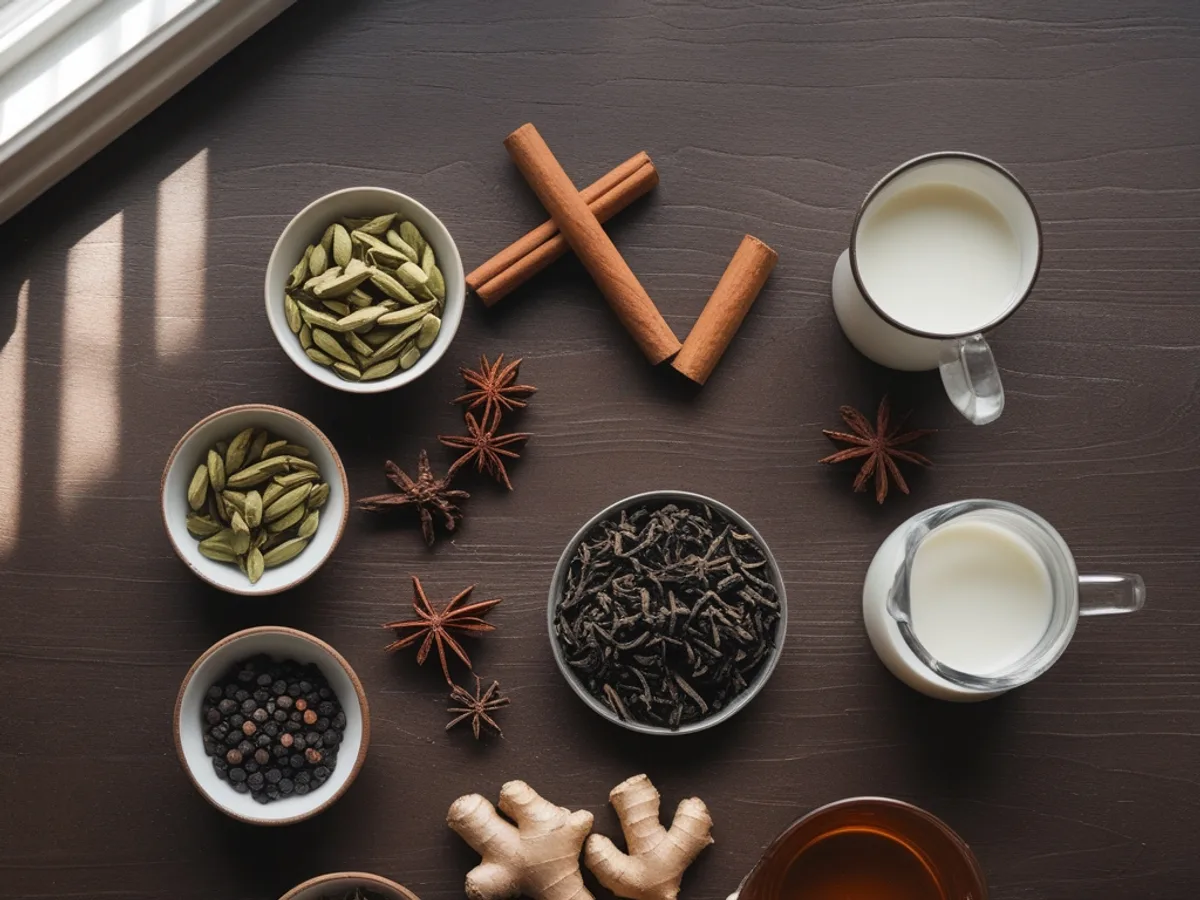
Ground spices are the reason so many glasses of iced chai turn muddy, with a gritty layer settling at the bottom. Whole spices give their flavor to the water and then come out cleanly in the strainer, so the tea stays clear.
Crack the cardamom pods and the peppercorns under the flat side of a knife before they go in, so the water reaches the seeds inside. Cinnamon sticks, cloves and a single star anise can go in whole. Fresh ginger slices bring a gentle heat that fades into the sweetness as the tea chills.
Strong brew, cold finish: how this iced chai tea recipe works
Here is the method. You simmer the spices in only half the water, brew the tea strong in that spiced water, then pour in the other half cold. The chai cools fast, needs less ice to chill, and does not taste thin once the ice melts a little.
- Spices first. Spices need time and heat to open up, so they simmer alone for 8 minutes.
- Tea off the heat. Black tea needs far less time than the spices.
- Cold water to finish. Two cups go into the pitcher, then the fridge does the rest.
Tea goes in off the heat
Take the pan off the burner before the tea bags go in, and set a timer for 5 minutes. Longer than that, and black tea turns harsh and mouth-drying, a bitterness that the cold only sharpens. Lift the bags out without squeezing them: the last drops pressed out of a bag are the most bitter ones.
Sweeten to taste, and start low
Stir the sweetener into the warm tea, before the cold water goes in; syrup and sugar dissolve easily while the chai is warm, much less once it is cold. Maple syrup suits the spices beautifully, but honey, brown sugar or plain sugar all work.
This is where the healthy angle of this drink lives. According to USDA values, a cup of brewed black tea has about 2 calories.
One teaspoon of maple syrup per glass adds about 17 calories and 4.5 g of carbohydrate, and that is the whole sweetener budget of the base recipe. A bottled sweetened black tea has 107 calories and 25.6 g of carbohydrate per 8 fl oz, so brewing your own iced chai helps with keeping added sugar down. Start with one teaspoon per glass, taste, and only then add more.
Milk or no milk
Without milk, iced chai is bright, spicy and refreshing, the lightest glass this recipe makes. With a splash, it turns rounder and softer.
- 2% milk. A quarter cup per glass adds about 31 calories and 2 g of protein, according to USDA data.
- Unsweetened almond milk. The same quarter cup adds about 12 calories, for a lighter, dairy-free glass.
- Oat or coconut milk. Both are creamier, and many cartons are sweetened, so check the label and cut the maple syrup to match.
Pour the milk last, straight over the ice, and watch it drift down through the amber tea before you stir.
Valérie C kept to the quantities exactly and says the pitcher came together quickly. The flavor, in her words, was delicious, and the body of the tea was just what she hoped for; another batch is on her list.
Iced chai tea latte recipe
A latte is mostly milk, so the tea needs to be stronger. Make the spiced tea exactly as written, but leave out the 2 cups of cold water and chill the strong chai on its own. Fill each glass with ice, pour in 1/2 cup of the chilled chai and top with 1/2 cup of cold milk. That is half chai and half milk, creamy and still full of spice.
For the hot version, with frothed milk, our chai latte recipe walks you through it step by step.
Iced vanilla chai tea latte recipe
Make the iced latte above and add 1/2 teaspoon of vanilla extract to the warm chai, along with the maple syrup. Vanilla makes the spices taste rounder and a little sweeter, so taste before you reach for more syrup.
More ways to pour it
Iced pumpkin cream chai tea latte recipe
Whisk 2 tablespoons of heavy cream with 1 tablespoon of pumpkin purée, 1/2 teaspoon of maple syrup and a pinch of ground cinnamon until it thickens slightly. Spoon it over an iced chai tea latte and let it sink slowly into the glass.
Dirty iced chai
Add a shot of espresso or a splash of cold brew coffee to an iced chai latte for a stronger, deeper glass. It also adds a good deal of caffeine; our dirty chai latte recipe has the full version, hot or iced.
Chai ice cubes
Freeze a cup of the finished iced chai in an ice cube tray. Use those cubes instead of plain ice, and the last sip tastes as strong as the first.
Cold brew iced chai
Simmer the spices in 1 cup of water for 8 minutes, then let it cool completely. Pour it into a pitcher with 3 cups of cold water and the 6 tea bags, cover and leave it in the fridge overnight, about 8 to 12 hours. Lift the bags out and sweeten with a little warm water mixed into the syrup. Cold-steeped tea comes out softer, with very little bitterness.
When you want chai in a jar, ready for any day, our chai tea drink mix keeps the spices dry in the pantry.
How much caffeine is in iced chai
USDA lists about 47 mg of caffeine in a cup of brewed black tea, about half of the 95 mg in a cup of brewed coffee. This recipe brews 6 tea bags for 4 glasses, so your glass lands around that range, depending on the tea and the steep.
MedlinePlus puts up to 400 mg of caffeine a day as an amount that is not harmful for most adults. For an evening glass, switch to decaf black tea and keep everything else the same.
Make ahead and storage for this iced chai tea recipe
Keep the iced chai covered in the fridge, with the milk and ice added only at serving time. Strained spiced tea keeps its flavor best in the first few days. There is no official keeping time for homemade brewed tea, so brew what you will drink soon and pour it out if it smells sour, looks cloudy or tastes flat.
Tips and fixes for watery, bitter or gritty iced chai
Most glasses that disappoint come from one of these small mistakes, and each one has an easy fix.
- Watery. The tea was not strong enough for the ice. Use the cold-water finish rather than pouring hot tea straight over ice, or use chai ice cubes.
- Bitter. The tea steeped too long or the bags were squeezed. Keep it to 5 minutes, off the heat.
- Too spicy. Cut the peppercorns to 3 and the cloves to 4 next time, or add an extra splash of milk to the glass.
- Gritty. Ground spices were used. Switch to whole spices, or strain through a coffee filter.
- Flat. The spices were not cracked. Crush the cardamom and the peppercorns before they go in.
What the studies on black tea say
Black tea has been tested in several trials, mostly for blood pressure. The results are mixed, and none of them is about a single glass of iced chai.
- Small drops in pooled trials. A 2014 meta-analysis of 11 trials with 378 people found that regular black tea, about 4 to 5 cups a day, lowered systolic blood pressure by 1.8 mmHg and diastolic by 1.3 mmHg on average (PubMed 25079225). That is a small change, and several of the authors worked for a tea company.
- No change in short trials. A 2020 meta-analysis of 14 trials with 798 people found that 4 to 24 weeks of green or black tea did not significantly change blood pressure or blood lipids (PubMed 33188386, The Journal of Nutrition, 2020). Its authors note the trials were too small to be sure.
- Milk in the cup. In a crossover trial published in Food & Function in 2018, 17 young healthy adults drank black tea with and without milk for 4 weeks each. Tea alone improved a measure of blood vessel function, while tea with milk lowered it and slightly raised blood pressure (PubMed 30411751).
A pleasant habit, not a treatment
These are small, short trials with small effects, and none tested iced chai with spices. Iced chai is not a treatment for anything. What it can be is a good everyday swap: a lightly sweetened glass that helps with cutting back on sugary bottled drinks.
Safety: caffeine and cinnamon
- Caffeine. MedlinePlus says up to 400 mg a day is not harmful for most people. If you are pregnant or breastfeeding, have a health condition or take medicines, ask your provider how much is right for you; children and teens should have less.
- Cinnamon. NCCIH says cinnamon is likely safe in the amounts used in food. Cassia cinnamon contains coumarin, which has been linked with liver problems, and prolonged use could be an issue for sensitive people such as those with liver disease. The two sticks steeped in this pitcher are a food amount; if you have liver disease, talk with your doctor before using cinnamon in larger amounts.
Where the numbers come from
- Calories, carbohydrate, protein and caffeine: USDA FoodData Central, brewed black tea, maple syrup, 2% milk, unsweetened almond milk, bottled sweetened black tea and brewed coffee. The recipe card figures are estimated from those USDA entries.
- Safety: MedlinePlus, Caffeine; NCCIH, Cinnamon.
- Studies: the three papers linked above, read on PubMed.
For more pitchers to keep in the fridge, browse our tea drinks collection. Brew it once, pour it over ice and savor that first cold, spiced sip: this iced chai tea recipe takes about 20 minutes, and most of that is the spices doing the work.

Iced Chai Tea
Ingredients
Spiced tea
- 2 cup water 480 ml, for simmering
- 2 cinnamon sticks
- 6 cardamom pods lightly cracked
- 6 whole cloves
- 6 black peppercorns lightly cracked
- 1 star anise pods
- 4 fresh ginger slices about 1/8 inch (3 mm) thick
- 6 black tea bags plain black tea such as English breakfast, or 6 tsp loose black tea
- 4 tsp maple syrup 1 tsp per glass to start; up to 2 tsp per glass if you like it sweeter
To finish and serve
- 2 cup water 480 ml, cold
- 3 cup ice cubes
- 1 cup milk 240 ml, 2% milk, 1/4 cup per glass; optional, or unsweetened almond milk
Instructions
- Put the 2 cups of water, cinnamon sticks, cracked cardamom pods, cloves, cracked peppercorns, star anise and ginger slices in a small saucepan. Bring to a boil, then lower the heat, cover and simmer for 8 minutes, until the water turns light amber and smells of cinnamon.

- Take the pan off the heat, add the 6 tea bags and steep for 5 minutes, no longer. Lift the bags out without squeezing them, pour the spiced tea through a fine strainer into a heatproof jug, then stir in the maple syrup while it is still warm.

- Pour the warm chai into a pitcher, add the 2 cups of cold water, stir and chill until cold. Fill 4 tall glasses with ice, pour in the iced chai and finish each glass with 1/4 cup of cold milk, or leave it clear and amber.

Notes
Nutrition
Frequently Asked Questions
How does an iced chai taste?
Iced chai tastes like a strong black tea with warm, sweet spice: cinnamon and cardamom up front, a little heat from ginger and pepper at the end. Without milk it is crisp and amber like an iced tea; with a splash of milk it turns rounder and softer.
Is chai tea healthier for you than coffee?
Neither is a health drink, but plain chai brewed at home is light: a cup of brewed black tea has about 2 calories and 47 mg of caffeine, against 95 mg for brewed coffee in USDA data. What decides how light your glass stays is the sweetener and the milk you add.
Is it good to drink chai tea at night?
Regular chai is made with black tea, so it has caffeine, and some people sleep worse after it. For an evening glass, brew the same spices with decaf black tea bags; the spices themselves carry no caffeine.
Do you just add milk to chai tea?
For iced chai, yes: a splash of cold milk over the chilled spiced tea is all it takes, about 1/4 cup per glass. For an iced chai tea latte, skip the cold water and mix the strong chai half and half with cold milk.
Can you use chai tea bags for iced chai?
Yes. Use 6 chai tea bags instead of the plain black tea and the whole spices, steep them for 5 minutes in water that has just come off the boil, then finish with cold water as usual. The flavor is milder than whole spices, so taste before you sweeten.