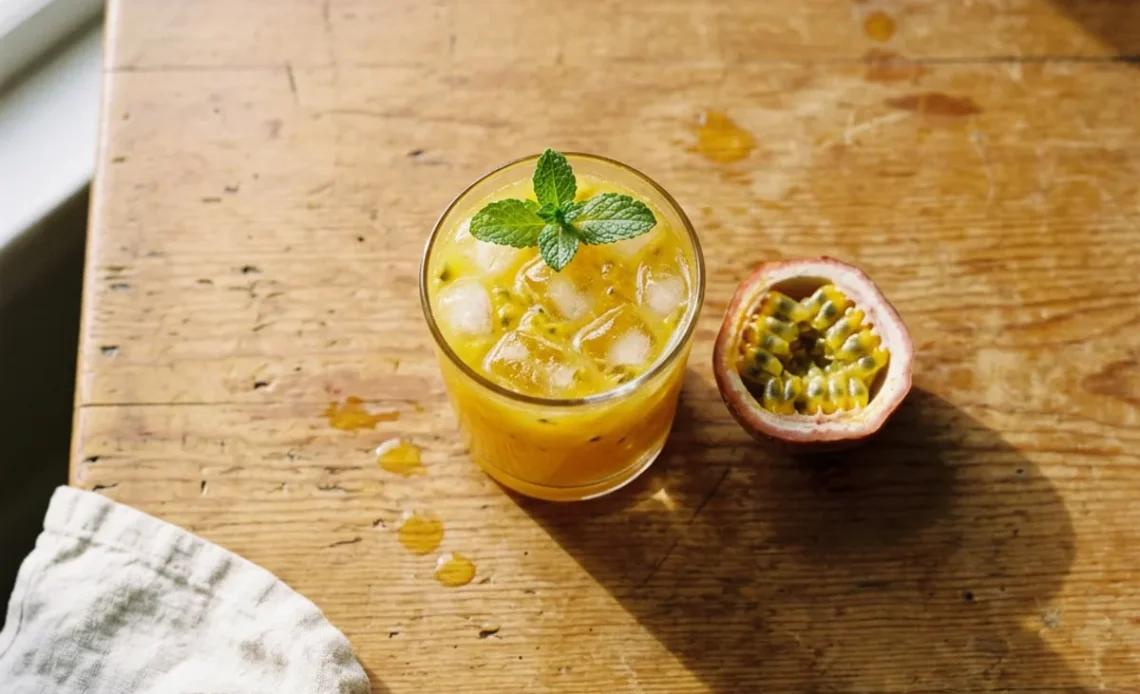
Start with ripe, wrinkled passion fruit and the rest is easy. This passion fruit juice recipe is tart, floral and very cold, and it needs nothing you cannot find at a good grocery store.
In short: scoop 1 cup (240 g) of passion fruit pulp, pulse it briefly with honey and 1 cup of cold water, strain out the seeds, then stir in 2 more cups of water. You get 4 glasses in about 10 minutes, and the honey is optional.
The recipe card below has every step of this passion fruit juice recipe, and the sections in between explain the choices that make it taste like real fruit.
Fresh fruit or frozen pulp for this passion fruit juice recipe?
Either one makes a lovely juice, so use what you can get.
Want a more familiar flavor on the table too? Try homemade orange juice alongside it.
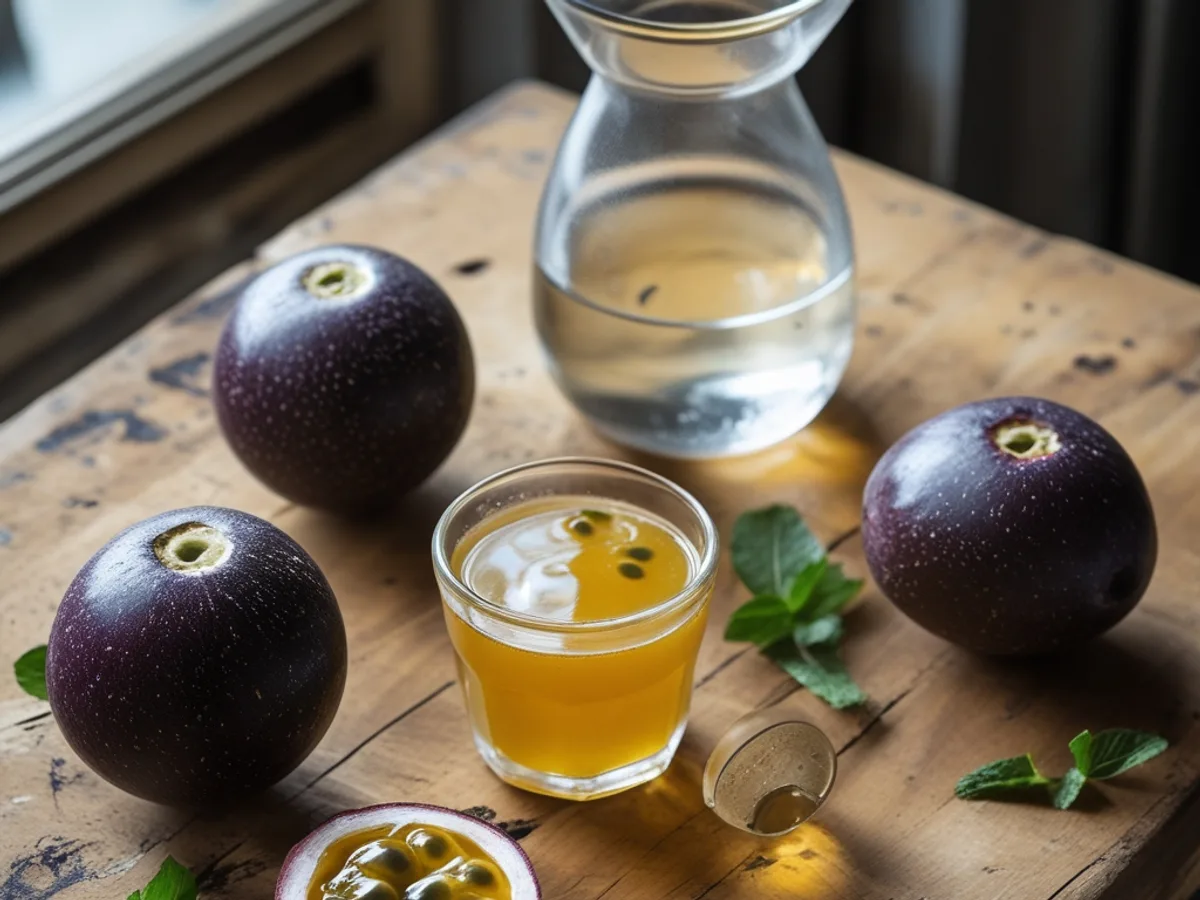
Fresh passion fruit. Choose fruit that feels heavy for its size, with wrinkled, dimpled skin. A smooth, shiny fruit is usually not ripe yet and tastes sharp.
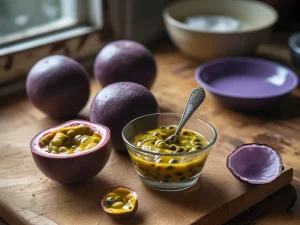
Purple passion fruit is the smaller, more fragrant kind; yellow passion fruit is bigger and tarter. Inside you will find a jelly-like golden pulp wrapped around crunchy black seeds, and that pulp, seeds included, is what you measure.
Frozen pulp. Many grocery freezer sections carry passion fruit pulp, sometimes labeled puree. Pick an unsweetened one with passion fruit as the only ingredient, and thaw it fully before you start, so you measure the real amount. It saves time and tastes bright all year.
How many fresh fruits you need depends on their size, so measure the pulp instead of counting fruit. Work over a cutting board, because passion fruit juice can stain cloth and pale counters.
How to make this passion fruit juice recipe in three easy steps
The method is simple, and three small habits make it taste like the fruit instead of like sweet water:
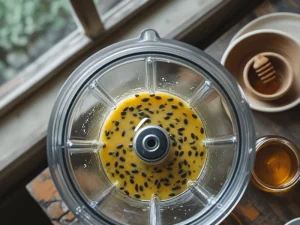
- Pulse, do not blend. Three or four short pulses free the pulp from the seeds. A long blend cracks the seeds, and the passion fruit juice turns cloudy, flecked with dark bits, and a little bitter.
- Use only a third of the water in the blender. Less water means a thicker mix that separates from the seeds more easily. You add the rest afterward, tasting as you go.
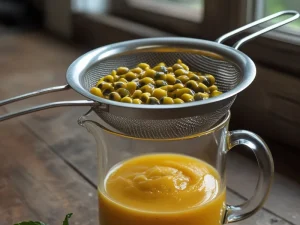
- Press gently in the strainer. A spoon pressed lightly against the seeds pulls through the juice without forcing seed fragments into the pitcher.
No blender? Shake the pulp, honey and the first cup of water hard in a closed jar for about a minute, then strain. It works, it just takes more elbow.
Finish with a few mint leaves and serve the pitcher straight from the refrigerator, with plenty of ice. I like to savor the first glass slowly, before the ice melts into it.
Want the same fruit in a tea pitcher instead? Take a look at this passion fruit iced tea.
No tweaks were needed when Valérie C ran the exact quantities: the pitcher came together fast, tasted delicious and had just the body she hoped for. She would pour it again.
The 1 to 3 ratio, and how to change it
One part pulp to three parts water is a balance that is tangy, fragrant, and still light enough to drink a full glass. Passion fruit varies a lot from one batch to the next, so taste and move along this scale.
| Strength | Pulp to water | When to choose it |
|---|---|---|
| Bold | 1 to 2 | Tart fruit lovers, or juice you will pour over a lot of ice |
| Classic | 1 to 3 | The recipe card version, balanced and bright |
| Light cooler | 1 to 4 | A hot afternoon, or fruit that is very sweet and ripe |
Sweetness follows the same logic. Ripe purple fruit often needs little or no honey, while yellow fruit can be sharp enough to want the full 2 tablespoons.
Stir the honey into the first cup of water in the blender, because it will not dissolve well once the juice is ice cold.
Keep more of the fruit: a lighter, fuller glass
This is where homemade beats bottled. According to USDA FoodData Central, raw passion fruit pulp with its seeds carries 10.4 g of fiber per 100 g, while strained passion fruit juice carries 0.2 g. Almost all of the fiber stays behind in the strainer with the seeds.
You do not have to drink a glass of seeds to keep some of it. A few easy swaps help with that:
- Strain through a coarse sieve instead of a fine one, so more pulp passes through.
- Stir a spoonful of strained pulp back into each glass. The seeds are edible and add a pleasant crunch.
- Skip or halve the honey. The fruit’s own sugar and tang carry the flavor, and every tablespoon you leave out is less added sugar in the pitcher.
A glass with more pulp also feels more like fruit and less like a sweet drink, which makes it easy to enjoy one glass and stop there.
Passion fruit syrup recipe from juice, no heat needed
Strained passion fruit juice also makes a quick syrup for lemonade, iced tea or sparkling water.
Pour 1/2 cup of strained juice and 1/2 cup of granulated sugar into a clean jar, close it and shake, then let it stand a few minutes and shake again until no grains remain. Keep it in the refrigerator in the closed jar and use it within a few days.
Because nothing is heated, the syrup keeps the fresh, perfumed taste of the fruit. Start with 1 tablespoon per glass of sparkling water and adjust. It is sweeter than the passion fruit juice, so it is a treat rather than an everyday pour.
Drinks to make with passion fruit juice
Once you have a pitcher in the refrigerator, it turns into several drinks:
- A sparkling mocktail. Our passion fruit mocktail recipe builds a fizzy, party-ready glass on the same pulp.
- A tropical blend. Mix half passion fruit juice and half homemade pineapple juice for a sweeter, rounder glass that needs no honey at all.
- A spritz. Fill a glass halfway with the passion fruit juice, add ice and top it with plain sparkling water.
- An iced tea. Add a splash of the passion fruit juice to cold unsweetened black or green tea.
- A greener glass. Stir a spoonful of pulp into a green juice recipe for a tart, tropical edge.
You will find more coolers like these in our fruit drinks collection.
Tips and common mistakes, with quick fixes
- Juice tastes bitter or looks grey. The seeds were blended too long. Next time, pulse only.
- Juice tastes flat. It is not cold enough, or there is too much water. Chill everything and go back toward the 1 to 3 ratio.
- Too sour. Add honey a teaspoon at a time, stirred into a little juice first, or use riper fruit.
- Too sweet. Add cold water or a squeeze of fresh pulp.
- Honey sinks to the bottom. It went in after the water was cold. Mix it in the blender with the first cup of water.
What studies say about passion fruit, and what they leave out
The research on passion fruit is real but narrow, and very little of it looks at a glass of juice.
- A trial with a mixed drink. In a randomized, placebo-controlled trial, 43 adults with high blood lipids drank a jelly drink made with roselle calyx extract and passion fruit juice with pulp for 8 weeks; LDL cholesterol and triglycerides were lower than at the start, and the authors call for more research (PMID 36187334). Because the drink combined two plants, it cannot tell us what passion fruit juice does on its own.
- The peel, not the juice. A study in 43 people with type 2 diabetes gave 30 g a day of yellow passion fruit peel flour for two months and reported lower fasting blood sugar (PMID 23088514). The peel is exactly the part this recipe throws away.
- Mostly animal research. A systematic review gathered 22 animal studies and found the peel was the most studied and most active part of the fruit, while pointing to weak points in how those studies were done. It is a review of antidiabetic mechanisms of Passiflora edulis, the passion fruit plant (PMID 42900770).
So the honest picture: enjoy this passion fruit juice for its flavor and as a lighter way to drink fruit, and treat the research as a reason for curiosity, not as a promise.
Storage, safety and preserving passion fruit
Passion fruit juice tastes best the day you make it. Cover any leftovers, keep them in the refrigerator and shake or stir before pouring, because the pulp settles.
Safety note. Fresh juice made at home is not pasteurized. The FDA notes that untreated juice carries a higher risk of serious illness for children, older adults, pregnant women and people with weakened immune systems, and it asks you to wash produce under running water before cutting it. Keep the pitcher cold too.
To keep passion fruit longer, leave whole fruits on the counter until they wrinkle, then refrigerate them. For the pulp, scoop it into an ice cube tray, freeze it, and move the cubes to a closed freezer bag. Two or three cubes thawed in a glass make a quick single serving.
Nutrition per glass
One glass, a quarter of the recipe, works out to about 90 calories, 23 g of carbohydrate, 1 g of protein and 17 mg of sodium. The figures come from USDA FoodData Central values for raw passion fruit pulp and honey and stay an estimate. They count the whole pulp, seeds included, so a strained glass comes in a little lower.
If you skip the honey, you remove its sugar too, and this passion fruit juice recipe stays bright thanks to the fruit alone.
Where the numbers come from
- Passion-fruit, (granadilla), purple, raw, USDA FoodData Central
- Passion-fruit juice, yellow, raw, USDA FoodData Central
- Honey, USDA FoodData Central
- What You Need to Know About Juice Safety, U.S. Food and Drug Administration
Passion Fruit Juice Recipe (Fresh or Frozen Pulp, Lightly Sweet)
Ingredients
- 240 g passion fruit pulp 1 cup, with the seeds; scooped from ripe fresh fruit or thawed unsweetened frozen pulp
- 3 cup cold water 720 ml
- 2 tbsp honey optional, to taste
- 1 cup ice cubes for serving
- 8 leaves fresh mint to finish
Instructions
- Cut the passion fruits in half with a serrated knife and scoop the pulp and seeds into a measuring cup until you have 1 cup (240 g). If you use frozen pulp, let it thaw completely first.
- Put the pulp, the honey and 1 cup of the cold water in the blender. Pulse 3 or 4 short times, just enough to loosen the pulp from the seeds without grinding them.
- Pour through a fine strainer into a pitcher and press gently with a spoon. Stir in the remaining 2 cups of cold water, taste, then pour over ice and finish with a few mint leaves.
Notes
Frequently Asked Questions
What is passion juice good for?
Mostly for a cold, tangy, refreshing glass. Strained passion fruit juice is largely water, with natural fruit sugar and potassium, and keeping some of the pulp in the glass adds fiber. No study has tested plain passion fruit juice on its own as a health drink.
What is the 80/20 rule for juicing?
It is a rule of thumb, not a medical guideline: about 80 percent vegetables and 20 percent fruit in a juice, so the glass carries less sugar. Passion fruit juice is all fruit, so treat it as a fruit drink, or add a spoonful of pulp to a green juice.
How do I preserve passion fruit?
Keep whole fruits at room temperature until the skin wrinkles, then move them to the refrigerator. To keep the pulp longer, scoop it into an ice cube tray, freeze it, and store the cubes in a closed freezer bag.
What are some drinks that can be made with passion fruit juice?
A sparkling passion fruit mocktail, a tropical blend with pineapple juice, an iced tea with a splash of the juice, or a spritz topped with sparkling water. A no-heat passion fruit syrup, shaken from the strained juice, also flavors lemonade.
Can I make passion fruit juice without a blender?
Yes. Put the pulp, honey and 1 cup of water in a jar, close it and shake it hard, then strain and add the rest of the water. It takes a little longer to free the pulp from the seeds.
Should I use purple or yellow passion fruit?
Both work. Purple passion fruit is usually a little sweeter and more fragrant, while yellow passion fruit is larger and more tart, so you may want the full 2 tablespoons of honey with yellow fruit.