
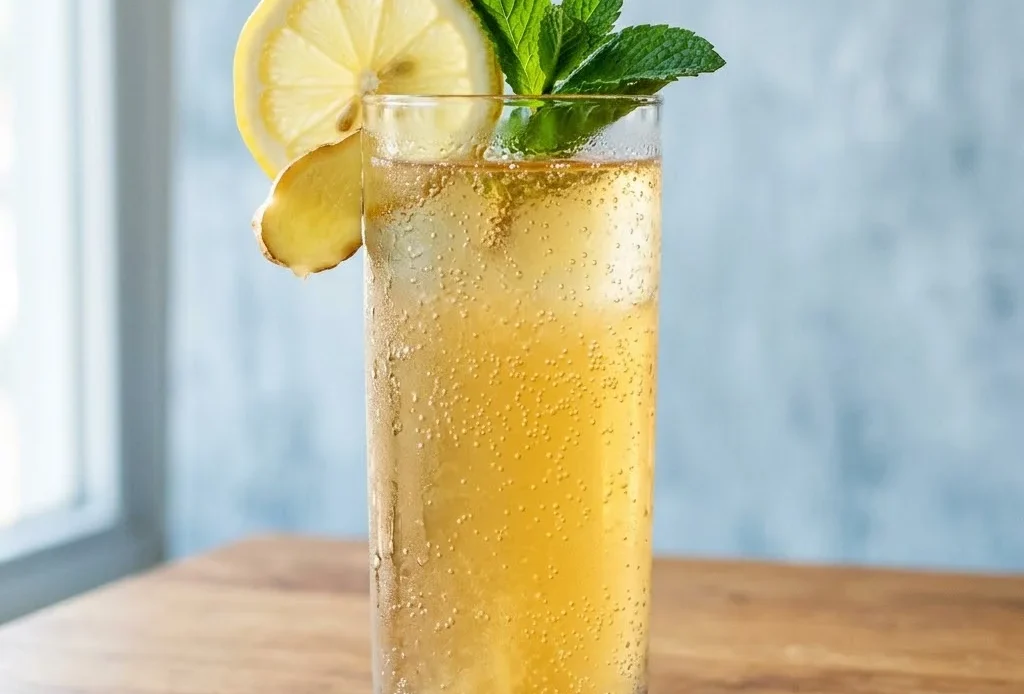
Store-bought ginger ale has almost no actual ginger in it. Canada Dry lists “ginger” well below corn syrup and natural flavors — the warmth you get from a real homemade ginger ale recipe is categorically different. I figured this out last February when I made my first batch from fresh root: sharper, cleaner, with actual heat that fades into lemon.
That batch changed how I think about the drink. This recipe gives you a spice-level system — mild, medium, or genuinely hot — that no store bottle can match and that you can dial to suit everyone at the table.
Why This Homemade Ginger Ale Recipe Works
Most recipes use one of two approaches: muddle fresh ginger directly in the glass, or make a concentrated syrup first. The syrup method wins every time. Muddling releases ginger oil unevenly — intense ginger in some sips, almost none in others. Syrup extracts flavor consistently and lets you control exactly how much heat goes into each glass.
One batch of syrup covers 8 to 10 glasses. You make it once and mix drinks all week. The ratio is 1:1 water to sugar with the ginger amount as the only variable — and that single variable is what makes this homemade ginger ale recipe adjustable from mild enough for kids to close to ginger beer intensity.
Key Ingredient Notes for Your Homemade Ginger Ale Recipe
Fresh Ginger Root
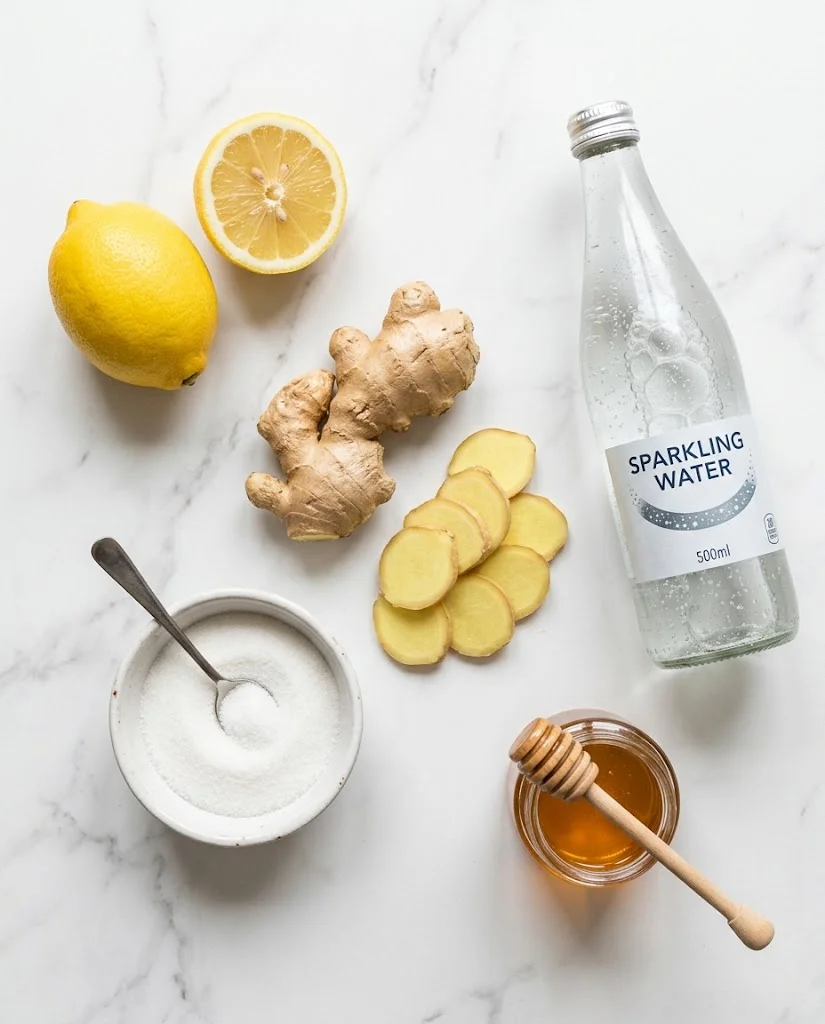
Fresh ginger root is not optional. My first batch used powdered ginger because I didn’t have fresh root on hand — the syrup came out cloudy and bitter, closer to gingerbread than ginger ale. Not drinkable.
Fresh root from an Asian grocery store runs $1 to $2 per pound versus $4 to $5 at a regular supermarket. You need about 2 to 3 inches per batch. No need to peel it — the skin adds a slight earthiness and gets strained out anyway.
Sweetener
White sugar produces the cleanest syrup — you taste ginger and lemon, nothing else. Honey works well and adds a floral note, but dissolve it at lower heat since honey scorches above 150°F. Keep the water-to-sugar ratio at 1:1 — more sugar makes the syrup too thick to mix evenly into cold sparkling water.
Sparkling Water
Use a sparkling water with strong carbonation — carbonation level varies significantly between brands. Topo Chico and Pellegrino hold their fizz longest. Standard club soda works but goes flat faster once opened.
For more fresh ginger drinks built on the same root, the ginger infusion recipe is a natural follow-up — same technique, different flavor profile.
What I Learned Testing This Homemade Ginger Ale Recipe
Ginger concentration is everything, and it took me more failed batches than I want to admit to land on the right ratios. My first serious test used 1 tablespoon of sliced ginger per cup of water — almost no heat. My second batch overcorrected to 4 tablespoons and came out so aggressively hot I couldn’t drink it without heavy dilution.
After several more batches, the sweet spot for a medium-spice homemade ginger ale recipe settled at 2 to 2.5 tablespoons of thinly sliced fresh ginger per cup of water, simmered for 15 minutes. When the syrup smells like a warm ginger snap cookie — that toasty, slightly spicy smell with a faint caramel note from the sugar — and it coats the back of a spoon without running off immediately, it’s ready.
Pull it off heat and cool it completely before mixing into sparkling water. I once poured warm syrup directly into a glass of Topo Chico and watched every bubble disappear instantly. Cold syrup only. I also stopped peeling the ginger after batch three — the skin adds a slight earthiness, and since everything gets strained out anyway, there’s no reason to bother.
Calories in This Homemade Ginger Ale Recipe
A standard glass made with 2 tablespoons of syrup runs about 50 to 60 calories, almost all from sugar. The sparkling water adds nothing. Fresh ginger root contains gingerols — the bioactive compounds behind the characteristic heat.
Most commercial ginger ale lists ginger well below corn syrup and artificial flavors. Homemade versions use the real thing, which is where the heat and flavor actually come from.
For a lower-calorie version: reduce syrup to 1 tablespoon per glass and add a generous squeeze of fresh lemon. The lemon brightens the ginger without adding perceptible calories and keeps the drink from tasting thin.
Homemade Ginger Ale Recipe Spice Level Guide
All three spice levels use 1 cup water and 1 cup sugar as the base. Only the ginger amount changes:
- Mild (1 tbsp sliced ginger): Light warmth, citrus-forward. Good for kids or anyone sensitive to spice.
- Medium (2 to 2.5 tbsp): Genuine ginger heat without being aggressive. Where most people land. The standard ratio throughout this recipe.
- Spicy (3 to 4 tbsp): Real heat, stomach-warming, close to ginger beer intensity. Start at medium and adjust up — it’s easy to overshoot.
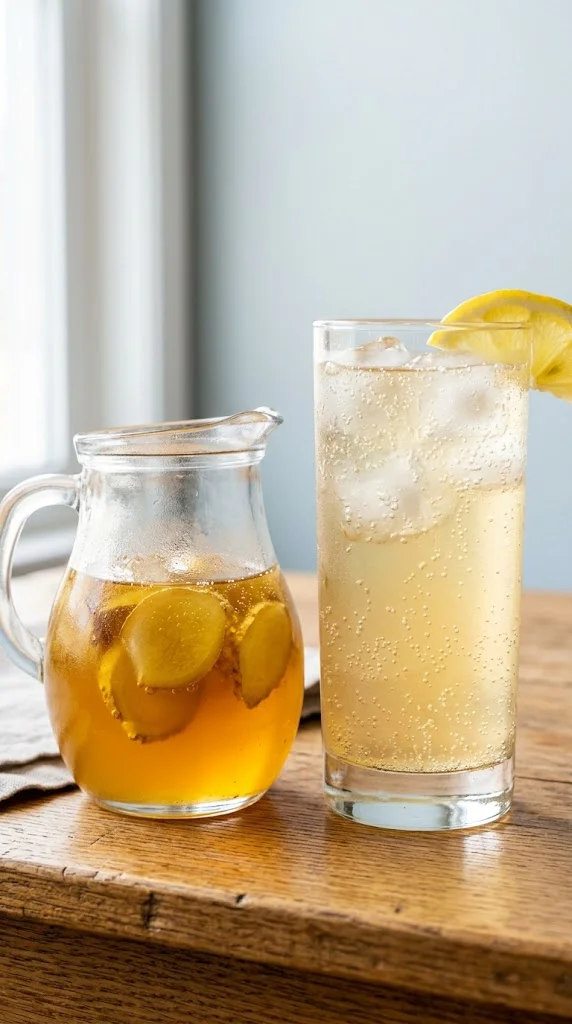
Other variations: add 3 to 4 fresh mint leaves to the syrup for the last 5 minutes of simmering (adds coolness that cuts the spice), or replace sugar with equal-weight honey for a floral note. For a party batch: scale syrup to 4 cups, combine with 2 liters of cold sparkling water and juice of 4 lemons. Stir just before serving. Serves 10 to 12.
Troubleshooting Your Homemade Ginger Ale Recipe
Drink Tastes Flat
Two causes: the sparkling water lost carbonation before mixing, or the syrup was still warm. Always use cold syrup from the fridge and pour sparkling water last, over the back of a spoon. Use a high-carbonation brand and serve immediately.
Syrup Crystallized in the Fridge
Warm the jar gently in a small saucepan with 1 tablespoon of water over low heat — it dissolves back within 2 to 3 minutes. To prevent it next batch, make sure the sugar fully dissolves before reducing the heat.
Too Sweet or Too Thin
Add a pinch of salt to the finished glass — it cuts perceived sweetness without changing the flavor. More lemon juice also balances it fast. If the drink tastes watery, you either used too much sparkling water or under-steeped the syrup. Next batch, simmer 2 to 3 extra minutes and taste before mixing — the syrup should taste strong enough to be slightly overwhelming on its own.
Too Spicy to Drink
Dilute with more sparkling water and a squeeze of lemon. For the next batch, reduce ginger by half a tablespoon and taste the syrup before mixing into a full glass. The syrup is meant to taste concentrated — it softens considerably once diluted into 6 to 8 ounces of sparkling water.
More Homemade Soda Recipes You’ll Love
If this homemade ginger ale recipe is in your rotation, the grapefruit soda recipe uses the same syrup-plus-sparkling method and is ready in 5 minutes. For fresh ginger in a simpler daily format, the ginger water recipe is the easiest use of the same root. For the seasonal version, this ginger ale also appears in the fall mocktails roundup. For a stronger, spicier base, try my ginger simple syrup, which uses the same syrup method with more fresh ginger.
For the full range of sodas made from scratch, the homemade sodas hub covers everything from dirty sodas to fermented drinks.
Homemade Ginger Ale Recipe
Equipment
- 1 Small saucepan
- 1 Fine mesh strainer
- 1 Glass jar or bottle for storing syrup
- 1 Tall glass for serving
Ingredients
For the Ginger Syrup (makes ~1 cup)
- 2 to 2.5 tbsp fresh ginger root thinly sliced, unpeeled — 2-3 inch piece; use 1 tbsp mild, 3-4 tbsp spicy
- 1 cup water
- 1 cup white sugar or equal-weight honey for floral variation
For Each Glass
- 2 to 3 tbsp ginger syrup chilled; adjust to taste
- 6 to 8 oz cold sparkling water high-carbonation — Topo Chico or Pellegrino recommended
- 1 squeeze fresh lemon juice optional but recommended
- ice as needed
Instructions
Make the Ginger Syrup
- Wash the ginger root — no need to peel it. Slice into thin rounds, about 1/8 inch thick. For medium spice, measure 2 to 2.5 tablespoons of sliced ginger. Use 1 tablespoon for mild or 3 to 4 tablespoons for hot.
- Add the sliced ginger, water, and sugar to a small saucepan. Stir to combine. Place over medium heat and bring to a gentle simmer, stirring occasionally, until the sugar fully dissolves.
- Reduce heat to low and simmer uncovered for 15 minutes. The syrup is ready when it smells like warm ginger cookies and coats the back of a spoon without running off immediately. Do not let it boil aggressively.
- Remove from heat and cool to room temperature — at least 30 minutes. Do not skip this step. Pouring warm syrup into sparkling water instantly flattens the carbonation.
- Pour the cooled syrup through a fine mesh strainer into a clean glass jar, pressing on the ginger to extract remaining liquid. Discard the solids. Seal and refrigerate for up to 2 weeks.
Assemble Each Glass
- Add plenty of ice to a tall glass. A full glass of ice keeps the drink colder longer and slows carbonation loss.
- Pour 2 to 3 tablespoons of chilled ginger syrup over the ice. Start with 2 tablespoons on your first glass — the syrup is concentrated and the heat softens considerably once diluted.
- Pour 6 to 8 ounces of cold sparkling water slowly over the back of a spoon to preserve carbonation. Add a squeeze of fresh lemon juice if using. Swirl gently to combine and serve immediately.
Notes
Nutrition
Frequently Asked Questions
How do you make homemade ginger ale from scratch?
Make a ginger syrup by simmering sliced fresh ginger root with equal parts sugar and water for 15 minutes. Strain, cool completely, then mix 2 tablespoons of syrup with cold sparkling water and a squeeze of fresh lemon. The whole process takes about 20 minutes.
Can I use powdered ginger instead of fresh root?
Fresh ginger root works significantly better. Powdered ginger produces a cloudy, slightly bitter syrup that lacks the clean heat of fresh root. If fresh ginger is unavailable, bottled ginger juice is a closer substitute than powder — use about 1 tablespoon per cup of water.
How long does homemade ginger ale syrup last in the fridge?
The ginger syrup keeps for up to 2 weeks refrigerated in a sealed glass jar. The finished ginger ale should be consumed immediately after mixing — carbonation is lost within minutes once the syrup and sparkling water are combined.
Is homemade ginger ale healthier than store-bought?
Homemade ginger ale uses real fresh ginger root, which contains gingerols — the compounds responsible for ginger’s heat and flavor. Most commercial ginger ales use artificial ginger flavoring. You also control the sugar content, so you can reduce sweetness to your preference.
How do I adjust the spice level of homemade ginger ale?
Use 1 tablespoon of sliced ginger per cup of water for mild heat, 2 to 2.5 tablespoons for medium, and 3 to 4 tablespoons for a genuinely spicy result close to ginger beer intensity. Start at medium — it is easy to add more syrup to the glass but difficult to fix one that is already too hot.
Can I make a batch of homemade ginger ale for a party?
Yes. Scale the syrup to 4 cups and combine in a large pitcher with 2 liters of cold sparkling water and the juice of 4 lemons. Add plenty of ice and stir gently just before serving to preserve carbonation. This serves 10-12 people comfortably.
Why does my homemade ginger ale taste flat?
Two common causes: the sparkling water lost carbonation before mixing, or the ginger syrup was still warm when added. Always use cold syrup straight from the fridge and pour the sparkling water last, over the back of a spoon to slow the pour and protect the carbonation.
Do I need to peel the ginger before making the syrup?
No. The peel adds a slight earthiness that works well in ginger ale and there is no need to remove it. Just wash the root well and slice it into thin coins — the thin slices maximize surface area and improve flavor extraction during simmering.
Want something milder than ginger? The homemade cream soda recipe follows nearly the same steps, swapping the ginger syrup for vanilla.
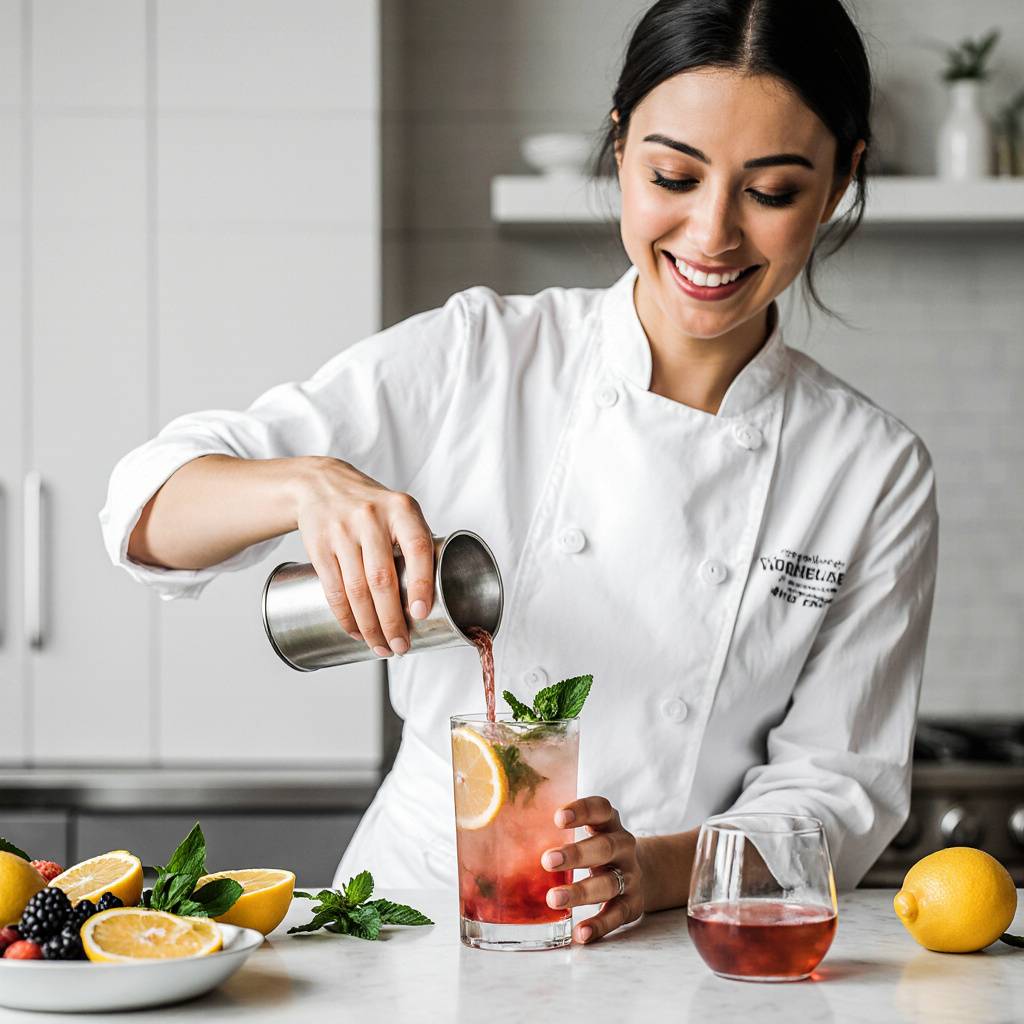
Made the ginger syrup batch and it’s lasted me almost two weeks in the fridge just like the recipe says. Love that I can adjust the spice level depending on my mood — sometimes mild, sometimes really punchy. So much better than store-bought ginger ale.