
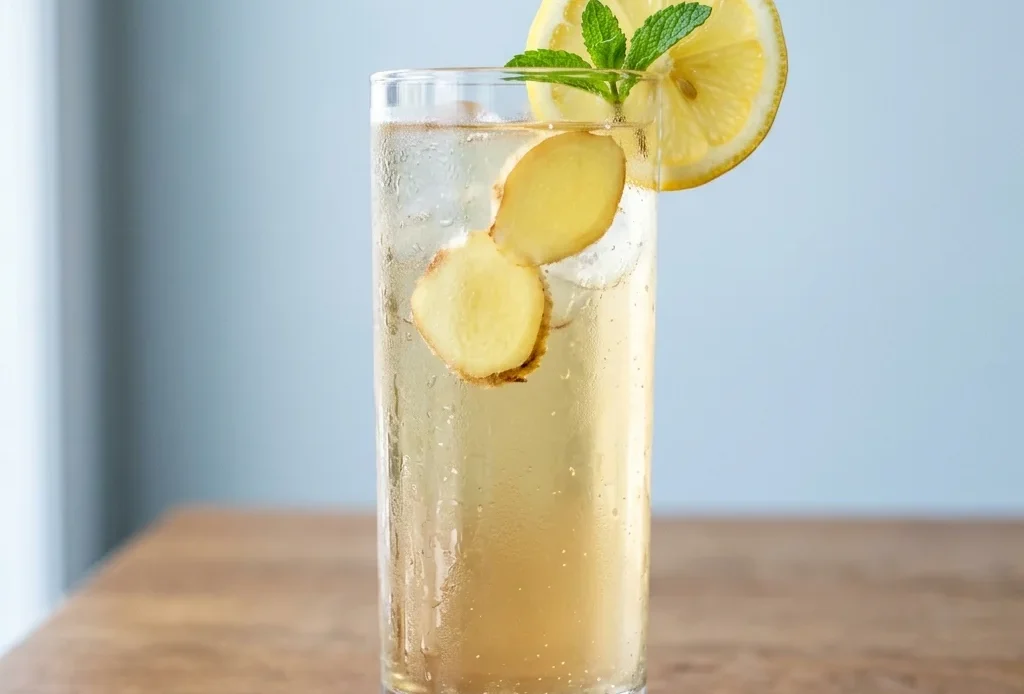
February, I was making this ginger water recipe three times a week. January had started it — I’d cleared out the fridge after the holidays and wanted something to drink in the mornings that wasn’t sweet, wasn’t coffee, and wasn’t plain water. A 30g knob of fresh ginger was sitting in the crisper drawer. That first batch was terrible. By the time I figured out the cold-steep method, this ginger water recipe had become a weekly habit I haven’t dropped since.
Water infused with fresh ginger, no boiling, no sugar. Five minutes of prep and a few hours of patience in the fridge. What you get is sharp, clean, and faintly peppery — nothing like the murky wellness tonics at juice bars, and nothing like ginger tea. The cold-steep keeps the flavor alive in a way that boiling just doesn’t.
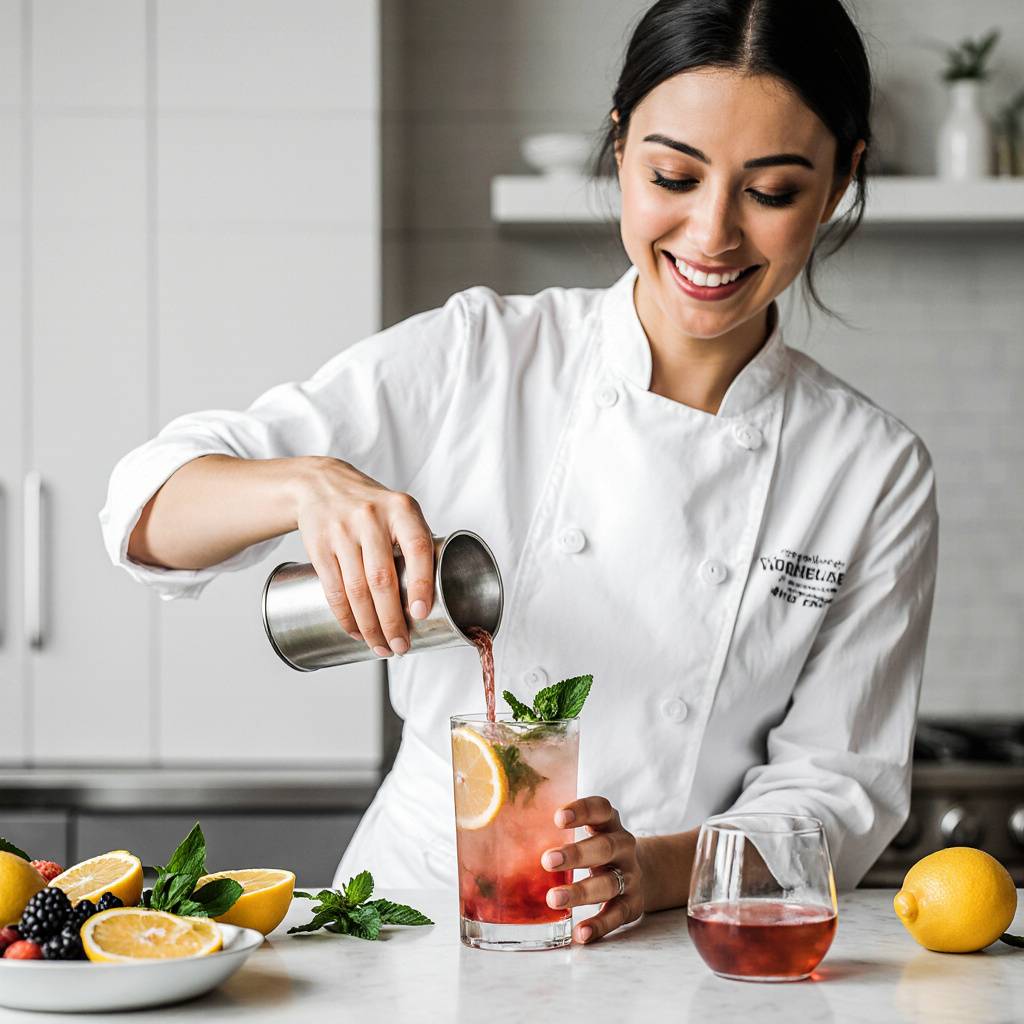
This recipe makes a full liter. Drink it plain, add lemon after steeping, or use it as a sparkling mocktail base when diluted 1:3 with soda water.
Why This Ginger Water Recipe Works Better Than Boiling
Boiling is the method most tutorials reach for. It works, but it changes the flavor — you get a warmer, slightly cooked note that pushes ginger toward tea territory. Cold steeping keeps the flavor brighter, more direct, and noticeably cleaner.
Ginger contains volatile aromatic compounds — primarily gingerols and shogaols — that dissipate under heat. Steep fresh ginger root in cold or room-temperature water and those compounds stay intact. They dissolve slowly. The result is sharper and almost green — somewhere between cracked pepper and citrus peel, hitting the back of your sinuses in a way the boiled version doesn’t reach.
Cold steeping also gives you precise control over intensity. Two hours produces mild ginger water, good for drinking in a large glass over ice. Four hours is the sweet spot for most people — noticeably flavored without being overwhelming. Overnight is very assertive: use it diluted with sparkling water 1:3, not straight.
Key Ingredient Notes
Fresh ginger root — this is the only ingredient where quality matters. Dried ginger powder isn’t a substitute here. It muddies the water and produces a flat, stale flavor that doesn’t improve with steeping time. Look for firm ginger with no soft spots. Older ginger that’s been in your fridge a few weeks still works — the skin gets papery but the flesh steeps just fine. Grocery store ginger is perfectly good; no specialty market needed.
Lemon (optional) — fresh juice only. Bottled lemon juice tastes metallic and kills the clean flavor you’ve built. Add it after straining, not before. Half a lemon per liter brightens the drink without pushing it into lemonade territory. Adding lemon before steeping makes the water slightly bitter — citric acid interacts with ginger compounds over the steep window in a way that doesn’t help.
Water — filtered is ideal if your tap has a strong mineral taste. Tap works fine for most people. Ginger has enough punch to mask mild chlorine notes.
If you want a stronger ginger drink served warm, the Ginger Infusion Recipe uses a hot-brew method with more ginger per cup — closer to medicinal tea, but very deliberate in flavor.
What I Learned Testing This Ginger Water Recipe
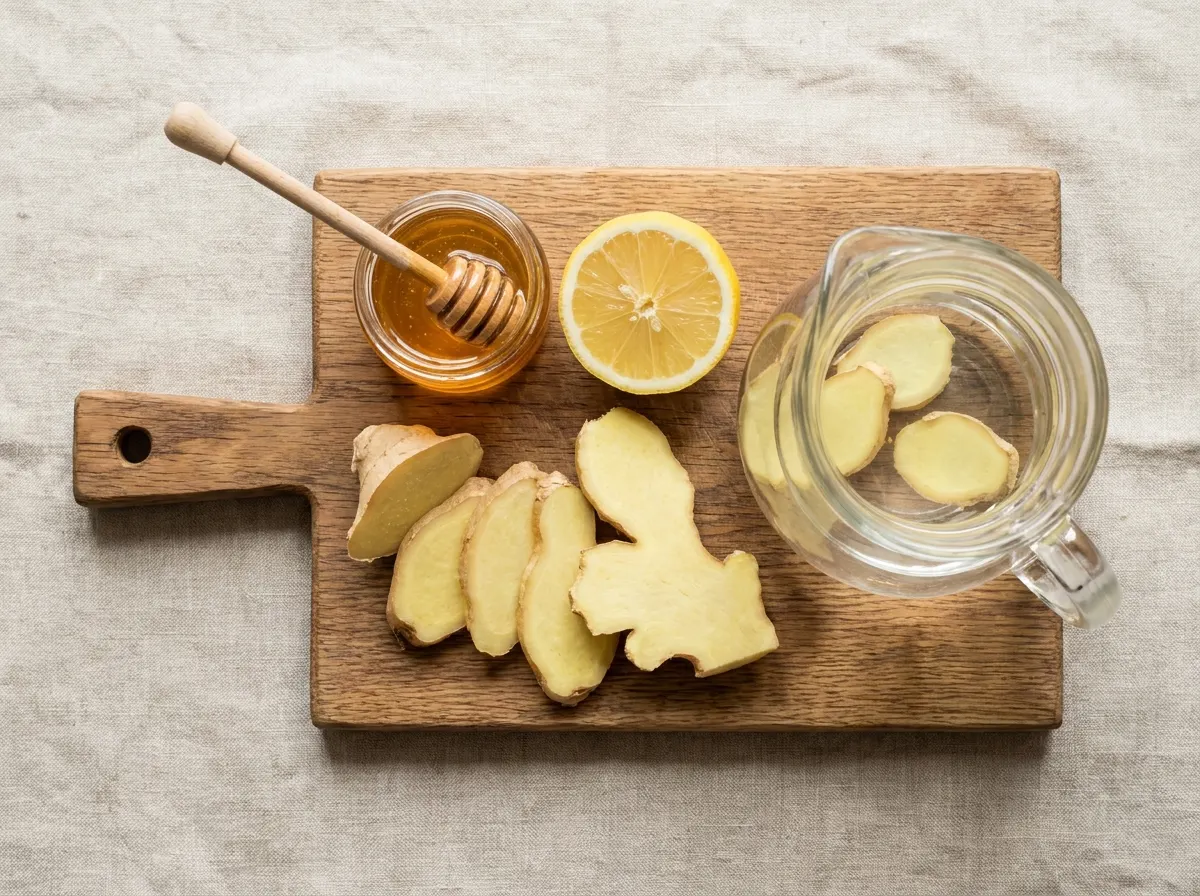
My first batch in January used two thick chunks of ginger — roughly 50g — dropped whole into a jar. Left it on the kitchen counter for five hours on a warm afternoon. When I came back, the water had gone nearly opaque. It had a soapy, almost astringent quality that made me pour the whole thing down the drain without tasting a second sip.
Two problems at once: too much surface area from the rough, uncut surfaces on the chunk edges, and too much warmth. A warm kitchen accelerates extraction unpredictably. Past four or five hours at room temperature, you hit a harsh bitter zone and there’s no coming back from it.
Fix was simple: thin slices (2-3mm), fridge steeping instead of counter steeping, and a hard stop at 4 hours for drinking straight. For overnight steeping, use 15g instead of 30g — and refrigerate the whole time. When I cracked open the jar the next morning after my first successful overnight batch, the smell was sharp and almost woodsy, like fresh-cracked pepper mixed with something faintly green. Nothing like boiled ginger tea. That’s when I committed to the cold method for good.
Calories in This Ginger Water Recipe
One liter of this ginger water recipe — made with 30g of fresh ginger and no added sweetener — comes to about 20 calories total. Per serving (one 250ml glass), that’s roughly 5 calories. Almost everything comes from trace natural sugars leaching out of the ginger during steeping.
Adding lemon juice brings it to about 8 calories per glass. Honey adds roughly 20 calories per teaspoon. Even with both, this stays well under 50 calories per liter — considerably less than anything pre-made you’d find in a bottle.
Tips and Variations for Your Ginger Water
Once you’ve run your first ginger water recipe at the 4-hour mark and have the base dialed in, the variations are worth trying.
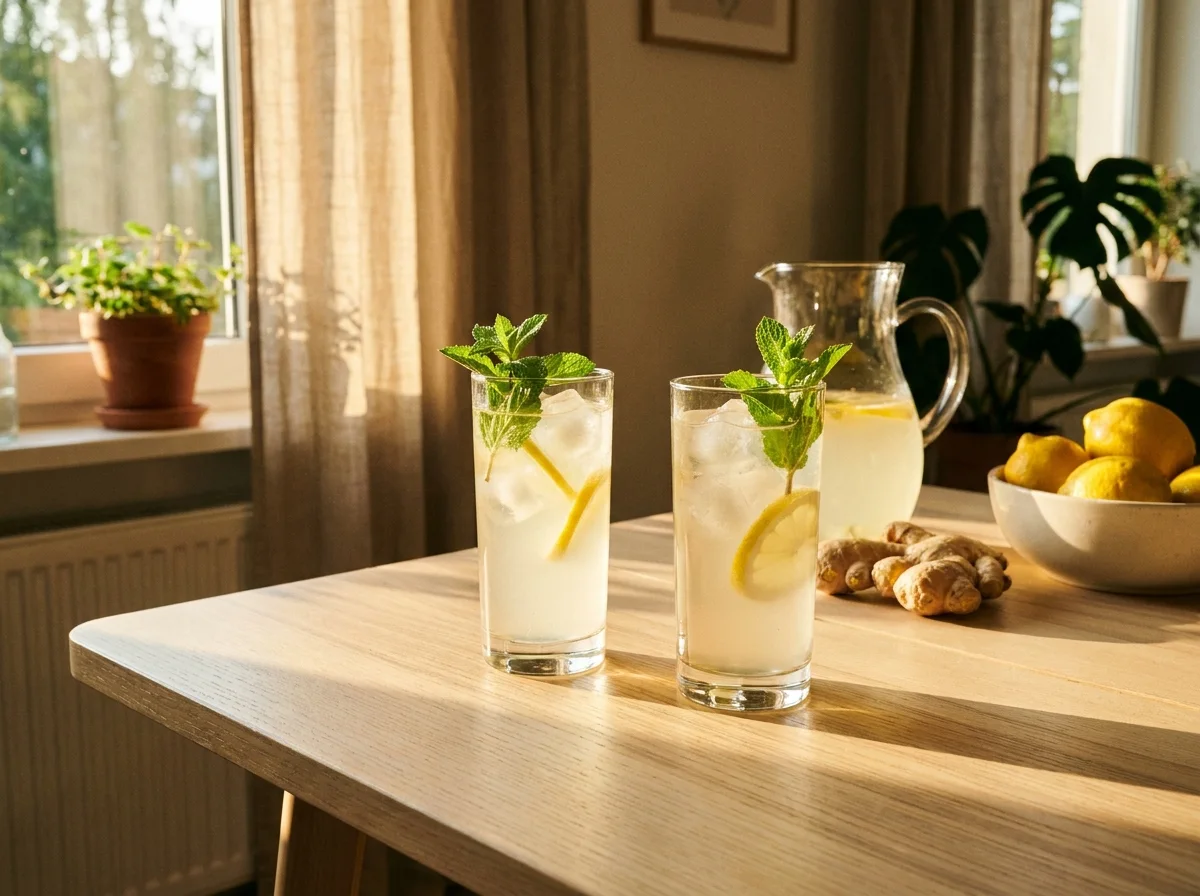
Mint — steep 8 fresh mint leaves alongside the ginger slices. Shifts the flavor toward something cooler and more cocktail-adjacent. Works especially well with lemon. When you open the jar after 4 hours, the smell hits you before anything else — sharp ginger plus cool mint is a genuinely good combination.
Sparkling water — once the ginger concentrate is ready, dilute 1:3 with sparkling water instead of still. The carbonation amplifies the peppery hit and makes it feel like a real drink. Good stand-in for soda on a warm afternoon.
Cucumber — 4 thin cucumber slices steeped with the ginger cuts the sharpness and adds a clean, green note. A solid choice if straight ginger water is too intense for you. This combination also works well as a rotation drink alongside the Cucumber Parsley Green Juice.
Turmeric — add one thin slice of fresh turmeric root to the jar. The color goes golden and the flavor picks up an earthy warmth. If that combination appeals to you, the Turmeric Shot Recipe takes it further with black pepper and lemon in a concentrated 1-oz shot format.
Steep time ladder — 2 hours is mild, good over ice in large quantities. 4 hours is the sweet spot for drinking straight. 8-plus hours is concentrate territory: dilute 1:2 before serving.
Troubleshooting Your Ginger Water Recipe
Water tastes bitter or soapy — steeped too long or too warm. Discard and start over with less ginger (20g instead of 30g) and a maximum 3-hour fridge steep. Counter-steeping in a warm kitchen accelerates extraction unpredictably. Always use the fridge.
Flavor is too mild after 4 hours — ginger may be old, or the slices were too thick. Try grating instead of slicing. Grating dramatically increases surface area and produces a noticeably stronger infusion in the same window. Strain through a fine mesh sieve or double-layer cheesecloth before serving.
Water turned slightly cloudy — normal. Ginger starch and fine particles create a natural haze, especially with grated ginger or overnight steeping. Flavor is unaffected. Strain more thoroughly if you want clear water.
Tastes flat the next day — the ginger slices stayed in the pitcher. Leaving them in past your target strength keeps extracting, and by day two the balance shifts toward bitter. Always strain before storing. Sealed and strained, this ginger water recipe keeps well in the fridge for up to 3 days.
More Detox Drinks You’ll Love
If this ginger water recipe is your go-to for mornings, these pair naturally with it:
- Ginger Infusion Recipe — stronger, brewed hot, more ginger per cup
- Turmeric Shot Recipe — ginger, turmeric, lemon, black pepper in a 1-oz shot
- Cucumber Parsley Green Juice — sharp, clean, vegetable-forward, ready in 10 minutes
- Baking Soda Shot for Weight Loss — a gentler antacid alternative if you want less sodium than this one
- Juice Fasting & Detox Recipes — full hub with all detox drinks on the site
Ginger Water Recipe
Equipment
- 1 Glass jar or pitcher (1 liter)
- 1 Fine mesh strainer
- 1 Sharp knife for slicing ginger
Ingredients
For the Ginger Water
- 30 g fresh ginger root about a 2-inch piece; no need to peel — wash well and slice thin
- 1 liter cold filtered water tap works if yours has no strong mineral taste
For the Lemon Variation (Optional)
- 1/2 lemon fresh-squeezed; add after straining, never before steeping
Instructions
Prepare and Steep
- Wash the ginger root but do not peel it. Slice into thin rounds, about 1/8 inch thick. You need about 30g — roughly a 2-inch piece. Thinner slices steep faster and extract more flavor. Older ginger with papery skin still works fine.
- Place the ginger slices in a clean glass jar or pitcher. Pour 1 liter of cold water over them. Do not use warm or hot water — cold steeping is what keeps the flavor bright and clean rather than cooked and tea-like.
- Seal or cover the jar and refrigerate. Steep for 2 hours for mild ginger water (good for a large glass over ice), 4 hours for the standard version (noticeable flavor without being overwhelming), or overnight for a very assertive concentrate. Overnight concentrate should be diluted 1:3 with sparkling water before drinking straight.
Strain and Finish
- Pour the steeped water through a fine mesh strainer into a clean jar or pitcher. Press firmly on the ginger slices to extract remaining liquid. Discard the solids — they have given everything they have.
- Squeeze half a lemon into the strained ginger water and stir to combine. Add lemon after straining, never before or during steeping — citric acid interacts with ginger compounds over the steep window and adds an unwanted bitterness. Half a lemon per liter brightens the drink without pushing it into lemonade territory.
- Keep refrigerated in a sealed jar for up to 5 days. Serve cold over ice or at room temperature. For a light sparkling mocktail, dilute 1 part ginger water with 3 parts sparkling water. Shake or stir the jar before pouring — a small amount of ginger sediment is normal and harmless.
Notes
Nutrition
For more drinks in this style, browse the complete Fruit Drink Recipes collection.
How do you make ginger water?
Peel and thinly slice 30g of fresh ginger root, add it to a liter of cold water, and refrigerate for 2 to 4 hours. Strain out the ginger and serve over ice. No boiling required. Lemon juice can be added after straining for a brighter flavor.
Can you add lemon to ginger water?
Yes. Add the juice of half a lemon after straining the ginger, not before. Adding lemon during steeping can turn the water slightly bitter as citric acid reacts with ginger compounds over time. Fresh lemon juice only — bottled lemon juice tastes metallic.
How long does ginger water last in the fridge?
Ginger water keeps well in the refrigerator for up to 3 days in a sealed jar or pitcher. The flavor continues to develop slightly over the first day, then slowly fades. Stir or shake before pouring — the natural ginger particles settle at the bottom.
Should you boil ginger for ginger water?
Boiling is not necessary and changes the flavor profile. Heat dissipates the volatile aromatic compounds in ginger that give it that sharp, peppery quality. Cold steeping preserves those compounds and produces a brighter, cleaner tasting drink. Boiling is better suited for ginger tea or a warm infusion.
Can you use ginger powder instead of fresh ginger?
Not recommended for this recipe. Ginger powder does not dissolve cleanly in cold water — it creates a murky, starchy suspension with a flat, slightly stale flavor. Fresh ginger root is essential for the clean infusion this recipe produces.
What can you add to ginger water for more flavor?
Lemon juice is the most common addition. Fresh mint steeped alongside the ginger adds a cooler, more refreshing note. Thin cucumber slices soften the sharpness. For a sparkling version, dilute the finished ginger water 1:3 with sparkling water. All additions go in after straining, not during steeping.
If simple wellness drinks are part of your routine, try this Chia Seed Water Recipe next — just 3 ingredients, 15 minutes, and a surprisingly refreshing result once you have the ratio right.

I used to prepare this drink without lemon, but I tried this recipe, really good thank you for this recipe
The cucumber variation cuts the sharpness just enough without losing the ginger character. Really easy and useful recipe.
Simple enough that I actually make it consistently. The lemon version is the one I come back to every morning.