
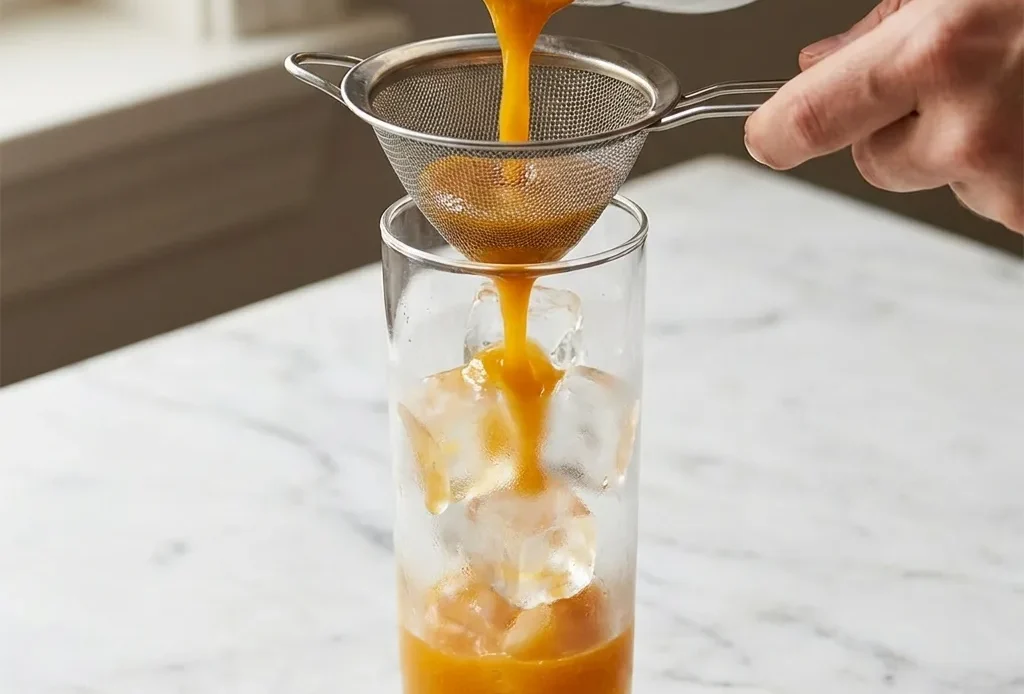
Two ingredients. That’s what most recipes tell you. Passion fruit and sparkling water, done. But anyone who’s actually made it knows that version tastes watery, flat, and nothing like the drink that convinced you to try it in the first place.
A proper passion fruit mocktail is tart and tropical with a fizzy finish that hits the back of your throat. This passion fruit mocktail recipe takes five minutes and three core ingredients — but the details matter. The pulp needs straining. The ratio of fruit to sparkling water has to be right. And the type of passion fruit you use changes everything.
I tested this recipe a dozen times — fresh fruit, frozen pulp, canned concentrate, different sweeteners, different bases — before I landed on the version below. It’s the one I keep coming back to, and it’s the one that actually competes with what you’d order at a juice bar.
If you’re new to building drinks from scratch, what makes a great mocktail is worth a read first — it covers the balance of sweet, sour, and base that makes any recipe work.
Passion Fruit Mocktail Recipe: What Makes a Passion fruit Mocktail?
A passion fruit mocktail is a non-alcoholic drink built around fresh or frozen passion fruit pulp. The pulp brings natural tartness and a distinctive floral sweetness — a flavor that’s tropical, slightly musky, and unlike anything else. Combined with citrus, a small amount of sweetener, and a sparkling base, it creates a drink that feels both refreshing and complex. That combination is what makes a great passion fruit mocktail worth making from scratch.
What separates a good version from a forgettable one is the pulp quality and the ratio. Too much sparkling water and the drink is thin. Too much syrup and you’ve buried the fruit. The goal is to let passion fruit lead every sip — the other ingredients are there to support it, not compete with it.
Passion fruit is also one of the few fruits that holds up to carbonation without losing its character. The seeds are edible but textually unpleasant in drinks, so straining is non-negotiable. Beyond that, this is a forgiving recipe — once you understand the ratio, you can customize it endlessly.
Passion Fruit Mocktail Recipe: Ingredients You’ll Need
Full measurements are in the recipe card. Here’s what to know about each ingredient before you start.
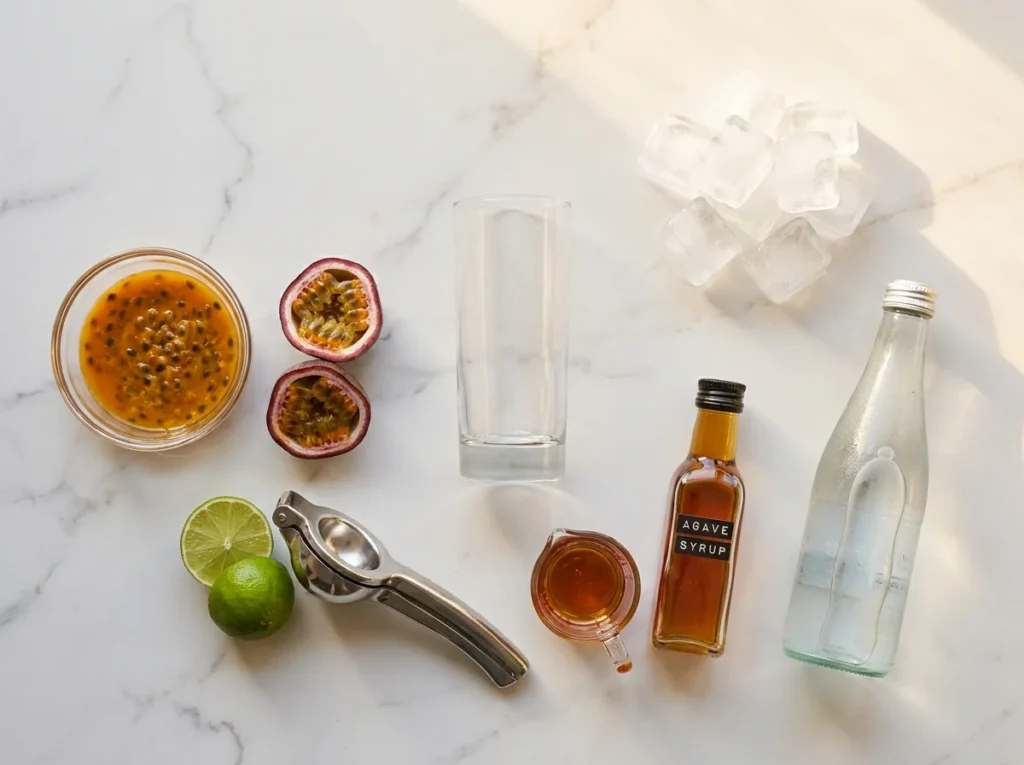
Passion Fruit Pulp
This is the drink. Everything else is support. You have three options — and they are not equal.
Fresh passion fruit delivers the most complex, floral flavor. One ripe fruit yields 2–3 tablespoons of pulp. Look for wrinkled, dimpled skin — smooth skin means it needs more time. Fresh passion fruit costs $2–4 each, varies by season, and can be inconsistent in sweetness. Worth it when you can find ripe ones; not worth it when you can’t.
Frozen pulp is the everyday pick. Goya brand frozen passion fruit pulp — found in the freezer aisle at Latin grocery stores or on Amazon — tastes nearly identical to fresh, costs a fraction of the price, and one 14 oz bag makes 8–10 drinks. Thaw overnight in the fridge or 30 minutes on the counter. This is what I use for every batch.
Canned concentrate is the one to avoid. Every brand I tested was over-sweetened with a faint artificial edge that lime juice couldn’t fix. Skip it — the flavor difference is not worth the $0.50 you’d save.
| Option | Flavor | Cost per drink | Availability | Verdict |
|---|---|---|---|---|
| Fresh passion fruit | Most complex, floral | $2–4 | Seasonal | Best when ripe ones are available |
| Frozen pulp (Goya) | Nearly identical to fresh | ~$0.60 | Year-round | Recommended for everyday use |
| Canned concentrate | Over-sweetened, artificial edge | Lowest | Year-round | Avoid |
Fresh Lime Juice
Non-negotiable. Lime juice is the acid that makes passion fruit taste alive rather than sweet and flat. One lime gives you roughly 1 oz of juice. Always squeeze fresh — bottled lime juice has a cooked, muted flavor that diminishes the drink. Roll the lime on the counter before cutting to break down the membranes and get more juice out.
Agave Syrup
Agave has a slightly floral quality that complements passion fruit without competing with it. Start with 0.5 oz — your pulp may already be sweet enough depending on ripeness. Ripe frozen pulp often needs no added sweetener at all. Taste the pulp first, then decide.
Sparkling Water or Ginger Beer
Sparkling water keeps the drink clean and lets the passion fruit lead. Ginger beer adds heat and complexity — a noticeably different drink, and the version I serve to guests. Either works; it depends on what you want. Avoid tonic water — the bitterness clashes with passion fruit’s natural tartness.
Ice
Use fresh ice straight from the freezer. Ice that has been sitting melts faster and dilutes the drink before you’re halfway through it. If you have a choice, large cubes melt slower and look better in the glass.
Passion Fruit Mocktail Recipe: How to Make a Passion fruit Mocktail
This passion fruit mocktail recipe is best served fresh — flavors are brightest right after assembly.
Passion Fruit Mocktail Recipe
Equipment
- 1 Fine mesh strainer for straining pulp
- 1 Tall glass
Ingredients
For the Passion Fruit Mocktail
- 4 ripe passion fruits or 4 oz canned passion fruit pulp
- 1 tbsp simple syrup adjust to taste — passion fruit varies in tartness
- 1 tbsp fresh lime juice
- 6 oz cold sparkling water per glass; high-carbonation brand
- ice as needed
Instructions
Prepare the Passion Fruit
- Cut passion fruits in half and scoop the pulp into a fine mesh strainer set over a bowl. Press firmly with a spoon to extract all the juice. Discard the seeds. You need about 2 oz of strained juice for 2 glasses. If using canned pulp, strain it the same way.
- Combine strained passion fruit juice, simple syrup, and lime juice in a small pitcher or glass. Stir to combine. Taste — it should be tart-forward with a clean tropical sweetness. Add more syrup if needed.
Assemble
- Add ice to two tall glasses.
- Pour equal amounts of the passion fruit base into each glass.
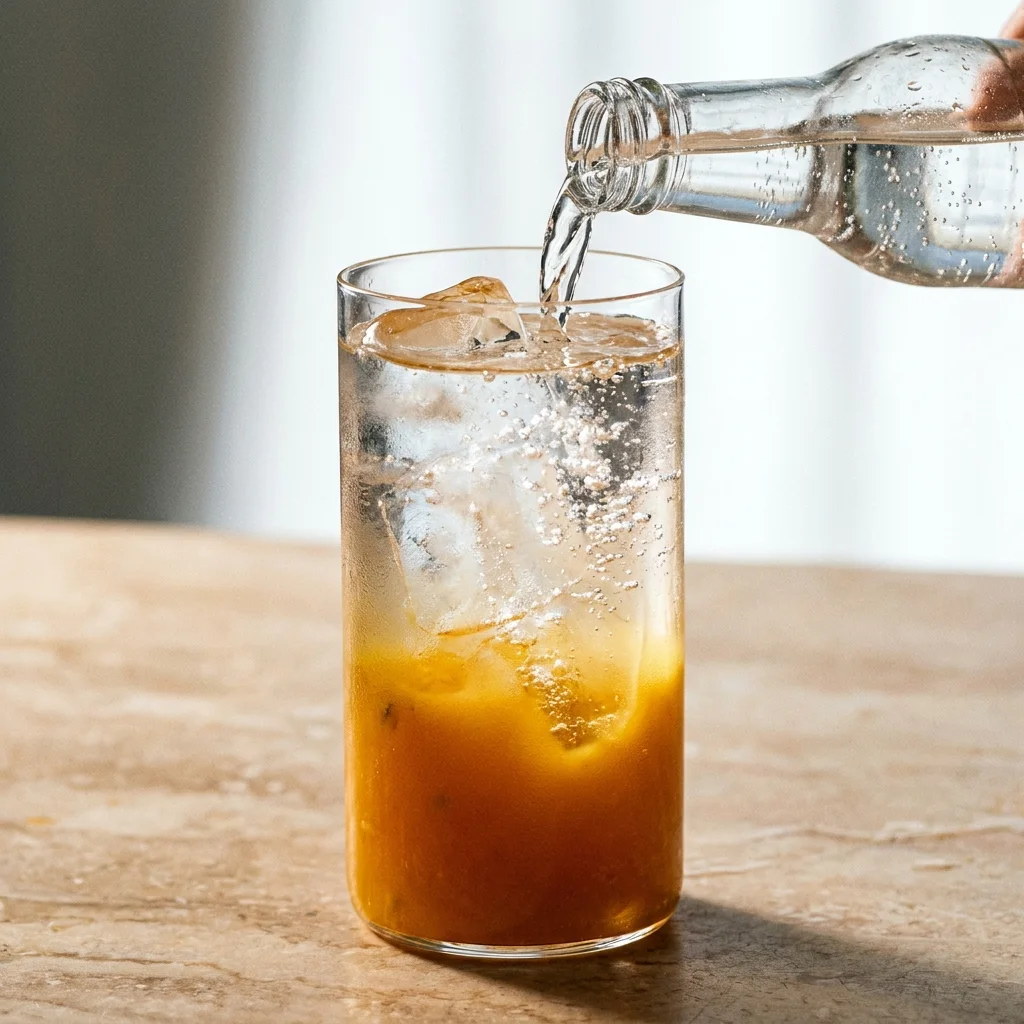
- Pour 3 oz of cold sparkling water slowly over each glass. Stir once from the bottom and serve immediately. The carbonation carries the passion fruit aroma — serve right away.
Notes
Passion fruit Mocktail Variations
Ginger Beer Version
Swap sparkling water for ginger beer. The heat from the ginger pushes against the tartness of passion fruit in a way that makes the drink more interesting and layered. Use a spicy ginger beer like Fever-Tree or Bundaberg for the best result. This is the version I serve to guests.
Coconut Passion fruit Mocktail
Replace sparkling water with coconut water for a less fizzy, more tropical version. The coconut adds a subtle sweetness and body that makes the drink feel more substantial. Works well over a lot of ice on a hot day — easy to make in batches for a crowd. Add 0.5 oz coconut cream if you want a creamier texture.
The experience is noticeably different from the sparkling version — smoother and rounder, without the bright acidic punch the carbonation creates. The coconut provides enough background sweetness that you can skip the agave entirely. If you’re expecting the fizzy, sharp original, think of this as a separate drink: more tropical punch than mocktail, and better suited to longer, slower sipping.
Color-Changing Passion fruit Mocktail
Brew butterfly pea flower tea, let it cool, and add 1 oz to the base before topping with sparkling water. The acidity from the lime juice turns it from blue-purple to pink-red as you stir — a color change that happens in real time in the glass. Visually striking and takes two extra minutes. The tea itself is flavorless, so it doesn’t affect the taste.
Spicy Passion fruit Mocktail
Add 2–3 thin slices of fresh jalapeño to the shaker with ice before adding the other ingredients. Shake and double-strain as normal — the jalapeño infuses heat into the base without chunks. The contrast between the tropical sweetness and the slow heat from the pepper is genuinely good. Adjust slices based on how spicy you want it.
Tajín Rim Version
Wet the rim of your glass with lime juice and dip in Tajín chili-lime powder before building the drink. The savory, salty heat on the rim is a strong contrast to the sweet-tart drink. Better than a plain sugar rim for this recipe and one of the simplest ways to make the drink look finished.
Make It Your Way — Substitutions
Passion Fruit Substitutes
If you can’t find fresh or frozen passion fruit pulp, mango puree is the closest substitute in flavor profile — tropical, slightly musky, similar tartness. Use the same amount. Guava pulp also works and gives a slightly more floral result. Passion fruit syrup (Monin or Torani) can substitute but requires adjusting: use 1 oz syrup, cut agave entirely, and add an extra 0.5 oz lime juice to compensate for the sweetness.
Sweetener Substitutes
Simple syrup is the closest swap for agave — same sweetness, neutral flavor. Honey adds a floral note that pairs well. Maple syrup works but adds an earthiness that can compete with the tropical flavor. For a sugar-free version, use monk fruit syrup or a small amount of stevia — start with half the amount and adjust to taste since sugar-free sweeteners vary significantly in intensity.
Citrus Substitutes
Lemon juice works if you’re out of limes — slightly less sharp, slightly more floral. Yuzu juice (if you can find it) is exceptional with passion fruit and worth trying. Grapefruit juice can substitute for a more bitter, grown-up version. Whatever you use, keep the acid — without it the drink loses definition.
Tips for Serving Your Passion fruit Mocktail
Best Glassware
A tall highball glass shows off the color and gives room for ice, the drink, and the garnish without looking crowded. A rocks glass works for a shorter, more concentrated serve. Avoid wide-mouthed glasses — carbonation escapes faster. If you’re serving at a party, stemless wine glasses look great and hold the right amount.
Ideal Temperature
Serve immediately after building. The drink is best between 34–40°F — cold enough that the carbonation stays tight and the flavor is sharp. Let it sit more than five minutes and the ice dilutes the base faster than the fizz can compensate. If you’re making multiple servings, keep the base (pulp + lime + agave) in the fridge and build each glass individually.
Batch Preparation
For a group of 8, multiply the base ingredients by 8, shake or stir together in a pitcher, and refrigerate up to 24 hours. Add sparkling water per glass when serving — never batch with fizz or it goes flat. Pour 3–4 oz of base over ice per glass, top with 4 oz sparkling water, stir once. Takes 2 minutes to serve 8 people.
Garnish Ideas
A fresh passion fruit half with the pulp facing up is the natural garnish — it shows exactly what’s in the drink and looks good on the glass rim. Add a lime wheel and a mint sprig for color contrast. For a more elaborate serve: sugared lime wheel, edible flower (hibiscus works beautifully), or a dried passion fruit slice. Tajín on the rim adds visual and flavor interest with zero extra effort.
Troubleshooting
The drink is too sweet. Reduce agave to 0.25 oz or skip it entirely. Taste the pulp first — ripe frozen pulp often needs no sweetener. If you’ve already built the drink, squeeze in an extra wedge of lime to balance it.
Seeds keep ending up in the glass. Your strainer isn’t fine enough. A Hawthorne cocktail strainer won’t catch passion fruit seeds. Use a fine mesh kitchen strainer — the kind used for flour or loose-leaf tea.
The fizz dies immediately. Two causes: stale ice or pouring too fast. Use fresh ice straight from the freezer. Pour the sparkling water slowly down the inside of the glass, not straight down the center. Stir once, gently, from the bottom.
The drink tastes watery. You need more pulp. Start with 2 passion fruits (3–4 tablespoons strained juice) instead of one. The pulp is the flavor — sparkling water is the vehicle. More syrup won’t fix a watery drink, it just makes it sweet and watery.
It’s too tart. Add agave in 0.25 oz increments, tasting after each addition. Don’t exceed 1 oz total or you’ll lose the bright tartness that makes the drink worth making.
The drink looks cloudy or brown. Passion fruit oxidizes quickly once the pulp is exposed to air. Use the pulp immediately after straining — don’t let strained juice sit on the counter. This doesn’t affect flavor but it does affect appearance.
Storage and Make-Ahead
The strained base (pulp + lime + agave, no sparkling water) keeps in the fridge for up to 24 hours in a sealed jar. After that, the flavor starts to dull and the color darkens. Don’t freeze the assembled drink.
Frozen pulp keeps in the freezer for up to 12 months unopened. Once thawed, use within 3 days. Don’t refreeze thawed pulp — the texture breaks down and the flavor flattens.
Fresh passion fruit keeps at room temperature for up to a week once ripe (wrinkled). Once cut, use the pulp within 2 days refrigerated. The pulp doesn’t freeze well in whole-fruit form — strain it first if you want to freeze it.
Nutrition Information
One serving of this passion fruit mocktail (with 0.5 oz agave) contains approximately 80 calories, 21g carbohydrates, and 18g sugar. The majority of the sugar comes from the passion fruit pulp and agave — both natural sources.
| Ingredient | Calories | Carbs | Sugar |
|---|---|---|---|
| Passion fruit pulp (3 tbsp) | ~30 | 7g | 6g |
| Lime juice (1 oz) | ~8 | 3g | 0.5g |
| Agave syrup (0.5 oz) | ~42 | 11g | 11g |
| Sparkling water (4 oz) | 0 | 0 | 0 |
| Total | ~80 | 21g | 17.5g |
Nutritional values sourced from USDA FoodData Central. Individual values may vary based on pulp ripeness and brand.
To reduce calories: Skip the agave entirely (saves 42 cal) and rely on ripe pulp for sweetness. Brings the drink to approximately 38 calories. Switching to ginger beer instead of sparkling water adds roughly 20–30 calories depending on the brand.
Benefits of Passion Fruit
Passion fruit is a good source of vitamin C, vitamin A, and dietary fiber. According to Healthline’s nutritional overview of passion fruit, the pulp also contains antioxidants including beta-carotene and polyphenols. One passion fruit provides roughly 17% of your daily vitamin C needs. USDA FoodData Central data shows passion fruit pulp delivers approximately 30 calories per 100g alongside 10g of dietary fiber — making it one of the more fiber-dense tropical fruits.
Is It Vegan and Gluten-Free?
Yes to both. Every ingredient in this recipe — passion fruit, lime, agave, sparkling water — is naturally vegan and gluten-free. If you substitute honey for agave, the drink is no longer vegan. All other substitutions in this recipe are vegan-friendly.
More Recipes You’ll Love
- What is a mocktail? — the balance of sweet, sour, and base that makes any non-alcoholic drink work
- Explore all mocktail recipes — every recipe on the site organized by style and occasion
- Grapefruit soda in 5 minutes — another quick citrus-forward drink with a clean, tart finish
- Raspberry leaf tea — floral and lightly tart, a natural pairing with tropical flavors
- Homemade ginger infusion — make your own ginger base to swap into this recipe for the spicy version
- Jungle Juice Recipe — Tangy, Bright, and Ready in 5 Minutes
Frequently Asked Questions
For more drinks in this style, browse the complete Mocktail Recipes Guide collection.
Can I use passion fruit syrup instead of fresh or frozen pulp?
Passion fruit syrup works but changes the drink significantly — it’s sweeter and less complex than real pulp. If using syrup, reduce to 1 oz, cut the agave entirely, and add an extra 0.5 oz of lime juice to compensate for the lost tartness. Monin and Torani both make decent versions.
How do I know when a passion fruit is ripe enough to use?
Look for wrinkled, dimpled skin — that’s the sign it’s at peak ripeness. A smooth, firm passion fruit needs several more days on the counter. Ripe ones feel slightly heavy for their size and smell floral. Never refrigerate unripe passion fruit; it stops the ripening process.
Can I make a passionfruit mocktail ahead of time?
Make the base (strained pulp + lime + agave) up to 24 hours ahead and refrigerate in a sealed jar. Add sparkling water only when serving — it goes flat within minutes. For a batch of 8, multiply the base by 8, refrigerate, and top each glass with sparkling water individually to order.
What can I substitute for agave syrup?
Simple syrup is the closest swap — same sweetness, neutral flavor. Honey adds a floral note that pairs nicely with passion fruit. Maple syrup can work but adds an earthiness that competes with the tropical flavor. For sugar-free, use monk fruit syrup and start with half the amount.
Is a passionfruit mocktail safe for kids?
Yes — it contains no alcohol, caffeine, or added colors. The tartness may be strong for younger kids; add an extra 0.25 oz agave and reduce the lime to 0.5 oz for a milder version. Use still water instead of sparkling for children who don’t enjoy fizz.
How many calories are in a passionfruit mocktail?
Approximately 80 calories per serving using 3 tablespoons of pulp, 1 oz lime juice, and 0.5 oz agave. Skipping the agave brings it to around 38 calories. Switching from sparkling water to ginger beer adds 20–30 calories depending on the brand.
Can I use frozen passion fruit instead of fresh?
Frozen pulp is actually the recommended option for everyday use. Goya frozen passion fruit pulp delivers nearly identical flavor to fresh, is available year-round, and costs significantly less. Thaw overnight in the fridge or 30 minutes at room temperature. One 14 oz bag makes 8–10 drinks.
Why does my passionfruit mocktail taste watery?
The pulp ratio is too low. Use 3–4 tablespoons of strained passion fruit juice per serving — that’s roughly 2 passion fruits. Adding more syrup won’t fix a watery drink; it just makes it sweet and watery. Double the pulp first, then adjust sweetness from there.
Can I make this drink without a cocktail shaker?
Yes. Combine the passion fruit juice, lime juice, and agave in a tall glass with ice. Stir vigorously with a long spoon for 20–30 seconds until the glass feels cold. Double-strain into a second glass over fresh ice, then top with sparkling water. The result is slightly less chilled but just as good.
What does passionfruit mocktail taste like?
Tart, tropical, and fizzy with a floral finish. The dominant flavor is passion fruit — a unique combination of sweet and sour with a musky, almost guava-like quality. The lime juice sharpens the tartness and keeps the drink bright. It’s refreshing rather than sweet, and nothing like standard fruit-flavored drinks.
Also try this Strawberry Lemonade Mocktail — bright, bubbly, and great for summer gatherings.
If you love bold fruit flavors, try this Dragon Fruit Punch Mocktail next — same fresh-juice approach, built to batch for a crowd.
Used frozen pulp and it worked perfectly. The ratio is right, previous recipes I tried always came out too watery or too sweet. This one is dialed in.
Been making this every Friday for the past month. The bright color alone makes it feel celebratory.
Made this for a dry January gathering and got genuinely enthusiastic reactions from people who don’t usually drink mocktails.
Really clear instructions and the result is exactly what the recipe promises. Comes together in five minutes flat.
This is the one I keep coming back to when I want something that actually feels like a real drink.
The tartness level is exactly right. Added a tiny pinch of flaky salt on the rim and it brought everything together.
Served this alongside cocktails at a summer party and it was the first thing to run out. Nobody missed the alcohol.
Found frozen passion fruit pulp at a Latin grocery and got a deep, authentic flavor. That’s the route to take.
Finally a mocktail that stands on its own instead of tasting like a watered-down version of something else.
Made a big batch for brunch and multiple people asked for the recipe before they’d finished their glass.
The lime balance is what makes it. Without it the passion fruit just tastes flat and one-note. Really well tested.
I don’t usually comment but this recipe earned one. My husband and I made it twice in the same week.
Quick, tropical, and it actually tastes like passion fruit rather than just sugar. Making it again for a dinner party this weekend.
Used frozen passion fruit pulp because fresh wasn’t available and it worked great. The color is gorgeous.
The ratio in this recipe is really dialed in. Most passion fruit mocktails I’ve tried come out too sweet — this one doesn’t.
Made this for the first time last week and it’s already in regular rotation. The tartness is hard to get right and this one nails it.