
Homemade soda is any drink you carbonate yourself — either by mixing a flavored syrup with seltzer, building a dirty soda with cream and syrup, or fermenting your own fizz with a ginger bug. This is where every method lives, organized by type so you can find what you’re actually looking for.
The homemade soda category has split into something much bigger than “juice plus sparkling water.” Dirty soda took over TikTok and turned Utah gas station drinks into a home-kitchen trend with a serious following. Ginger bug fermentation brought a new audience to the idea of brewing your own fizz from scratch. Italian sodas, cream sodas, flavored syrups — there’s a version of this for every skill level and every kind of kitchen.
I built this page because I kept bouncing between techniques before I understood how they connected. The methods are different. The equipment is different. The time investment is very different. So I’ve organized everything here by type — figure out which kind of homemade soda you want to make, then go from there.
If you’re new to this: start with a quick syrup soda. If you’re ready for something more interesting: dirty soda or ginger bug.
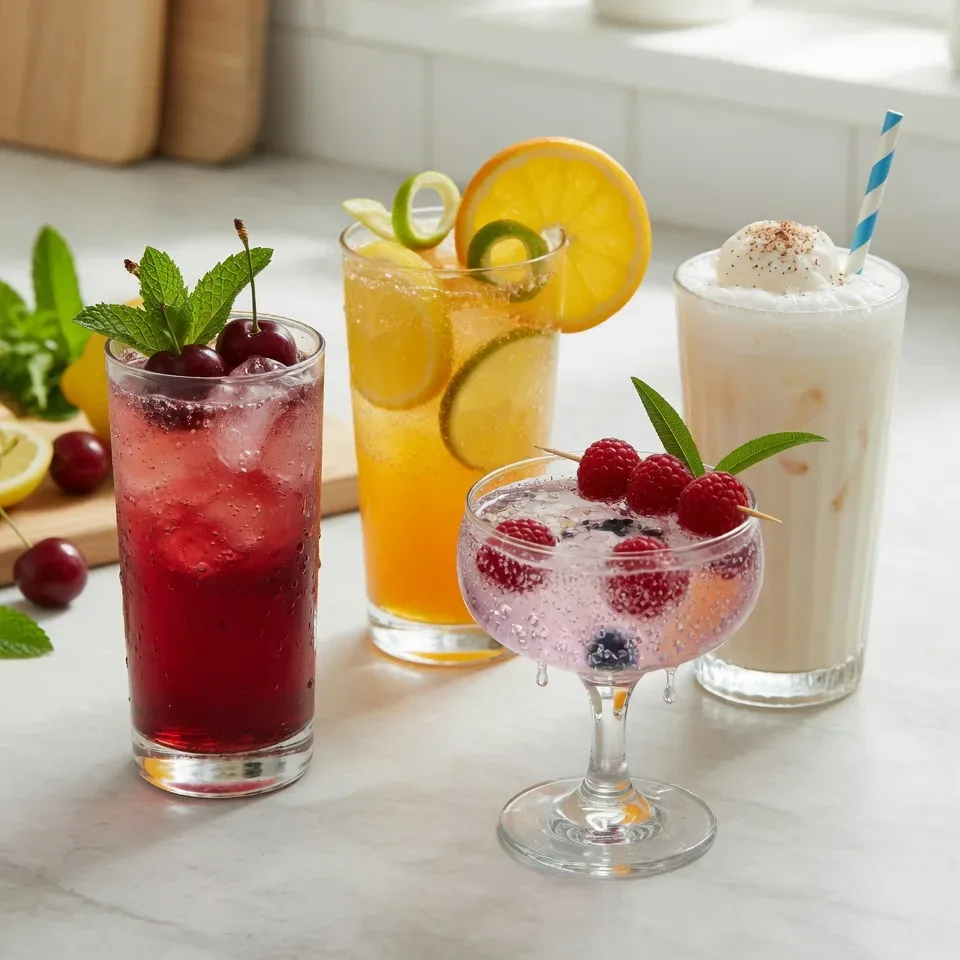
Which Type of Homemade Soda Are You Making?
There are five distinct styles of homemade soda. They share a name but almost nothing else — different methods, different equipment, different results.
Quick Soda — Syrup + Seltzer (5 Minutes)
The easiest version. You make a simple flavored syrup on the stove — sugar, water, and whatever fruit, herb, or spice you want — chill it, then mix with seltzer or sparkling water. No special equipment. Done in under 10 minutes once the syrup is cold. This is the foundation most recipes build on.
- Time: 5 minutes (plus syrup chill time)
- Equipment: Saucepan + store-bought seltzer
- Skill level: Beginner
Dirty Soda — Cream + Soda + Flavored Syrup
Dirty soda started in Utah as a way to dress up convenience store fountain drinks with cream, coconut milk, and flavored syrups — a trend that The New York Times highlighted as part of Utah’s soda shop craze before it spread nationwide through TikTok. The defining move is pouring a fat — coconut cream, half-and-half, or vanilla cream — into a cold soda. It doesn’t mix in fully. It creates a layered, slightly cloudy drink that looks and tastes unlike anything you can buy in a can. See all dirty soda recipes
- Time: 5 minutes
- Equipment: Just a glass and ice
- Skill level: Beginner
Italian Soda — Syrup + Sparkling Water + Cream Float
Close to dirty soda but with a specific structure: flavored syrup goes in the glass first, sparkling water on top, then a cream or half-and-half float. The cream sits on the surface and mixes in as you drink. Lighter and sweeter than dirty soda, and easy to customize with any syrup flavor.
- Time: 5 minutes
- Equipment: Just a glass
- Skill level: Beginner
Fermented Soda — Ginger Bug (3 to 5 Days)
A different category entirely. You grow a live culture called a ginger bug — wild yeast and bacteria from fresh ginger — then use it to naturally carbonate any flavored liquid. The result is a lightly fizzy, slightly tangy soda with live cultures. Takes several days and requires clean equipment, but it’s genuinely satisfying to make something that’s actually alive. For a deeper look at wild fermentation science, the University of Minnesota Extension has a solid overview. Start with the ginger infusion
- Time: 3–5 days (mostly hands-off)
- Equipment: Glass jars, flip-top bottles
- Skill level: Intermediate
Cream Soda — Vanilla Syrup Base
Cream soda is technically a quick syrup soda, but the vanilla-cream base is specific enough to call out separately. The syrup uses vanilla bean or extract, and the result is the closest homemade version of the classic commercial drink. Works on its own, or as a base for dirty soda variations.
- Time: 10 minutes (plus chill)
- Equipment: Saucepan + seltzer
- Skill level: Beginner
| Method | Time | Equipment | Fizz Source | Skill Level |
|---|---|---|---|---|
| Quick Soda | 5 min | Saucepan + seltzer | Store-bought | Beginner |
| Dirty Soda | 5 min | Just a glass | Store-bought soda | Beginner |
| Italian Soda | 5 min | Just a glass | Store-bought sparkling water | Beginner |
| Fermented Soda | 3–5 days | Jars + flip-top bottles | Ginger bug (live yeast) | Intermediate |
| Cream Soda | 10 min | Saucepan + seltzer | Store-bought | Beginner |
Dirty Soda Recipes
Dirty soda is the fastest-growing category on this site. You don’t need to cook anything. You don’t need special equipment. Pick a soda, add a cream, add a flavored syrup or fresh fruit, and you’ve got something that costs under $2 to make at home instead of $8 at a shop.
Every dirty soda recipe here is built around the same three-part formula: base soda + fat (coconut cream, half-and-half, or vanilla cream) + flavor add-in. Swap any one element and you’ve got a different drink.
- Dirty Cherry Sprite — The easiest version. Great starting point if you’ve never made a dirty soda before.
- Coconut Lime Dirty Soda — Bright and citrusy. Coconut cream adds a rich tropical base.
- Peach Mango Dirty Soda — Tropical and lightly sweet. Works best with Sprite or 7UP as the base.
- Raspberry Vanilla Dirty Soda — Berry-forward with a smooth vanilla finish.
- Salted Caramel Root Beer Dirty Soda — Warm and indulgent. Works as a dessert drink.
- Dirty Dr Pepper Recipe — Tested 4 Ways — Surprisingly Easy.
More dirty soda recipes in progress: Vanilla cream Dr Pepper, and a sugar-free version for anyone cutting back on sweeteners.
Ginger Bug & Fermented Soda Recipes
The ginger bug method is the most rewarding on this list — and the most involved. You’re growing a small living culture: wild yeast from fresh ginger root, fed on sugar and water, until it becomes bubbly and active. That culture then ferments any sweet liquid into a naturally carbonated soda.
The result is genuinely different from anything you can make with seltzer. Lightly fizzy, slightly tangy, with a depth that comes from real fermentation. It also contains live cultures, which is the main reason people seek it out over commercial soda.
- Homemade Ginger Infusion — The base used across multiple ginger soda recipes. Make this first.
- Ginger Bug Recipe — The wild-fermented starter culture you grow before you can naturally carbonate any homemade soda.
- Ginger Beer Recipe Homemade — What you actually make with an active ginger bug: a sharp, fizzy, naturally carbonated soda, no yeast packets needed.
The full ginger bug cluster is being built out now. Coming soon: ginger bug soda flavors and ginger bug tea soda.
Quick & Easy Homemade Sodas
Not every homemade soda needs a plan or a 3-day ferment. These are the ones you can pull together in under 10 minutes with whatever’s in the fridge.
- Grapefruit Soda in 5 Minutes — Fresh grapefruit juice, simple syrup, sparkling water. That’s it.
More quick soda recipes are being added: flavored syrups for every season, a cream soda ginger ale, and a full Italian soda base. Check back weekly.
Homemade Soda Syrups — The Base for Everything
Most homemade sodas start with a syrup. The ratio is almost always the same: 1 part sugar to 1 part water, simmered with your flavoring until the sugar dissolves, then cooled before mixing.
A few things most syrup recipes skip over:
- Use superfine sugar when you can. It dissolves faster. You don’t need to simmer as long, which means fresher flavor in the finished syrup.
- Cold infusion works better for delicate ingredients. Mint, basil, and cucumber get bitter or grassy when you apply heat. For these, steep the ingredient in the prepared (but cooled) syrup overnight in the fridge.
- Storage: Most syrups last 2–3 weeks refrigerated in a sealed jar. Add a tablespoon of vodka to extend that to 4–6 weeks — you won’t taste it in a non-alcoholic drink.
- Mixing ratio: Start at 1.5 oz syrup to 8 oz seltzer. Some flavors read sweeter than others; adjust from there. Always taste with sparkling water, not flat water — carbonation changes how sweet the drink will actually taste.
Flavored Syrup Guides
Every flavor below starts from the same base, with its own ratio, steep time and storage notes.
- Simple syrup recipe — the 1:1 and rich 2:1 base for every other syrup
- Vanilla syrup — for lattes and cream soda
- Strawberry syrup — for lemonade, milk and matcha
- Brown sugar syrup — for iced coffee and tea
- Lavender syrup — for tea, lemonade and sparkling water
- Pumpkin spice syrup — for autumn lattes
- Coconut syrup — toasted, for iced coffee and soda
- Peach syrup — for iced tea
- Blueberry simple syrup — for lemonade and sparkling water
- Mint simple syrup — for mojito-style mocktails
- Rosemary simple syrup — for herbal sodas
- Ginger simple syrup — for ginger ale and mules
- Almond syrup — for lattes and orgeat-style drinks
- Blackberry simple syrup — for berry sodas
Equipment: What You Actually Need
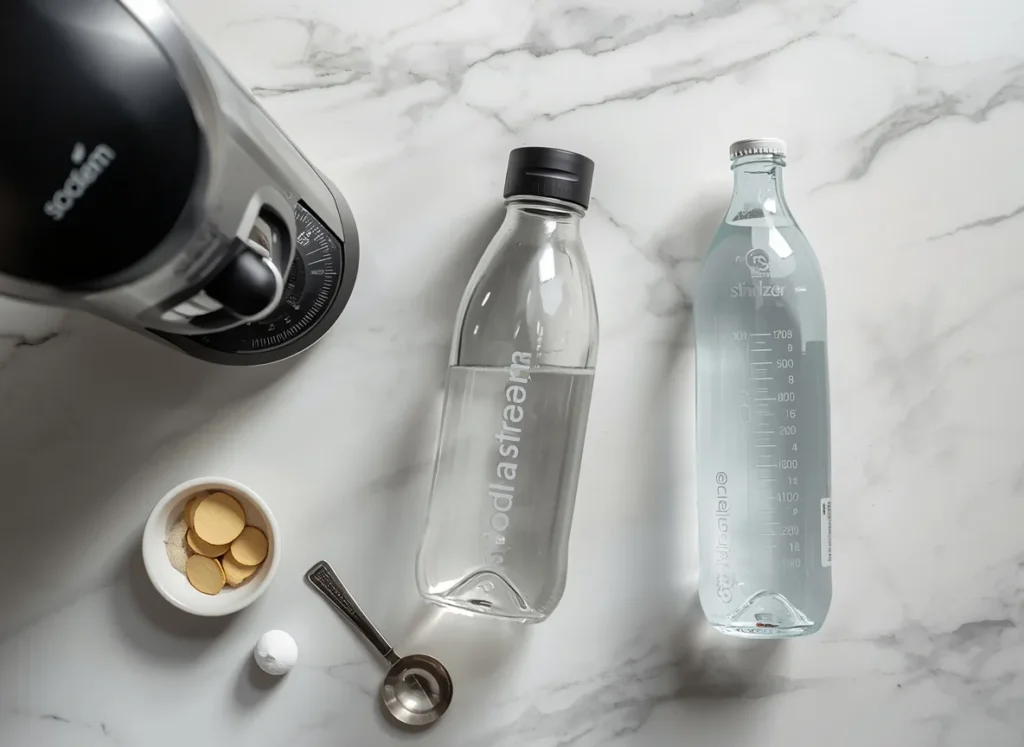
You don’t need much to make homemade soda. Here’s the honest breakdown for each method.
The Seltzer + Syrup Method (No Equipment Required)
Buy a bottle of plain seltzer. Make a syrup. Mix them. The only tool you need is a small saucepan. A fine mesh strainer helps if you’re infusing fruit or herbs. Nothing else is required.
SodaStream or Home Carbonation Machine
A SodaStream lets you carbonate plain water at home, so you control the carbonation level and always have fresh seltzer without buying bottles. It’s a convenience upgrade, not a requirement. Machines run $80–$120 and need CO2 cartridge refills every few months. If you drink a lot of homemade soda, the cost works out. If you’re just starting out, use store-bought seltzer first.
Fermentation Equipment (Ginger Bug Only)
For a ginger bug, you need:
- A 1-quart wide-mouth mason jar for the starter culture
- Flip-top glass bottles (Grolsch-style) for the finished soda
- Accurate measuring spoons or a kitchen scale
- Non-chlorinated water — filtered, or tap water left out overnight (chlorine inhibits the wild yeast and slows or kills fermentation)
That’s the full list. No airlock, no hydrometer, no brewing equipment. The ginger bug is one of the simplest fermentation projects you can do in a home kitchen.
What I Learned Making Homemade Sodas
The single biggest mistake I made early on: adding syrup to flat water and wondering why the drink tasted off. Carbonation changes how you perceive sweetness. A syrup that tastes right on its own will read too sweet or too flat in still water, but just right with seltzer. Always test your syrup ratio with sparkling water.
For dirty sodas: temperature matters more than any other variable. Pour over plenty of ice first, make sure the base soda is very cold, then add the cream last. If the soda isn’t cold enough, the fat coagulates and you get a separated, greasy-looking drink instead of the smooth layered effect you’re after.
For ginger bug: patience is the whole job. If your bug isn’t visibly bubbling by day 4, it’s not dead — it just needs more time and a warmer spot in your kitchen. Above 70°F is the sweet spot.
All Homemade Soda Recipes
Dirty Sodas
- Dirty Cherry Sprite
- Coconut Lime Dirty Soda
- Peach Mango Dirty Soda
- Raspberry Vanilla Dirty Soda
- Salted Caramel Root Beer Dirty Soda
- See all dirty soda recipes
Ginger & Fermented Sodas
- Homemade Ginger Infusion
- Ginger Bug Recipe
- Ginger Beer Recipe Homemade
- More recipes coming soon
Quick Sodas
- Grapefruit Soda in 5 Minutes
- More recipes coming soon
FAQ
How do you make homemade soda from scratch?
The simplest method is two steps: make a flavored simple syrup by simmering equal parts sugar and water with your chosen flavor (fruit, herbs, spices), let it cool completely, then mix 1.5 oz of syrup with 8 oz of cold sparkling water. For fermented soda, you first grow a ginger bug starter and use it to naturally carbonate a sweet liquid over 2–3 days in sealed bottles.
What is a dirty soda?
A dirty soda is a cold soda — usually Coke, Dr Pepper, or Sprite — mixed with a flavored cream or syrup and a fat like coconut cream or half-and-half. The trend started in Utah at shops like Swig and Sodalicious and spread nationwide through social media. The fat layer gives the drink a richer texture and a layered appearance you won’t get from a standard soft drink.
Is homemade soda healthier than store-bought?
It depends on the recipe. A soda made with fresh juice and a modest amount of natural sweetener is generally lower in artificial ingredients than commercial options. A ginger bug fermented soda contains live cultures you won’t find in any canned drink. Dirty sodas with full-fat cream and flavored syrups can match or exceed the calorie count of a standard soda.
How long does homemade soda last?
Quick syrups keep 2–3 weeks refrigerated. Mixed sodas should be consumed right away — carbonation goes flat within a few hours once poured. Ginger bug fermented sodas last about a week in sealed flip-top bottles in the fridge. Open them carefully over the sink: pressure builds during storage, especially if left at room temperature even briefly.
Can you make soda without a SodaStream?
Yes. The easiest option is to buy plain seltzer or sparkling water and mix it with a homemade syrup — that’s how most recipes on this site work. For natural carbonation without any equipment at all, a ginger bug ferments and carbonates the liquid using wild yeast. No machine required.
What is a ginger bug?
A ginger bug is a live fermentation culture made from fresh ginger, sugar, and water. Wild yeast on the ginger skin feeds on the sugar over several days, making the mixture bubbly and active. You then add a small amount of this culture to any sweet liquid — juice, tea, lemonade — seal it in a flip-top bottle, and let the yeast carbonate it naturally.
What is the difference between club soda, seltzer, and sparkling water?
Seltzer is plain carbonated water with no additives — the cleanest base for homemade syrups. Club soda has added minerals that give it a slight salty-mineral taste, which works in some recipes. Sparkling mineral water like Perrier has a stronger mineral character that can compete with delicate flavors. For most homemade soda recipes, plain seltzer is the right call.
How much sugar is in homemade soda?
A standard 1:1 simple syrup at a 1.5 oz to 8 oz ratio contains roughly 18–22g of sugar per serving — similar to most commercial sodas. You can reduce this by making a lighter syrup (0.75:1 ratio) or using monk fruit or erythritol as a lower-sugar substitute. The flavor impact is minimal with a good quality sweetener.
What soda works best as a base for dirty soda?
Dr Pepper, Coke, and Sprite are the most popular bases. Dr Pepper pairs particularly well with vanilla cream and coconut. Sprite and 7UP work best with fruit syrups and lighter flavors. Mountain Dew has a strong citrus character that holds up to bold additions like raspberry or peach.
Can I make homemade soda without any cooking?
Yes. For dirty sodas, no cooking is required at all — it’s just mixing cold ingredients in a glass. For cold-process syrups, steep your ingredients (mint, cucumber, lavender) in sugar syrup overnight without heat. The flavors come through cleanly and stay brighter than a heated version.
How do I get natural carbonation at home without using seltzer?
The only way to create natural carbonation without pre-carbonated water is fermentation. A ginger bug produces CO2 as wild yeast consumes sugar, which carbonates the liquid inside a sealed flip-top bottle. It takes 2–4 days at room temperature. Monitor pressure daily and open briefly over a sink to release excess gas if needed.
What flavored syrups work best for homemade sodas?
Fruit-forward syrups — strawberry, raspberry, peach, passion fruit, blackberry — are the most versatile and work in quick sodas, Italian sodas, and dirty sodas alike. Vanilla is the essential base for cream sodas. Ginger syrup is great with sparkling water and lime. Lavender and hibiscus work well for a more floral drink but benefit from a small amount of citrus to balance the sweetness.
Related Categories
- Mocktail Recipes — non-alcoholic cocktail-style drinks for any occasion
- Tea Drink Recipes — iced teas, chai drinks, green tea blends, and more
- Fruit Drink & Juice Recipes — fresh juices, smoothies, and fruit-forward drinks
Tea makes an excellent sparkling base too. See the tea drink recipes hub for sparkling hibiscus, cold brew sodas, and tea-based drinks that work the same way as homemade soda — brew concentrated, add sparkling water, done.
If you want fruit-forward drinks without the carbonation focus, the fruit drink recipes hub covers agua fresca, fresh juices, smoothies, and lemonades — same fresh-ingredient approach, different direction.
New: Taco Bell Dirty Soda Recipe — the Pepsi dirty soda copycat you can make at home in 2 minutes.
Craving something different? Try this Mountain Dew cream soda dirty soda — vanilla syrup and Coffee-mate turn Mountain Dew into a 2-minute creamy drink.
Coconut Dr Pepper Recipe (The 3-Ingredient Creamy Copycat)
The Founder Dirty Soda Recipe (The Original Swig Copycat That Actually Tastes Right)
Homemade Ginger Ale Recipe (Fresh, Spicy, 20-Minute Syrup Method)
Dirty Lemonade Soda Recipe (The Creamy, Tart Version That Actually Works)
Dirty Lemonade Soda Recipe (The Creamy, Fizzy Version That Works)
Crumbl Dirty Soda Recipe (The Smart Cookie Copycat You Can Make Tonight)
Homemade Cream Soda Recipe (The 3-Ingredient Version You’ll Actually Make Again)
Olipop Caramel Apple Copycat | Homemade Caramel Apple Prebiotic Soda