
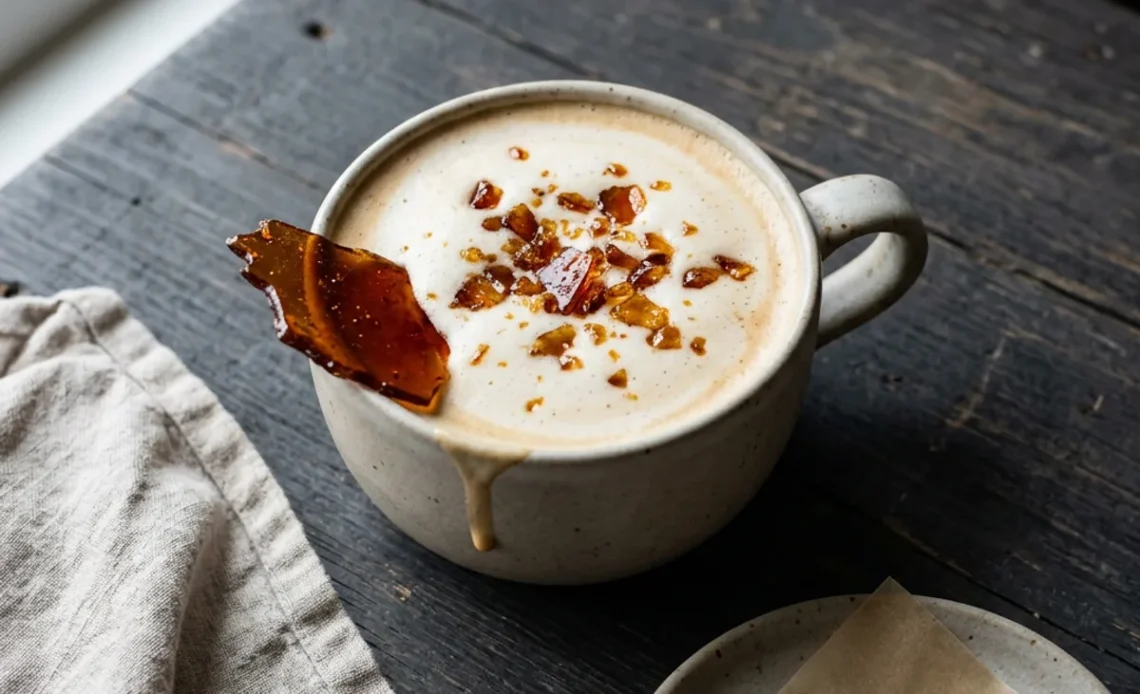
The one detail that matters in a caramel brulee latte is how far you take the sugar.
In short: caramelize 1/2 cup of sugar to a deep amber, pour a spoonful onto parchment for shards, then whisk in hot water, salt and vanilla. Stir a quarter of the syrup into 2 fl oz of espresso, add 1 cup of frothed milk and top with shards: about 224 calories a mug.
Stop the sugar at golden and you get a plain caramel latte. Push it to a deep amber, just before it smokes, and the syrup turns toasty and slightly bitter, like the cracked top of a crème brûlée. That is the whole drink: espresso, frothed milk and sugar cooked a little further than feels safe. The recipe card has the exact quantities.
I make it from scratch with simple ingredients, and you can adjust the sweetness to your taste. This version uses about 25 grams of added sugar per mug and no whipped cream.
| Caramel brulee latte you might mean | What is in it | What the evidence shows | Main caution |
|---|---|---|---|
| This homemade brulee latte, hot | Espresso, 2% milk, a burnt sugar syrup and shards: about 224 calories and 38 g carbohydrate a mug | No study on the drink itself; sugary drinks and weight are covered below | Caffeine: about 126 mg from 2 fl oz of espresso (USDA) |
| Iced caramel brulee latte, homemade | The same mug poured over ice with cold milk | No study on the drink itself | Same caffeine; dissolve the syrup in hot espresso first |
| Caramel brulee latte from Starbucks | Espresso, steamed milk, caramel brulée sauce, whipped cream and topping: 410 calories, 48 g sugars (Starbucks) | No study on the drink itself | About 150 mg caffeine, an approximate value (Starbucks) |
| Iced Caramel Brulée Latte, Starbucks | Espresso, milk, ice, sauce, whipped cream and topping: 400 calories, 44 g sugars (Starbucks) | No study on the drink itself | About 150 mg caffeine (Starbucks) |
| Caramel creme brulee latte | The name many people use for the same Starbucks drink | Not applicable | The menu name is Caramel Brulée Latte |
Why burnt sugar beats a plain caramel sauce
Sugar changes in stages as it heats. First it melts clear, then it goes pale gold, then amber. The darker it gets, the more the sweetness fades and the toasted, nutty, almost coffee-like flavors build. A brulee latte lives at the dark end of that scale.
Two things follow from that:
- You need less of it. A dark caramel tastes stronger, so a modest amount of syrup flavors a whole mug of milk. That is the healthy angle of this recipe, built into the technique rather than added on top.
- There is no cream or butter. The syrup is only sugar, water, a pinch of salt and vanilla. It is thinner than a caramel sauce, so it dissolves cleanly in espresso and stays mixed in cold milk.
The shards are the brulee part: a spoonful of the same caramel poured thin on parchment, left to harden into glass, then cracked over the foam. They give the crunch of a crème brûlée top without a blowtorch.
If you lean toward tea over coffee, a creamy milk tea is the gentler way to get a milky mug.
If you prefer a richer, buttery version, our caramel latte uses a classic cream caramel sauce. This one is its darker, lighter-bodied cousin.
How to burn sugar without burning it
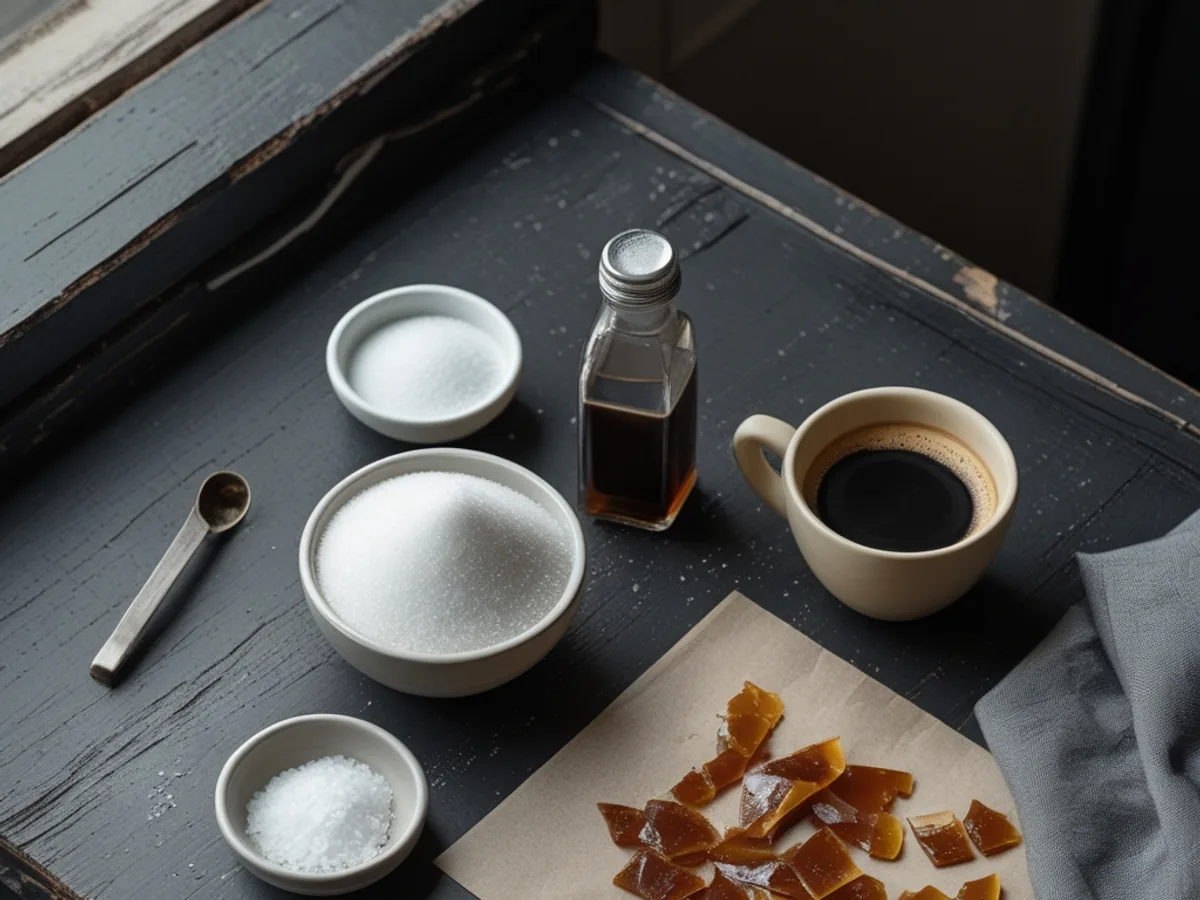
Dry caramel, sugar melted with no water, is faster than a wet caramel and gives a cleaner, darker flavor. It needs your full attention for about 8 minutes. My mise en place: sugar in the pan, hot water measured, salt and vanilla next to the stove, and a sheet of parchment on a plate.
- Use a light-colored pan. You judge the color by eye. In a dark pan, deep amber and burnt look the same.
- Swirl, do not stir. A spoon pushes sugar crystals up the sides, and they can make the whole pan seize into grains. Tilt and swirl the pan so the melted sugar covers the dry spots.
- Watch for the smell. Deep amber smells toasty. Once the smell turns sharp and you see smoke, it has gone too far: the syrup will taste only bitter. Start again; it costs half a cup of sugar.
- Pour the shards before the water. Once the water goes in, the caramel becomes syrup and will not harden.
- Add the water off the heat, slowly. Molten sugar is far hotter than boiling water, and the water spits and steams on contact. Stand back, pour a little at a time and whisk.
If a hard lump forms when the water goes in, put the pan back on low heat and stir until it melts.
Tips, technique and common mistakes in the mug
Most problems with a homemade brulee latte come after the caramel, at the assembly:
- Coffee too weak. The burnt sugar needs the bitter backbone of espresso. With drip coffee, the drink tastes like sweet milk. Brew it strong, about double your usual dose.
- Syrup added to the milk. Stir it into the hot espresso first: it dissolves at once there, and the flavor spreads evenly through the mug.
- Milk boiled. When steaming and frothing milk at home, milk heated past steaming tastes flat and froths poorly. Take it off as soon as small bubbles form at the edge.
- Shards added too early. They start melting on contact with warm foam. Scatter them just before serving, so the first sips still crunch.
- Too sweet or not sweet enough. Taste the syrup diluted in espresso before adding milk. You can always add more; you cannot take it out.
Hot or iced caramel brulee latte?
The iced caramel brulee latte uses the same three steps with one change: the syrup goes into the hot espresso, and only then over ice. Cold milk does not dissolve sugar well, so syrup poured straight onto ice sinks in a sticky layer at the bottom of the glass.
Fill a tall glass with ice, pour in the sweetened espresso, then 1 cup of cold milk, and stir. Skip the frothing, or froth the cold milk for a light foam on top. Add the shards last; they stay crisp longer on a cold drink. For more chilled coffee drinks, our iced latte covers the basic ratio and the ice.
What is in the caramel brulee latte from Starbucks?
Starbucks describes its Caramel Brulée Latte as its signature espresso, steamed milk and caramel brulée sauce, finished with whipped cream and more caramel brulée bits on top. Its ingredient list names a caramel brulee sauce made from invert sugar, sugar and fructose with skim milk powder, natural flavor and salt, and a topping of sugar and corn syrup.
For its standard recipe, Starbucks lists 410 calories, 48 grams of sugars, 61 grams of carbohydrate and 14 grams of fat, with about 150 mg of caffeine as an approximate value. It also notes that the figures are based on standard recipes and change when a drink is customized.
This homemade version is not a copy of that drink. It skips the whipped cream and the milk powder, uses one sugar instead of three, and comes to about 224 calories and 38 grams of carbohydrate per mug, according to USDA values.
Is the caramel creme brulee latte Starbucks fans ask for the same drink?
Yes. Many people search for a “caramel creme brulee latte” at Starbucks, but the menu name is Caramel Brulée Latte.
The “crème brûlée” in people’s minds comes from the dessert: a custard under a sheet of burnt sugar. Starbucks does not add custard to the drink, and neither do we. The link to the dessert is the taste of sugar cooked dark and the crunchy top.
Iced caramel brulee latte: Starbucks vs homemade
Starbucks lists its Iced Caramel Brulée Latte at 400 calories, 44 grams of sugars and 16 grams of fat, with ice, milk, espresso, the sauce, whipped cream and the topping. Our iced caramel brulee latte uses the same mug as the hot one, so it keeps the same values: about 224 calories and 38 grams of carbohydrate, with ice instead of whipped cream.
How sweet is this caramel brulee latte?
Each mug gets a quarter of the syrup and shards, about 25 grams of sugar, according to USDA values for granulated sugar. The rest of the carbohydrate comes from the milk. Choosing a latte sweetened by you, with sugar you can see in the pan, helps with keeping added sugar in check, without giving up the flavor.
To make it lighter:
- Half the syrup. Stir in half and taste: the dark caramel still comes through, and a mug drops to about 176 calories. Keep the leftover syrup for the next day.
- Shards only. Skip the syrup in the mug and rely on a generous handful of shards melting into the foam.
- Smaller mug. Use 1 shot of espresso and 3/4 cup of milk for a smaller drink with the same balance.
Variations and swaps
Once the syrup is made, the brulee latte adapts easily:
- Oat or other plant milk. A barista-style oat milk froths best. Values change with the brand, so check its label.
- Decaf. Decaf espresso keeps the flavor with much less caffeine, which makes this a reasonable afternoon drink.
- Vanilla-forward. Double the vanilla in the syrup, or follow our vanilla latte and add the burnt sugar shards on top.
- Spiced. Steep a cinnamon stick in the hot milk for 5 minutes, then remove it before frothing.
- Salted. Increase the salt to 1/4 teaspoon for a salted brulee latte.
You will find more warm and cold drinks built on a homemade syrup in our tea drinks collection.
Serving suggestions
This latte is sweet and rich enough to stand on its own, so I pair it with something plain: a slice of toast with butter, a bowl of plain yogurt with fruit, or a simple almond biscuit. For a brunch, set out the warm syrup, a pot of espresso, a jug of hot milk and a plate of shards, and let everyone build their own mug and adjust the sweetness to their taste.
Storing the syrup and the shards
The syrup keeps in a closed jar in the fridge. It thickens as it cools; warm the jar briefly in hot water before using it.
The shards keep in a dry, airtight box at room temperature, between sheets of parchment. Humidity is their enemy: left in the open, they turn sticky within hours. Make the lattes themselves fresh, just before serving.
One mug in Mathieu M’s hands, with every quantity left as written, came out delicious, with the texture Mathieu had pictured and a quick, easy assembly. Mathieu would make it again.
What the evidence says about coffee, caffeine and sugary drinks
No trial has looked at this drink itself. Here is what solid reviews say about its two main parts, caffeine and added sugar:
- Coffee in a diet. An umbrella review of meta-analyses found coffee associated with a probably lower risk of several conditions, including type 2 diabetes and cardiovascular disease, and caffeine associated with a rise in blood pressure in short trials and a higher risk of pregnancy loss in observational studies. The authors conclude that coffee can be part of a healthful diet (PubMed 28826374, 2017). Most of these results are associations, not proof of an effect.
- Caffeine and sleep. A meta-analysis of 24 studies found that caffeine reduced total sleep time by 45 minutes on average. To avoid that loss, the authors suggest having coffee (107 mg per 250 ml) at least 8.8 hours before bedtime (PubMed 36870101, 2023).
- Sugary drinks and weight. A meta-analysis of prospective cohorts and randomized trials concluded that sugar-sweetened beverage consumption promotes higher BMI and body weight in children and adults (PubMed 36789935, 2023). The CDC counts flavored coffees, and sugar added to coffee at home, as sugary drinks.
Put together: a latte with a measured amount of sugar, enjoyed earlier in the day, fits a balanced routine better than a large, very sweet one in the evening.
Who should avoid it, or switch to decaf
One mug has about 126 mg of caffeine, from 2 fl oz of espresso according to USDA. For most adults, the FDA cites 400 milligrams a day as an amount not generally associated with negative effects, though sensitivity varies a lot from person to person. If you are pregnant, trying to become pregnant or breastfeeding, or you have a condition or take a medication caffeine may affect, the FDA recommends asking your health care provider whether to limit it. MedlinePlus notes that caffeine can increase stomach acid and sometimes lead to heartburn.
This is not a drink for children: the Dietary Guidelines cited by the FDA say caffeinated drinks should be avoided under age 2 and that drinks with no added sugars should be the main choice for kids and teens.
Sources
- Nutrition and caffeine: USDA FoodData Central, 2% milk, espresso and granulated sugar. The recipe card values are estimates for one of 4 mugs.
- Caffeine guidance: FDA, Spilling the Beans: How Much Caffeine Is Too Much?, and MedlinePlus, Caffeine.
- Sugary drinks: CDC, Rethink Your Drink.
- Starbucks drinks: nutrition and ingredient pages for the Caramel Brulée Latte and the Iced Caramel Brulée Latte.
- Studies: PubMed records linked above.
Cook the sugar one shade darker than you dare, crack the shards over the foam, and your caramel brulee latte is ready, hot in winter or iced the rest of the year.
Caramel Brulee Latte With Real Burnt Sugar Shards, Hot or Iced
Ingredients
Burnt caramel syrup and shards
- 1/2 cup granulated sugar 100 g
- 1/3 cup hot water 80 ml, from the kettle
- 1/8 tsp salt fine
- 1/2 tsp vanilla extract
Lattes
- 8 fl oz espresso 240 ml, about 2 shots per mug, or very strong coffee
- 4 cup milk 2% milk, 960 ml
Instructions
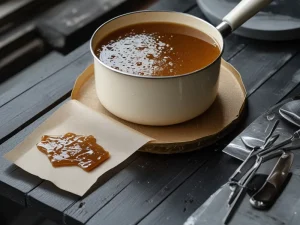
- Spread the sugar in a small heavy saucepan over medium heat. Let it melt without stirring, swirling the pan, until it turns a deep amber and smells toasty, about 6 to 8 minutes. Pour about 1 tablespoon onto parchment paper for the shards. Off the heat, whisk in the hot water slowly (it spits), then the salt and vanilla. Stir until smooth.
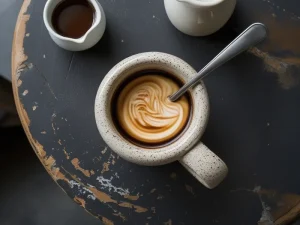
- Brew the espresso. Divide the warm syrup between 4 mugs, add about 2 fl oz of espresso to each, and stir until the syrup dissolves completely.
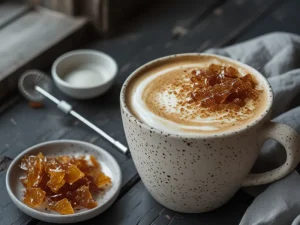
- Heat the milk until steaming with small bubbles at the edge, without boiling, then froth it with a frother, a whisk or a sealed jar. Pour 1 cup into each mug, holding the foam back with a spoon, then spoon the foam on top. Crack the hardened caramel and scatter the shards over the foam just before serving.
Notes
Nutrition
Frequently Asked Questions
Is caramel latte high in sugar?
It can be. Starbucks lists 48 grams of sugars for its standard Caramel Brulée Latte; this homemade version adds about 25 grams of sugar per mug, plus the natural sugar of the milk, and you can halve the syrup.
How to order a caramel brulee latte at Starbucks?
Ask for a Caramel Brulée Latte by name, hot or iced. Starbucks builds it with espresso, milk, caramel brulée sauce, whipped cream and a caramel brulée topping, and notes that drinks may be customized, so you can ask for less sauce or no whipped cream.
How to make caramel latte at home without a machine?
Use very strong coffee from a moka pot, a French press or an AeroPress instead of espresso. Heat the milk in a saucepan and froth it with a whisk or by shaking it in a sealed jar half full.
What does the caramel brulee latte taste like?
Darker and less sugary-sweet than a plain caramel latte. Cooking the sugar to a deep amber brings toasty, slightly bitter notes, like the crackly top of a crème brûlée, and the shards add a crunch that melts slowly into the foam.
Can I make the burnt caramel syrup ahead?
Yes. Keep the syrup in a closed jar in the fridge and warm it a few seconds before stirring it into the espresso. Keep the shards apart in a dry, airtight box, since humidity turns them sticky.