
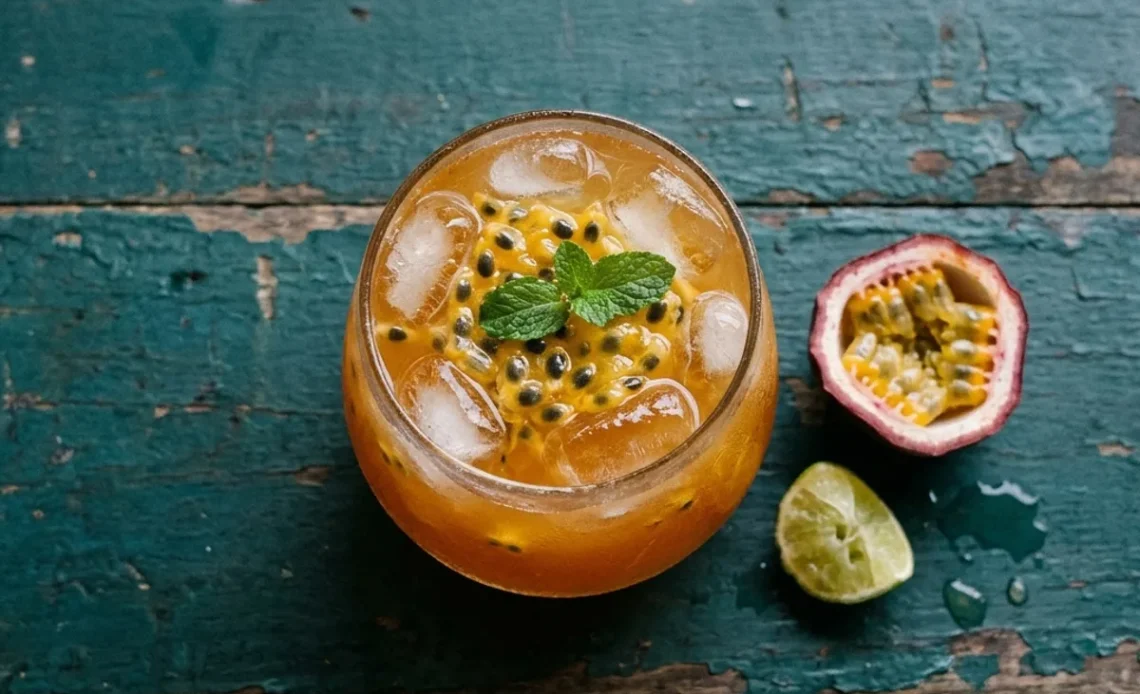
What if your next iced tea tasted like a beach morning? This passion fruit iced tea is my favorite way to get there: strong black tea, the whole golden pulp of real passion fruit, a squeeze of lime and a light hand on the honey.
The short version: steep 4 black tea bags in 2 cups of just-boiled water for 4 minutes, stir in 2 tablespoons of honey, then add 2 cups of cold water, 1/2 cup of passion fruit pulp with seeds and the lime. Pour over ice: 4 glasses, about 61 calories and 3 grams of fiber each.
| Passion fruit tea you might mean | What is in it | What the evidence shows | Main caution |
|---|---|---|---|
| This homemade pitcher | Black tea, whole passion fruit pulp, honey, lime: about 61 calories and 3 g fiber a glass | Small trials on black tea and blood pressure are mixed (see below) | Caffeine: about 47 mg in a cup of brewed black tea (USDA) |
| Tazo Passion herbal tea | Hibiscus flowers, natural tropical flavors, licorice root, orange peel, cinnamon, rose hips, lemongrass (Tazo) | No study found on the blend itself | The passion taste comes from flavorings, not fruit pulp |
| Starbucks Iced Passion Tango Tea | Hibiscus, apple, lemongrass and natural flavors; 5 calories and 0 g sugar for a grande, unsweetened (Starbucks) | No study found on the drink itself | Sweetened versions add sugar; ask for it unsweetened |
| Iced passion fruit tea at Starbucks: caffeine | Listed at 0 mg of caffeine, an approximate value (Starbucks) | Not applicable | A lemonade version adds sugar |
| Mango and passion fruit twist | Our twist: mango puree added to this pitcher | No study found on the drink itself | Adds natural fruit sugar; keep the honey low |
Why real passion fruit beats a flavored tea bag
Most passion fruit tea you buy is an herbal blend that taste “tropical” thanks to natural flavors. That is fine, but a flavored passion fruit tea misses what makes the fruit special: the sweet-sour pulp, the crunch of the seeds, and a perfume that fills the kitchen the moment you cut one open.
Here is the playful twist: instead of straining everything out, we stir the pulp and seeds straight into the tea. The seeds float and sink like little black pearls, and they bring fiber that a strained drink loses. According to USDA values, half a cup of purple passion fruit with its seeds holds about 12 grams of fiber, so even split over 4 glasses, each one keeps about 3 grams.
Choosing your tea: black, green or caffeine-free
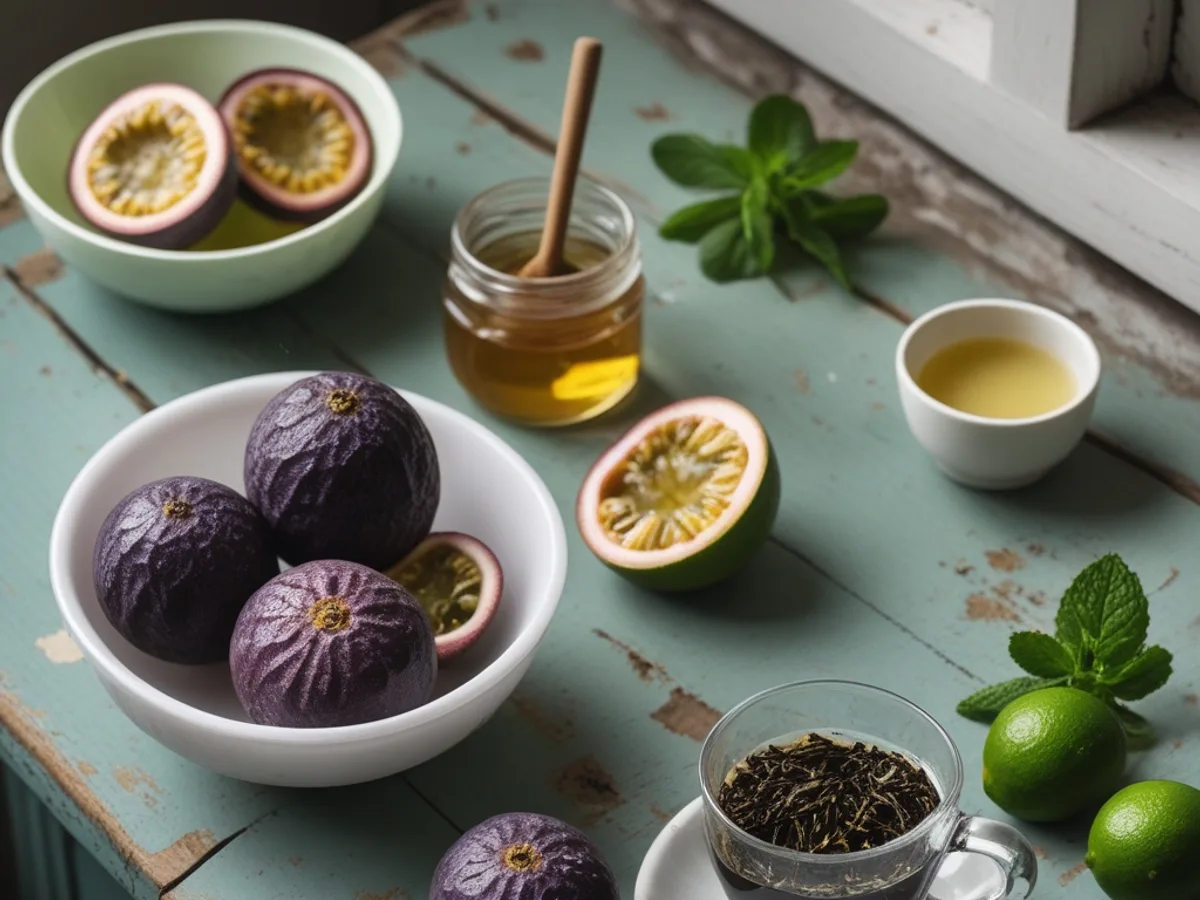
Black tea gives iced passion fruit tea its classic amber color and enough backbone to stand up to the tart fruit. Any plain black tea works: an English breakfast blend, Ceylon or Assam.
- Black tea. Bold and malty. Steep for 4 minutes and no longer.
- Green tea. Lighter and grassier, with less caffeine (USDA lists brewed green tea at about 28 mg per cup against about 47 mg for black). Steep for 2 to 3 minutes in water that has rested a minute off the boil.
- Decaf black tea. Same color and flavor; USDA lists brewed decaf black tea at about 2 mg of caffeine per cup.
- Caffeine-free. Swap the tea bags for a strong hibiscus brew. Our hibiscus tea recipe shows how to steep it, and its ruby color turns this drink a deep sunset red.
Steep time and other tips for a clear, not bitter, tea
Bitterness is the most common problem with homemade passion fruit tea, and it nearly always comes from steeping too long or squeezing the bags. A few habits fix it:
- Pour, do not boil. Bring the water to a boil, then pour it over the bags; there is no need to keep the tea on the heat.
- Set a timer. Four minutes for black tea gives a strong base that stays smooth once diluted.
- Lift, do not squeeze. Squeezing the bags pushes out the harsh, drying side of the tea.
- Sweeten while hot. Honey dissolves easily in warm tea and stays mixed once the cold water goes in. Stirred into a cold pitcher, it tends to sink in a sticky ribbon.
- Add the fruit after the heat. Passion fruit tastes brightest raw, so it goes in with the cold water, not into the hot tea.
Making it ahead for a party? Steep and sweeten the tea up to a day early and keep it in the fridge, then add the pulp and lime an hour before serving.
Fresh passion fruit or frozen pulp?
Fresh passion fruit gives the most perfume to an iced passion fruit tea. Choose fruit that feels heavy, with wrinkled, dimpled skin: wrinkles mean ripe and sweet, while smooth fruit is still sour. Purple and yellow passion fruit both work; taste the pulp first and adjust the honey to it.
No fresh fruit nearby? Frozen passion fruit pulp, sold in the freezer section of many Latin and international grocery stores, works just as well. Thaw it in the fridge and measure the same 1/2 cup. Pick an unsweetened pulp so the honey stays the only added sugar in the pitcher.
If you end up with extra fruit, our passion fruit juice recipe turns it into a bright, lightly sweet juice.
How sweet is this passion fruit iced tea?
This is where a homemade passion fruit tea shines. Brewed black tea has about 2 calories per cup according to USDA, so almost every calorie in the glass comes from the fruit and the honey you choose to add.
With 2 tablespoons of honey for the whole pitcher, each glass comes to about 61 calories and 16 grams of carbohydrate, and part of that comes from the fruit itself rather than added sugar. Want it lighter still? Here is what to change:
- Less sweet. Start with 1 tablespoon of honey, taste after chilling, and add more only if you miss it. Cold drinks taste less sweet than warm ones, so always taste cold.
- More fizz. Fill each glass halfway with the tea and top with plain sparkling water for a lighter, bubbly glass.
- Smoother. Strain out the seeds if you prefer, knowing you lose most of the fiber.
Choosing a pitcher built on whole fruit and a little honey helps with keeping added sugar down across the day, without giving up a drink with real flavor.
Tazo passion fruit iced tea vs this homemade pitcher
Tazo Passion is an herbal passion fruit tea in name, not a black tea. Tazo lists hibiscus flowers, natural tropical flavors, citric acid, licorice root, orange peel, cinnamon, rose hips and lemongrass, so the “passion” comes from flavorings rather than fruit. Steeped and chilled, it makes a bright magenta iced tea.
You can bring the two worlds together: steep 4 Tazo Passion bags instead of black tea, then follow the rest of this recipe with real pulp. You get the floral, magenta herbal base plus the crunch and perfume of the fruit. For more pitchers in the same family, browse our tea drinks collection.
What is in the passion fruit iced tea from Starbucks?
At Starbucks, the drink most people mean is the Iced Passion Tango Tea. Starbucks describes it as a blend of hibiscus, lemongrass and apple shaken with ice, and lists its ingredients as an infusion of water, hibiscus flowers, citric acid, natural flavors, cinnamon, apple, licorice root, lemongrass and fruit juice extract for color, with ice. Passion fruit itself is not on the list.
A grande, unsweetened, is listed at 5 calories and 0 grams of sugar. This recipe is not a copy of that drink: it is a black tea with real passion fruit, so it tastes fruitier and more tart, and it has more body.
Does Starbucks passion fruit iced tea have caffeine?
No caffeine is listed. Starbucks gives the Iced Passion Tango Tea 0 mg of caffeine, and notes that caffeine figures are approximate values. That makes sense, since the base is hibiscus, an herbal infusion with no tea leaves.
Our iced passion fruit tea is different: black tea has caffeine, about 47 mg in a cup of brewed black tea according to USDA. If you want it caffeine-free, use decaf black tea or the hibiscus base described above.
Mango passion fruit iced tea Olive Garden fans can make at home
Mango and passion fruit are a classic tropical pair. If you came looking for the mango and passion fruit tea you had at Olive Garden, here is a homemade take: it is not the restaurant’s recipe, simply this pitcher with ripe mango blended in.
Blend the flesh of 1 ripe mango with a cup of the finished tea until smooth, then stir it back into the pitcher. Mango adds natural sweetness, so taste before adding any more honey: you may want to cut it to 1 tablespoon. Serve this iced passion fruit tea over plenty of ice.
What the evidence says about black tea
Tea is studied mostly for its flavonoids and the heart and blood vessels, and the results so far are modest and mixed.
- Blood pressure, green and black tea. In a small trial on drinking green and black tea, published in the Journal of Hypertension in 1999, 20 men had a single large dose and 13 people drank 5 cups a day for a week. Tea raised blood pressure briefly after drinking, more than caffeine alone, but a week of regular tea did not change 24-hour blood pressure (PubMed 10404946, 1999).
- Black tea and vascular function. A randomized trial found that acute black tea consumption improves cutaneous vascular function, on one of its measures, in healthy middle-aged adults (PubMed 28034564, 2018). Only 20 people drank a single 200 ml cup, and part of the research team worked for a tea company; the authors suggest the effect may contribute to benefits of regular tea.
- Flavonoids and cardiovascular risk. A meta-analysis of randomized trials on flavonoid-rich foods notes that most of the research has looked at soy and cocoa, and calls for longer studies on other flavonoid sources (PubMed 18614722, 2008).
The trials are small and short, and none tested a sweetened fruit tea. Enjoy this pitcher as a lighter everyday drink that supports a habit of less added sugar, not as a remedy.
Safety: caffeine and who should go decaf
For most adults, the FDA cites 400 milligrams of caffeine a day as an amount not generally associated with negative effects, though sensitivity varies a lot from person to person. If you are pregnant, trying to become pregnant or breastfeeding, or you have a condition or take a medication that caffeine may affect, the FDA recommends asking your health care provider whether you need to limit it.
For children, the Dietary Guidelines cited by the FDA say caffeinated drinks should be avoided under age 2, and drinks with no added sugar should be the main choice for kids and teens. The decaf or hibiscus passion fruit tea is the one to pour for younger guests.
Storing the pitcher
Keep passion fruit tea covered in the fridge and drink it within 2 to 3 days; it is brightest on day one. The pulp and seeds sink, so give it a good stir before each pour, and add ice to the glasses rather than the pitcher so the tea never gets watered down.
Delicious, with exactly the texture Khalil A hoped for and nothing altered along the way; it was quick and easy enough that Khalil would fill the pitcher again.
Love the passion fruit and lime combination? Our passion fruit mocktail recipe turns the same fruit into a sparkling party drink.
Where the numbers come from
- Calories, carbohydrate, fiber and caffeine: USDA FoodData Central, purple passion fruit, raw, honey, raw lime juice, brewed black tea, brewed decaf black tea and brewed green tea. The recipe card values are estimates for one of 4 glasses.
- Caffeine guidance: FDA, Spilling the Beans: How Much Caffeine Is Too Much?
- Store-bought teas: ingredient and nutrition lists published by Starbucks and Tazo.
- Studies: PubMed records linked above.
Pour a tall glass of passion fruit iced tea, watch the seeds swirl through the ice, and make it your own with green tea, a splash of fizz or a spoonful of mango.

Passion Fruit Iced Tea With Whole Fruit and Just 2 Tablespoons of Honey
Ingredients
- 4 black tea bags regular or decaf
- 2 cup water 480 ml, just off the boil, for steeping
- 2 cup cold water 480 ml
- 1/2 cup passion fruit pulp pulp and seeds of about 4 to 5 ripe passion fruits, or thawed frozen pulp
- 2 tbsp honey or less, to taste
- 1 tbsp lime juice about half a lime, freshly squeezed
- 2 cup ice cubes for serving
- 4 sprigs fresh mint optional, for serving
Instructions
- Pour 2 cups of just-boiled water over the 4 tea bags in a heatproof jug and steep for 4 minutes. Lift the bags out without squeezing them, then stir in the honey while the tea is still hot so it dissolves completely.

- Pour the sweetened tea into a pitcher and add the 2 cups of cold water. Halve the passion fruits, scoop the pulp and seeds straight into the pitcher, add the lime juice and stir well. Taste and adjust with a splash more water or lime.
- Refrigerate the pitcher until cold, at least 1 hour. Stir before pouring, since the pulp settles, then serve over ice in tall glasses with a sprig of mint in each.

Notes
Nutrition
Frequently Asked Questions
Can I make passion fruit iced tea with green tea?
Yes. Use 4 green tea bags and steep them for only 2 to 3 minutes in water that has cooled for a minute after boiling, because green tea turns bitter faster. It gives a lighter, grassier tea that lets the passion fruit lead, with less caffeine per cup according to USDA values.
Can I use frozen passion fruit pulp?
Yes, and it is often easier to find than fresh fruit. Thaw it in the fridge and use the same 1/2 cup; check the label and pick an unsweetened pulp so the honey stays the only added sugar.
How do I know a passion fruit is ripe?
A ripe purple passion fruit feels heavy for its size and has wrinkled, slightly dimpled skin. A smooth, firm fruit is still sour; leave it on the counter for a few days.
How long does passion fruit iced tea keep in the fridge?
Keep it covered in the refrigerator and drink it within 2 to 3 days. The tea slowly loses its fresh edge, and the pulp settles, so stir before every pour.
Is the passion fruit tea at Starbucks made with passion fruit?
Not according to its ingredient list. Starbucks lists its Iced Passion Tango Tea as an infusion of hibiscus, apple, lemongrass, cinnamon, licorice root and natural flavors, with no passion fruit named.