
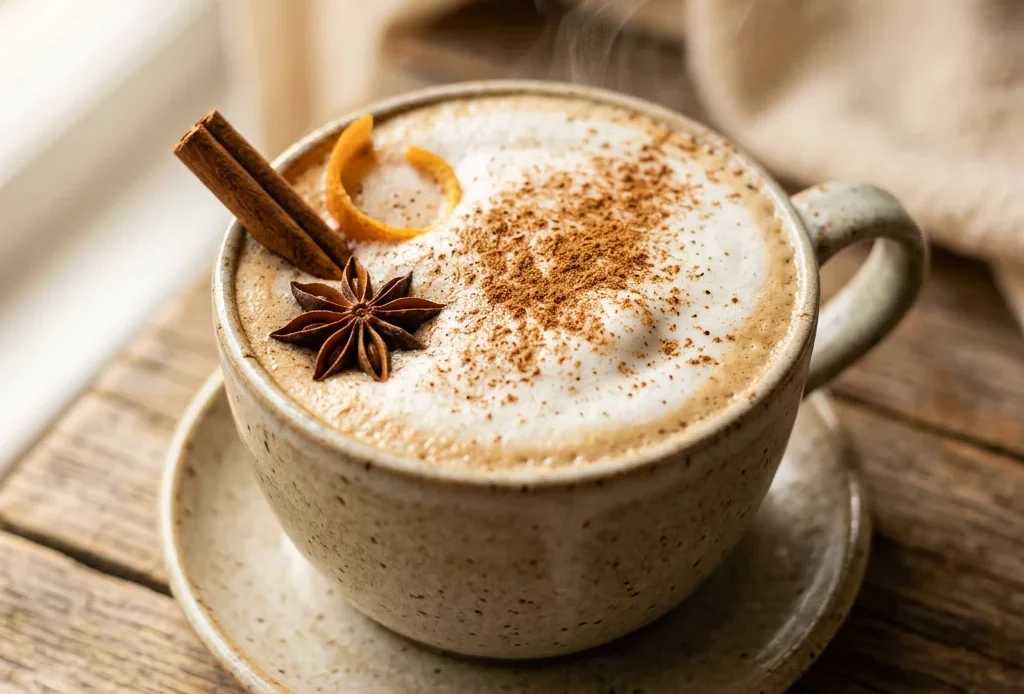
The first time I tasted real chai was in a friend’s kitchen, where her mother was simmering tea, ginger and whole spices in a small dented pot. The smell alone won me over. Every chai latte recipe I had tried before that used a syrupy mix, and it tasted like cinnamon candy. This is the from-scratch version, and it takes ten minutes.
If you would rather have a shelf-stable option, my chai tea drink mix is a great shortcut. This chai latte recipe is a fresh, single-batch version that tastes better than any cafe drink.
Why This Chai Latte Recipe Works
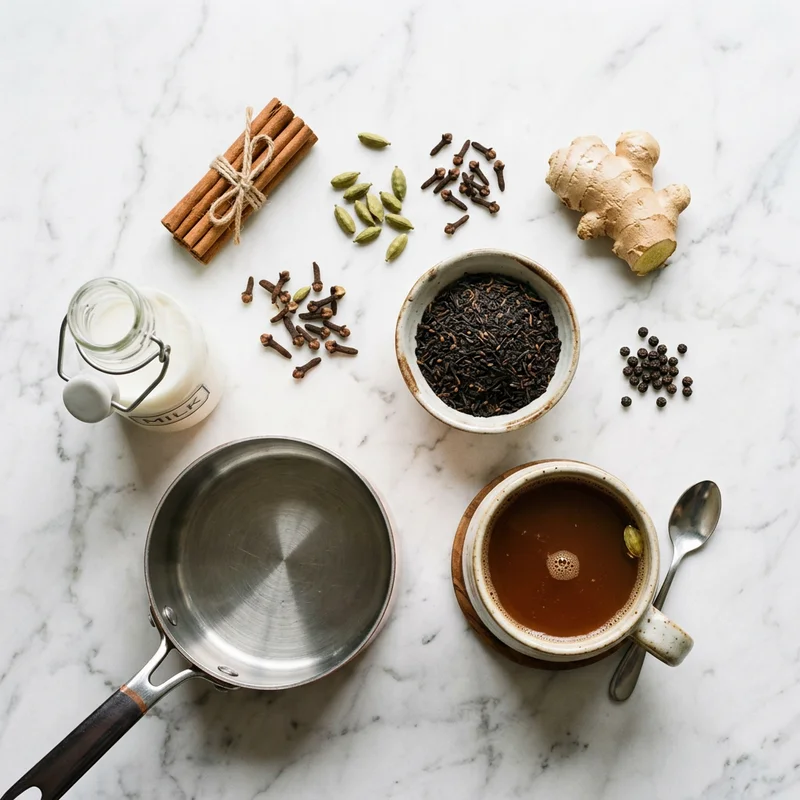
Whole spices release more flavor than ground ones, and they stay clear of the drink after straining. Simmering them in water first, before the tea and milk go in, builds a spicy base. Then the black tea steeps for four minutes, and milk goes in last, so it never boils over or turns bitter.
I use cinnamon, cardamom, cloves, fresh ginger and black pepper. Together they taste warm, sweet and slightly peppery. The pepper is optional, though I find it makes the ginger taste brighter.
Chai Latte vs Masala Chai
Masala chai is the traditional Indian drink, made by simmering tea, milk and spices together, often with plenty of sugar. A chai latte, as served in Western cafes, is a milder, milkier take, usually with steamed milk. My recipe sits in between, with a real spice base and cafe-style creaminess.
Key Ingredient Notes
A good chai latte recipe starts with strong black tea. Assam gives the classic malty base, and a basic English breakfast tea works fine. Two or three tea bags per batch is about right, or 1 tablespoon of loose tea. Avoid delicate teas like Darjeeling, since the spices overpower them.
Buy whole spices from a bulk bin or an Indian grocery, where they cost a fraction of the jar price at a supermarket. Crush the cardamom pods lightly with the flat of a knife to crack them open. Whole milk gives the creamiest chai latte, and oat milk is my dairy-free pick.
What I Learned Making a Chai Latte Recipe
I tested this over a cold week in November, when I was trying to recreate that kitchen smell. My first batch used ground spices stirred straight into the milk, and it turned gritty and muddy. The second used too many cloves, and it tasted like a dentist’s office.
The version below fixed both issues. Four cloves per batch, strained whole spices, and a short steep for the tea. The smell of ginger and cardamom filled the kitchen, and my neighbor knocked on the door to ask what I was making. I have not gone back to a mix since.
Here is a small habit that makes any chai latte recipe easier: crush a handful of cardamom pods and slice the ginger on Sunday, and keep them together in a small jar. During the week, the spice base takes two minutes to start, and the whole drink is ready before your toast pops.
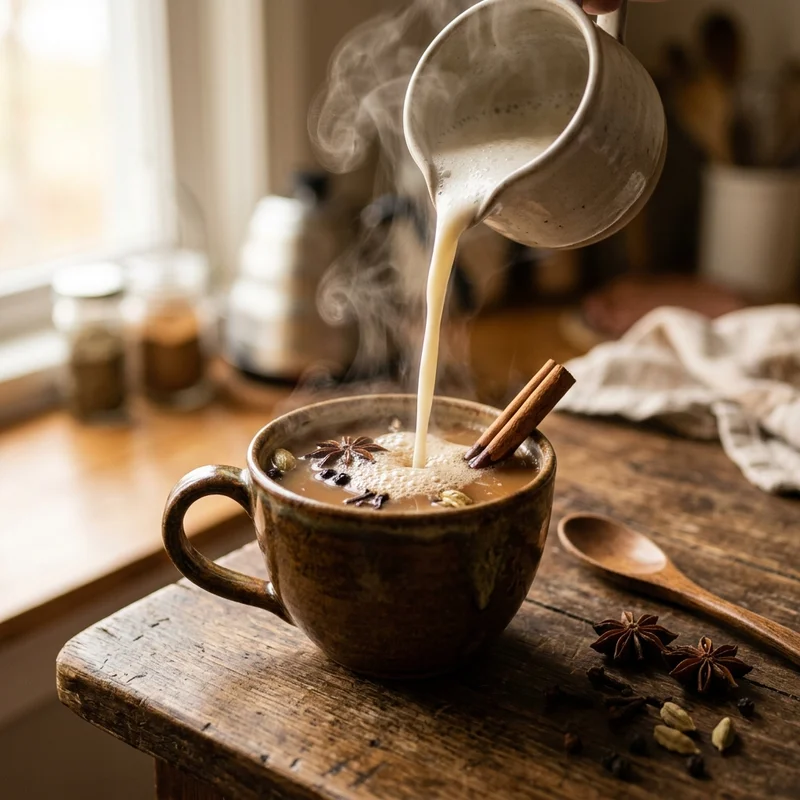
The smell deserves a mention. As the spices simmer, the kitchen fills with a warm, sweet, slightly peppery aroma, like a bakery and a tea shop at once. When the milk goes in, the color shifts to a soft caramel-tan, and the steam smells like gingerbread. It is a small piece of comfort on a cold morning.
A stainless steel milk pitcher is handy for straining, and a fine mesh sieve catches every spice. Do not skip the strain, since whole cloves and peppercorns are unpleasant to bite into. Rinse the pan right away, because milk left on the stove makes a film that is hard to scrub.
Is a Chai Latte Healthy?
It is a warm treat. A 12-ounce homemade chai latte with 1 tablespoon of brown sugar has about 165 calories and 22 grams of sugar. Tea has less caffeine than coffee, and the spices add flavor with no extra calories. Cut the sugar to 1 teaspoon for a lighter cup.
Tips and Variations for This Chai Latte Recipe
- Add a few strands of saffron or a pinch of nutmeg for a richer, festive flavor.
- Use honey or maple syrup instead of brown sugar.
- Swap half the black tea for rooibos for a caffeine-free, sweeter cup.
- Whisk in a spoonful of my vanilla syrup for a vanilla chai.
Iced Chai Latte
For an iced chai latte, make the spiced tea concentrate with only 1 cup of water, strain it and chill. Pour 1/2 cup of concentrate over ice, then add 6 ounces of cold milk. Stir and sweeten to taste. The concentrate keeps for 5 days in the fridge, which makes weekday drinks a one-minute job.
If you want a coffee-based option with the same method as this chai latte recipe, see my iced latte. If you like warm, spiced milk drinks, my golden milk is another comforting favorite.
Troubleshooting Chai Latte Recipe
Chai tastes bitter: The tea steeped too long. Steep 4 minutes, then strain.
Chai tastes weak: Not enough spices, or old ones. Use fresh whole spices and simmer them 5 full minutes.
Chai tastes too spicy: Cloves and pepper are strong. Use 3 cloves and skip the pepper.
More Recipes You’ll Love
Browse the tea drinks hub for more warm and iced drinks. My iced matcha latte is a fresh alternative when you want green tea.
The short version: simmer 1 1/2 cups of water with a cinnamon stick, 4 crushed cardamom pods, 4 cloves and 4 ginger slices for 5 minutes. Add 3 tea bags and steep 4 minutes, then add 1 1/2 cups of milk and 2 tablespoons of brown sugar. This chai latte recipe makes two mugs, and it tastes better than any mix.

Chai Latte
Equipment
- 1 Small saucepan
- 1 Fine mesh strainer
- 1 Two mugs
Ingredients
For the Spice Base
- 1 1/2 cups water 360 ml
- 1 stick cinnamon
- 4 pods green cardamom lightly crushed
- 4 whole cloves
- 4 slices fresh ginger about 1/4 inch thick
- 4 whole black peppercorns optional
For the Chai
- 3 bags black tea or 1 tablespoon loose Assam
- 1 1/2 cups whole milk or oat milk
- 2 tbsp brown sugar or honey, to taste
Instructions
Simmer the Spices
- Add the water, cinnamon, cardamom, cloves, ginger and peppercorns to a small saucepan.
- Bring to a boil over medium-high heat.
- Reduce the heat and simmer for 5 minutes.
Steep and Finish
- Remove the pan from the heat and add the tea bags.
- Steep for 4 minutes, no longer.
- Return to low heat, remove the tea bags and stir in the milk and brown sugar.
- Heat for 2 minutes until steaming, without boiling.
- Strain into two mugs and serve hot.
Notes
Nutrition
Frequently Asked Questions
What ingredients are in a chai latte?
A chai latte has black tea, milk, sweetener and warm spices such as cinnamon, cardamom, cloves, ginger and black pepper. Cafes often use a pre-made concentrate, while a homemade chai latte simmers whole spices and tea in water and milk.
How do baristas make chai lattes?
Most baristas mix a sweetened chai concentrate with steamed milk, usually at a 1:1 ratio. Some cafes brew tea and spices fresh. At home you can do the same by simmering spices and tea, then adding warm milk, which gives a fresher, less sugary drink.
Is a chai latte just tea with milk?
Not quite. A chai latte is spiced black tea with milk, and the whole spices like cardamom, cinnamon, cloves and ginger give it a distinct flavor. Plain tea with milk lacks those spices, so it tastes much milder and less aromatic.
Is a chai latte healthier than coffee?
It depends on how you make it. Tea usually has less caffeine than coffee, and homemade chai lets you control the sugar. A cafe chai latte can contain more added sugar than a plain coffee, so the homemade version is generally lighter.
How do you make an iced chai latte?
Make a spiced tea concentrate with 1 cup of water, strain it and chill it. Pour 1/2 cup over ice, then add 6 ounces of cold milk. Stir and sweeten to taste. The concentrate keeps for about 5 days in the fridge.
Can I make a chai latte without tea bags?
Yes. Use 1 tablespoon of loose black tea per batch, or use a few tablespoons of strong brewed tea. Rooibos works for a caffeine-free version. Steep for 4 minutes and strain before adding milk so the drink stays smooth.