

A friend brought me a spanish latte from a specialty cafe last spring, and I asked what was in it before I finished the first sip. The answer was surprisingly simple: espresso, milk and sweetened condensed milk. It tastes like a coffee-flavored caramel candy, creamy and sweet without being sticky. I now make it at home most weekends, and the method takes about three minutes.
If you like the idea of a sweeter drink, you are probably also a fan of my vanilla latte or caramel latte. This one uses one shortcut ingredient and no syrup at all.
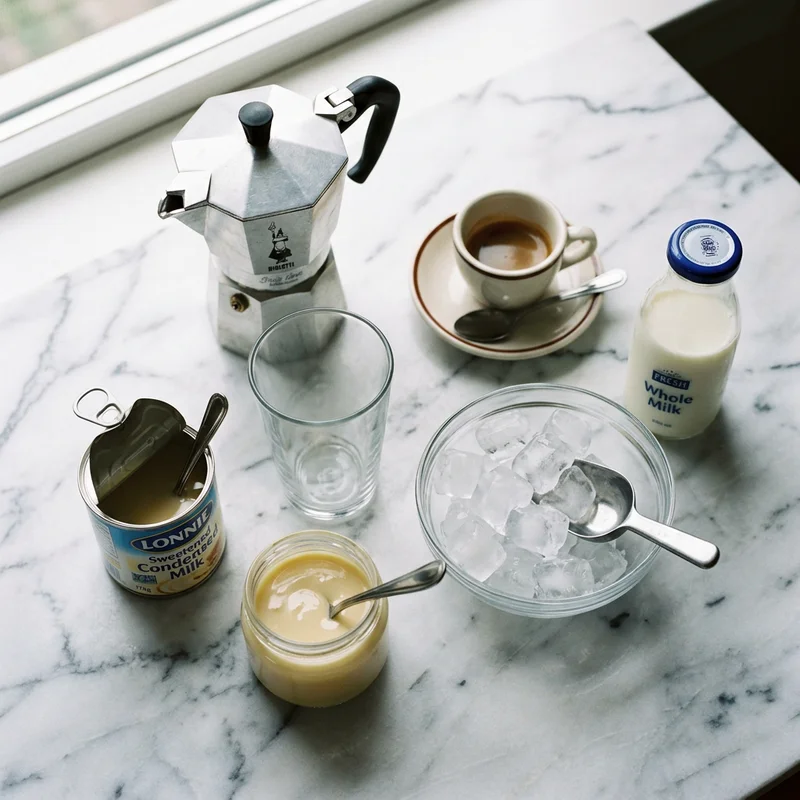
Why This Spanish Latte Works
Sweetened condensed milk does two jobs at once. It sweetens the drink and it adds body, so the latte tastes rounder and creamier than one made with sugar. The cooked, slightly caramelized flavor of the condensed milk also matches espresso very well.
I use 2 tablespoons of condensed milk, 2 shots of espresso and about 6 ounces of cold milk. The order matters. Stir the condensed milk into the hot espresso first, so it dissolves, and only then add the milk. Dumping it in cold leaves a sticky layer at the bottom of the glass.
Spanish Latte vs Regular Latte
A regular latte is espresso and milk, and you add sweetener separately if you want it. A spanish latte builds the sweetness in with condensed milk, so it is thicker, sweeter and more dessert-like. It also tastes more of milk and caramel than a plain latte.
Key Ingredient Notes
The star is sweetened condensed milk, which is milk cooked down with sugar until thick. Shake the can before opening, and keep leftovers in a jar in the fridge for up to a week. Evaporated milk is not the same and will not work as a substitute here.
A strong espresso is important, because the drink is sweet and a weak coffee gets lost. If you do not have a machine, brew a very strong moka pot coffee or use my cold brew concentrate. Whole milk gives the creamiest result, though oat milk is a good dairy-free choice.
What I Learned Making a Spanish Latte
I tested this over a warm weekend in April, with a can of condensed milk left over from a pie. My first try used 4 tablespoons, and it was so sweet that my teeth hurt. It also left a thick, sticky sludge at the bottom of the glass.
I cut it to 2 tablespoons and started dissolving it into the hot espresso. That fixed both problems. The smell of warm condensed milk and coffee, somewhere between caramel and toasted cream, is what made me a fan. I also chill the glass first, which keeps the iced version cold longer.
The scent tells you it is right. When hot espresso hits the condensed milk, the cup smells like toffee and warm cream, a little like the bottom of a caramel candy wrapper. The color is a warm, pale beige, lighter than a regular latte, and it stays creamy down to the last sip.
It is also one of the cheapest lattes to make. A can of condensed milk costs about two dollars and makes eight drinks, so each one costs about 25 cents before the coffee. I keep a jar of the milk in the fridge with a small spoon in it, so scooping is quick.
One caution: condensed milk goes off quickly once opened. Transfer leftovers to a clean, sealed glass jar, and use it within a week. If it smells sour or turns thick and lumpy, throw it out rather than risking a bad drink. Always use a clean spoon each time, since crumbs or coffee residue from a used spoon shorten the life of the jar and can spoil the whole batch quickly.
Is a Spanish Latte Healthy?
It is a sweet treat. A homemade 12-ounce spanish latte has about 240 calories and 31 grams of sugar. Using 1 tablespoon of condensed milk cuts the sugar nearly in half. Skim or oat milk trims the calories a little more, though the drink will taste less creamy.
Tips and Variations
- Add a pinch of cinnamon on top for a warm, spiced flavor.
- Use a splash of vanilla extract for a vanilla spanish latte.
- Make it hot: warm the milk to 150 degrees F and stir in the espresso and condensed milk.
- Blend with ice for a frozen spanish latte that tastes like a milkshake.
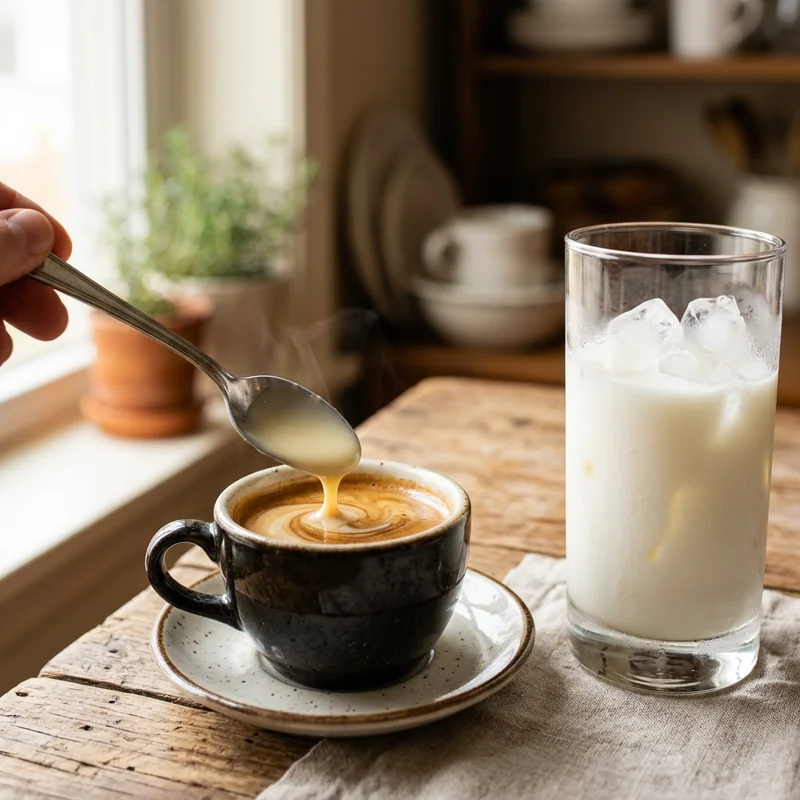
Spanish Latte Recipe, Iced or Hot
This spanish latte recipe works both ways. For iced, fill a glass with ice and pour in the dissolved espresso mixture, then 6 ounces of cold milk. For hot, replace the cold milk with steamed milk. It follows the same base method as my iced latte, with one extra step.
Most people prefer it iced, and it is the most popular version in specialty cafes. It also holds up well for a batch: mix condensed milk and espresso for four servings and keep it in a jar in the fridge for the week.
Troubleshooting Spanish Latte
Latte is too sweet: Cut the condensed milk to 1 tablespoon, or use more milk.
Sticky layer at the bottom: The condensed milk was added cold. Stir it into the hot espresso first.
Latte tastes weak: Use a double shot or stronger coffee, since the sweetness masks flavor.
More Recipes You’ll Love
Browse the tea drinks hub for more cafe-style drinks at home. My mocha latte is a rich chocolate alternative.
The short version: stir 2 tablespoons of sweetened condensed milk into 2 shots of hot espresso until dissolved. Pour over ice, then top with 6 ounces of cold milk. This spanish latte takes three minutes, tastes like coffee candy, and works iced or hot.

Spanish Latte
Equipment
- 1 Tall glass
- 1 Espresso machine, moka pot or AeroPress
- 1 Small spoon
Ingredients
For the Latte
- 2 shots espresso or 1/2 cup double-strength coffee
- 2 tbsp sweetened condensed milk
- 6 oz cold whole milk or oat milk
- 1 cup ice cubes
Instructions
Make the Coffee Base
- Brew 2 shots of espresso, or 1/2 cup of double-strength coffee, into a small cup.
- Add the sweetened condensed milk to the hot espresso.
- Stir for 20 seconds, until the condensed milk fully dissolves and the mixture looks smooth.
Build the Latte
- Fill a tall glass with 1 cup of ice cubes.
- Pour the cold milk over the ice.
- Slowly pour the espresso mixture over the milk.
- Stir gently before drinking so the flavors blend.
- Serve right away with a straw.
Notes
Nutrition
Frequently Asked Questions
What is a Spanish latte made of?
A spanish latte is made of espresso, milk and sweetened condensed milk. The condensed milk sweetens the drink and adds a creamy, caramel-like flavor. It is usually served iced, though a hot version made with steamed milk is also common.
What is the difference between a Spanish latte and a normal latte?
A normal latte is espresso and milk, sweetened separately if at all. A spanish latte includes sweetened condensed milk, so it is sweeter, thicker and more dessert-like. It tastes more of caramelized milk than a plain latte does.
Is a Spanish latte very sweet?
It is sweeter than a regular latte, though you control the level. Two tablespoons of condensed milk gives a balanced sweet drink. Use 1 tablespoon for a milder version, or 3 tablespoons if you have a sweet tooth.
Is a Spanish latte stronger than a latte?
No. A spanish latte has the same amount of espresso as a regular latte, so the caffeine is similar. It tastes milder and sweeter, because the condensed milk softens the coffee flavor. Use a double shot if you want a stronger drink.
Are Spanish lattes healthy?
A homemade 12-ounce spanish latte has about 240 calories and 31 grams of sugar, so it is best as a treat. Using 1 tablespoon of condensed milk and lower-fat milk lowers both calories and sugar. Serve it on occasion.
How do you make a Spanish latte without an espresso machine?
Use a moka pot, an AeroPress or very strong coffee brewed at double strength. Stir the condensed milk into the hot coffee until dissolved, then add the milk and ice. Cold brew concentrate also works, though you may need to warm it slightly to dissolve the milk.