
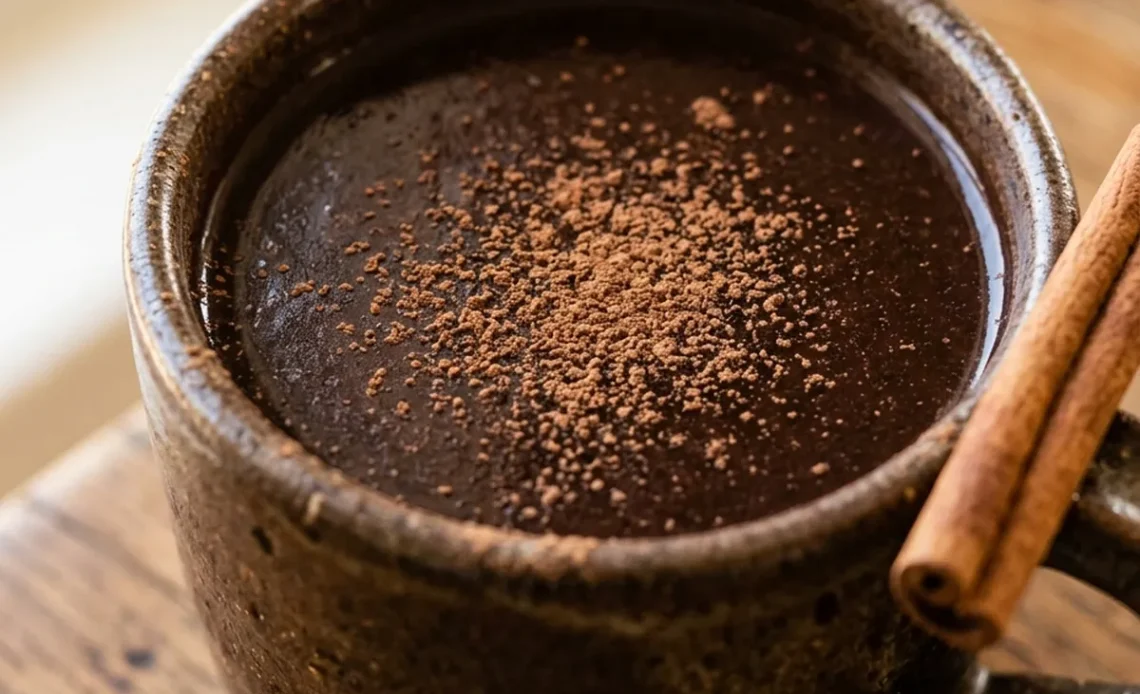
A friend gave me a jar of lion’s mane powder for my birthday, the kind of gift that sits in the pantry for months before anyone actually uses it. This mushroom adaptogen drink recipe is what finally got that jar opened — warm cacao, a little coconut milk, and two mushroom powders blended into something that tastes more like dessert than medicine.
Why This Mushroom Adaptogen Drink Recipe Works
Lion’s mane and reishi both come as fine powders that dissolve fully into warm liquid, unlike whole dried mushrooms, which need a long simmer to extract anything useful. Blending the powder into warm milk or a cacao base, rather than just stirring it into hot water, keeps the texture smooth instead of gritty. Cacao’s natural bitterness also masks the earthy mushroom taste better than plain coffee does.
Key Ingredient Notes
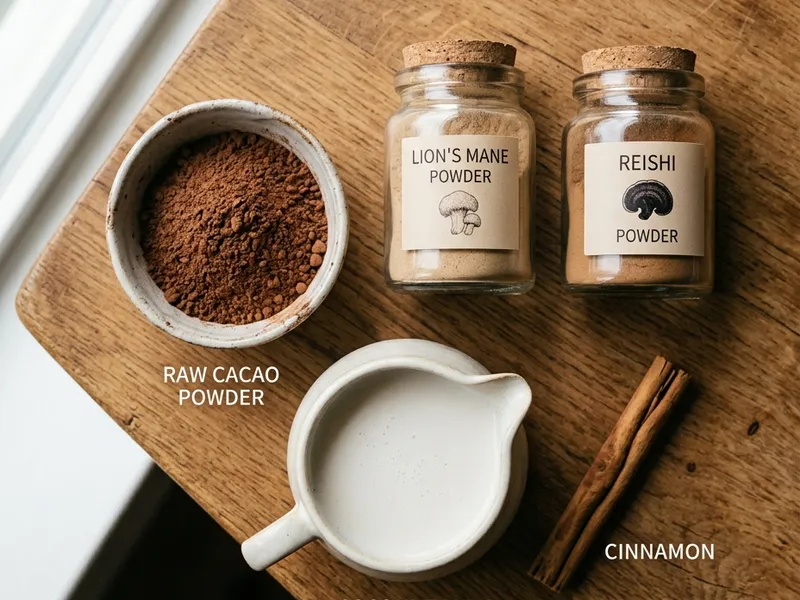
Lion’s mane and reishi are the two mushroom powders in this mushroom adaptogen drink recipe, both sold as fine powders at most health food stores or Asian grocery markets. Look for a supplement facts panel listing the actual mushroom species and extraction method, since many cheaper products are mostly mycelium-on-grain filler rather than the fruiting body most studies actually test.
Raw cacao powder, not Dutch-processed cocoa, keeps more of the natural bitterness that balances the earthy mushroom flavor. A pinch of cinnamon and a small spoon of maple syrup round out the flavor without turning it into a dessert.
What I Learned Testing This
My first batch used plain water instead of milk, and the powder never fully dissolved, leaving a gritty layer at the bottom of the mug. Switching to warm coconut milk and whisking the powder in gradually, rather than dumping it all at once, finally got a smooth, drinkable texture. This mushroom adaptogen drink recipe genuinely does taste like a cozy hot chocolate once the ratio is right, not like a supplement.
Does a Mushroom Adaptogen Drink Actually Help Focus?
Honestly, the evidence is mixed. A few small clinical trials on lion’s mane found modest cognitive improvements in older adults with mild impairment, but the effect faded after people stopped taking it, and other small trials in healthy adults found no benefit at all or even slightly worse results on some memory tests. The Alzheimer’s Drug Discovery Foundation’s research summary is a good, non-hyped place to read the actual trial data rather than marketing claims.
An NCBI herbal medicine reference on reishi notes that most attributed benefits still rest on traditional use and lab studies rather than strong human clinical data. Treat this mushroom adaptogen drink recipe as a pleasant ritual worth trying, not a proven brain-boosting shortcut.
Tips and Variations
- Add a shot of espresso if you still want some caffeine alongside the mushrooms.
- Swap coconut milk for oat milk for a thinner, less rich version.
- A pinch of sea salt sharpens the cacao flavor noticeably.
- Make a bigger batch of the dry mix (cacao, cinnamon, mushroom powders) and store it for faster mornings.

Troubleshooting This Mushroom Adaptogen Drink Recipe
Gritty texture: The powder didn’t fully dissolve. Whisk it into a small amount of warm liquid first to form a paste before adding the rest.
Tastes too earthy or bitter: Add a bit more sweetener, or cut the mushroom powder slightly. Cheaper mycelium-based powders also tend to taste more bitter than fruiting-body extracts.
Separates in the mug: Give it a quick stir before each sip. This is normal for powdered mushroom extracts blended into milk.
More Recipes You’ll Love
If functional, wellness-leaning drinks are becoming a habit, my dirty matcha latte covers the caffeine-plus-focus angle, and my golden milk recipe is the other warm, spiced ritual drink worth trying. Browse the full tea drinks collection for more.
Quick recap: whisk lion’s mane and reishi powder into warm cacao and milk until smooth, then sweeten to taste. This mushroom adaptogen drink recipe is a genuinely pleasant ritual — just don’t expect the mixed, mostly small-trial research on lion’s mane to guarantee a noticeable brain boost.
Mushroom Adaptogen Drink Recipe
Equipment
- 1 Small saucepan
- 1 Whisk
Ingredients
For the Drink
- 1 cup coconut milk or any milk
- 1 tbsp raw cacao powder
- 1/2 tsp lion’s mane powder
- 1/2 tsp reishi powder
- 1 tsp maple syrup to taste
- 1/8 tsp cinnamon optional
Instructions
Make the Paste
- In a mug, whisk the lion’s mane and reishi powder with a small splash of warm milk to form a smooth paste.
Warm and Combine
- Heat the remaining milk in a small saucepan until steaming, not boiling.
- Whisk in the cacao powder and cinnamon until fully dissolved.
- Pour the warm milk mixture into the mug with the mushroom paste, whisking as you pour.
- Stir in maple syrup to taste.
- Serve immediately while hot.
Notes
Frequently Asked Questions
Does lion’s mane actually improve focus?
The evidence is mixed. A few small trials found modest cognitive improvement in older adults with mild impairment, but effects faded after stopping, while other small trials in healthy adults found no benefit or slightly worse results on some tests. Treat this mushroom adaptogen drink recipe as a pleasant ritual, not a proven cognitive fix.
What’s the difference between lion’s mane and reishi?
Lion’s mane is studied mostly for cognitive and nerve-related effects, while reishi’s research leans toward immune-related lab and animal studies. Both come as fine powders that dissolve well into warm liquid.
Can I use whole dried mushrooms instead of powder?
You can, but they need a much longer simmer, often 20-30 minutes, to extract anything useful. Powder is faster and blends smoother for a drink like this one.
Why is my drink gritty instead of smooth?
The powder didn’t fully dissolve. Whisk it into a small splash of warm liquid first to form a paste, then add the rest of the milk gradually.
Is mushroom coffee the same as this recipe?
Similar idea, different base. Mushroom coffee blends the same powders into hot coffee, while this mushroom adaptogen drink recipe uses cacao and milk for a caffeine-free, dessert-like version.
How do I know if a mushroom powder is good quality?
Check the label for the actual mushroom species and whether it’s made from the fruiting body or mycelium-on-grain filler. Fruiting-body extracts are closer to what most studies actually test.