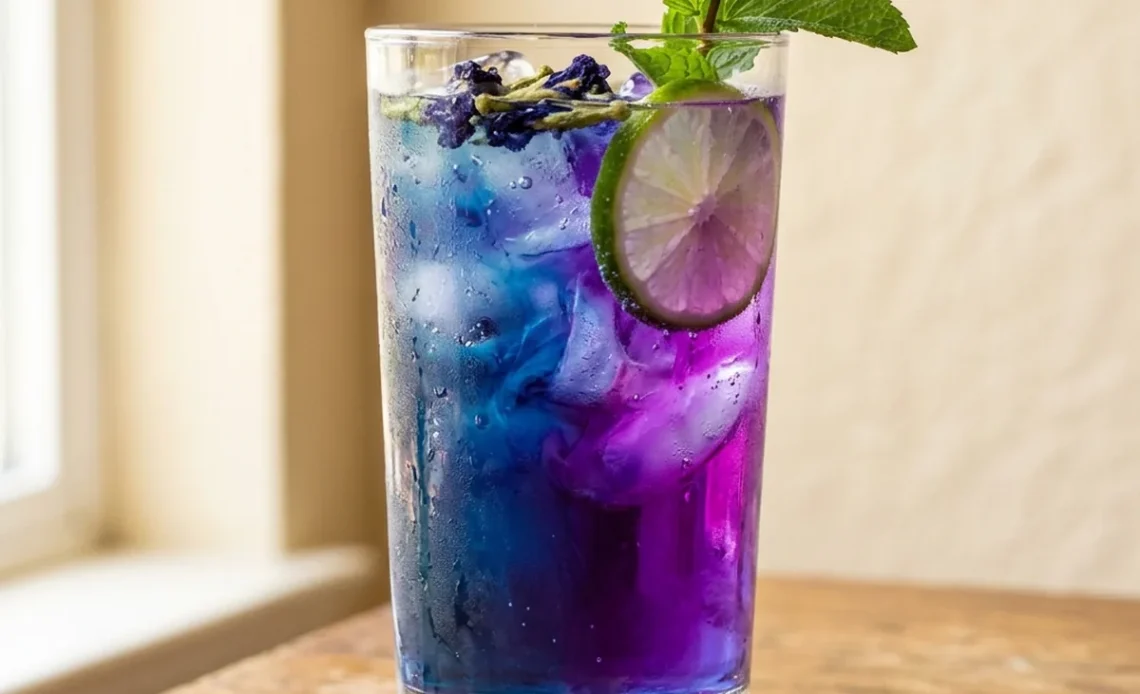
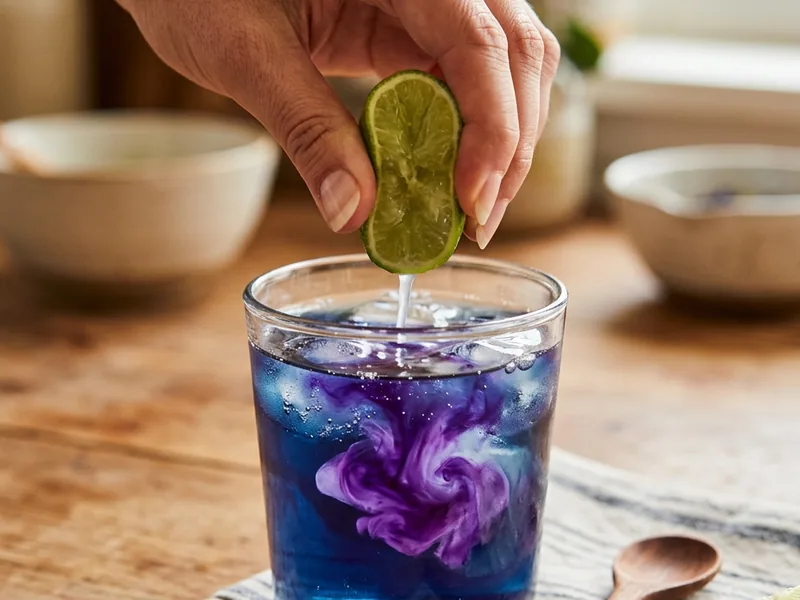
A jug of deep blue tea sitting on the counter always gets a reaction before anyone’s even tasted it. This butterfly pea flower tea recipe is the one I make for birthdays and any excuse to show off, because the real trick isn’t the flavor. It’s watching the drink turn from blue to purple the second a squeeze of lime hits the glass.
Why This Butterfly Pea Flower Tea Recipe Works
The color change is genuinely chemistry, not a food dye trick. Butterfly pea flowers get their deep blue from anthocyanin pigments, and those pigments are sensitive to pH. A reaction documented in the flower’s own profile shows that adding something acidic like lime or lemon juice shifts the color straight from blue toward purple and pink, right in front of whoever’s watching.
Steeping time controls the depth of blue. A short steep gives a paler, more delicate color; a longer one pulls a deep, almost ink-like blue that shifts more dramatically once the lime goes in. Either way, this butterfly pea flower tea recipe needs the tea fully cooled before adding acid, since a warm base mutes the color shift.
Key Ingredient Notes
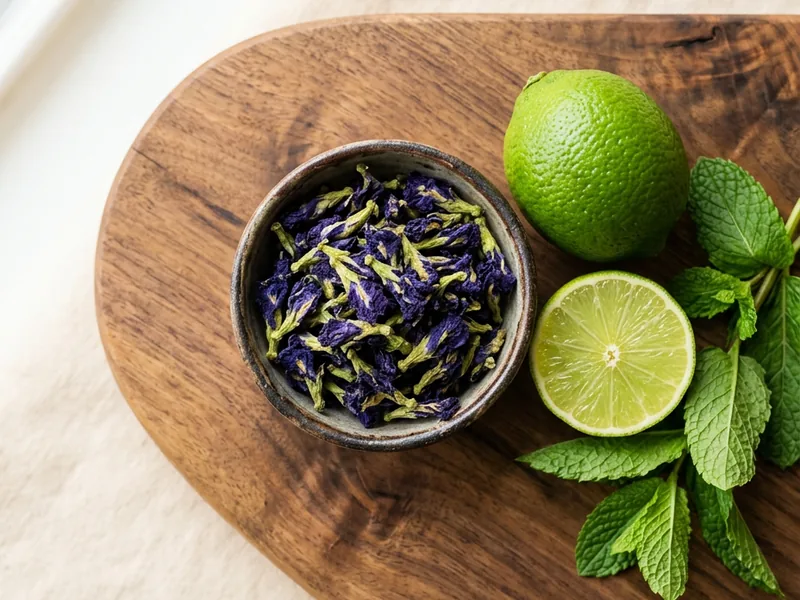
Dried butterfly pea flowers are the only place to source the real blue color; they’re usually found in the tea or specialty aisle, or from any online spice shop. Skip the powdered “blue tea” mixes if you can, since the whole dried flowers give a truer color and cleaner, less bitter flavor.
Fresh lime juice matters here more than in most drinks, because it’s not just for flavor. It’s the ingredient doing the actual color-changing work, and bottled lime juice reacts more slowly and less dramatically than fresh. Mint and a touch of simple syrup round out the flavor without fighting the floral, slightly earthy taste of the tea itself.
Tonic water makes a good topper if you want to layer in a second color shift, since tonic is slightly acidic on its own and nudges the color toward pink even before the lime hits. Plain soda water keeps things simpler and lets the blue-to-purple transition from the lime stay the main event. This butterfly pea flower tea recipe works fine either way; it’s really a question of how much of a show you want the drink to put on.
What I Learned Testing This
I made my first batch of this butterfly pea flower tea recipe for my niece’s birthday party in June, mostly because she’d seen the color-changing version on someone’s video and wanted to know if it was real. My first attempt used bottled lime juice out of the fridge door, and the color barely shifted at all, more of a dull grey-purple than the bright shift I was expecting.
Switching to fresh-squeezed lime the next day made an immediate difference. The tea itself smells faintly earthy and slightly sweet while it steeps, nothing like a floral perfume, more like wet hay with a hint of something green. That smell fades once the lime and mint go in, replaced by something brighter.
By the third attempt, I’d figured out the timing that actually gets a gasp out of a room: pour the blue tea over ice first, let everyone see the color settle, and only then add the lime in front of them instead of stirring it in beforehand. It sounds like a small thing, but this butterfly pea flower tea recipe is genuinely more fun to serve as a two-step reveal than as a drink that’s already finished when it arrives at the table.
Tips and Variations
A few things make this butterfly pea flower tea recipe more reliable batch to batch:
- Use fresh lime juice, not bottled, for the fastest and most dramatic color change.
- Let the tea cool fully before adding acid; a warm base mutes the shift.
- Top with tonic water instead of soda water for an extra pink tint from the tonic’s own acidity.
- Serve in a clear glass so guests can watch the color change happen, not a colored or frosted one.
Troubleshooting This Butterfly Pea Flower Tea Recipe
- Color won’t change: lime juice was bottled instead of fresh, or too little was used. Add another squeeze.
- Tea tastes bitter: steeped too long or with water that was too hot. Use water just off the boil, not a rolling boil, and steep 5 to 7 minutes.
- Color is muddy instead of bright blue: tea wasn’t fully cooled before straining, or flowers were old and faded. Fresh, cooled tea gives the truest color.
- Drink separates or looks cloudy: normal once ice and mixers are added. A quick stir before serving fixes it.
This butterfly pea flower tea recipe also holds up well made ahead. Brew the tea and let it cool completely, then refrigerate it separately from the lime juice and mint until serving time. Combining everything too far in advance mutes both the flavor and the color show, so keep the acid and the tea apart until right before guests arrive.
More Recipes You’ll Love
If this butterfly pea flower tea recipe earns a spot at your next gathering, the full tea drinks collection has more options built around the same steep-and-serve method. It’s a genuinely simple drink once the timing clicks, and it never stops being fun to watch.
Butterfly Pea Flower Tea
Equipment
- 1 Fine mesh strainer
- 1 Highball or collins glass
Ingredients
For the Tea
- 2 tablespoon dried butterfly pea flowers
- 2 cup hot water just off the boil, not boiling
- 1 oz fresh lime juice not bottled
- 0.5 oz simple syrup
- 4 oz tonic water or soda water
- 2 sprig fresh mint for garnish
- 1 wheel lime for garnish
Instructions
Brew and Cool
- Add dried butterfly pea flowers to hot water and steep 5 to 7 minutes.
- Strain out the flowers and discard.
- Let the tea cool to room temperature, then refrigerate until cold.
Build and Reveal
- Fill a glass with ice.
- Pour the cooled blue tea over the ice, along with the simple syrup.
- Top with tonic water or soda water.
- Squeeze fresh lime juice in last, in front of guests if serving, to trigger the color change.
- Garnish with mint and a lime wheel, serve immediately.
Notes
Nutrition
Frequently Asked Questions
Why does butterfly pea flower tea change color?
The blue color comes from anthocyanin pigments, which are sensitive to pH. Adding something acidic like lime or lemon juice shifts the pigment’s structure, turning the tea from blue toward purple and pink. It’s a real chemical reaction, not a food coloring trick.
What does butterfly pea flower tea taste like?
It’s mild, faintly earthy, and slightly sweet on its own, closer to a green tea than anything floral or perfumed. Most of the flavor in this recipe comes from the lime, mint, and simple syrup added afterward rather than the tea base itself.
Can I use bottled lime juice instead of fresh?
You can, but the color change will be slower and less dramatic. Fresh lime juice has more active acidity, which triggers a faster, more vivid shift from blue to purple.
How do I get the deepest blue color?
Use dried whole butterfly pea flowers rather than powdered mixes, steep for a full 5 to 7 minutes, and let the tea cool completely before serving. A warm base and under-steeping both produce a paler, less dramatic blue.
Is butterfly pea flower tea caffeinated?
No. Dried butterfly pea flowers are naturally caffeine-free, which makes this a good option for an evening drink or for serving to guests who are avoiding caffeine.
Can I make this ahead of time for a party?
Yes, brew and cool the tea up to a day ahead and refrigerate it separately from the lime juice. Add the lime right before serving so guests can watch the color change happen, rather than mixing everything together in advance.