
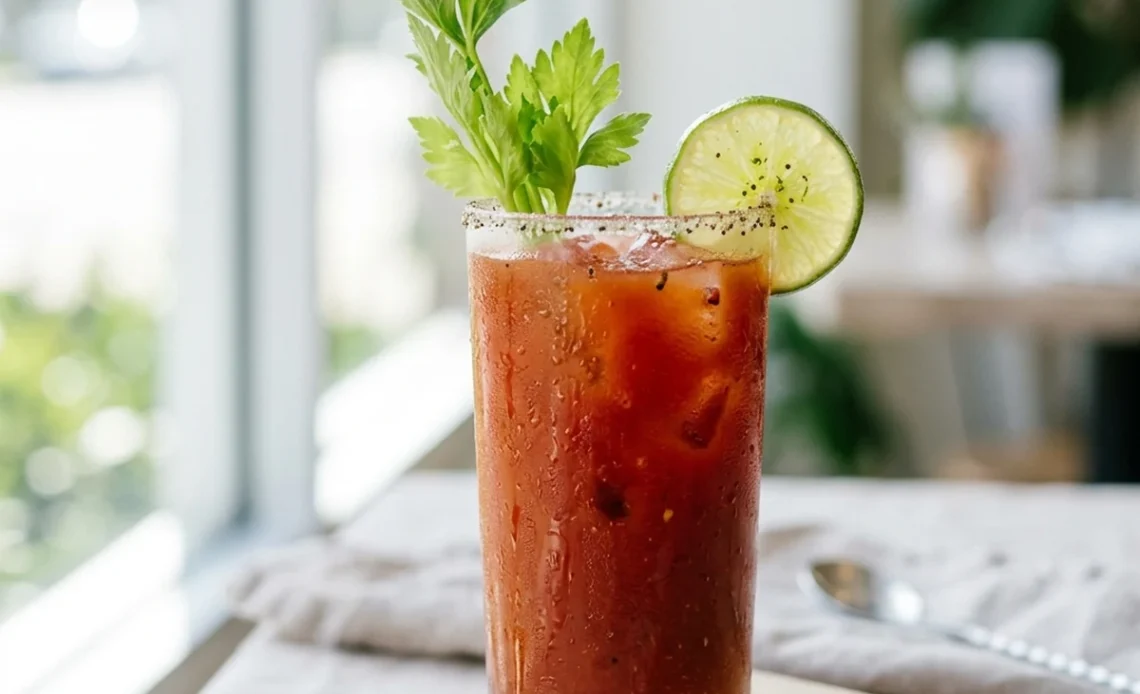
A pitcher of cold tomato juice on the counter and a craving for something savory before noon — that’s the actual starting point for this virgin mary mocktail. No vodka, no excuses, just the same bold, peppery, slightly briny flavor that makes a Bloody Mary worth ordering, minus the part where you need a nap by 2pm.
People ask if a drink built on tomato juice and hot sauce can really count as healthy, and the honest answer is mostly yes, with one catch worth knowing before you pour. This version keeps the classic flavor intact while being upfront about the one ingredient category most virgin mary recipes go quiet on: sodium.
Why This Virgin Mary Mocktail Works
Vodka mostly just dilutes a Bloody Mary. The real backbone is acid, salt, and heat working together. Pull the alcohol and that structure still holds, as long as you don’t pull punches on the seasoning.
Bartenders from Paris to Chicago all claim credit for inventing the Bloody Mary, and the real history is genuinely murky, but every version agrees on the same base: tomato, citrus, and something sharp. Skip the vodka, double down on the lemon and horseradish, and a virgin mary mocktail doesn’t taste like a consolation prize. It tastes like the version some brunch spots should have been serving all along.
Key Ingredient Notes for This Virgin Mary Mocktail
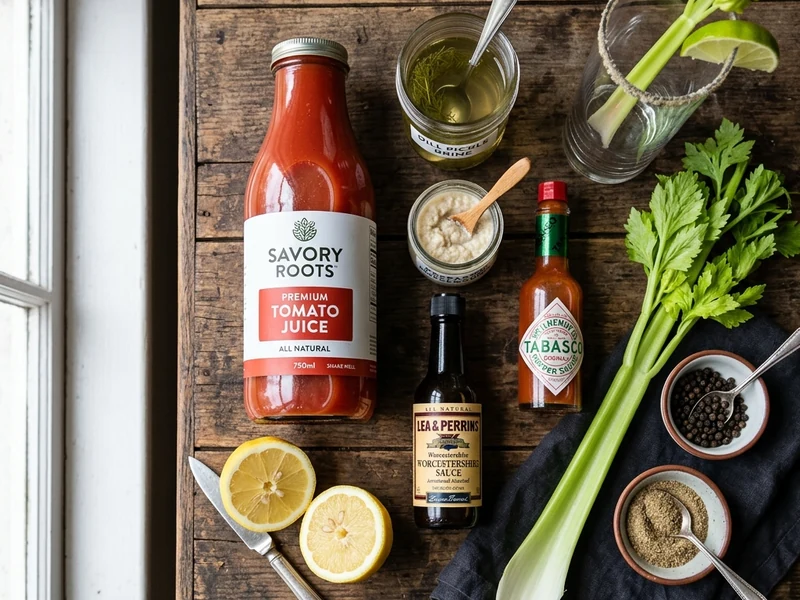
Tomato juice is the only ingredient that actually matters here. Pick a bad one and nothing else fixes it. I use a low-sodium tomato juice instead of the regular canned stuff, because once you stack lemon juice, pickle juice, Worcestershire, celery salt, and hot sauce on top of regular tomato juice, the sodium adds up fast.
Horseradish should be the prepared, jarred kind near the cocktail sauce at the grocery store, not dehydrated flakes — fresh horseradish root works too if your store carries it, but it brings a lot more bite per spoonful. Worcestershire sauce gives the drink its umami backbone; a vegan Worcestershire works fine if you’re avoiding anchovies.
Celery salt belongs on the rim, not just in the mix; it’s doing double duty as garnish and seasoning. Pickle juice or olive brine both work as the briny note; I keep a jar of dill pickle juice in the fridge specifically for this. Any classic hot sauce works here too: Cholula and Tabasco are both fine, it’s really about how much heat you want, not the brand.
What I Learned Testing This Virgin Mary Mocktail
I made the first batch on a gray Sunday in February, annoyed at how watered-down the “virgin” Bloody Marys at brunch spots always taste. That batch used double the horseradish I needed (I misread my own note) and it took the top of my head off by the second sip.
Half the horseradish and double the lemon fixed it, plus twenty minutes in the fridge before serving so the sharp edges soften. Celery salt and brine hung in the air all afternoon, and the kitchen ended up smelling like a deli counter, which somehow made the drink taste better before I’d even poured it.
Is a Virgin Mary Mocktail Actually Healthy?
Tomato juice carries real nutrition. It’s rich in lycopene, and a cup of it counts as a full vegetable serving under the USDA’s MyPlate guidelines. That part is genuinely good news.
Sodium is the part most virgin mary recipes skip. Stack regular tomato juice with pickle juice, Worcestershire, hot sauce, and a salted rim, and a single serving can land anywhere from 600 to over 1,000 milligrams of sodium, more than a quarter of the daily limit covered in the American Heart Association’s sodium guidance via Healthline.
Fixing it isn’t complicated: start with a low-sodium or no-salt-added tomato juice, go light on the Worcestershire, and skip the salted rim if sodium’s a concern. You still get the same bold, savory flavor in this virgin mary healthy mocktail, just without the sodium spike nobody mentions.
Tips and Variations
- Low-sodium version: swap in no-salt-added tomato juice, cut the Worcestershire by half, and skip the celery-salt rim — this virgin mary healthy mocktail stays just as bold either way.
- Smoother, blended version: run everything through a blender with a chunk of cucumber and a small peeled garlic clove for a thicker, almost gazpacho-like texture.
- Spicier version: double the hot sauce, add 3-4 dashes of cayenne, and finish with a generous crack of black pepper.
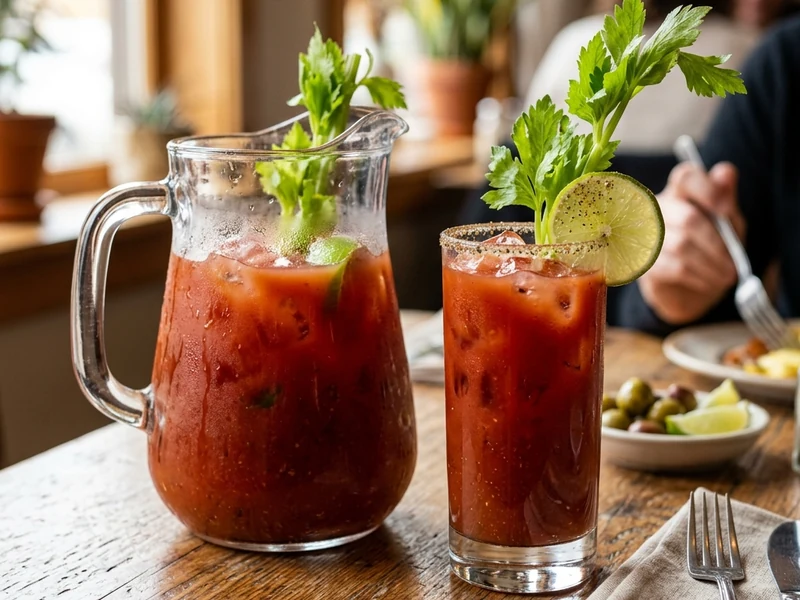
- Brunch batch: multiply the mix and keep it in a pitcher in the fridge for up to three days; garnish each glass fresh instead of pre-garnishing the pitcher.
- Garnish upgrade: a skewer of celery, olives, and a pickle spear does more work than a plain celery stalk alone.
Troubleshooting
- Tastes flat or one-note: the usual cause is too little acid. Add another full squeeze of lemon before reaching for more salt or hot sauce — acid is what makes the other flavors pop.
- Too thick or pulpy: some bottled tomato juices are thicker than others. Loosen it with a tablespoon or two of cold water, or a couple of extra ice cubes, instead of cutting back on the seasoning.
- Tastes too salty: cut back on the Worcestershire and skip the celery-salt rim — most of the sodium load comes from those two, not the tomato juice itself.
- Separates after sitting in the fridge: that’s normal for tomato-based drinks. Give it a good stir before serving instead of shaking, which just makes it foamy.
- No real heat even after adding hot sauce: you likely need a fresh bottle — hot sauce mellows over months once opened. Add fresh-cracked pepper and a pinch more cayenne to compensate.
More Recipes You’ll Love
If this virgin mary mocktail scratched the savory itch, a few other zero-proof recipes are worth trying next. The Mockmosa Recipe is the non-alcoholic mimosa that actually tastes balanced, not just sweet, and the Mocktail Aperol Spritz goes bittersweet and bubbly, the opposite flavor direction from this one. Planning the holiday table? See the Thanksgiving mocktails plan with 8 drinks by moment of the day.
For something fruity instead of savory, the Passion Fruit Mocktail Recipe is a good next stop. Or browse the full mocktail recipes guide for more zero-proof options.
Virgin Mary Mocktail
Equipment
- 1 Mixing glass or pitcher
- 1 Jigger or measuring spoons
Ingredients
For the Virgin Mary Mocktail
- 1.5 cups low-sodium tomato juice or no-salt-added
- 2 tbsp fresh lemon juice
- 1 tbsp pickle juice or olive brine
- 1 tsp prepared horseradish jarred, not dehydrated
- 1 tsp Worcestershire sauce vegan version works fine
- 5 dashes hot sauce such as Cholula or Tabasco
- 1/4 tsp celery salt
- 1/4 tsp black pepper freshly cracked
- 1 cup ice
For the Garnish
- 2 stalks celery
- 2 wheels lime
- 4 whole olives
- 2 spears pickle
- 1 tbsp celery salt for rimming, as needed
Instructions
Prep the Glasses
- Run a lime wedge around the rim of two glasses, then dip the rims in celery salt to coat.
- Fill each glass with ice and set aside while you mix the drink.
Mix the Drink
- In a mixing glass or pitcher, combine the tomato juice, lemon juice, and pickle juice.
- Stir in the horseradish, Worcestershire sauce, hot sauce, celery salt, and black pepper.
- Taste the mix and add an extra dash of hot sauce or squeeze of lemon if it needs more punch.
- Pour the mixture evenly into the prepared glasses over the ice.
Garnish and Serve
- Garnish each glass with a celery stalk, a lime wheel, and a skewer of olives and pickle.
- Stir once more right before serving and enjoy immediately while cold.
Notes
Nutrition
Frequently Asked Questions
Is a Virgin Mary mocktail healthy?
Mostly, yes. Tomato juice is rich in lycopene and counts as a full vegetable serving under USDA guidelines. The catch is sodium: between the tomato juice, pickle juice, Worcestershire, and a salted rim, a serving can run 600 to over 1,000 milligrams. Use a low-sodium tomato juice and skip the rim to keep it genuinely light.
What’s the difference between a Virgin Mary and a Bloody Mary?
A Bloody Mary includes vodka; a Virgin Mary is the same tomato-based mix without the alcohol. The flavor structure stays the same — acid, salt, and heat carry the drink either way, so skipping the vodka doesn’t weaken the taste if the seasoning is balanced.
Can you make a Virgin Mary mocktail ahead of time?
Yes. Mix everything except ice and garnishes, then store it in an airtight pitcher in the fridge for up to three days. Stir well before serving since tomato-based drinks naturally separate while sitting, and add fresh garnish to each glass rather than pre-garnishing the whole batch.
What can you use instead of alcohol in a Virgin Mary?
Nothing needs to replace the vodka directly — the drink doesn’t need a substitute spirit to taste complete. If you want extra depth, an extra tablespoon of pickle brine or a stronger hit of horseradish fills the gap vodka would have left, without adding any alcohol.
What’s the best garnish for a Virgin Mary mocktail?
A celery stalk and a lime wheel cover the basics, but a full skewer of celery, olives, and a pickle spear does more work. A celery-salt rim adds seasoning as well as visual texture, especially if you’re serving it for brunch or a crowd.
Can you use store-bought tomato juice instead of fresh?
Yes, and it’s actually the standard choice for this recipe. A no-salt-added or low-sodium bottled tomato juice works better than fresh-juiced tomatoes here, since it’s more consistent in thickness and lets you control the sodium instead of guessing at it.