
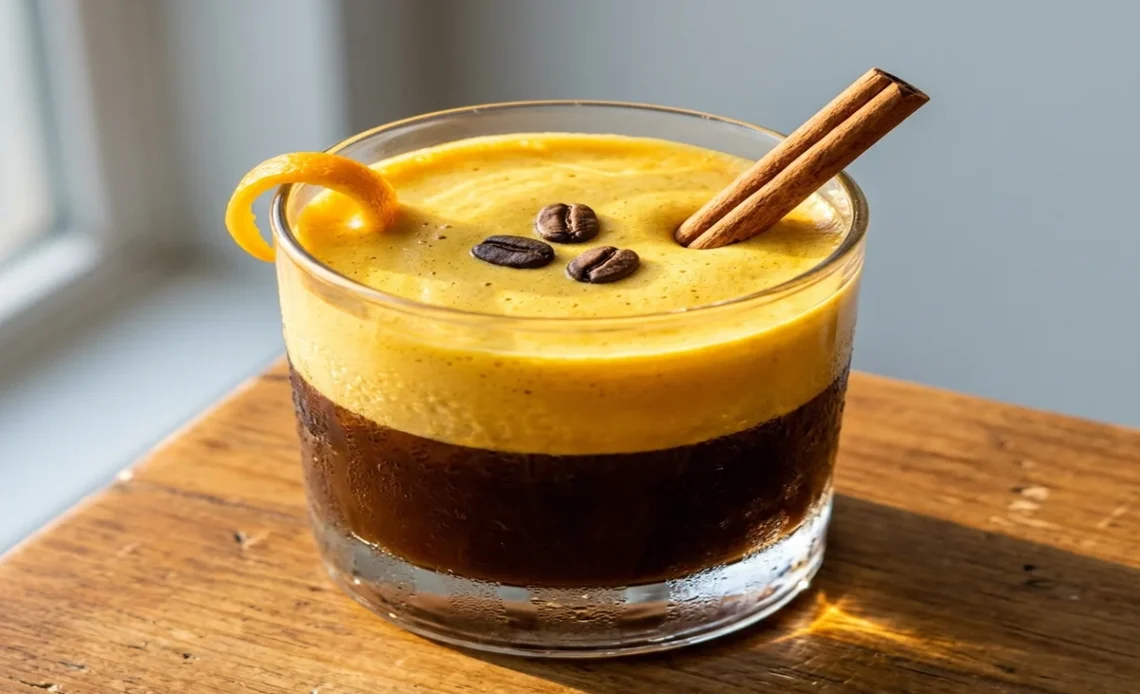
Trending for a reason — viral egg coffee is Vietnamese cà phê trứng remade for the home kitchen, and it takes less than 10 minutes. Egg yolks whisked with sweetened condensed milk form a thick golden foam. Spoon it over strong coffee and you get something closer to tiramisu than a standard morning cup. It is entirely non-alcoholic, and the ingredients are almost certainly already in your kitchen.
I finally made this on a rainy Sunday in January, after seeing it scroll past on my FYP for two straight weeks. I had leftover egg yolks from a flan attempt the weekend before, and that seemed like excuse enough. What I did not expect was how fast it came together — or how one small mistake nearly ruined the first batch.
What Is Viral Egg Coffee? (The TikTok Drink Explained)
Viral egg coffee — properly called cà phê trứng in Vietnamese — dates back to 1946 in Hanoi. A bartender named Giang at the Metropole Hotel invented it during a milk shortage, using whipped egg yolks and condensed milk as a substitute for cream. What he produced was a thick, custard-like foam layered over strong Vietnamese drip coffee.
It went viral on TikTok because of its visual drama — that golden foam layer sitting on dark coffee looks almost impossible to achieve at home — and because the ingredient list is short enough to not intimidate anyone. Both the Vietnamese original and the Italian parallel known as caffè allo zabaione are entirely non-alcoholic. This recipe covers the Vietnamese method, with notes on the Italian approach in the Tips section.
Why This Recipe Works
Two things make the foam hold. First, the fat in the egg yolk: whisked long enough, it emulsifies with the condensed milk into a stable, airy mousse. This is the same principle behind zabaglione and other egg-foam preparations — physical work traps air and builds a structure that holds against the liquid below.
Second, the condensed milk adds sweetness and binds the foam, giving it body and a faint caramel richness. What the foam is not: scrambled eggs. Yolks stay soft and raw in the Vietnamese method — which is exactly why temperature control when adding the coffee matters, and why pasteurised eggs are worth buying. Done right, viral egg coffee tastes like warm vanilla custard, with no egg flavour at all.
Key Ingredient Notes
On Using Pasteurized Eggs
Pasteurised eggs are sold in-shell at most major US grocery chains — look for Davidson’s Safest Choice or any carton labelled “pasteurised in shell” in the refrigerated egg section. I found them at my local Whole Foods, sitting right next to the organic eggs. Using them removes the salmonella risk that comes with raw yolks, without changing anything about the recipe itself.
If you cannot find pasteurised eggs, use the freshest conventionally produced eggs available and drink immediately after making. For healthy adults, the risk from a single fresh egg yolk is low — but not zero. Pasteurised eggs make it negligible.
On the Coffee Base
Strong brewed coffee is non-negotiable in this egg coffee recipe. The foam is rich and sweet — a weak coffee underneath gets completely buried. Espresso is ideal. No espresso machine? A Moka pot or a French press brewed with double the usual grounds both produce the right concentration. A traditional Vietnamese phin filter works too, just more slowly. Nguyen Coffee Supply sells both the filter and Vietnamese robusta blends that taste authentic in this drink.
What I Learned Testing This
I tested three whisking durations over two January Sunday mornings: 3 minutes gave loose cream, 5 minutes held reasonably well, and 10 minutes produced a proper pale-yellow mousse with real resistance on the spoon. Stopping at 3 minutes because your arm hurts will give you a flat result. A hand mixer on medium-high gets you there in about 2 minutes.
My first batch had a separate problem. I poured the espresso while it was still too hot, and the egg foam came out grainy at the edges — partial scramble. Letting the shot cool for 90 seconds on the second attempt fixed it completely. The golden foam sitting still on top of the dark coffee is genuinely the most satisfying thing I have made in my home kitchen. It looks more like a small custard dessert than a drink.
How to Serve Viral Egg Coffee: Hot vs. Iced
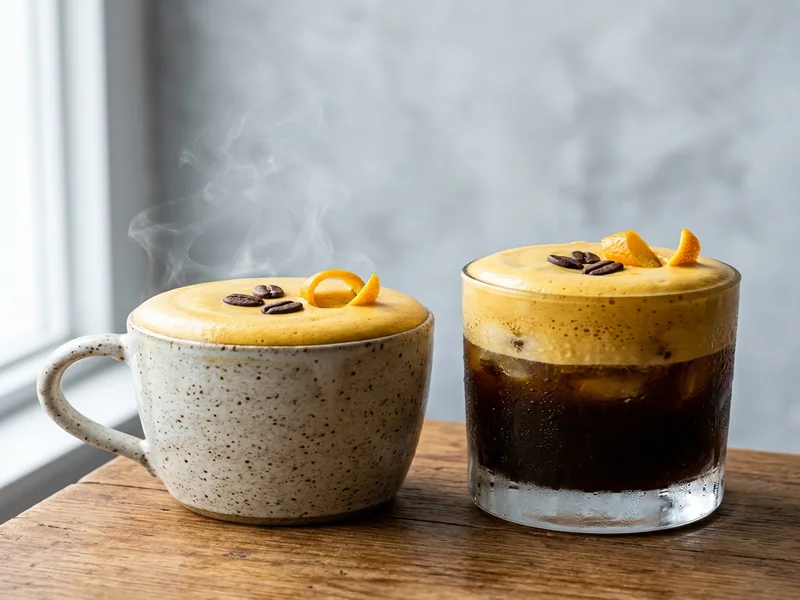
Hot version: Pour your cooled coffee into a warmed cup, then spoon the foam on top. Traditional Hanoi service keeps the foam and coffee separate — you stir at the table, and the gradual mix changes both the texture and the flavour as you drink. Try it both ways at least once.
Iced version: Fill a rocks glass with ice, pour the coffee over, then spoon the foam on top. This is the version that spread on TikTok — thick golden egg foam sitting on dark iced coffee, exactly what the clips show. It holds for about 15 minutes before it starts folding naturally into the coffee below.
Either way, resist the urge to stir right away. Sipping through the foam layer first gives a different flavour than the stirred version — richer, sweeter, less sharp. Both are good. They just taste like two slightly different drinks in the same glass.
Tips and Variations
Dairy-Free Version
Oat milk condensed milk works as a direct substitute. Expect slightly less stable foam than the dairy version — whisk for the full 10 minutes and use immediately. Coconut condensed milk also works and adds a mild tropical note that pairs well with a dark roast coffee base.
Decaf Version
All the foam technique applies to decaf espresso or a strong decaf French press. Good option for an evening drink without the caffeine hit. A light dusting of cocoa powder or cinnamon on top of the finished foam adds a small visual touch and pairs well with decaf roasts.
- Less sweet: Start with 1 tablespoon of condensed milk instead of 2 — taste the foam before spooning and adjust up from there.
- Italian method (caffè allo zabaione): Whisk the yolk with 1 teaspoon of sugar only, no condensed milk. Pour hot espresso directly into the bowl and whisk briefly. Slightly thinner foam, slightly less sweet.
- Extra aromatic: Add a drop of vanilla extract or a pinch of cardamom to the yolk mixture before whisking. Both work well with strong dark coffee.
Troubleshooting
Foam won’t thicken. Whisk longer — most first attempts stop too early. 5 minutes minimum, 10 minutes for the best texture. Set the bowl over ice while whisking; a colder bowl helps the foam stiffen faster. A pinch more sugar also improves stability.
Foam breaks when you add the coffee. Coffee was too hot. Let it rest for 90 seconds after brewing, until the temperature drops to roughly 70°C (160°F). Adding extremely hot liquid to raw yolk partially sets it and breaks the emulsion into a grainy layer.
Tastes too sweet. Reduce the condensed milk to 1 tablespoon and taste the foam before adding the coffee. Start low and add — the Vietnamese original is quite sweet, but the right level is personal.
No espresso machine. A Moka pot brewed to full concentration or a French press with double the usual grounds both work well. Avoid weak drip coffee — this viral egg coffee needs intensity in the base to balance the sweet foam above it.
More Recipes You’ll Love
If this egg coffee has you interested in foam-and-coffee drinks, try the dalgona coffee mocktail — a whipped instant coffee version with a similar foam-on-top presentation, served over milk or oat milk. For more drinks from the same part of the world, the Korean mocktail roundup has six recipes genuinely worth making. For the full non-alcoholic collection, the mocktail recipes guide covers everything on this site.

Viral Egg Coffee
Equipment
- 1 Small bowl
- 1 Whisk or hand mixer Hand mixer on medium-high cuts whisking to 2 minutes
- 1 Espresso machine, Moka pot, or French press
- 1 Rocks glass or small ceramic cup Rocks glass for iced, ceramic cup for hot
Ingredients
For the Egg Foam
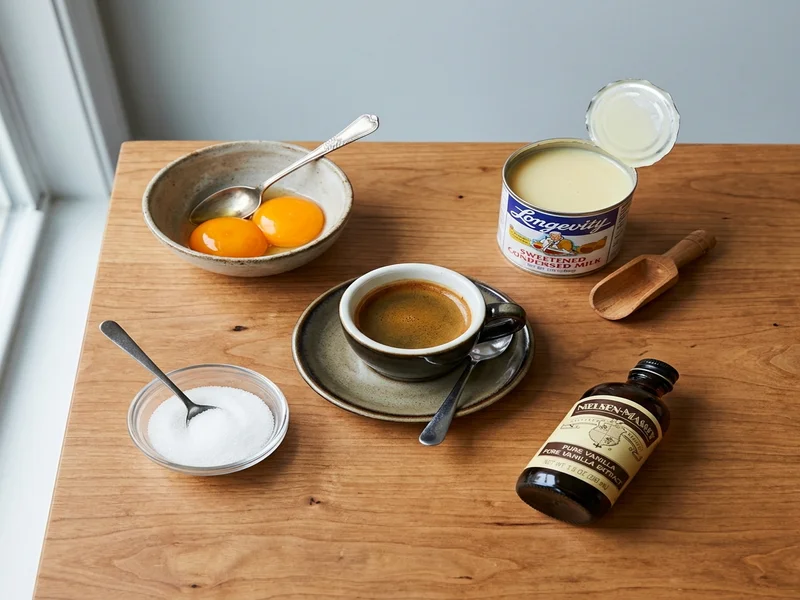
- 2 pasteurized egg yolks Davidson’s Safest Choice or any pasteurized-in-shell label
- 2 tablespoons sweetened condensed milk reduce to 1 tablespoon for a less sweet foam
- 1/4 teaspoon vanilla extract
For the Coffee Base
- 1 shot espresso or 1/2 cup very strong brewed coffee — Moka pot or French press work well
- 1/2 cup ice for iced version only
Instructions
Make the Egg Foam
- Add the egg yolks, sweetened condensed milk, and vanilla extract to a small bowl. If using a hand mixer, set the speed to medium-high before starting.
- Whisk vigorously for 5 to 10 minutes until the mixture turns pale yellow, thick, and mousse-like. Lift the whisk — the foam should fall in thick ribbons and hold its shape briefly. A hand mixer reaches this point in about 2 minutes. Do not stop early; under-whisked foam collapses on the coffee.
Brew and Cool
- Pull a shot of espresso or brew 1/2 cup of very strong coffee using a Moka pot or French press with double the usual grounds. The coffee must be concentrated — a weak base gets buried under the foam.
- Let the coffee rest for 90 seconds after brewing. Adding it too hot will partially scramble the yolk at the edges and break the foam into a grainy, flat layer. Aim for around 70 degrees C (160 degrees F) before combining.
Assemble and Serve
- Hot version: pour the cooled coffee into a small warmed ceramic cup. Iced version: fill a rocks glass with ice and pour the coffee over the top.
- Gently spoon the whisked egg foam over the coffee. It should sit in a thick, golden layer on the surface. Do not stir immediately — sipping through the foam first gives the traditional layered experience.
- After a few sips through the foam layer, stir to combine if you prefer a creamier texture. Drink within 15 to 20 minutes for the best foam texture before it dissolves naturally into the coffee.
Notes
Frequently Asked Questions
What is Vietnamese egg coffee (Cà Phê Trứng)?
Vietnamese egg coffee, or cà phê trứng, was invented in Hanoi in 1946. Egg yolks are whisked with sweetened condensed milk into a thick, custard-like foam, then spooned over strong brewed coffee. It is entirely non-alcoholic and tastes like tiramisu or crème brûlée in drink form. Simple to make, dramatic to look at.
What does viral egg coffee taste like?
Viral egg coffee tastes like a warm, drinkable tiramisu. The foam is sweet, rich, and custardy — there is no eggy or savory flavour at all. Condensed milk carries the sweetness, the yolk adds body and a faint vanilla richness, and the strong coffee underneath balances both. It reads more as a dessert drink than a breakfast coffee.
Is egg coffee safe to drink?
Egg coffee made with raw yolks carries a small salmonella risk, which is why using pasteurized eggs is strongly recommended. Davidson’s Safest Choice is the most widely available US brand — look for the “pasteurized in shell” label in the refrigerated egg section. Made with pasteurized eggs, this viral egg coffee is as safe as any other coffee drink.
How long do you need to whisk egg yolks for egg coffee?
At least 5 minutes by hand, ideally 10. At 3 minutes the foam is flat and loose. At 5 minutes it holds reasonably well. At 10 minutes it reaches a proper pale-yellow mousse with real body on the spoon. A hand mixer on medium-high cuts the time to about 2 minutes and produces a consistently stable result.
Can you make viral egg coffee without an espresso machine?
Yes. A Moka pot brewed to full concentration or a French press with double the usual grounds both produce coffee strong enough to hold up under the sweet foam. A traditional Vietnamese phin filter also works — it brews more slowly but delivers the right intensity. Avoid weak drip coffee; the foam needs a strong base to balance.
Is viral egg coffee served hot or cold?
Both. The traditional Hanoi version is served hot, with the foam spooned on top and stirred at the table. The TikTok version is usually iced — coffee poured over ice, foam spooned on top. The iced version holds for about 15 minutes before the foam folds naturally into the coffee. Both work; they just taste slightly different.
What is the difference between Vietnamese and Italian egg coffee?
Vietnamese egg coffee (cà phê trứng) whisks egg yolks with sweetened condensed milk, then spoons the foam over cooled coffee. Italian caffè allo zabaione — an egg zabaglione coffee — whisks yolks with sugar only, then pours hot espresso directly into the yolk mixture. The Italian version is slightly less sweet, thinner in foam, and has a more direct espresso flavour underneath.
Can you make egg coffee ahead of time?
Whisk the egg foam up to 2 hours ahead and refrigerate it, covered. Whisk briefly again before using if it has settled. Brew the coffee fresh. Do not assemble the drink more than 10 minutes before serving — the foam dissolves into the coffee quickly once combined. Drink within 15 to 20 minutes for the best foam texture.


Was skeptical about whisking egg yolks into coffee but the texture really is like a custardy foam on top. Took a bit of arm work to get it thick enough, but the result was rich and not overly sweet. Worth trying once you get the technique down.